AI for Good Global Summit 2026 Speakers


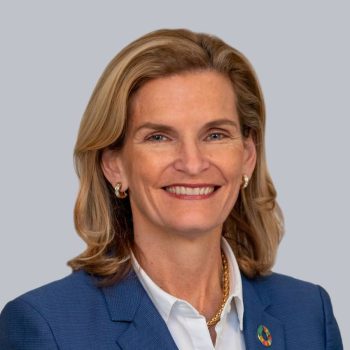
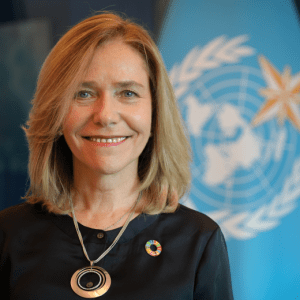
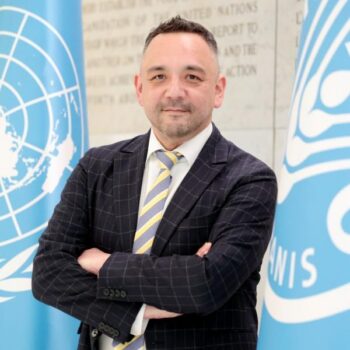
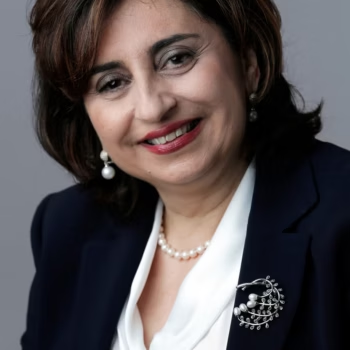
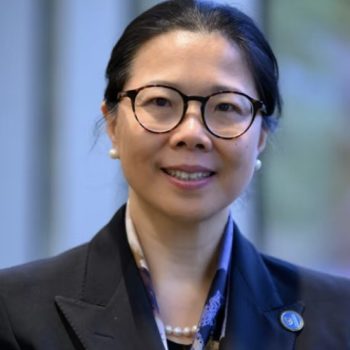
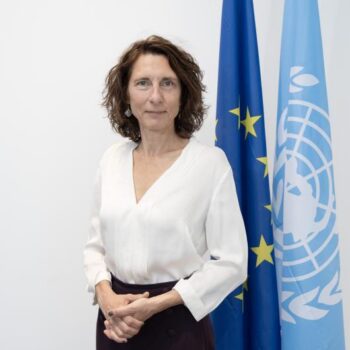
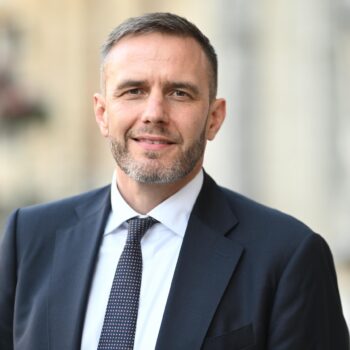
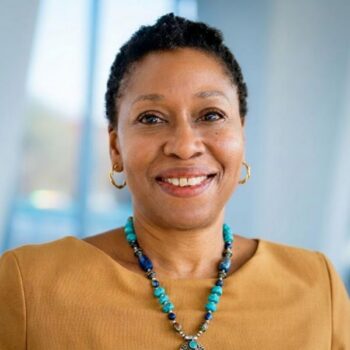
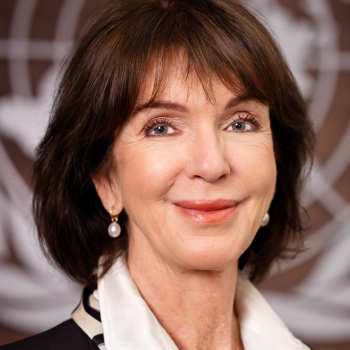
Doreen Bogdan-Martin took office as Secretary-General of the International Telecommunication Union (ITU) on 1 January 2023. Ms Bogdan-Martin was elected as ITU’s first-ever female Secretary-General by Member States at the Union’s Plenipotentiary Conference in Bucharest, Romania.
Ms Bogdan-Martin was previously the Director of the ITU Telecommunication Development Bureau. She took office on 1 January 2019, becoming the first woman in ITU history to hold one of the organization’s top elected management positions.
Ms Bogdan-Martin is a strategic leader with more than 30 years’ high-level experience in international and inter-governmental relations and a long history of success advising governments around the world on policy and regulatory issues.
From 2008-2018, she led ITU’s Strategic Planning & Membership Department. She was instrumental in establishing the Broadband Commission for Sustainable Development, on which she has served as Executive Director for more than a decade, and was an architect of the annual Global Symposium for Regulators, the pre-eminent global event for digital policymakers, as well as director of ITU’s first global youth summit, #BYND. She pioneered and oversees ITU’s ongoing contribution to the EQUALS Global Partnership for Gender Equality in the Digital Age, and is leading ITU’s collaboration with UNICEF on the Giga project to connect all the world’s schools.
Ms Bogdan-Martin is a frequent speaker at top-level international policy events and has spearheaded ITU’s new Youth Strategy to more actively engage with the young people who are driving the next wave of digital transformation.
During her tenure as Director of BDT, she has led the implementation of a Results-Based Management system, improved internal accountability frameworks, and initiated a comprehensive review of reporting mechanisms across BDT’s global network of field and area offices, with a view to creating a more dynamic, responsive and fit-for-purpose organization.
Ms Bogdan-Martin holds a Master’s degree in International Communications Policy from American University in Washington, DC, post-graduate certification in Strategies for Leadership from the Institute for Management Development in Lausanne, Switzerland, and is certified in Accountability and Ethics by the United Nations Leaders Programme.
She is an affiliate of the Harvard University Berkman-Klein Center for Internet and Society, a Generation Unlimited Champion, and a Champion of the EDISON Alliance led by the World Economic Forum. She serves on a number of advisory bodies, including the Geneva-Tsinghua Initiative, the SDG Lab Advisory Board, the UN Technology Innovation Labs, and the Alumni Expert Council of the Internet Policy Lab of American University in Washington D.C. She is also a qualified amateur radio operator.
Ms Bogdan-Martin is married with four children.

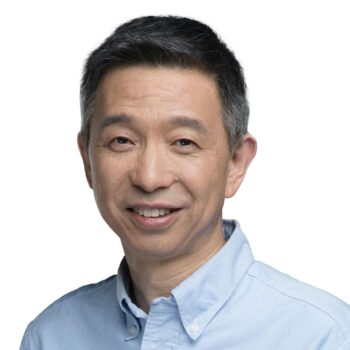
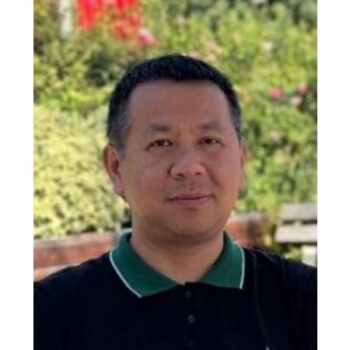
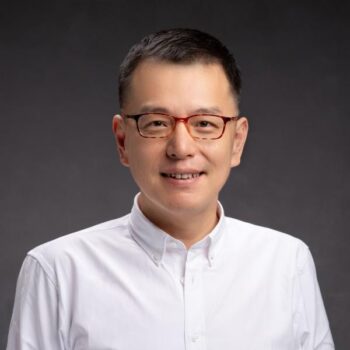
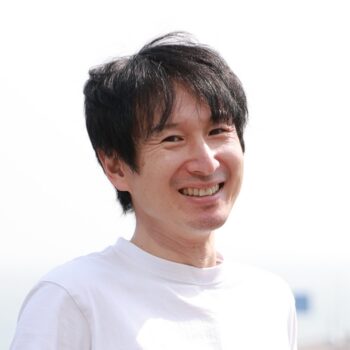
Dr. Jian Wang is an Academician of the Chinese Academy of Engineering, Director of Zhejiang Lab, and Founder of Alibaba Cloud. The Cloud ranks third as a public cloud provider globally and first in Asia. He was also the chief architect of Apsara, its computing foundation, and took the lead in proposing the industrial model of using computing as a public service. In 2016, Dr. Wang pioneered and led the nonprofit City Brain initiative to develop a new digital infrastructure for sustainable “smart” cities as his personal effort and was the architect of Hangzhou City Brain. He founded the Yunqi Academy of Engineering, a private nonprofit research institute with a focus on scientific research for City Brain, and the Yunqi Science and Technology Innovation Foundation, a philanthropic private foundation that operates the free 2050 museum, which envisions the future through technology innovation and organizes the 2050 event every year in April, promoting the vision of science and technology bringing people together.

Lisa Monaco is the President of Microsoft Global Affairs, where she leads the company’s global policy work and engagement with governments and international organizations around the world. In this role, she is responsible for advancing Microsoft’s global policy and trust agenda—championing responsible leadership on technology policy including national security and cybersecurity, digital sovereignty, and AI Policy—while strengthening strategic partnerships with governments and international institutions.
Lisa joined Microsoft in 2025 after serving as the 39th Deputy Attorney General of the United States (2021–2025), the Department of Justice’s second-ranking official and Chief Operating Officer. She oversaw its law enforcement, litigation, policy and national security work and was responsible for the day-to-day operations of a 115,000 employee Cabinet department.
In her more than 25-year career in government Lisa has held several senior national security positions, including White House Homeland Security and Counterterrorism Advisor (2013–2017), where she advised the President and coordinated the U.S. government’s response to a wide range of security threats—including terrorist attacks, cyber incidents, and pandemics. She also served as Assistant Attorney General for National Security, the first woman to hold the position, and as Chief of Staff of the FBI. She began her career as a federal prosecutor and was a member of the Justice Department’s Enron Task Force.
Lisa is a recognized leader in national security, cybersecurity, law enforcement, and public policy. A former partner in a global law firm, she has served on numerous private sector boards and commissions and taught national security law. She is a Distinguished Scholar at the NYU School of Law, a member of the Council on Foreign Relations and is a recipient of the National Intelligence Public Service Medal and the CIA Director’s Award.
She holds a B.A. in American History and Literature from Harvard University and a J.D. from the University of Chicago Law School.

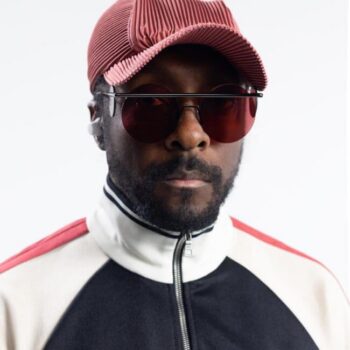
As a creative artist, tech entrepreneur, the Founder & CEO of FYI.AI, a Goodwill Ambassador, AI Skills Coalition for the United Nations International Telecommunications Union, and Professor of Practice in the GAME School at Arizona State University, will.i.am has been recognized by a CLIO Award, an Emmy Award, nine Grammy Awards, the James C. Morgan Global Humanitarian Award, a TIME 100 Impact Award, the World Economic Forum’s Crystal Award, and an Honorary Fellowship by the Institution of Engineering and Technology (IET – UK).
He is simultaneously a creative innovation advisor, futurist, multi-platinum Grammy-winning music artist, producer, entertainer and a tech entrepreneur as part of his cross-disciplinary career. He invests in and develops businesses in a range of sectors including the FYI Web 3.0 creativity & productivity tool, automotive, consumer-tech, fashion, food & beverage, software (AI, Natural Language Understanding, Voice Computing) and telecom.
His early work as Futurist and market opportunity spotter was with Beats Electronics. As a founding equity stakeholder in the company, will.i.am was instrumental in helping to transform Beats By Dre™ into a global consumer electronics brand. Beats Electronics was purchased by Apple in 2014 for US$3 billion.
will.i.am teams with the world’s leading companies helping them to embrace future technologies, what’s next in cultural trends and to develop new business initiatives. A sampling of multinational organizations he has collaborated with include Apple, Arizona State University, Coca-Cola, Deutsche Telekom, Formula 1, Honeywell, Intel, LG, Marvel Comics, Mercedes-AMG, Microsoft, NVIDIA, Qualcomm, Pepsi, Salesforce, SiriusXM and UPROXX Studios.
In philanthropy will.i.am established his i.am Angel Foundation in 2009 to transform lives through education, inspiration and opportunity incorporating STEAM (science, tech, engineering, arts and mathematics) education resources and robotics clubs in schools. i.am Angel Foundation programs also include after-school tutoring and scholarship aid for university-bound students in underserved areas. With a 99% graduation rate, participating students are often the first in their families to attend a four-year college or university.
Through a private-public partnership with Los Angeles Unified schools, the foundation has helped establish hundreds of after-school robotics clubs in high schools across the city. In collaboration with Arizona State University, his FYI.AI platform has been adapted to EDU.FYI to offer university-level courses, tutoring tools and student life resources. As a Professor of Practice at the GAME School at ASU, he is teaching a course, “The Agentic Self”, January – May 2026. Course students are using EDU.FYI and GPU technology provided by NVIDIA to build and maintain their personal AI agents.
As an education advocate, will.i.am serves on the boards of advisors and directors of College Track, FIRST Global (student robotics), Smithsonian Science Education Center Advisory Committee, and the Iovine-Young Academy at University of Southern California. In recognition of his work in Artificial Intelligence and education, will.i.am was appointed Goodwill Ambassador, AI Skills Coalition, United Nations International Telecommunications Union in 2025.

Ray Kurzweil is a world-class inventor, thinker, and futurist with a 36-year track record of accurate predictions. A leader in artificial intelligence for 63 years, he was the principal inventor of the first CCD flat-bed scanner, the first omni-font optical character recognition, the first print-to-speech reading machine for the blind, the first text-to-speech synthesizer, the first music synthesizer capable of recreating the grand piano and other orchestral instruments, and the first commercially marketed large-vocabulary speech recognition software.
Ray has won a Grammy, the National Medal of Technology, a place in the National Inventors Hall of Fame, and 21 honorary Doctorates. His latest book, The Singularity Is Nearer, debuted at #4 on the New York Times Best Seller list.
He served as a Director of Engineering and later Principal Researcher and AI Visionary at Google for 13 years where he developed an AI model that conversed in natural language with 100,000 books, a landmark precursor to today’s large language models.

Puyr Tembé is one of the most important Indigenous leaders in Brazil. A woman from the Tembé people, she was born in the São Pedro village, located in the Alto Rio Guamá Indigenous Land, in the state of Pará. Since a young age, she has been active in defending Indigenous territories and rights, deeply inspired by the leadership of women in her family.
She is the first Secretary of Indigenous Peoples of the State of Pará (SEPI), a government department created in 2023, where she leads efforts in dialogue with Indigenous territories, the fight against environmental crimes, and the promotion of Indigenous participation in public policy.
Puyr is a co-founder of ANMIGA (National Articulation of Indigenous Women Warriors of Ancestry), has served as president of the Federation of Indigenous Peoples of the State of Pará (FEPIPA), and was part of UMIAB (Union of Indigenous Women of the Brazilian Amazon). She has also coordinated Indigenous School Education in the state and plays an active role both nationally and internationally.
Her journey is marked by the fight for environmental justice, women’s leadership, land demarcation, and the appreciation of ancestral knowledge. She is a mother, grandmother, and a protagonist of the international documentary We Are Guardians.

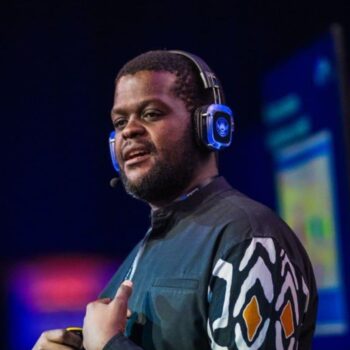
Prof Vukosi Marivate is a Professor of Computer Science and holds the ABSA UP Chair of Data Science at the University of Pretoria. He specialises in developing Machine Learning (ML) and Artificial Intelligence (AI) methods to extract insights from data, with a particular focus on the intersection of ML/AI and Natural Language Processing (NLP). His research is dedicated to improving the methods, tools and availability of data for local or low-resource languages. As the leader of the Data Science for Social Impact research group in the Computer Science department, Vukosi is interested in using data science to solve social challenges. He has worked on projects related to science, energy, public security, and utilities, among others. Prof Marivate is a co-founder of Lelapa AI, an African startup focused on AI for Africans by Africans. Vukosi is a co-founder of the Masakhane Research Foundation, which aims to develop NLP technologies for African languages. Vukosi is also a co-founder of the Deep Learning Indaba, the leading grassroots Machine Learning and Artificial Intelligence conference on the African continent that aims to empower and support African researchers and practitioners in the field.

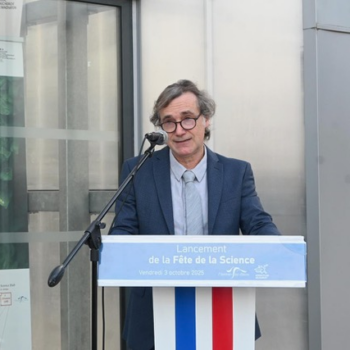
Joëlle Barral is a Senior Director of Research & Engineering at Google DeepMind (GDM). Based in Paris, she has a diverse portfolio of foundational research efforts, which includes theoretical and empirical aspects of frontier models as well as early-stage research in artificial intelligence and the life sciences. She is also in charge of GDM’s efforts in healthcare. She leads a team of researchers and engineers spread across Europe and North America.
Joëlle Barral was previously software lead at Verily, Google’s sister life sciences company, and the head of Verily Surgical. She joined Verily in 2014 and was part of the team who started Verb Surgical, Verily’s joint venture with Johnson & Johnson’s Ethicon, pioneering a vision for the future of robotic surgery that leverages machine learning and digital tools to enhance the surgeon’s judgment, improve decision making, and positively impact clinical outcomes.
Before joining Verily, she was with HeartVista, a spin-off from Stanford University, where she developed an MR software package for the comprehensive evaluation of ischemic and valvular heart diseases. Joëlle Barral has authored numerous patents on topics ranging from maternal health, digital pathology, surgical robotics, and medical imaging.
She holds a B.S. degree in Math and Physics from Ecole Polytechnique, France, and M.S. and Ph.D. degrees in Electrical Engineering, in the field of high-resolution Magnetic Resonance Imaging, from Stanford University, where she was also a Simon Stertzer Biodesign Innovation Fellow. She is the 2019 recipient of the Pierre Faurre Prize.

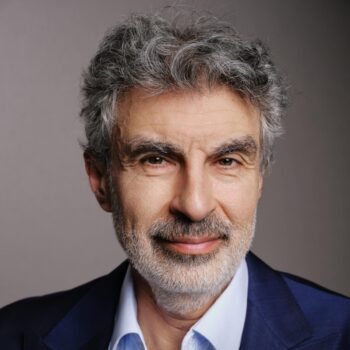
Yoshua Bengio is recognized as one of the world’s leading experts in artificial intelligence and a pioneer in deep learning. Since 1993, he has been a professor in the Department of Computer Science and Operational Research at the Université de Montréal. He is the founder and scientific director of Mila, the Quebec Institute of Artificial Intelligence, the world’s largest university-based research group in deep learning. He is a member of the NeurIPS board and co-founder and general chair for the ICLR conference, as well as program director of the CIFAR program on Learning in Machines and Brains and is Fellow of the same institution. In 2018, Yoshua Bengio ranked as the computer scientist with the most new citations, worldwide, thanks to his many publications. In 2019, he received the ACM A.M. Turing Award, “the Nobel Prize of Computing”, jointly with Geoffrey Hinton and Yann LeCun for conceptual and engineering breakthroughs that have made deep neural networks a critical component of computing. In 2020 he was nominated Fellow of the Royal Society of London.

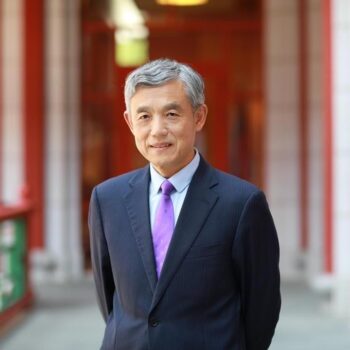
Dr. Lan Xue is a Distinguished Professor and Dean at Schwarzman College Tsinghua University. His teaching and research interests include global Policy, crisis management, and science, technology and innovation policy. From 2000 to 2018, he served as Associate Dean, Executive Associate Dean and Dean of the School of Public Policy and Management at Tsinghua University. He also holds adjunct positions at Carnegie Mellon University and the Brookings Institution. Dr. Xue advises the State Council, chairs China’s National Expert Committee on Next Generation AI Policy, and is a member of the Standing Committee of the Chinese Association of Science and Technology. Internationally, he serves on the UN Sustainable Development Solution Network board, UN Committee of Experts on Public Administration, and UN Internet Policy Forum Leadership Panel.
Dr. Xue is a recipient of Distinguished Young Scholar Award from National Natural Science Foundation of China, Cheung Kong Chair Distinguished Professor of the Ministry of Education, the Fudan Distinguished Contribution Award for Management Science, the Distinguished Contribution Award from Chinese Association for Science of Science and S&T Policy, and the Second National Award for Excellence in Innovation in China. He holds a PhD in Engineering and Public Policy from Carnegie Mellon University.

Dr. Ali Taha Koç was born in Ankara in 1980. He completed his undergraduate degree in 2001 at Bilkent University, Department of Electrical and Electronics Engineering with full scholarship. Later, he received his master’s and doctorate degrees in the Department of Electrical Engineering at the University of Texas at Dallas, both with full scholarships. Dr. Ali Taha Koç joined Intel in 2006 as a research and development (R&D) engineer in the USA. During his tenure at Intel, he developed 63 patents, published 23 scientific articles, and developed and managed several international projects. In 2013, he became one of the 10 awarded engineers who developed the most patents at Intel. After returning to Türkiye in 2014, he began working as the Chief Counsellor of the Prime Ministry and in the same year was appointed as the Head of Information Technologies of the Presidency. During his tenure at the Presidency, he also managed the formation of the State Information Coordination Center (SICC) in the Presidency Security Policies Department, and initiated the information flow from all ministries and security units to the Presidency. Koç was appointed as the Head of the Digital Transformation Office on 12 September 2018. Besides his duties at the Presidency, he also served as a board member of Türksat Uydu Haberleşme Kablo TV ve İşletme A.Ş. (Türksat Satellite Communications Cable TV and Business Inc.). As of October 2023, he is the Chief Executive Officer of Turkcell and serves as a board member of the International GSM Association (GSMA), Türkiye’s Automobile Joint Venture Group (TOGG), ULAK Haberleşme A.Ş., Mobile Telecommunication Operators Association (m-TOD) and Siro. He is also a licensed pilot, fluent in English, and married with one child.
Dr. Werner Vogels is Chief Technology Officer at Amazon.com where he is responsible for driving the company’s customer-centric technology vision.
As one of the forces behind Amazon’s approach to cloud computing, he is passionate about helping young businesses reach global scale, and transforming enterprises into fast-moving digital organizations.
Vogels joined Amazon in 2004 from Cornell University where he was a distributed systems researcher. He has held technology leadership positions in companies that handle the transition of academic technology into industry. Vogels holds a PhD from the Vrije Universiteit in Amsterdam and has authored many articles on distributed systems technologies for enterprise computing.

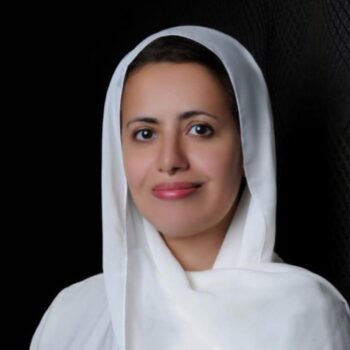
Ms. AlBawardi is a Certified Strategy and Business Planning Professional, as well as an IT/Performance Management Senior Consultant, with more than 22+ years of working experience.
Moreover, she is a certified trainer as well as an Elsevier reviewer for international AI & technical research papers and articles. Ms. AlBawardi is also a public speaker and a workshop presenter in several national and international conferences including: United Nations ITU IGF2023 in Kyoto Japan, as well as UN ITU AI for Good Summits 2024 and 2025 (with more than 150 international workshop attendees) in Geneva Switzerland.
Ms. AlBawardi is also an Author who have participated in writing several technical international publications, as well, including HiMSS Book of the Year (editions 2007, 2013 and 2018) in USA. She is also a USA Today Bestselling Author, as well as a weekly Columnist, with 200+ articles, in KSA digital journals, mainly about AI and Digital Economy themes.
Ms. AlBawardi has earned a Master’s degree in Computer Science from Boston University, USA, in 2003, as well as 2 certifications in Strategic Planning. Her Computer Science Bachelor Degree was from the American University in Cairo, in 1994, and she has also attended a Strategic Management course in Harvard University, USA, in 2019.

Udbhav Tiwari is the VP for Strategy and Global Affairs at Signal. Udbhav’s experience in the technology sector spans both global and regional contexts, where he was formerly the Director for Global Product Policy at Mozilla, with prior roles at Google and the Centre for Internet and Society in India. He has testified before the U.S Senate Committee on Commerce, Science and Transportation and been quoted as an expert by CNN, The Guardian, Wired, Financial Times, BBC, and Reuters. Udbhav was previously affiliated with the Carnegie Endowment for Peace and was named to India Today’s “India Tomorrow” list in 2020.

Dr. Sasha Luccioni is a leading scientist at the nexus of artificial intelligence, ethics, and sustainability, with a PhD in AI and a decade of research and industry expertise. She is the Climate Lead at Hugging Face, a global startup in responsible open-source AI, where she spearheads research, consulting and capacity-building to elevate the sustainability of AI systems. A founding member of Climate Change AI (CCAI) and a board member of Women in Machine Learning (WiML), Sasha is passionate about catalyzing impactful change, organizing events and serving as a mentor to under-represented minorities within the AI community. In 2024, Dr. Luccioni’s work was recognized by TIME Magazine’s 100 most influential people in AI and by Business Insider on its 2024 AI Power List.

Dr. Roman V. Yampolskiy is a tenured faculty member in the department of Computer Science and Engineering at the University of Louisville. He is the founding and current director of the Cyber Security Lab and an author of many books including “AI: Unexplainable, Unpredictable, Uncontrollable”. Dr. Yampolskiy’s main area of interest is Artificial Intelligence security and Security.
Jessica Sibley is the Chief Executive Officer of TIME.
As CEO, Sibley oversees the global media brand which includes TIME’s iconic magazine and digital platforms that reach the largest audience in its history of 120 million people worldwide; TIME Studios, the Emmy Award-winning film and television division and producer of award-winning branded content; a rapidly growing global live events business; TIME for Kids, which provides trusted news with a focus on news literacy for children; and more.
Since joining as CEO in 2022, Sibley has accelerated TIME’s digital transformation, expanded into new platforms, and revitalized the TIME brand overall—leading TIME to be named Media Brand of the Year by the Digiday Media Awards in 2024. She has diversified TIME’s revenue streams, launched new products, supercharged its global live events business, increased advertising revenue and meaningfully engaged new audiences, all while upholding TIME’s vision of covering leaders who shape the world and providing trusted guidance to its global audiences.
Prior to joining TIME, Sibley was the Chief Operating Officer of Forbes, where she led all revenue and growth initiatives for the world’s largest business media brand and achieved five consecutive years of growth from 2018 to 2022. Previously, Sibley held senior leadership positions at The Wall Street Journal, Bloomberg, and Condé Nast.

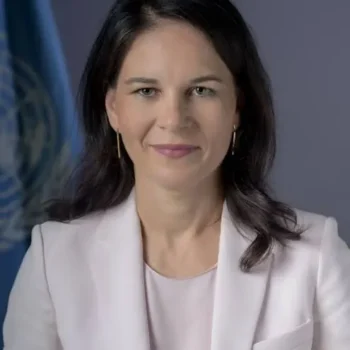
Ambassador Annalena Baerbock served as Germany’s Federal Minister for Foreign Affairs from December 2021 until May 2025. Throughout her career she has been a strong advocate for the multilateral system, human rights, and climate policy.
She was an elected member of the German Parliament (Deutscher Bundestag) from 2013 until June 2025.
In 2018, she was elected co-chairperson of the Green Party and held the position of party leader until 2022.
Prior to becoming an MP, Annalena Baerbock advised her party’s parliamentary group in the German Bundestag on foreign and security policy and served as chairperson of her party in the federal state of Brandenburg. From 2005 to 2008 she worked for a Member of the European Parliament.
Annalena Baerbock holds a Master of Laws (LLM) from the London School of Economics and Political Science and an undergraduate degree in Political Science from Hamburg University.
She was born in Hanover on 15 December 1980 and has two daughters.

Michael Nash has worked at the forefront of entertainment media’s technological transformation for over 30 years. Labeled a “visionary” by The Atlantic, he’s led various digital enterprises and is widely recognized for his prominent role in revolutionizing the music business. Music Ally called him, “one of the most influential people in the global music industry.”
Nash currently serves as Universal Music Group’s EVP, Chief Digital Officer. He joined UMG in 2015 and oversees the industry leader’s global digital strategy, partnerships and business development. In his Corporate Management capacity, he works closely with operating units to align strategic direction and tactical execution. For “leading the industry’s response to AI” Fast Company designated UMG one of the world’s “50 Most Innovative Companies” of 2024. Nash has been named to every Billboard Power 100 List during his tenure.
Prior to joining UMG, Nash was a strategic advisor to digital media startups and served in senior management at Warner Music Group from 2000 to 2011, rising to EVP, Digital Strategy and Business Development, responsible for WMG’s global digital business.
Nash’s music industry career highlights include major deals—often first-of-their-kind partnerships—with companies such as Amazon, Apple, AT&T, Meta, Spotify, Tencent, Verizon, YouTube and many others.
Earlier in his career, Nash helmed the Madison Project, the music industry’s first digital distribution trial (1999). He founded Inscape, a digital media/games publisher backed by Time Warner that produced award-winning titles with artists such as William S. Burroughs, DEVO and The Residents (1994-1997). And he oversaw the Criterion Collection, working with luminaries such as Robert Altman, David Bowie, Terry Gilliam and Louis Malle, producing definitive editions of masterpieces like “Citizen Kane,” “Dr. Strangelove,” “The 400 Blows” and “Ugetsu” (1991-1994).
Nash’s quoted commentary on technology and culture has been featured in numerous periodicals including The Economist, the Financial Times, The New York Times and The Wall Street Journal.
Nash has art-world roots, with a wide range of publications and exhibitions to his credit, including presentations for the American Film Institute, Lincoln Center, The Museum of Contemporary Art and the Sundance Film Festival. Summarizing his career arc, the editors of “Give Them the Picture” wrote, “Nash used the interest he developed in emerging forms of digital culture while working as an art curator and critic, and became a pioneer of digital innovations in the business world.”

Mr. Jean Todt is the United Nations Secretary-General’s Special Envoy for Road security appointed by the then Secretary-General Ban Ki-moon on 29 April 2015, as the first ever Special Envoy for Road security. Mr. Todt was the previous President of the FIA (Fédération Internationale de L’Automobile) and is now an Honorary President of the FIA – the international motor sport governing body and federation of motoring organisations. On 6 February 2022, Mr. Todt was awarded as winner and inaugural recipient of the Autosport Gold Medal, in recognition of his lifetime of service to the sport and for leaving a lasting legacy for future generations.
He ran for FIA President in 2009, winning three successive four-year terms that concluded in December 2021. Some notable highlights from his presidency include the introduction of the electric racing Formula E series, the Women in Motorsport commission, the Halo head protection device, the F1 Budget cap, the Action for Road security campaign and the $20 Affordable Helmet for road use in developing countries. Mr. Todt made road security a priority of the federation by launching the FIA Action for Road security campaign in 2011 in support of the UN Decade of Action for Road security. The campaign is built around a global advocacy for road security, supporting action on the ground by its 250 member clubs in nearly 150 countries, building institutional and commercial partnerships and mobilising the motor sport community to promote road security.
Mr. Todt is also a member of the FIA Foundation for Automobile and Society Board of Trustees. He began his career as a world championship rally co-driver in 1966, before joining Peugeot in 1981 as Sporting Director. He joined Ferrari Racing in 1993, ultimately becoming responsible for all motor sport activities for the Ferrari-Maserati Group. In 2003, he was appointed General Manager of Ferrari and at the end of 2006, became Chief Executive Officer of the company until 2008.
In 2011, Mr. Todt was named Grand Croix de la Légion d’Honneur, the highest honour of the French Republic. He is Chairman of the Board of the Suu Foundation, a humanitarian organisation founded by Nobel Peace laureate Aung San Suu Kyi, to advance the health and education of the people of Myanmar, and a member of the International Peace Institute (IPI) Board of Directors. He is also one of the Founders and the Vice-President of ICM, a medical research institute devoted to medical research for brain and spinal cord disorders. Mr. Jean Todt was born on 25 February 1946 at Pierrefort, Cantal (France). He has one son, Nicolas Todt, and shares his life with actress and film producer Michelle Yeoh, who is a UNDP Goodwill Ambassador and Global Road security Advocate.

Lu Zhang, Founder and Managing Partner of Fusion Fund, is a renowned Silicon Valley-based investor, a serial entrepreneur, and a Stanford Engineering alumna. With a strong technical background, Lu has extensive experience bringing a broad range of technologies to commercialization, and deep domain expertise in AI in healthcare, Enterprise AI/Networks, Edge Computing and Data Privacy. Founded by Lu in 2015, Fusion Fund is dedicated to supporting early-stage entrepreneurs working on innovation in healthcare, enterprise AI and industrial automation. With investments in over 90 companies across the U.S. and Canada, Fusion Fund has generated substantial exits over the years.
Prior to starting Fusion Fund, Lu was a serial entrepreneur and materials science researcher. Following the exit of her startup, Lu began investing in and supporting early-stage entrepreneurs. This eventually led her to create Fusion Fund in 2015. Since then, Lu has built a distinguished ecosystem and established her reputation in the VC industry. She was honored as Young Global Leader by World Economic Forum (Davos), Silicon Valley Women of Influence, Top 25 Female early-stage investor by Business Insider, Featured Honoree of VC of Forbes 30 under 30 and Town & Country 50 Modern Swans – Entrepreneurship Influencer.
Lu frequently speaks at high profile tech conferences such as World Economic Forum (Davos), Future Investment Initiative (FII), Web Summit, SuperReturn, etc. and she is a guest lecturer at Stanford University and Wharton. Lu serves as a board member of many portfolio companies, the Board Director of CommonSpirit Health Foundation, the Board and Chairwoman of the Youth Council of Future Science Award, and Jury Board of the Cartier Women Initiative and Young Leader Award. She holds an M.S. in Materials Science and Engineering from Stanford University.

H.E. Mohamed Adam Moalim Ali is a distinguished statesman whose extensive career in public service has shaped Somalia’s Policy and policy landscape. Appointed as Minister of Communications and Technology on April 7, 2024, he also serves as a Member of the House of the People in the Federal Parliament of Somalia, where he plays a key role in national legislation and development.
He has held several high-profile ministerial positions, including Minister of Livestock, Forestry & Range and Minister of Public Works, Reconstruction & Housing, leading sectoral reforms, infrastructure projects, and sustainable resource management. His leadership in these roles has driven economic growth and resilience in key industries.
Beyond public service, H.E. Mohamed Adam Moalim Ali has a strong background in the private sector, bringing valuable insights that enhance his Policy approach. He is also a dedicated humanitarian, supporting social welfare initiatives through organizations like the Welfare Projects Society and various NGOs, advocating for the well-being of vulnerable communities.
Academically, he holds a Master’s Degree in Business Administration from MAHSA University in Malaysia, alongside specialized diplomas from ALISON in Ireland. This solid educational foundation equips him with strategic foresight and analytical skills, enabling him to engage effectively on national and international platforms.
Since his appointment, H.E. Mohamed Adam Moalim Ali has focused on advancing Somalia’s digital transformation, strengthening digital infrastructure, and positioning Somalia in the global digital economy. One of his key achievements has been the re-establishment of the Postal Department and revival of postal services, a significant step in modernizing the country’s communication sector.
Through his strategic leadership, policy expertise, and commitment to national development, he continues to drive transformative change, fostering innovation and progress for the Somali people.

Bill Gross is a lifelong serial and parallel entrepreneur who has started more than 150 companies with more than 50 successful IPOs and acquisitions. He started the first and longest-running technology incubator in the world – Idealab – in 1996 in Pasadena, California, near his alma mater, Caltech, where he graduated with a degree in Engineering and Applied Science.
Bill has been on the forefront of disruptive innovation his entire life and his mission is to challenge the status quo, to be bold, and to solve big challenges in the world that others would not.
Among the transformative changes that Bill has wrought is the invention of the business model that powers most of the monetization of the Internet. Bill invented the “paid click”, or CPC (bidded keyword cost-per-click) model with the company GoTo/Overture, which he founded in 1998. After a successful IPO and becoming the global market leader in paid search, the company was acquired by Yahoo in 2003. Today, Bill’s pioneering idea is used by Google and millions of websites around the world and remains one of his most significantly impactful inventions.
Bill is also at the forefront of climate tech and AI tech and is pioneering a new system of fair attribution, compensation, and monetization in generative AI with his newest company, ProRata.ai. Bill is a visionary who sees the future and relishes sharing that with the world and helping entrepreneurs globally with his lessons learned from a lifetime of business creation.
In addition to serving as Idealab’s board chairman and the CEO of ProRata & Gist, Bill is also a member of the Board of Trustees of the California Institute of Technology and of the ArtCenter College of Design.

Stuart Russell received his B.A. with first-class honours in physics from Oxford University in 1982 and his Ph.D. in computer science from Stanford in 1986. He then joined the faculty of the University of California at Berkeley, where he is Professor (and formerly Chair) of Electrical Engineering and Computer Sciences and holder of the Smith-Zadeh Chair in Engineering. He is also an Adjunct Professor of Neurological Surgery at UC San Francisco and Vice-Chair of the World Economic Forum’s Council on AI and Robotics.
Russell is a recipient of the Presidential Young Investigator Award of the National Science Foundation, the IJCAI Computers and Thought Award, the World Technology Award (Policy category), the Mitchell Prize of the American Statistical Association and the International Society for Bayesian Analysis, the ACM Karlstrom Outstanding Educator Award, and the AAAI/EAAI Outstanding Educator Award. In 1998, he gave the Forsythe Memorial Lectures at Stanford University and from 2012 to 2014 he held the Chaire Blaise Pascal in Paris. He is a Fellow of the American Association for Artificial Intelligence, the Association for Computing Machinery, and the American Association for the Advancement of Science.
His research covers a wide range of topics in artificial intelligence including machine learning, probabilistic reasoning, knowledge representation, planning, real-time decision making, multitarget tracking, computer vision, computational physiology, global seismic monitoring, and philosophical foundations. His books include “The Use of Knowledge in Analogy and Induction”, “Do the Right Thing: Studies in Limited Rationality” (with Eric Wefald), and “Artificial Intelligence: A Modern Approach” (with Peter Norvig). His current concerns include the threat of autonomous weapons and the long-term future of artificial intelligence and its relation to humanity.

I am Professor of Responsible Artificial Intelligence at the Department of Computing Science at Umeå University, Sweden, where I lead the AI Policy Lab .
I am Wallenberg Scholar (2024) and Senior Advisor on AI Policy to the Wallenberg Foundations. I am a member of the Royal Swedish Academy of Engineering Sciences (IVA), and Fellow of the European Artificial Intelligence Association (EURAI) and of ELLIS (European Laboratory for Learning and Intelligent Systems). I am also Guest Professor at the Civic AI Lab, University of Amsterdam, and Honorary Professoral Fellow at the University of Melbourne.
Given the increasing importance of understanding the societal, ethical, and legal impact of AI, I am deeply involved in international AI Policy, policy, and strategy initiatives. I am currently co-chair of the ACM Tech Policy Council, member of UNESCO’s High-Level Expert Group on the Implementation of the UNESCO AI Ethics Recommendation, and member of the OECD Expert Group on AI Futures. I am also founder of ALLAI, the Dutch AI Alliance, and former member of the United Nations High-Level Advisory Body on AI, the European Commission High-Level Expert Group on Artificial Intelligence, and co-chair of the World Economic Forum Global Future Council on Artificial Intelligence. As part of UNESCO’s AI Ethics Experts Without Borders, I advise governments worldwide on the development and operationalization of national AI strategies.
My research focuses on the interconnections between people, organizations, technology, and policy, with a strong emphasis on responsible and Policy-aware AI systems. My work spans from formal and computational models of agency, norms, and institutions to applied AI policy, evaluation frameworks, and socio-technical system design, combining theory, engineering, and methodological design.
I have held major leadership roles in the AI research community, including Program Chair of AAMAS 2024 and Ethics Chair of AAAI 2024, and I currently serve on multiple international advisory boards and expert panels.
In recognition of my work, I am recipient of the AI Policy Leader 2025 Award (CAIDP), AI and Ethics Professional of the Year 2022, and the Medal of Honour of the City of Oeiras (Portugal). I have published over 300 peer-reviewed articles with over 19,000 citations. My newest book, The AI Paradox, is published by Princeton University Press (2026).
I regularly speak internationally on AI ethics, Policy, and policy, advise public and private organizations, and contribute to major journals, conferences, and policy processes.
I also actively communicate about AI and its societal impact and can be followed on LinkedIn or Bluesky, or through my blog Thinking in Public.

Philip is chief executive of the Raspberry Pi Foundation, an educational charity with a global mission to enable young people to realise their full potential through the power of computing and digital technologies.
Philip was previously a non-executive director of the Foundation’s commercial business, Raspberry Pi Ltd and part of the team that led the successful IPO of the business on the London Stock Exchange in June 2024.
Prior to joining Raspberry Pi, Philip was the Deputy Chief Executive of the UK’s innovation foundation, Nesta, where he built programmes and ventures to address social problems through innovation.
He was a non-executive director of the Behavioural Insights Team (the Nudge Unit) and a founding trustee of the Centre for London. He served as an adviser on social innovation to the UK government, and has advised municipal and national governments, charities, and social enterprises all over the world.
Earlier in his career, Philip was a chief officer at the London Borough of Camden and a senior civil servant in the Home Office.
Philip has a degree in law from the University of Liverpool and qualifications in management and finance. He was awarded a CBE for services to Engineering and Technology for Societal Impact in the King’s Birthday Honours in 2025.
Outside of work he is a dad, craft cider maker, and a slow cyclist. He is an active member of the local community, having served as a scout volunteer, a school governor, and trustee of a local arts organisation.

Mr. Kyeongman KIM serves as Deputy Minister at the Office of Artificial Intelligence Policy in the Ministry of Science and ICT (MSIT) of the Republic of Korea. In this role, he is responsible for shaping and implementing Korea’s national artificial intelligence policies and advancing strategies to strengthen the country’s digital and AI ecosystem.Prior to his current position, Mr. Kim was the Director General of the Artificial Intelligence Policy Bureau and earlier, the Director General of the Telecommunications Policy Bureau at MSIT, overseeing the development of key telecommunications and digital policy initiatives. Throughout his career in public service, he has held several senior positions within the Korean government including Director of the AI Infrastructure Policy Division, Director of the Postal Business Information Center, and Director of the Telecommunications Competition Policy Division. He also served as a seconded official to the Organisation for Economic Co operation and Development OECD and as Secretary at the Korea Communications Commission, contributing to international and national digital policy development.Mr. Kim joined the Korean civil service after passing the national civil service examination in 1997 and has since built extensive experience in telecommunications, digital infrastructure, and artificial intelligence policy.He holds a Master’s degree in Public Administration from the University of Colorado Denver and completed doctoral coursework in Technology Policy at Yonsei University. He received his Bachelor’s degree in Business Administration from Korea University.

Alissa Starzak is the Chief Legal Officer at Cloudflare, the cloud connectivity company on a mission to help build a better Internet. Cloudflare empowers organizations to make their employees, applications, and networks faster and more secure everywhere, while reducing complexity and cost. Powered by one of the world’s largest and most interconnected networks, Cloudflare blocks billions of threats online for its customers every day.
Prior to joining Cloudflare, Alissa worked for the U.S government in a variety of national security positions. Most recently, she served as the 21st General Counsel of the Department of the Army, after confirmation by the Senate. Before her appointment as Army General Counsel, Alissa served in a variety of senior positions in both the Executive branch and the Senate, worked in private practice in Washington, D.C., and clerked for the Honorable E. Grady Jolly, U.S. Court of Appeals for the Fifth Circuit. She graduated from Amherst College and the University of Chicago Law School.

Will Marshall is Chairman, Co-Founder & CEO of Planet. Will is a scientist-turned-entrepreneur with extensive experience building and leading teams in the technology space, at NASA and now at Planet, having grown the team from the garage to a public company of over 800 people. He oversees the vision, product and business strategy – carrying out Planet’s mission, as written into the Public Benefit Corporation charter, to accelerate humanity toward a more sustainable and secure world. Will was recognized as a Young Global Leader by the World Economic Forum and serves on the board of the Open Lunar Foundation. Prior to Planet, Will was a Scientist at NASA/USRA where he helped formulate the Small Spacecraft Office at NASA Ames Research Center, worked as a systems engineer on lunar orbiter mission “LADEE and a member of the science team for the lunar impactor mission “LCROSS”, served as Co-Principal Investigator on PhoneSat, and was the technical lead on research projects in space debris remediation. Will holds a Ph.D. in Physics from the University of Oxford and a Masters in Physics with Space Science and Technology from the University of Leicester. He was also a Postdoctoral Fellow at George Washington University and Harvard.

Mayra Arevich Marín, is a Member of the Central Committee of the Communist Party of Cuba and Minister of Communications of the Republic of Cuba.
Previously, she served as Executive President of the Cuban Telecommunications Company (ETECSA).
Previously he assumed multiple responsibilities within the company. He was Head of the Metropolitan Regional Management and Supervision Center with the mission of guaranteeing the management and intervention of the communications networks in the city of Havana.
She held the position of Deputy Chief Manager of the Regional Management Supervision Center and later assumed the position of Branch Manager of the Havana City Network and was promoted to Vice President of Havana City.
She obtained a Master’s Degree in Telematic Engineering at the “José Antonio Echevarría” University of Technology of Havana and a Diploma in Public Administration at the Higher School of State and Government Cadres.

Masahiko Metoki has enjoyed an extensive career in the public service, particularly in the postal sector.
He first joined Japan’s Ministry of Posts and Telecommunications in 1983. Mr. Metoki later took on the role of Postmaster at the Nihonmatsu Post Office in Fukushima Prefecture, eventually moving back to the Ministry of Posts and Telecommunications’ Postal Savings Bureau as its Director of the International Service Office.
In 2003, he made his way back to Japan Post, where he continued his work in the postal savings business until he was called upon to join the organization’s privatization efforts as Director of the Office for the Promotion of Privatization of Postal Services in the Cabinet Secretariat. Since the Post’s privatization, Mr. Metoki has held executive roles related to the Post’s initial stock offering, governance and international postal affairs.
In addition to his experience with the Post, Mr. Metoki has worked with the Japanese Ministry of Foreign Affairs and the Embassy of Japan in Thailand.
Mr. Metoki is a familiar face at the UPU, having represented Japan as Chair of the Postal Operations Council (POC) since 2012. He chaired Committee 5 and the Postal Financial Services Group of the POC in 1999. He emphasized that the UPU, as a UN organization, must support postal financial services in a comprehensive manner.
He has also chaired the 22nd Congress committee for postal financial services and the Postal Operations Council’s Postal Financial Services Group. Mr. Metoki also led the first-ever revision of the UPU’s Convention, allowing for equipment containing lithium batteries to be sent via post.
He holds a Bachelor Degree (BA) in social psychology from the University of Tokyo. In 1995, he was awarded with a decoration “The Most Noble Order of the Crown of Thailand 3rd Class”. He is a co-author of the academic paper “Postal Savings for National Development” (2008).

Emmy award-winning television journalist and coach Jane Hanson has spent over 30 years helping people learn to communicate better. Not only does it enhance their presence, and ensure they resonate with every type of audience, but in today’s fast paced world, it is imperative to be on one’s game 24/7. Hanson focuses on three core elements: what you say, how you say it, and how your body language keeps it all in sync.
Among her diverse array of media and presentation training clients: top tier leaders of corporations spanning the fields of finance, insurance, startups, technology, education, fashion and media; publishers and editors in chief of numerous national magazines; key opinion leaders in the pharmaceutical industry; politicians and world leaders, internet entrepreneurs; chefs and restaurateurs. She has also hosted programs on cable channels and private satellite broadcasts, covering nearly every subject, from healthcare to food to finance to religion. And she is a frequent speaker, emcee, host, and panel moderator. Events she has participated in range from the New York Emmys to Toys for Tots to the Race for the Cure to the Randall’s island Sports Foundation. She has hosted events for virtually every industry, many health care issues, dozens of schools and colleges, and many groups focusing on women and children. She is also a Forbes contributor and uses her experience working with executive leaders to offer her unique insight and expertise.
Jane Hanson grew up on the prairies of rural Minnesota, coming to New York three decades ago to join the NBC networks. She began as an anchor and correspondent for NBC New York in 1979. In 1988, Jane was named co-anchor of “Today in New York,” a position she held until 2003 when she became the station’s primary anchor for local programming and the host of “Jane’s New York”; She covered events ranging from the tragedy of 9/11 to the joy of Yankees victory parades to Wall Street and Washington; has interviewed presidents, business magnates, prisoners, and celebrities; traveled as far as the Gobi Desert of Mongolia and the great depths miles below New York City for her special reports. Most recently she hosted a daily entertainment and lifestyle program, New York Live, for NBC4 in New York City.
Jane has won 9 Emmy Awards. In addition, she was named Correspondent of the Year by New York’s Police Detectives and received a similar honor from New York’s Firefighters. She has also been the recipient of numerous other awards for her service to the community. Jane has served as the March of Dimes Walk-America Chairman, honorary chair for the Susan B. Komen Foundation’s Race for the Cure, and as a board member of Graham Windham, Phipps Houses, the Randall’s Island Sports Foundation, the Westhampton Beach Performing Arts Center, and Telecare. She has taught courses on communication at Long Island University, Stern College, and the 92nd Street Y. Hanson is a Past President of the New York Chapter of the National Academy of Television Arts and Sciences.


At the age of 20, while aspiring to become a nurse, she lost her right arm in a traffic accident. Overcoming despair, anxiety, and internal struggles, she became Japan’s first nurse with a prosthetic arm. As part of her rehabilitation, she took up swimming and was selected to represent Japan at the Beijing and London Paralympics, placing 4th in Beijing and 8th in London. After retiring from swimming, she resumed playing the violin, a skill she had pursued since childhood, and is currently active as the world’s first violinist with a prosthetic arm. She has performed at events such as the Tokyo 2020 Paralympic Games opening ceremony, CBS’s “The World’s Best,” and the Osaka-Kansai Expo opening ceremony.

Avi Saxena is Chief Technology Officer, Global Digital, for Warner Bros. Discovery (WBD). He is responsible for all the technology that serves WBD’s consumer products globally, including HBO Max, the company’s unified streaming platform, now available in the U.S., LATAM, EMEA, and APAC markets, with more launches planned in additional territories. Saxena also oversees all WBD direct-to-consumer News, Sports and Entertainment products such as CNN, Eurosport, GolfTV & Golf Digest, Bleacher Report, March Madness, NHL, Harry Potter Franchise, DC Comics, MotorTrend, Magnolia, TNT, TBS and numerous other entertainment products.
While based in the Warner Bros. Discovery Seattle office, Avi is responsible for a global technology organization that spreads across Seattle, New York, San Francisco, Ottawa, London, Stockholm, Amsterdam, Budapest, India and many other global locations.
Saxena has more than 30 years of technology experience, about half of that with Amazon in a variety of roles, most recently as Vice President of Technology for Amazon Marketplace. He also held leadership roles at Microsoft and several internet infrastructure startups, where he created content delivery networks and other technologies to transform how businesses leverage internet technology.
Saxena holds an MBA from Southern Methodist University, an M.S. in Computer Science from University of Texas, Dallas, and a B.S. in Computer Science from SGS Institute of Technology and Science.

On 16 December 2024, the United Nations Secretary-General António Guterres announced the appointment of Michelle Gyles-McDonnough of Jamaica as the new Executive Director of the United Nations Institute for Training and Research (UNITAR).
With more than 30 years’ experience in sustainable development, policy advocacy, international trade and international relations, and change management in complex bureaucracies, Ms. Gyles-McDonnough has held multiple leadership roles within the UN system and in the field. She brings a wealth of experience in managing diverse portfolios in the economic, social, and environmental fields that impact the Sustainable Development Goals. She has led work in transforming international organizations and cross-cultural teams, resulting in new and agile ways of working, strengthened capacities, and innovative development solutions for governments and key partners.
Before assuming the post as UNITAR Executive Director, Ms. Gyles-McDonnough was the Director, Sustainable Development Unit, in the Executive Office of the United Nations Secretary-General in New York. In this role, she served as lead Sustainable Development Adviser to the Secretary-General and Deputy Secretary-General, responsible for the shaping of policy priorities and the design and delivery of the work programme to implement the Secretary-General’s sustainable development vision and reforms for a fit for purpose U.N. development system.
Throughout her career with the United Nations since 1999, Ms. Gyles-McDonnough has served in leadership and senior advisory roles as Chief of the United Nations Development Programme’s (UNDP) sub-regional policy advisory facility for the Caribbean (1999-2004); Coordinator of the Grenada Recovery Programme following hurricane destruction of 212 percent of GDP (2004-2005); Caribbean Regional Adviser, UNDP (2005); Programme Adviser, UNDP Executive Office/Operations Support Group (2006-2008); UN Resident Coordinator and UNDP Resident Representative for Barbados and the OECS (2008-2013); and UN Resident Coordinator and UNDP Resident Representative for Malaysia, Singapore and Brunei Darussalam (2013-2016).
Prior to joining the United Nations, Ms. Gyles-McDonnough practiced privately as an international trade lawyer; served as Legal Advisor to the Embassy of Jamaica in Washington DC; Advisor to the Secretary-General of the Organization of American States on international trade; and teaching assistant at the John F. Kennedy School of Government, Harvard University.
She holds a law degree from Columbia University School of Law, with honours in international and foreign law; a Masters in Public Administration from the John F. Kennedy School of Government at Harvard University; and a Diploma in Executive Education from The Wharton School at the University of Pennsylvania. She received her undergraduate degree at Bryn Mawr College in Pennsylvania, USA in Economics, with a minor in French.

Hatem Dowidar is the Group CEO of e&. He joined e& in September 2015, initially serving as Group Chief Operating Officer. He was appointed Chief Executive Officer, International in March 2016, and in May 2020, he became the Group’s Chief Executive Officer.
Ever since he took the company’s helm, Dowidar was the architect for the group’s transformation from a traditional telco to a technology group. He has spearheaded several ground-breaking strategic programmes that propelled the company’s business growth to new heights across the 38 markets where it now operates. As the company transformed into a global technology group in February 2022, and despite the ever-changing business landscape, his astute brand stewardship has been the foundation for enhancing e&’s brand equity, enhancing employee experience, and adding value to stakeholders.
Today, e& is the Fastest Growing Technology Brand and the most valuable brand portfolio in the Middle East and Africa , standing tall in global rankings. Dowidar also has been recognised by Brand Finance as the number one ranked telecom leader globally on the Brand Guardianship Index 2024. e& also attained the highest position in Brand Finance’s inaugural Employer Brand Report 2024, with its UAE entity ranking as the Top Global Telecoms Employer.
A highly skilled strategist and visionary, Dowidar has been instrumental in ushering in a new phase of strategic partnerships and key collaborations with global industry leaders that will digitally empower societies.
Prior to joining the group, Dowidar was the Group Chief of Staff for Vodafone Group based in London. He brings more than 30 years of experience in multinational companies and more than 25 years of these within the telecommunications industry across various leadership positions.
He initially joined Vodafone Egypt in 1999, served as Marketing Director (CMO), and later became the CEO of Vodafone Egypt from 2009 – 2014, where he steered the business growth with benchmark profitability in challenging and competitive environments. Dowidar has a long track record of achievements in the various leadership positions he held at Vodafone Group and its subsidiaries, including Group Core Services Director, Chairman and CEO of Vodafone Malta, CEO of Partner Markets with partnerships covering over 45 markets, and Regional Director Emerging Markets. He also has extensive Corporate Policy experience through his representation as Chairman and Board Member on several Corporate Boards within and outside the telecommunications industry.
Dowidar began his career in AEG/Deutsche Aerospace (Daimler Benz Group) in Egypt before moving into marketing at Procter & Gamble, where he held several managerial roles.
He is currently a board member of Vodafone Group, Etihad Etisalat Company (Mobily), Maroc Telecom, and Etisalat Misr (Etisalat Egypt).
On a global industry level, Dowidar is a member of the GSMA and the United Nations Internet Policy Forum (IGF) leadership panel. GSMA is an industry organisation representing the interests of global mobile operators and the broader mobile ecosystem. IGF leadership panel is a multi-stakeholder group for policies and practices relating to the Internet and technologies. Convened by the Secretary-General of the United Nations, the IGF facilitates knowledge exchange on how to maximise Internet opportunities and address risks and challenges.
Previously, Dowidar served as a board member for Hutch Lanka, Etisalat Nigeria, Attijariwafa Bank Egypt, Barclays Bank Egypt and Vodacom Africa, Vodafone Egypt and Malta, and ElSweedy Electrometers.

Dr. Ebtesam Almazrouei is a pioneering force in artificial intelligence (AI) and advanced technology, with a wealth of experience spanning both government and the private sector. Her exceptional expertise in artificial intelligence, supercomputing, telecommunications, semiconductors, technology Policy, advanced technology, and strategic innovation has positioned her at the forefront of AI leadership globally, earning recognition among H2o.ai’s world’s top 100 AI leaders. As a thought leader, entrepreneur, and patent inventor, Dr. Almazrouei has been instrumental in pioneering cutting-edge AI models and fostering global AI policy frameworks.
Dr. Ebtesam Almazrouei plays a key role in shaping AI strategies and frameworks, and building international collaborations on a global scale. She serves as Chairperson of the United Nations AI for Good Impact Initiative and as a Senior AI Consultant for the International Telecommunication Union (ITU), playing a critical role in shaping global AI policies, technology Policy, and regulation frameworks.
Dr. Almazrouei’s exceptional contributions have garnered her notable honors, including the Leading AI Women in the World list, the Global Leadership Women in Tech® MENA Award, and a spot among the Top 100 Global Tech Speakers. She also holds various advisory roles and board memberships across various international organizations.
As the CEO and Founder of AIE3, Dr. Almazrouei continues to drive AI innovation, developing scalable AI solutions, building capacity, and leading industry-wide advancements. She previously held senior executive roles, including Executive Director, Acting Chief AI Researcher, and Founder of the AI Cross Center Unit (AICCU) at the Technology Innovation Institute (TII). She established and led the AI Cross Center, driving strategic planning and development. Dr. Ebtesam Almazrouei directed and spearheaded the development of the Falcon Large Language Models (LLMs)—Falcon 7B, 40B, and 180B. These AI models have made significant strides in AI research and development in the world, particularly in open-source generative AI models. Additionally, she developed NOOR, the first and the largest Arabic LLM in 2022.
Dr Ebtesam Almazrouei is the first Emirati woman to hold a Ph.D. in Artificial Intelligence for Wireless Communication Engineering and Computer Science. Her vision is to leverage AI to address global challenges and drive meaningful societal impact.

Peter Sands has been the Executive Director of The Global Fund to Fight AIDS, Tuberculosis and Malaria since March 2018.
Between 2015 and 2017 Peter was a Research Fellow at Harvard University, dividing his time between the Mossavar-Rahmani Center for Business and Government at Harvard Kennedy School and the Harvard Global Health Institute.
Peter was Group CEO of Standard Chartered PLC from November 2006 to June 2015, having joined the Board of Standard Chartered as Group CFO in May 2002.
Prior to joining Standard Chartered, Peter was a Senior Partner at McKinsey & Co.
Peter has served on various boards and commissions, including the UK’s Department of Health, the World Economic Forum and the International Advisory Board of the Monetary Authority of Singapore. He is currently Chair of the Board of Cera, a digital-first home healthcare company based in the UK.
Peter graduated from Oxford University with a First Class degree in Politics, Philosophy and Economics. He also received a Master in Public Administration from Harvard University, where he was a Harkness Fellow. Peter, who grew up in Singapore and Malaysia, is married to author Betsy Tobin and has four children.
Dr. Michelle J. Johnson is an Associate Professor of Physical Medicine and Rehabilitation at the Perelman School of Medicine at the University of Pennsylvania. She has secondary faculty appointments in the Departments of Bioengineering and Mechanical Engineering and Applied Mechanics in the School of Engineering and Applied Sciences at University of Pennsylvania.
Dr. Johnson holds a Ph.D. in Mechanical Engineering from Stanford University, with a specialization in design, robotics and rehabilitation. Her pioneering work focuses on developing robotic and sensor-based technologies to assist individuals recovering from neurological injuries, such as stroke and other non-traumatic brain injuries.
As the Director of the Rehabilitation Robotics Lab (A GRASP Lab), Dr. Johnson leads an interdisciplinary team that designs and evaluates assistive robots and therapeutic devices to improve motor control, physical function, cognitive function and quality of life in older adults and adult and children with disabilities.
Her research integrates principles from robotics, neuroscience, and rehabilitation science to create innovative solutions for real-world clinical applications.
Dr. Johnson has published extensively in leading scientific journals and has secured significant research funding from prestigious agencies, including the National Institutes of Health (NIH) and the National Science Foundation (NSF). Her projects emphasize human-robot interaction, adaptive technology design, and equitable access to rehabilitation tools for local and global underserved communities. She is a Fulbright Scholar.

Josh Parker joined NVIDIA in 2023 to lead the company’s corporate sustainability program. Josh studied electrical engineering and spent several years practicing IP law at a large law firm and later for the computer storage company Western Digital. While at Western Digital, he was asked to lead the company’s ethics and compliance program in Asia and later to build a new corporate sustainability program for the company. At NVIDIA, Josh is pursuing a data-driven approach to sustainability, believing that accurate and credible data is a prerequisite for effectively managing impacts. Josh is also deeply persuaded that technology—especially AI—can play a critical and dramatic role in solving world-scale sustainability challenges.

Mr. YU Xiaohui, President of China Academy of Information and Communications Technology (CAICT), Deputy Secretary of the Party Committee of CAICT, and a professorate senior engineer.
Mr. YU also serves as Vice Chairman and Secretary General of the Internet Society of China (ISC), Chairman of the Alliance of Industrial Internet (AII), Chairman of the Artificial Intelligence Industry Alliance (AIIA), member of the Expert Advisory Committee for the Development of Strategic Emerging Industries, member of the Intelligent Manufacturing Expert Committee of the National Manufacturing Strategy Advisory Committee, deputy-director member of the Communication Science and Technology Committee of the Ministry of Industry and Information Technology (MIIT), Chairman of the Expert Committee for Information and Communication Economy (ECICE) of MIIT, and member of the ChinaInfo100.
Mr. YU has long been engaged in the research in the fields of information and communication technology and industry, digital economy, informatization, integration of informatization and industrialization, digital infrastructure and digital governess. He has taken the lead in the systematic research in fields including industrial internet, digital economy, Broadband China, mobile internet, internet, IoT, and new infrastructure, supporting the formulation of national strategies, plans, and policies as well as technological and industrial innovation and development.

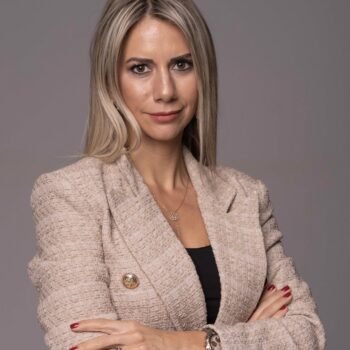
Lisa Bechtold is a global executive in Data & AI, Risk Management and Policy. As Global Head of Group Risk Management at Nestlé S.A., she is globally responsible for managing a complex spectrum of risks to enable the safe and sustainable growth of the organization. Before joining Nestlé, she served as Group Head of AI Policy at Zurich Insurance, and held various leadership roles within Technology & Operations, Digital Risk Management and Corporate Legal. She holds a Ph.D in Law, an LL.M. degree (Berkeley) and completed executive education at MIT CSAIL and Stanford GSB.

Lasha Tabidze is leading the execution of the VEON’s DO1440 and AI1440 strategies. He plays a pivotal role in shaping VEON’s evolution into a digital operator, driving the development of local digital ecosystems, accelerating AI adoption, and strengthening operational performance across all markets.
With more than 16 years of senior leadership experience in telecommunications and digital businesses, Lasha has led major transformation programs and introduced sector-defining innovations. As former CEO of Veon Georgia, he pioneered fully digital customer experiences and launched successful new products that set new industry standards. His career also spans entrepreneurial ventures, combining strategic vision with execution to build impactful digital services.

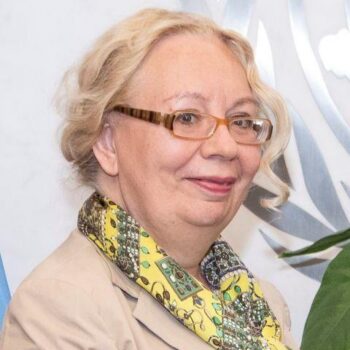
Tatiana Valovaya is the 13th Director-General of the United Nations Office at Geneva (UN Geneva) and the first woman to occupy the position.
Ms. Valovaya has more than 35 years of experience in public service, diplomacy, and journalism. She began her career in 1983 in the editorial office of the Economic Gazette in Moscow, first as a correspondent and later as deputy editor for the Department of World Economy.
In 1989, Ms. Valovaya joined the Permanent Mission of the Union of Soviet Socialist Republics to the European Union (EU) where she served as Third Secretary. She then became Second Secretary of the Permanent Mission of the Russian Federation to the EU, a position she held until 1994. During her diplomatic career, she oversaw issues relating to financial and economic cooperation.
From 1995 to 1997, Ms. Valovaya worked at the Presidential Administration of the Russian Federation, where she was responsible for relations with the statutory bodies of the Commonwealth of Independent States (CIS). She later served as Head of the Monetary and Financial Policy Directorate at the Ministry for the CIS.
From 1999 to 2012, Ms. Valovaya worked in the Government administration of the Russian Federation as Deputy Director and then Director of the Department of International Cooperation.
Ms. Valovaya joined the Eurasian Economic Commission in 2012 as a Member of the Board (Minister) responsible for integration and macro-economic issues. In this capacity, she led on the implementation of integration policies within the Eurasian Economic Commission. She also coordinated the formation processes of the Supreme Eurasian Economic Council, oversaw the negotiation of free trade agreements between the Eurasian Economic Community and third countries, and managed relations with international organizations.
In 1980, Ms. Valovaya graduated from the Faculty of International Economic Relations of the Moscow Finance Institute. She holds the scientific degree of Candidate of Economic Sciences (1st doctoral level scientific degree and the degree of Doctor of Economic Sciences from the Financial Academy under the Government of the Russian Federation).
Ms. Valovaya has written more than 170 scientific and journalistic publications on issues of international monetary and credit relations, European and Eurasian economic integration, and multilateral cooperation in the CIS.
In addition to her mother tongue, Russian, she speaks English and French.

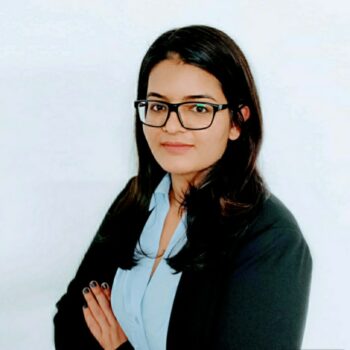
Kavita is co-founder of Nimbora, a women-led climate technology startup building the intelligence layer for water. With a PhD in Environmental Science with experience in water conservation, sustainability, and ecosystem restoration, she brings deep domain expertise to addressing global water challenges. She has also worked at the intersection of environment and community systems, with a focus on inclusive approaches that recognize the role of women in water management and climate resilience.
At Nimbora, Kavita is pioneering the concept of water credits—a market-based approach that enables farmers, industries, and governments to measure, verify, and monetize water savings. By integrating IoT sensors, satellite data, and AI models, her work transforms water efficiency into quantifiable outcomes aligned with frameworks such as Volumetric Water Benefit Accounting (VWBA).
Her focus is on shifting water from an undervalued resource to a measurable and incentivized asset, enabling scalable conservation in water-stressed regions. This approach connects sustainability efforts with financial systems, helping unlock new pathways for climate finance, ESG reporting, and large-scale resource optimization.
Nimbora was recently showcased at the India AI Summit 2026, reflecting growing recognition of its approach to water intelligence and sustainability.

Gianluca Esposito has been Director General of Human Rights and Rule of Law of the Council of Europe since 1 August 2024.
He was previously the Director of the Private Office of the Secretary General and the Deputy Secretary General of the Council of Europe. Prior to this, he served as Executive Secretary of the Group of States against Corruption (GRECO), Head of the Crime Problems Department, and Head of the Equality and Human Dignity Department.
Gianluca started his career at the Council of Europe in 1995 where he was involved in the negotiation of several conventions and other legal instruments, in the areas of nationality, anti-corruption, cybercrime, the efficiency of justice, combating trafficking in human beings, money laundering, terrorism and its financing. From 2005 to 2009, he was an adviser in the Private Office of the Council of Europe’s Secretary General and Deputy Secretary General. Gianluca served as the Council of Europe’s first Ethics Officer.
From 2009 to 2015, Gianluca was as a Senior Counsel in the Legal Department of the International Monetary Fund (IMF) in Washington, DC.

Sister Raffaella Petrini, a member of the Franciscan Sisters of the Eucharist religious congregation, was appointed as Secretary-General of the Governorate of Vatican City State by Pope Francis in November 2021.
A native of Rome, Italy, Sr. Petrini holds a degree in political science from the “Libera Università Internazionale degli Studi Sociali Guido Carli (LUISS)”, a Master of Organizational Behavior degree from the University of Hartford, and a doctorate from the Pontifical University of St. Thomas Aquinas (the Angelicum), where she taught Welfare Economics and Sociology of Economic Processes at the Faculty of Social Sciences. She has served as an official at the Vatican Congregation for the Evangelization of Peoples since 2005. Since 2022 she is also a member of the Dicastery for Bishops and the Administration of the Patrimony of the Apostolic See (APSA)

Helen H. Liang, PhD. is the Founder and Managing Partner of FoundersX Ventures based in Silicon Valley. Her investment focus is on AI-powered tech infrastructure and solutions across industries, from enterprise AI to Fintech and healthcare. She is an early investor in multiple tech unicorns, generating outstanding returns with multiple home runs. Helen is featured on the Wall Street Journal and Business Insider as a pioneering technology investor. She serves as a board director in multiple high growth tech companies. Helen is an invited speaker at TechCrunch and a guest lecturer at Stanford. Her select investments include SpaceX, Jeeves, Salt Security, Kapital, Kontigo, Universal Quantum, Glyphic Bio, Turion Space.

United Nations Secretary-General António Guterres announced on 10 June 2022 the appointment of Amandeep Singh Gill of India as his Envoy on Technology. The Secretary-General wishes to extend his appreciation and gratitude to the Assistant Secretary-General for Policy Coordination and Inter-Agency Affairs, Ms. Maria-Francesca Spatolisano, for her dedication and commitment as Acting Envoy on Technology.
Mr. Gill is the Chief Executive Officer of the International Digital Health and Artificial Intelligence Research Collaborative (I-DAIR) project, based at the Graduate Institute of International and Development Studies, Geneva.
A thought leader on digital technology, he brings to the position a deep knowledge of digital technologies coupled with a solid understanding of how to leverage the digital transformation responsibly and inclusively for progress on the Sustainable Development Goals.
Previously, he was the Executive Director and Co-Lead of the United Nations Secretary-General’s High-Level Panel on Digital Cooperation (2018-2019). In addition to delivering the report of the High-Level Panel on Digital Cooperation, Mr. Gill helped secure high-impact international consensus recommendations on regulating Artificial Intelligence (Al) in lethal autonomous weapon systems in 2017 and 2018, the draft Al ethics recommendation of UNESCO in 2020, and a new international platform on digital health and Al.
Mr. Gill was India’s Ambassador and Permanent Representative to the Conference on Disarmament in Geneva (2016-2018). He joined his country’s Diplomatic Service in 1992 and served in various capacities in disarmament and strategic technologies and international security affairs, with postings in Tehran and Colombo. He was also a visiting scholar at Stanford University.
Mr. Gill holds a PhD in Nuclear Learning in Multilateral Forums from King’s College, London, a Bachelor of Technology in Electronics and Electrical Communications from Panjab University, Chandigarh and an Advanced Diploma in French History and Language from Geneva University. He is fluent in English, French, Hindi and Punjabi.

Hon Dr Tatenda Annastacia Mavetera is Zimbabwe’s Minister of Information Communication Technology, Postal and Courier Services. She is a youthful member of Parliament representing Chikomba West Constituency in Mashonaland East Province in Zimbabwe.
Since her appointment, several projects have been designed to accelerate universal access to Broadband services have been initiated in Zimbabwe.
Before being appointed Minister, Hon Dr Mavetera was a member of the Pan African Parliament, where she was the first Vice President of the Youth Caucus. At the beginning of the 9th Zimbabwean Parliament, she was appointed Assistant Speaker where she chaired Parliament and committees in the house. She is passionate when it comes to youth and women issues in Zimbabwe. She initiated the youth caucus in the 9th Parliament, in a bid to see youth issues being addressed, furthermore, she was a member of the Budget and Justice Committees.
In 2021, she initiated a movement dubbed Young Women 4ED which is designed to ensure that young women are not ignored in all aspects of life.
She holds an Honours Degree in Management and Marketing and a Masters in Strategic Marketing. She is a strategic marketer and information communication expert, who has been in the Information Communication and Transport industry for the past 11 years.
Hon Dr.Tatenda Annastacia was awarded a Doctorate in Humane Letters from the International Women’s University for the contribution she has made to emancipate women, more importantly, young women in Zimbabwe. She is currently studying for another doctorate in Business Leadership at the Midlands State University.

Ayman Essam is a distinguished expert in legal and external affairs, bringing a wealth of experience and a profound commitment to driving strategic excellence across Vodacom’s diverse markets. He is the Chief External Affairs Officer for Vodacom Group.
Ayman’s career began at Vodafone Egypt in 2001, where he spent over a decade in the Legal Department, playing a pivotal role in major acquisitions. He later served as a partner at Zaki Hashem & Partners Law Firm (2010–2012), where he led the firm’s transformation and regional expansion. In 2012, he returned to the telecom sector as Legal & Corporate Affairs Director at Orange Egypt, expanding his expertise in corporate Policy and regulatory compliance. Before joining Vodacom Group, Ayman served as the Director of External Affairs and Legal at Vodafone Egypt since January 2017; During his tenure, he enhanced Vodafone Egypt’s reputation as a reliable digital partner for the government, positioning the company as a standout performer within Vodacom’s portfolio.
In his role, Ayman is responsible for Vodacom Group’s external affairs strategy across its key markets. He reports directly to Shameel Joosub, Vodacom Group CEO, and is a Member of the Vodacom Group Executive Committee.
Ayman’s previous affiliations include:
Previously, Ayman led key functions at Vodafone Egypt, including
Ayman is known for his collaborative and inclusive leadership style. He has a proven track record of fostering a culture of sustainability, integrating social contract considerations into business decisions.
Ayman’s vision aligns closely with Vodacom’s purpose of “connecting for a better future”. His focus on creating a positive impact through technology resonates with the company’s mission to empower people, protect the planet and maintain trust.
Ayman’s deep sector knowledge and proven leadership are valuable assets to Vodacom Group as the company strengthens its engagement with governments, regulators, and partners across the African continent

Rebecca Finlay is CEO at Partnership on AI, a global nonprofit bringing together a cross-sectoral community of over 100 partners in 17 countries to ensure developments in AI advance positive outcomes for people and society. With an influential career at the intersection of technology and society, Rebecca has held leadership roles in civil society, research organizations and industry. Prior to PAI, she founded the AI & Society program at global research organization CIFAR, one of the first international, multistakeholder initiatives on the impact of AI in society. Rebecca’s insights have been featured in books and media including The Financial Times, The Guardian, Politico and Nature Machine Intelligence. She speaks at venues such as SXSW, Wall Street Journal, OECD, FTC, and the UK AI security Summit. She is a Fellow of the American Association for the Advancement of Sciences (AAAS) and was recognized with the Tech Diplomacy Award North America from Women in Tech Global. She lives in Toronto and holds degrees from McGill and the University of Cambridge.

Nicholas Thompson is the CEO of The Atlantic, a position he has held since 2021. During that time, the publication has won three National Magazine Awards for General Excellence, three Pulitzer Prizes, and been named Digiday’s Publisher of the Year. It has also significantly grown revenue, while reaching the highest level of subscribers in its 167-year history. Thompson is also the former editor-in-chief of WIRED, where he built successful subscription and affiliate revenue businesses. While at WIRED he also wrote and edited multiple stories that were cited in front of Congress and one that was turned into an Academy Award winning film. Another of his stories was recently turned into a documentary for HBO Max.
Thompson is a cofounder of The Atavist, a multimedia CMS that was sold to WordPress, and Speakeasy.ai, which was sold to Amplica Labs. He previously served as editor of NewYorker.com. He is a life member at the Council on Foreign Relations, a board member at The National Committee on American Foreign Policy, the author of The Running Ground and The Hawk and the Dove: Paul Nitze, George Kennan, and the History of the Cold War, and a former contributor to CNN and CBS News. He films a daily video on tech policy for Linkedin and has roughly two million followers across social media platforms. Thompson has long been a competitive runner. In 2021, he set the American record for men aged 45 and older in the 50K race, and in 2025, he became the top-ranked runner in the world in his age group for the 50-mile run. He is a Phi Beta Kappa graduate of Stanford where he earned degrees in Earth Systems, Political Science, and Economics.

Pamela Coke-Hamilton, an international trade lawyer and expert with a heart for development, has served as Executive Director of the International Trade Centre (ITC) since October 2020. Her appointment was announced by United Nations Secretary-General António Guterres.
Since joining the organization at the height of the COVID-19 pandemic, Ms. Coke-Hamilton has placed the spotlight on the fact that trade is a human story and that ITC’s work is, at its core, about transforming trade and changing lives. It is about ensuring the smallest, least developed, most vulnerable, hardest-to-reach countries have equal standing as their counterparts in global trade, and that their small businesses are empowered to achieve their full potential.
As ITC Executive Director, she co-chairs the Working Group on Our Common Agenda, the UN Secretary-General’s blueprint for global cooperation to reinvigorate multilateralism and serve as a booster shot for the Sustainable Development Goals. She also serves as a Broadband Commissioner for Sustainable Development – an ITU-led public-private partnership fostering digital cooperation to achieve universal connectivity – and as co-chair of the Broadband Commission Working Group on Connectivity for MSMEs.
Before joining ITC, Ms. Coke-Hamilton served as UNCTAD’s Director of the Division on International Trade and Commodities, having worked extensively with the private sector, government and academia across African, Caribbean and Pacific countries to build their trade-related institutional strength.
She began her career in Jamaica’s Ministry of Foreign Affairs and Foreign Trade, with her first posting at the Permanent Mission of Jamaica in Geneva during the Uruguay Round Negotiations. She later served in Washington, D.C., at various regional institutions, including as Director of Trade, Tourism and Competitiveness at the Organization of American States and as Regional Hub Coordinator for the Caribbean in the Integration and Trade Department of the Inter-American Development Bank.
As Executive Director of the Caribbean Export Development Agency, Ms. Coke-Hamilton was instrumental in fostering the growth of regional businesses, enhancing their capacity to increase exports, attract investment and transform to meet requirements of the new international trading system. Notably, she established the Women Empowered through Export (WE-Xport) platform to address the disadvantages that women-owned businesses face in accessing markets.
She holds a Juris Doctor in Law from Georgetown University and an undergraduate degree in International Relations from the University of the West Indies. She is the founder of the Shridath Ramphal Centre and the Masters in International Trade Policy programme at the University of the West Indies. When she is not working, she enjoys sports, art, history, reading and traveling.

Malik Afegbua is an award-winning Nigerian filmmaker, contemporary artist, designer, and creative technologist recognized globally for his pioneering work at the intersection of storytelling, culture, and technology. Ranked among the top five AI artists in Africa, he is widely regarded as one of the continent’s leading voices shaping the future of creativity and innovation.
He is the Founder and CEO of Slickcity Media and Executive Director of Gener8 and CELS AFRICA, where he leads groundbreaking projects merging African futurism, artificial intelligence, and immersive media to reclaim and reimagine African narratives.
A Salzburg Global Fellow, Malik serves on Nigeria’s Council for Creative Technology Futures and is an Advisory Council Member for Young Leaders in Art and Health. His acclaimed project The Elder Series sparked a global conversation on ageing and representation, featured by major international platforms and institutions.
Actively working to correct bias in the AI and digital space, Malik’s work and philosophy have been the subject of numerous academic studies, featured in art and academic books worldwide, and cited in several students final-year projects across disciplines. He has also contributed to roadmap policies on generative AI, helping shape ethical frameworks for the future of creative technology.
Through film, fashion, and technology, Malik continues to collaborate with global brands, cultural institutions, and development organizations to advance Africa’s creative digital economy and inspire the next generation of storytellers.

Mariya Gabriel is the former Deputy Prime Minister and Minister of Foreign Affairs of Bulgaria (2023–2024). As European Commissioner for Innovation, Research, Culture, Education and Youth (2019–2023), Ms Gabriel led the “1 million talents in deep Tech” initiative and well as the Digital Education action Plan. As European Commissioner in charge of the Digital Economy and Society (2017-2019), she notably spearheaded the European Artificial Intelligence Strategy and the Digital Europe Program. A former Member of the European Parliament (2009-2017), she notably served as a member of the Committee on Civil Liberties, Justice and Home Affairs. She has held both teaching and research positions at the Bordeaux Institute of Political Studies.

Kenneth Cukier is the deputy executive editor at The Economist, following two decades as a foreign correspondent, technology writer and commentary editor.
He is the coauthor of the bestselling book “Big Data” with Viktor Mayer-Schönberger, which was translated into 20 languages and sold 2m copies. His latest book is “Framers” on AI and mental models, with Viktor and Francis de Véricourt.
Kenn was a research fellow at Harvard’s Kennedy School and Oxford’s Saïd Business School. He previously served on the board of directors of International Bridges to Justice and Chatham House. He is a member of the Council on Foreign Relations.

I am a cognitive neuroscientist and dancer based at ETH Zürich, where I lead the Social Brain Sciences (SBS) Lab. Through my research, I use complex social learning paradigms (often involving dance, acrobatics, and music), social interaction manipulations, and robots, in combination with brain imaging and other physiological measures, to explore how our brains and behaviours are shaped by different kinds of experience throughout the lifespan and across cultures.
I served as the Principal Investigator on the European Research Council Starting Grant entitled ‘Social Robots’, which ran from 2016-2024. Further funding of my research has been generously provided by the National Institutes of Health (USA), Humboldt Foundation (Germany), Netherlands Organisation for Scientific Research, Volkswagen Foundation (Germany), Economic and Social Research Council (UK), Ministry of Defense (UK), Marie Curie Actions, Coleg Cymraeg Cenedlaethol (Wales), Leverhulme Trust (UK), the Australian Research Council and the Swiss National Science Foundation.
In addition to my academic activities, I am a member of UNESCO’s International Bioethics Committee, where I have been involved in compiling reports on the Ethical Issues of Neurotechnologies and the Mental Health and Wellbeing of Children and Adolescents in the Digital Environment. I am passionate about raising the profile and participation of women in science, and enthusing the public about scientific research and how the arts and sciences and mutually benefit each other.

Sangbu Kim is the World Bank’s Vice President for Digital Transformation as of September 2024. In this role, he leads efforts to build the foundations for digital economies in developing countries to thrive, enhance digital and data infrastructure, ensure cybersecurity and data privacy for institutions, businesses, and citizens, and advance digital government services.
With over 27 years of experience, Mr. Kim has held senior positions in the Office of the President of the Republic of Korea, where he developed national ICT plans, including e-government, broadband expansion, digital literacy, cybersecurity, and trade policy. He also served in the Korean Communications Commission and the Ministry of Information and Communication. More recently, he was Director of Government Affairs and Public Policy for Consumer Products in the Asia Pacific region at Google. Earlier, he served as Vice President for Corporate Strategy, Investment, and Partnerships at the Korean telecommunications operator LG Uplus.
A South Korean national, Mr. Kim holds a Master of Public Administration from Harvard Kennedy School and a Bachelor of Business Administration from Seoul National University.

Sandra Maximiano, Chairwoman of ANACOM’s Board of Directors since 15 December 2023, holds a PhD in Economics from the University of Amsterdam. She is an Associate Professor of Economics at ISEG – School of Economics & Management, University of Lisbon, where she is co-coordinator of XLAB – Behavioral Research Lab and of the Master’s Degree in Economics program. She is also a Visiting Associate Professor at the Faculty of Law of the University of Coimbra. She was previously an Assistant Professor at Purdue University and a Research Fellow at the University of Chicago in the United States. She has also taught at the Católica Lisbon School of Business & Economics and the Nova School of Business and Economics. Her academic research spans several areas: experimental and behavioral economics, organizational and labor economics, public policy, and information management. Her research explores issues related to social and moral preferences in individual decision making and in strategic and competitive environments, gender differences in economic decisions and the dynamics of information in competitive and co-operative situations. Maximiano primarily uses laboratory and field experiments to study human economic behavior and to collect data. Her work has been published in journals such as Review of Economic Studies, Economic Journal, Experimental Economics and Games and Economic Behavior. He is currently the Associate Editor of the Portuguese Economic Journal. Maximiano is a member of the Supervisory Board, a member of the Advisory Board and a member of SEDES observatories and working groups. Between 2020 and 2024, she was Vice-President of the Data Science Portuguese Association and a member of the ASF Forum for Market Conduct. From 2006 to 2023, she was the author of opinion columns in the Portuguese press, most notably the column “A Economia somos nós” (The Economy is Us) in the Expresso newspaper.

Bernhard is the Director Global Accelerator and Ventures at the United Nations (UN) World Food Programme (WFP). Since he created the Global Accelerator in 2015, it has become one of the Worlds biggest impact startup accelerators, offering 18 annual programmes.
Prior to starting the Accelerator, Bernhard co-founded the award-winning ShareTheMeal app that crowdsources funding for WFP and has delivered over 294 million meals for hungry children worldwide. His previous experience includes creating WFP’s Business Innovation Unit and working as a Project Leader at the Boston Consulting Group (BCG).

Michael Nash is an Irish-American filmmaker and founder of Beverly Hills Productions. Named by Movie Maker Magazine as one of the “Top 10 Movie Makers for the Planet,” he is a Sundance alumnus whose films have won awards worldwide. He is currently partnered with Leonardo DiCaprio on the six-part AI documentary series Raise. In 2024, Nash became the first filmmaker in history to have a documentary placed on the lunar surface when Climate Refugees was included in a lunar time capsule dedicated to arts and humanity. Through Beverly Hills Productions, his team creates work that is both entertaining and educational, reflecting his commitment to storytelling as a force for positive impact.

Kevin Lee is the founder and CEO of EQ4ALL, a B Corp-certified technology company dedicated to advancing digital inclusion. Guided by the mission of “envisioning an equitable society through technology,” Kevin leads the development of AI-driven accessibility solutions, including sign language translation and LLM-based Easy Read conversion for deaf and hard-of-hearing people and individuals with intellectual disabilities or low literacy.

Barbara Mazzolai is Associate Director for Robotics and Director of the Bioinspired Soft Robotics Laboratory at the Istituto Italiano di Tecnologia (IIT), Genoa. From February 2011 to March 2021 she was the Director of the IIT Center for Micro-BioRobotics (CMBR). She graduated in Biology (with Honours) at the University of Pisa, Italy, and received the Ph.D. in Microsystems Engineering from the University of Rome Tor Vergata. She was Deputy Director for the Supervision and Organization of the IIT Centers Network from July 2012 to 2017. From January to July 2017 she was Visiting Faculty at Aerial Robotics Lab, Department of Aeronautics, of Imperial College of London. She is member of the Scientific Advisory Board of the Max Planck Institute for Intelligent Systems (Tübingen and Stuttgart, Germany) and of the Max Planck Queensland Center on extracellular matrix, and member of the Advisory Committee of the Cluster on Living Adaptive and Energy-autonomous Materials Systems – livMatS (Freiburg, Germany). In 2020, she has obtained the Italian National Scientific Qualification of Full Professor in Bioengineering. Her research activity is in the field of bioinspired soft robotics, combining biology and engineering for advancing technological innovation and scientific knowledge. In particular, she focuses her investigations on plants and invertebrate animals. In the field of plant-inspired robotics, she was the Coordinator of the EU FET-Open PLANTOID project, and currently she is the Coordinator of the EU FET-Proactive Projects GrowBot and I-SEED. In May 2021, she has started the European Research Council (ERC) Consolidator Grant “I-Wood”, Forest Intelligence: robotic networks inspired by the Wood Wide Web. She has received various awards for her work, including the Marisa Bellisario Award and the Medal of the Italian Senate. She is author and co-author of more than 260 papers appeared in international journals, books, and conference proceedings. In 2019, she published her book “La Natura Geniale” and in 2021 “Il futuro raccontato dalle piante” (ed. Longanesi).

My name is Victor Daniyan, a passionate entrepreneur and the Founder & CEO of Nearpays, a fintech company redefining the way businesses process payments globally.
My journey began with years of experience working with global tech giants like Nokia and Huawei, where I built a strong foundation in technology, innovation, and strategy. Those experiences shaped my vision to create smarter, more inclusive financial tools — leading to the birth of Nearpays, an AI-driven soft POS solution that empowers merchants and enterprises to accept payments anytime, anywhere.
Under my leadership, Nearpays has grown rapidly — now serving over 60,000 SMEs and individuals, processing 650,000+ monthly transactions, and recently earning the Best Fintech Award at GITEX. We also secured investment from Visa through Plug and Play, a testament to our credibility and innovation.
I’m honored to be a Certified Management Consultant and a Forbes 30 Under 30 nominee, recognitions that reflect my commitment to driving financial inclusion and digital transformation across Africa and beyond.
Every step of my journey has been guided by a single principle — innovation with purpose.

Tomas Lamanauskas is Deputy Secretary-General of the International Telecommunication Union, elected at the ITU Plenipotentiary Conference of 2022, and taking up duties as of January 2023.
His 25 years of experience spans across sectors of telecoms and digital policy, regulation and strategy, stemming from executive level positions in agencies, companies, and organizations across Europe, the Middle East, the Caribbean and the Pacific region.
As Deputy Secretary-General of ITU, Tomas focuses on the financial sustainability and operational excellence of the organization. He also works to raise the digital industry’s ambition in fighting the climate crisis through the Green Digital Action initiative and promotes investments into the digital infrastructure as well as digital resilience through the Digital Infrastructure Investment Initiative and other efforts. Additionally, Tomas contributes to the global efforts to harness the opportunities and mitigate challenges of new technologies, in particular Artificial Intelligence, including through his role as a co-chair of the United Nations Inter-Agency Working Group on AI. He is also playing a key role in ensuring ITU’s support to other UN-wide development and Policy efforts, including through the World Summit of the Information Society process and membership at the Operational Steering Committee of the UN Joint SDG Fund.
Tomas holds Master’s Degrees in Public Administration (Harvard), Leadership and Strategy (London Business School), Telecommunications Regulation and Policy (The University of the West Indies) and Law (Vilnius University).


Mpho Lethoko McNamee is the Group Chief of Corporate Affairs at Telkom Limited, bringing over 20 years of experience in corporate affairs, public policy, and strategic communications across the telecommunications, financial services, healthcare, professional services, and industrial sectors. She has built a career shaping corporate positioning at the intersection of business, society, and regulation.
A recognised voice on digital transformation and the role of business in societal progress, Mpho’s work focuses on the convergence of connectivity, data, and artificial intelligence as drivers of inclusive economic growth. At Telkom, she plays a key role in positioning digital infrastructure as a foundational enabler of South Africa’s and Africa’s AI future.
Her thought leadership bridges academia and practice, including a GIBS (Gordon Institute of Business Science) co-authored white paper on corporate governance and leadership and a University of Johannesburg academic journal publication on stakeholder engagement and shared value creation.
Mpho holds an MBA from GIBS, a Certificate of Management from Harvard Business School, and is currently a candidate at the Cambridge Institute for Sustainability Leadership. Her contributions have been recognised through awards from the International Association of Business Communicators (IABC) and the Trialogue Social Impact Awards.
In addition to her executive role, she has served as a Non-Executive Director of Openserve since 2024 and was appointed to the Board of the National Business Initiative (NBI) in 2026, where she supports efforts to mobilise business leadership for inclusive growth and sustainable development.
Mpho is a passionate advocate for diversity, inclusion, and the advancement of women in communications and technology. Her work reflects a deep commitment to responsible leadership and leveraging innovation to deliver meaningful, long-term impact.

Vijay Karia is an AI sustainability expert, entrepreneur, and global leader in AI for Good, recognized for pioneering the fields of digital sanitation and digital recycling. He is the Co-Founder and CEO of OptiCloud, an AI-driven platform that reduces digital waste, energy consumption, and carbon emissions across cloud and data center infrastructure.
He is a recipient of the United Nations AI for Climate Action Award at COP29 and a 2025 Gusi Peace Prize Laureate and is a frequent speaker on the intersection of artificial intelligence and climate action. Vijay’s work focuses on utilizing AI to enable enterprises and governments to transform digital inefficiency into measurable environmental and economic impact that also support indigenous communities.

Ingrid-Gabriela Hoven is Managing Director of Deutsche Gesellschaft für Internationale Zusammenarbeit (GIZ) GmbH since October 2020. Ms. Hoven is a development economist with more than 30 years of international experience focusing strongly on sustainability, gender and climate issues as well as digital transformation. From 2010 to 2014, she served as World Bank Group Executive Director representing Germany. Prior to this assignment and thereafter, she held various high-level positions in the BMZ (German Federal Ministry for Economic Cooperation and Development). During this time, Ms. Hoven spearheaded new global initiatives such as the NDC Partnership and AFR100, as well as multistakeholder partnerships in the field of climate risk insurance and finance. She is a member of, amongst others, the Supervisory Board of the German Energy Agency (dena), the Board of Trustees of the Max Planck Institute for Tax Law and Public Finance, the Agora Verkehrswende Council and the Insurance Development Forum (IDF) Steering Committee. Ms. Hoven studied economics and political science at Justus-Liebig University Giessen and Université Paris IX/Dauphine. She is alumna of the postgraduate program of the German Development Institute (now IDOS).
Photo: GIZ/ Gaby Gerster

Miguel Panadero is the Acting Director for the United Nations System Staff College (UNSSC), and Deputy Director leading the organisation’s Integrated Business Centre. With over 25 years of xperience in leadership, management, and learning within the international public sector, including various assignments with the UN, the OSCE and the EU. Miguel has a proven track record in fostering knowledge networks and driving organizational change, innovation, and digital transformation. His work is dedicated to achieving agility, operational excellence, and sustainable results aligned with the core values of the United Nations.
A Spanish national, Miguel holds a Master of Laws (LL.M.) from the Universidad de Castilla-La Mancha and has pursued doctoral studies in Regional Analysis at the Universidad de Castilla-La Mancha, the University of Plymouth, and the Université Catholique de Louvain. His extensive background includes roles in multilateral diplomacy, crisis management, policy development, human resources management, and digital transformation projects including deployment of customised ERP, CRM, CMS and LMS solutions.
Miguel’s commitment to professional development and knowledge management has significantly contributed to the UNSSC’s mission of providing world-class learning opportunities for UN staff. His leadership in the Knowledge Centre for Leadership and Management has been instrumental in enhancing the skills and capabilities of UN personnel globally.

Philip Marnick is the General Director of the Telecommunications Regulatory Authority (TRA). He was appointed early January 2022 by the Members of the Board, to assume the position, paving the way for a more effective regulatory framework by continuing the evolution of the telecom sector liberalization.
Mr. Marnick leads the TRA, including the development of consumer protection initiatives and resolving disputes. The TRA develops regulatory rules that promote competition, innovation, and investment in broadband services and facilities, as well as developing a more comprehensive and competitive framework that aligns with international best practices. Ensuring that Bahrain remains a center of innovation and that its telecommunications sector serves everyone while supporting Bahrain’s strategic objectives.
Before assuming his role at the TRA, Philip managed and directed at Ofcom in the UK, where he was the Group Director of Spectrum responsible for all aspects of UK national and international spectrum management – from strategy to delivery including awards, clearance and enforcement.
Mr. Marnick has worked in the telecommunications sector for over 30 years. He has served as a senior executive in technology, operations, and strategy. Mr. Marnick has worked in both start-ups (from inception to sale) and major corporations, in firms such as UK Broadband, O2, Orange, BT, J-Phone in Japan (now Softbank Mobile), Extreme Mobile, and SpinVox (now Nuance).
From analogue to 5G, he has engaged across every mobile generation. Throughout his carrier he has been at the forefront of industry developments – in both fixed and mobile. He has collaborated on the first deployments of mobile networks utilizing new technologies and standards, this has also included innovative products such as the first camera phone and photo messaging service, as well as mobile internet and hosted voice services.

United Nations Secretary-General António Guterres, following the recommendation of the United Nations Joint Staff Pension Board, has appointed Rosemarie McClean of Canada as Pension Benefits Administrator of the United Nations Joint Staff Pension Fund (UNJSPF).
Ms. McClean brings to the position over 32 years of progressively responsible experience in pension administration and management. Currently Chief Operating Officer of the Ontario Teachers’ Pension Plan in Toronto, she manages a sizeable budget and is responsible for operational activities including financial operations for pension administration and investments, information technology, project management and process improvement.
Before this position, Ms. McClean served as Senior Vice-President of Member Services in the Pension Plan and was accountable for all aspects of service delivery to retired and working teachers in Ontario. Named as one of the Most Powerful Women in Canada by the Women’s Executive Network in 2008, she has mentored young leaders both within and outside her organization.
Ms. McClean holds a Master of Business Administration from the Rotman School of Management, University of Toronto, and a Bachelor of Arts in Business Administration and Management from the University of Waterloo. She holds a Certified Public Accountant designation.

Dr. B Ravindran is the founding head of the Wadhwani School of Data Science and AI and the Centre for Responsible AI (CeRAI) at IIT Madras. He has more than three decades of experience in AI research and teaching. His research interest spans responsible AI and deep reinforcement learning. He is a fellow of the Association for the Advancement of AI and of the Indian National Academy of Engineering.
He chaired the committee that drafted the India AI Governance Guidelines, a framework to promote safe, innovative, and responsible AI adoption by balancing innovation with risk mitigation. He was a member of the committee that drafted RBI’s FREE-AI report to guide AI adoption in the financial sector.
He served as the chair of the Safe & Trusted AI Working Group to the India AI Impact Summit 2026, and was recently appointed to the Independent International Scientific Panel on AI by the UN General Assembly

Matthew is a world-renowned authority at the intersection of emerging technology and the creative industries. As a specialist in immersive tech and artificial intelligence, he is not merely predicting the digital future, he is actively engineering it. As a leader, he leads his team in building the vital pathways that connect human creativity with machine intelligence, ensuring that the next era of technology remains profoundly human-centric.
His influence operates at the highest levels of policy and innovation. Matthew represents the creative sector on the UK Government’s Technical Working Group on AI and Copyright and serves as a strategic voice on the Bridge AI Advisory Board for Innovate UK. Recognized by Wired as a “pioneer and a visionary,” and hailed as a “fashion-tech trailblazer” by Draper’s, Matthew sits at the epicenter of the global conversation on how technology is governed, applied, and scaled.

Dr Rachel Adams is the Principal Researcher at Research ICT Africa, where she Directs the AI4D Africa Just AI Centre, is the Director of the African Observatory on Responsible AI and is the Principal Investigator of the Global Index on Responsible AI.
Rachel is a member of the UNESCO Expert Committee for the implementation of the UNESCO Recommendation on the Ethics of Artificial Intelligence, an Associate Fellow at the Leverhulme Centre for the Future of Intelligence at the University of Cambridge, a Research Associate with the Information Law and Policy Centre at the University of London, and a Research Associate of the Tayarisha: African Centre of Excellence on Digital Policy at the University of Witwatersrand, Johannesburg. Rachel was previously a Chief Research Specialist at the Human Sciences Research Council, South Africa.
Rachel has published widely in areas such as AI and society, gender and AI, transparency, open data, and data protection.

Abdulbaset Albaour is a senior digital transformation leader with over a decade of experience advancing digital Policy in Libya. As Chairman of GATI and the National Committee for Digital Transformation, he has played a central role in shaping the country’s digital future by formulating national strategies, promoting inter-agency collaboration, and aligning local efforts with global digital Policy standards.
He holds a Master’s degree in Information Technology from Tun Abdul Razak University, Malaysia, and has led the design and implementation of foundational national policies and frameworks, including:
In addition to his leadership in government, Mr. Albaour has served as a member of the General Assembly of the Libyan Holding Company for Telecommunications, Post, and Information Technology, and as an Assistant Professor at the Faculty of Information Technology, Misrata University.
His contributions have significantly strengthened Libya’s performance in international benchmarks such as the UN E-Government Development Index (EGDI) and the Global Cybersecurity Index (GCI). He is also a committed member of the Libyan Cybersecurity Foundation and the Libyan Telemedicine Association.
In recognition of his leadership and impact, Mr. Albaour was nominated for the 2025 UN–Portugal Digital Fellowship, a testament to his dedication to digital innovation, public sector modernization, and inclusive, citizen-centered e-Policy in Libya.

Entered Xi’an Jiaotong University at the age of 15, holding degrees in engineering, economics and financial economics. Former employee of Procter & Gamble and President of Dreame China, he led a team of over 1,500 staff and drove more than $8 billion in revenue for the home robotics business.

Mustafa Yasin Sheikh is the Director General of the National Communications Authority of Somalia (NCA) since 19th November 2022. Prior to this nomination, he worked as the Deputy Director General of the National Communications Authority of Somalia (NCA) and a Member of the Board of Directors. Mr. Mustafa served as the Executive Director of the Somalia Network Information Centre (SONIC) – the Somalia DotSO (.so) ccTLD registry operator – between 2018 – 2021. Mustafa also worked as a senior policy advisor at the Ministry of Communications and Technology between 2017 and 2018. With over 15 years of experience in both private and public service management and leadership, Mustafa specialized in Internet Policy, regulatory and policy analysis, Public-Private Partnership, and competition economics. During his years of work, he participated in several specialized workshops, meetings, forums, and associations worldwide.

Michele Malejki currently serves as Global Head of Social Impact at HP Inc. and Executive Director of the HP Foundation. Recognized for her dedication to fostering positive change through both business and philanthropy initiatives, Michele oversees HP Foundation and HP Inc. strategic programs designed to advance digital inclusion and equip disconnected communities for the future of work. Michele sees technology as a great equalizer and is determined to harness HP’s unique capabilities and resources to close the global digital divide and power the future of work. In 2023, Michele and her team received the inaugural TIME “Team of the Year” award for their unwavering commitment to social impact.
In addition to her role at HP, Michele has worked with several boards including serving on the UN Women’s Global Innovation Coalition for Change, the President’s Council of Cornell Women, the Global Partnership for Education Private Sector Advisory Group, and the Save the Children’s Council Action Team Gender Equality.
Michele holds an MSc in Sustainable Development from the School of Oriental and African Studies (SOAS), University of London, and a BSc in Industrial and Labor Relations from Cornell University.

Brandon Andrews is CEO of The Inexorable and co-founder of Gauge; an AI-driven mobile market research platform connecting brands to consumers and influencers to identify opportunities and avoid mistakes. He has done casting for ABC’s Shark Tank and other business shows on TV for a decade; meeting thousands of entrepreneurs each year. Named a Global Innovation Fellow by the U.S. Department of State, he has traveled the world speaking and hosting events on entrepreneurship and innovation.
He helped build and hosted the inaugural CGI Entrepreneurship Greenhouse at Clinton Global Initiative. He has also headlined entrepreneurship programming around the world including Bishkek, Kyrgyzstan; Dushanbe, Tajikistan; the Unleash+ pitch competition in Mysore, India; and four-part artificial intelligence event series in Kampala, Uganda.
Working with AI for Good he hosts Innovation Factory pitch competitions around the world. He also created and hosts the Impact with AI podcast engaging entrepreneurs using AI to support the United Nations Sustainable Development Goals.
He managed the #TechtoWealth Tour with DJ Young Guru. Designed to get 10K people of color coding, #TechtoWealth brought tech events to WeWork locations in the final six OTRII Tour cities + BET Hip Hop Awards with $1M in coding scholarships available from Opportunity Hub and Flatiron School.
Previously, Brandon empowered public affairs, technology, and real estate clients at MWWPR. He spent 5 years in the United States Senate where he handled technology, small business, and defense policy.
He is Chairman of the DC Commission on National and Community Service. A former fashion model, he serves on the DC Commission on Fashion, Arts, and Events and works with fashion/beauty entrepreneurs.
He provides commentary on policy, politics, business and tech on TV, radio, and the web.
A former Division-1 track athlete, Brandon is a graduate of Oral Roberts University.

The Directorate of Technical Cooperation and Sustainable Industrial Development oversees the Organization’s normative contribution to the Sustainable Development Goals, in addition to supporting and advancing the application of strategies and interventions for sustainable industrial development in the environment, energy, and SME areas. Advancing competitiveness and job creation are also key impact dimensions for the Directorate, in addition to the advancement of digitalization and artificial intelligence. Mr Zou is also the Director General’s Special Representative for the G77 and China.
At UNIDO since 2013, Zou is the architect of UNIDO’s Programme for Country Partnership, and has guided the Organization’s field and strategic engagements.
Before joining UNIDO, he performed multiple roles, including as Deputy Director General of International Department at the Chinese Ministry of Finance, Alternate to the Chinese Executive Director at the World Bank, and Global Environmental Facility Operational Focal Point for China.
Zou holds a Ph.D. in Economics from China’s Ministry of Finance Graduate School, Research Institute for Fiscal Science.

Dr. Jingbo Huang is the Director of the United Nations University Institute in Macau (UNU Macau). Under her leadership, UNU Macau has developed a strong portfolio in education, training and policy relevant research in digital technologies and SDGs, particularly in AI for SDGs since 2018. Recently she led the institute to successfully organize World Data Forum Satellite Event in 2023 and UNU Macau AI conference in 2024 with 500+ participants from 40+ countries, and established the UNU Global AI Network. She has been working in the UN system for 20+ years, holding various managerial positions in the UN Secretariat, UNDP, UNESCO, UNSSC and UNU. Jingbo received her Doctor of Education degree from Columbia University, and bachelors from Peking University.

Pranav Vempati is a thought leader and global speaker known for his insightful contributions to the technology sector. As the Founder and CEO of Makers Hive, Pranav is dedicated to creating innovative technologies that are both advanced and accessible, with a strong commitment to driving positive social change.
Pranav’s journey was significantly shaped by two esteemed mentors: the Father of the Green Revolution, Bharata Ratna Dr. M. S. Swaminathan, and Padma Bhushan Dr. T. Ramasami. Their guidance inspired Pranav to leverage technology to address pressing societal challenges. This mentorship led him to focus on developing solutions that empower underserved communities, ensuring that innovation benefits those who need it most.
In 2018, Pranav founded Makers Hive with the mission to make cutting-edge technology accessible to everyone. The company’s first product, KalArm, is India’s first and the world’s most affordable bionic hand. This groundbreaking innovation has significantly improved the lives of many by providing a functional, cost-effective solution for individuals with limb loss.
Pranav and Makers Hive have received several prestigious accolades, including Forbes 30 Under 30 Asia, Forbes Asia 100 to Watch, GQ India’s 7 Most Influential Young Indians , and he was shortlisted for One Young World Entrepreneur of the Year Award.
As a global thought leader and speaker, Pranav continues to advocate for the transformative power of technology in driving social progress. Under his leadership, Makers Hive is committed to developing affordable, innovative solutions that address deep-rooted societal challenges, ensuring that no one is left behind in the pursuit of a better future. His work exemplifies how technology can uplift and empower, making a profound impact on both industry and society as a whole.

Serves as the co-chair of the African Union Science Technology Commission ASRIC/ASTR Council on 4IR. She is a visionary figure in the advancement of responsible AI, dedicated to harnessing technology for good and unlocking humanity’s potential. Recognised as a Top 10 Leader advancing AI globally. A true full-stack human Amb. Lavina combines her expertise in psychology, technology, and economics to bring a unique and insightful perspective to AI development.
Her dedication and achievements are evident in her numerous accolades including top 10 leaders shaping AI. A futurist who’s vision is to accelerate the world’s augmentation of data by creating a more intelligent tomorrow through the footprints of collective humane knowledge. She’s not just a leader; she’s an inspiration, earning the title #aiMOM for fostering responsible development for a better tomorrow.

Seizo Onoe took office as Director of the Telecommunication Standardization Bureau (TSB) at the International Telecommunication Union (ITU) on 1 January 2023.
Before his election as TSB Director by ITU Member States, he completed an over 30-year career with Japanese mobile operator NTT DOCOMO. In 2021, he became Executive Vice President and Chief Standardization Strategy Officer for the Nippon Telegraph and Telephone (NTT) Corporation and a Fellow of NTT DOCOMO, INC. From 2017, he served as NTT DOCOMO’s Chief Technology Architect and President of its subsidiary DOCOMO Technology.
Between 2012 and 2017, he served as NTT DOCOMO’s Chief Technology Officer and Executive Vice President, a Member of the Board of Directors, and Managing Director of R&D Innovation Division. Earlier, he served as Senior Vice President and Managing Director of NTT DOCOMO’s R&D Strategy Department and Managing Director of the company’s Radio Network Development Department.
As TSB Director, he heads the part of ITU responsible for the coordination of technical standards and collaborative standardization processes that enable the interconnection and interoperability of information and communication technologies (ICTs) worldwide.
Mr Onoe is committed to facilitating open and inclusive standardization processes, along with promoting digital technologies to address global issues, building a new ecosystem that reflects evolving technologies, and strengthening cooperation and collaboration in ICT standardization worldwide.
Known in the industry as “the father of LTE” (Long-Term Evolution), he helped upgrade the wireless broadband standard for mobile devices and networks. He now aims for global outreach to bridge standardization gaps, deliver the benefits of technology widely and speedily, and ensure meaningful and affordable broadband access for everyone.
Mr Onoe holds a Master’s degree in electronics from the Kyoto University Graduate School of Engineering.

Dr Bilel Jamoussi, a distinguished engineer and diplomat, is the Deputy Director of ITU Telecommunication Standardization Bureau and Chief, Study Groups & Policy Department (SPD) in Geneva, Switzerland.
His primary mission is to establish the international standards essential for ensuring global telecommunications and ICT interoperability, promote universal, meaningful connectivity and champion sustainable digital transformation.
Key achievements under his tenure have been important new standards, ensuring increased industry engagement, bolstering cooperation with other standardization bodies, as well as leading in emerging tech discussions and building strategic partnerships.
Before 2010, he held executive roles, including Director of Standards for Nortel, and contributed to over 90 international standards bodies. With a PhD in Computer Engineering from Pennsylvania State University, he is an IEEE Senior Member and has served on the IEEESA Board of Governors. A key voice in the global ICT arena, he is a regular keynote speaker at events like the Global Cybersecurity Forum and is frequently interviewed by top media outlets.
Fluent in Arabic, French, and English, with knowledge in Spanish and German, Bilel’s global perspective has been shaped by living and working in Tunisia, Canada, the USA, and Switzerland.

Anita V.M. Erskine, MCM is a globally acclaimed strategic communications leader and Master of Ceremonies specializing in high-level convenings where policy, business, innovation, and emerging technologies — including AI, climate action, digital transformation, entrepreneurship, and inclusive economic development — intersect to shape global dialogue and drive impact. She is trusted by the United Nations system, the World Bank Group, the African Union, the European Union, and governments to convene and lead conversations on critical development priorities, and by multinational organizations including MTN Group, Nestlé S.A., and Equatorial Coca-Cola Bottling Company (ECCBC) to steer executive leadership engagements that influence strategy and outcomes worldwide.
She serves as Executive Director of Erskine Global Communications, a strategic communications and advisory firm focused on translating complex global challenges into human-centred narratives that drive alignment and action across institutions and industries.
Anita holds a Master’s degree in Communications Management from McMaster University (Canada) and a Bachelor of Arts in Cultural Studies. She has been recognized among the 100 Most Influential Women in Africa, the Top 100 Career Women Africa, and the 500 Most Influential Africans globally, and is also recognized among the Top Influential Masters of Ceremonies in Africa, honoring excellence in international event hosting and moderation.

Tomas is an entrepreneur, educator, keynote speaker, and brand expert who helps founders fix their brands and scale internationally.
As the CEO and Co-Owner of the international branding studio GoBigname, he works with startups, small businesses, and corporates to help their brands grow globally. His work earned him a spot on the Forbes 30 Under 30 list.
GoBigname is Naming, Branding and Web Design Studio helping Founders and Marketers of startups, SMEs on their journey to become global players: Slido, a Saas startup with more than 45 million users acquired by Cisco, Exponea acquired by Bloomreach now valued over $2.2 billion, Berlin Brands Group valued over $1,2 billion, Rezztek – technology startup brand which became officialy licensed product by NHL in 2023 and license provider for global sport brand HEAD.
Over the past 12 years, the GoBigname team has created more than 300 brand names, brand strategies, consistent & distinctive brand identities and websites.
Tomas has been sharing his knowledge through masterclasses and keynotes for organizations and companies all over Europe. He’s worked with the Swiss Government and was part of the Google Certified Trainers program, showing his passion for helping others succeed in business and branding.


Based in Geneva, Switzerland, Frederic Werner is a recognized leader at the intersection of artificial intelligence, technology, and global development. As the Chief of Strategic Engagement at ITU, the United Nations’ specialized agency for Digital Technologies, and Chief of Strategy and Operations for AI for Good, Frederic drives initiatives that shape the future of AI’s role in solving humanity’s greatest challenges.
Frederic is a co-creator of the United Nations AI for Good Global Summit, a landmark platform connecting AI innovators with real-world problem owners to collectively advance the Sustainable Development Goals (SDGs). Under his stewardship, AI for Good has become a global hub for innovation, collaboration, and actionable solutions, redefining how AI is used for social good.
At ITU, Frederic leads transformative strategic initiatives, driving global collaboration in digital transformation and standards development to address critical challenges. His leadership ensures the organization remains a leader in setting international standards and leveraging AI to advance the SDGs.
Before joining ITU, Frederic held pivotal roles that shaped global ICT collaboration. As Communications & Program Director of ETIS in Brussels, he established a pan-European network of CIOs and cybersecurity leaders. Earlier, as Head of Marketing and Communications at the European Organization for Conformity Assessment, he spearheaded capacity-building projects with the European Commission, strengthening ICT infrastructures in EU candidate countries.
A recognized figure in the AI sphere, Frederic is a regular keynote speaker and panellist at global tech and AI events, such as Davos, Vivatech, SXSW, World AI Festival Cannes, AI Africa Expo, World AI Summit Amsterdam, AWS Reinvent and GITEX to name a few. His insights on AI capacity building, Policy and standards have led to numerous interviews and features across international media, books, and podcasts.
Academically, Frederic holds a B.A. in Business & Human Resources Management with a Communications Minor from Vrije Universiteit Brussel, an MBA in International Business from United Business Institutes, a Technical MBA in Telecoms Technology from Informa Telecoms, and a certificate from the MIT Sloan School of Management on AI’s Business Strategy Implications.
Having lived in diverse countries such as Belgium, Senegal, the United Kingdom, the Philippines, Austria, Turkey, Hungary, and Switzerland, Frederic brings a unique and global perspective to his partnerships and collaborations.

Apoorva Shah is Vice President of Product Management at Wiley, where he leads product management and user experience, building platforms and tools for researchers.
Apoorva began his career as a researcher, publishing data‑driven research at the American Enterprise Institute (AEI) before spending more than a decade at Advisory Board Company / EAB. There, he built enterprise SaaS and analytics platforms across healthcare and higher education, led the acquisition and integration of RapidInsight, and scaled a higher‑education analytics product from early revenue to broad market adoption.
At Wiley, Apoorva is leading AI Gateway, a multi‑publisher platform that connects trusted scholarly content with AI tools such as Claude and Perplexity, enabling researchers to work where they already are while maintaining attribution, quality, and publisher sovereignty.

Moriba Jah is an astrodynamicist, space environmentalist, and decision intelligence pioneer advancing a new foundation for how AI reasons under uncertainty. He is a full professor of Aerospace Engineering & Engineering Mechanics at the University of Texas at Austin, leading the Jah Decision Intelligence Group (JDIG) and the co-founder and Chief Scientist of GaiaVerse and Privateer Space.
Jah’s early work focused on improving transparency and accountability in Earth orbit, developing methods to identify admissible orbital regions and reconcile inconsistent space object catalogs. His contributions underpin platforms such as ASTRIAGraph and Wayfinder, which integrate global data sources to provide open, verifiable insight into the space environment.
Building on this foundation, Jah now leads the development of a broader epistemic framework for AI, introducing the Theory of Epistemic Abductive Geometry (TEAG). This approach replaces overconfident probabilistic inference with possibilistic reasoning that explicitly represents ignorance, enabling AI systems to distinguish between what is supported by evidence and what remains unknown.
Through GaiaVerse, Jah applies these principles across domains including climate risk, public health, human rights, and conflict analysis, creating agentic AI systems that produce auditable, bounded, and traceable outputs. His work emphasizes that trustworthy AI must be able to say “I don’t know,” and to justify what it claims with explicit evidence and uncertainty bounds.
Jah is a leading advocate for “space environmentalism,” framing Earth’s orbital domain as a finite, shared ecosystem requiring stewardship. His work bridges science, policy, and ethics, advancing a vision of AI that supports accountability, transparency, and equitable decision-making at planetary scale.
He is a MacArthur Fellowship recipient, a TED Fellows member, a National Geographic Society Explorer, and an International Fellow of the Royal Society of Edinburgh.

Strategic leader in digital government transformation and capability building, with extensive experience advising governments on digital skills, innovation policy, and organisational readiness. Proven ability to lead cross-agency initiatives, develop digital capability frameworks, and translate emerging technology trends into actionable public sector strategies.

Manoj Sanker is the Co-founder and CEO of NemoCare Wellness, a pioneering med-tech enterprise dedicated to ending preventable neonatal mortality through AI-driven precision healthcare. An alumnus of PES University(India) and a Fellow at Center for Healthcare Entrepreneurship at IIT Hyderabad, Manoj has spent nearly a decade bridging the gap between advanced engineering and global clinical impact.
As a budding entrepreneur in the healthcare and med-tech space, Manoj’s expertise lies in smart wearables combined with machine learning and user experience design. He is the technical architect of NemoCare Raksha, an IoT-enabled smart wearable backed by a next-generation AI analytics platform for predictive distress modeling, utilizing deep-learning algorithms to detect subtle physiological shifts ,hours before clinical symptoms appear.
His work gained national prominence on Shark Tank India Season 3, where he secured an investment to scale his “Made in India” technology globally and is backed by global funding agencies like the Bill & Melinda Gates Foundation,BIRAC(DBT,Govt Of India initiative),IKP Knowledge Park, Axilor Ventures ,MeitY’s Startup Hub(The Ministry of Electronics and Information Technology (MeitY), under Government of India) , Department of Science and Technology(Govt. of India),Google, Qualcomm, JICA(Japan) and Indian Council of Medical Research (ICMR)
Manoj is a LIF Global 2025 Fellowship Awardee by the Royal Academy of Engineering(UK),and is a staunch practitioner of design thinking. He aspires to become a global product leader, disrupting the healthcare industry through innovative product development that serves the world’s most vulnerable infants.

Mr. Natsume has been the Assistant Director General, Infrastructure and Platforms Sector, World Intellectual Property Organization (WIPO) since January 2021.
His portfolio includes frontier technologies such as AI, databases, classifications, standards, digital solutions for intellectual property offices, as well as customer experience, marketing, and digital engagement. Prior to his current role, he was the Senior Director of PCT (Patent Cooperation Treaty) Legal and International Affairs Department, the Director of PCT International Cooperation Division, as well as the Head of the WIPO Japan Office.
Before joining WIPO, he served with the Ministry of Foreign Affairs of Japan, the Permanent Mission of Japan to Geneva, and at the Japan Patent Office, where he played a leading role in various international intellectual property negotiations and debates including WIPO, WTO/TRIPS, WHO and CBD. At the Japan Patent Office, he also worked as a patent examiner specializing in image and information processing.
He was also a visiting researcher at California Institute of Technology.

Leonard Rosenthol is the Senior Principal Architect for PDF & the Document Cloud at Adobe, having been involved with PDF technology for more than 20 years. He represents Adobe on various international standards bodies including the ISO (where he is the Project Editor for PDF/A, PDF/X and PDF/E), W3C and ETSI/ESI (where he authored the PDF Electronic Signature standard, PAdES).
Prior to re-joining Adobe in 2006, Leonard worked as the Director of Software Development for Appligent, and the Chief Innovation Officer for Apago, while also running the successful consulting business of PDF Sages. Before becoming involved in PDF, Leonard was the Director of Advanced Technology for Aladdin Systems and was responsible for the development of the StuffIt line of products.


Alexandra Hirzel is a MedTech entrepreneur, investor, and board advisor specializing in the deployment of AI in regulated healthcare environments. She has founded and exited several companies, and now advises healthcare executives, investors, and AI-driven organizations on Policy, scale, and real-world implementation across Europe and the U.S. She has served as a mentor and judge for UN AI for Good for over five years and has previously delivered both online and in-person masterclasses within the programme. Alexandra is a recent Women Hidden Figures Awards Winner and a 100 Women in Tech Nominee, recognized for leadership at the intersection of healthcare, technology, and impact.

Josh Jarrett is an experienced entrepreneur and executive at the intersection of technology, education, and research. He is the Senior Vice President & General Manager, AI Growth at Wiley, where he leads the development of new AI offerings across licensing, applications, and agents.
Previously, Josh co‑founded two companies in the education‑to‑employment space (InStride and Koru) and was a founder of the higher education program at the Bill & Melinda Gates Foundation. He also serves as Chair of the SkillUp Coalition, a nonprofit initiative focused on helping workers in low‑wage roles reskill and transition into high‑growth industries.
Josh is a graduate of Dartmouth College and holds a graduate degree in business from Harvard Business School.

United Nations Secretary-General António Guterres announced on 26 July 2023 the appointment of Tatiana Molcean of the Republic of Moldova as the Executive Secretary of UNECE. She took office on 1 September 2023. Ms. Molcean brings to the position twenty years of experience in the public sector with extensive international cooperation and development experience, and in-depth knowledge and expertise across the entire UNECE membership. Prior to her appointment, she was the Permanent Representative of the Republic of Moldova to the United Nations Office, World Trade Organization and other international organizations in Geneva (since 2020). Ms. Molcean served as State Secretary and Deputy Minister for Multilateral and Bilateral Cooperation in the Ministry of Foreign Affairs and European Integration (2017-2020), Deputy Director General for European Integration and Head of the Division for Economic and Sector Cooperation with the European Union (2012-2017) and Head of the Division for Economic Cooperation and Sectorial Coordination at the General Directorate for European Integration (2004-2008). A career diplomat, she has also served as Chargé d’Affaires at the Embassy of the Republic of Moldova to Sweden (2008-2011). Ms. Molcean holds a LLM Degree in Law from the Faculty of International Law at Moldova State University and completed the Multilateral Diplomacy Program from the Graduate Institute of Geneva, Switzerland. She is fluent in Romanian, English and Russian, with advanced knowledge of French.

Since January 2025 to April 2026, he led KT’s Responsible AI Center, establishing company-wide Responsible AI policies and governance structures and implementing evaluation methodologies and technical safeguards for AI systems. He has also contributed to the open-source community by releasing SafetyGuard, a guardrail framework designed to enhance safety and reliability in generative AI systems. Previously, he served as Vice President of AI Technology Collaboration and Responsible AI at KT from 2023 to 2024. In this role, he led the development of generative AI strategies based on market and domain analysis, while managing collaborative projects with global AI companies and startups to accelerate AI technology and service innovation. From 2011 to 2022, Mr. Park was Director of Technology Strategy at KT, where he was responsible for developing long-term technology strategies and service plans for key initiatives including IPTV, 5G networks, and edge computing. He also led analyses of emerging technologies to guide the company’s R&D directions. His work focuses on bridging advanced technologies with responsible governance, particularly in generative AI, trustworthy AI systems, and telecommunications innovation.

Carlos Madjri SANVEE (Togo) is Secretary General of the World Alliance of YMCAs. He took up the role in January 2019, having been elected during the 19th YMCA World Council in Chiang Mai, Thailand in July 2018. He is the first African Secretary General of World YMCA.
In his current role, he led the response to the Covid crisis from early 2020 by launching YMCA wide efforts for Movements to share and help each other, notably launching the YMCA Covid Solidarity Fund. Putting young people at the centre of initiating and leading change, he created the vision for the Youth Led Solutions Initiative, a series of Summits and projects launched in 2021 to empower young people with knowledge, networks and resources to lead change in their communities. He has been at the forefront of developing new partnerships with the public, private and ‘third’ (civil society) sectors, especially with the ‘Big 6’ youth empowerment organisations and the WHO and UN, in launching the Global Youth Mobilization in 2020-2022. Building on the three part Covid response strategy of ‘Resilience, Recovery and Reimagination’, he spearheaded a Movement-wide process of conversation and consultation which led to the adoption of YMCA Vision 2030 at the 20th YMCA World Council in Aarhus, Denmark in July 2022. The vision puts young people at the centre of the YMCA’s mission, a direction he had promoted across his different roles since 2010.
His priority in his second term of office – from 2022 – is to see Vision 2030 implemented across the Movement, addressing the 12 Strategic Goals of the four ‘Pillars of Impact’: Community Wellbeing, Meaningful Work, Sustainable Planet, and Just World. World YMCA’s first duty is to add value to its members. 2023 and 2024 saw the launch of two of the Vision 2030 Pillars (including a global survey on young people’s hopes and fears in the world of work), as well as the support functions for Strategic Alignment and Movement Strengthening, Learning, Innovation and Impact, and Resource Development and Partnerships. He also became Chair of the ‘Big 6’ as it launched a second phase of the Global Youth Mobilization with EU funding. In January 2025, his term was extended until December 2028.
Carlos Sanvee has been with the YMCA Movement for 50 years. He joined YMCA Togo as a teenage volunteer in 1973, and became a staff member in 1987 as a youth worker and community organiser. He ultimately became the deputy National General Secretary.
He first joined World YMCA in January 1999 as Executive for Finance & Administration, a position he held until 2007. During this time he was secretary of the-then Youth Committee within the Executive Committee, and strove to integrate young people at all levels of the Committee, and not in separate committees. He then worked as General Secretary of the Africa Alliance of YMCAs from 2007 until 2018, when he led the African YMCA Movements in articulating their collective identity with a shared vision around the ‘African Renaissance’. In this period he developed the Africa-wide YMCA ‘From Subject to Citizen’ programme. From 2011 to 2018, he was also acting as a part-time Special Advisor to the Secretary General of the World YMCAs.
He holds a first degree in Physics and Chemistry from Université du Bénin in Togo, and a “Diplôme des Hautes études de pratiques sociales (DHEPS)” from Université Lyon Lumière II, France.

Tony Maciulis is an award-winning media executive whose career has spanned network television, digital content, and thought leadership initiatives for some of the world’s top brands.
He is currently Chief Content Officer of GZERO Media, a subsidiary of Eurasia Group. In his role, he leads a team of creators producing the US public television program GZERO World with Ian Bremmer as well as podcasts and daily newsletters and serves as executive producer and host of the series Global Stage.
Prior to GZERO, Tony was Katie Couric’s longtime producer and Head of News Video at Yahoo.

The United Nations Secretary-General António Guterres appointed Mr. Sameer Chauhan as the Director of the United Nations International Computing Centre (UNICC) on 1 December 2019.
As the head of the organization, he has the responsibility to lead all aspects of UNICC’s strategy and operations, to facilitate the provision of services to more than 100 Clients and Partner Organizations, to establish the UNICC strategy, to develop a biennial business plan and budget and to implement the approved plan. He is accountable to the UNICC Management Committee (MC) that governs the organization and represents the entire United Nations system.
Mr. Chauhan effectively led a strategic transformation of UNICC with the advice and backing of his board. This has allowed UNICC to become the preferred strategic digital partner for the whole UN system. The organization has successfully built capabilities in areas such as cybersecurity, data, AI, crypto and automation, as well as in key business areas like treasury, finance and HR. He started his career at UNICC in August 2015 in New York as Chief of Clients and Projects.
Previous Experience
Mr. Chauhan has over twenty years of prior experience in the public and private sectors and an educational background in Computer Engineering and Computer Science. Before UNICC, Mr. Chauhan was the Head of Knowledge Management and Digital Marketing IT for Deutsche Bank (DB) Asset and Wealth Management. He played several roles at DB over eight years, including as the COO for an IT division of approximately 800 staff and as the product manager responsible for a multi-billion-dollar trading platform. He also spent several years as a consultant for Deloitte, working across various industries including financial services, public sector, telecom, manufacturing and software.

Tech Maestro, the youngest CEO of a K-Unicorn company, Chief Happiness Officer (CHO) of Galaxy Corporation, and the youngest attendee at the APEC 2025 Leaders’ Dinner – these are the titles that describe Choi Yong-ho, CEO of Galaxy Corporation. Choi Yong-ho is a recipient of the Presidential Citation for Distinguished Services at the 2025 APEC Leaders’ Meeting, the Global Content Producer Award at the Asia Model Festival, the Ministry of SMEs and Startups Award at the Korea SME Regulatory Innovation Awards, and the Grand Prize in the Metaverse Enterprise category at the Korea Innovation Management Brand Award.
After traveling alone to over 40 countries in his teens, Choi Yong-ho published a book titled Dreams Come True, through which he shared his ideas and attracted supporters before entering the startup arena. He later brought together like-minded peers and participated in the International Creativity Olympiad sponsored by NASA, where they placed 8th.
After attending university, he explored the potential across 100 different business ideas with peers, and in his twenties, boldly ventured into a Hallyu (Korean Wave) startup. He founded K-culture and became the publisher of KBS KWAVE, a Hallyu magazine distributed worldwide. During this period, he popularized the ‘K-‘ branding series and became a leading example of youth entrepreneurship.
After experiencing a business failure in his early thirties, he set out to pursue a venture aimed at realizing boundless imagination through AI-powered metaverse content designed to bring happiness to humanity. He founded the AI enter-tech company Galaxy Corporation and achieved global success with Physical 100 Seasons 1 and 2.
Global K-culture artists – including G-DRAGON, leader of BIGBANG; Song Kang-ho, lead actor in the film Parasite; Taemin of SHINee; and Kim Jong-kook of Turbo – are affiliated with Galaxy Corporation under the leadership of Choi Yong-ho. He is currently engaged in combining these Super IPs with technology.
He also serves as a specially appointed professor at Yonsei University College of Arts and collaborates with KAIST on industry-academia initiatives, contributing to the development of talent in the art-science sector.

Bolor-Erdene Battsengel is a young dynamic leader with over a decade of experience in leading successful large-scale digital transformation initiatives, harnessing AI and technological advancement for public policy and global-scale project. Having worked in international organizations, including the World Bank and UN, governments and academia, she now helps international tech companies with strategic engagement, government relations and AI policies.
As the former founding Vice Minister of Digital Development of Mongolia, she led the country’s digital transformation, crafting a comprehensive 5-year plan “Digital Nation” policy. She is globally recognised by successfully leading E-Mongolia project which digitalized over 1,500 government services, help reducing red-tape bureaucracy and corruption. Coming from countryside of Mongolia, she founded Girls Code NGO to empower young women and girls from disadvantaged communities to learn STEM education and coding skills.

Mr. Türk is the current United Nations High Commissioner for Human Rights. He took up his official functions as High Commissioner on 17 October 2022.
He has devoted his long and distinguished career to advancing universal human rights, notably the international protection of some of the world’s most vulnerable people – refugees and stateless persons.
Prior to this, Mr. Türk was the Under-Secretary-General for Policy in the Executive Office of the United Nations Secretary-General where he coordinated global policy work. He also ensured UN system-wide coordination in the follow-up to the Secretary-General’s “Call to Action for Human Rights” and his report, Our Common Agenda, which sets out a vision to tackle the world’s interconnected challenges on foundations of trust, solidarity and human rights. He previously served as Assistant Secretary-General for Strategic Coordination in the Executive Office of the Secretary-General (2019-2021).
As Assistant High Commissioner for Protection in the Office of the United Nations High Commissioner for Refugees (UNHCR) in Geneva (2015-2019), Mr. Türk played a key role in the development of the landmark Global Compact on Refugees.
Over the course of his career, he held a number of key positions including at UNHCR headquarters where he served as Director of the Division of International Protection (2009-2015); Director of Organizational Development and Management (2008-2009); and Chief of Section, Protection Policy and Legal Advice (2000-2004). Mr. Türk also served UNHCR around the world, including as Representative in Malaysia; Assistant Chief of Mission in Kosovo and in Bosnia and Herzegovina, respectively; Regional Protection Coordinator in the Democratic Republic of the Congo; and in Kuwait.
Mr. Türk holds a doctorate in international law from the University of Vienna and a Master of Laws degree from the University of Linz, Austria. He has published widely on international refugee law and international human rights law. He is fluent in English and French and has a working knowledge of Spanish.

Eleni Diamanti is CNRS research director at the LIP6 laboratory of Sorbonne University in Paris. She received her PhD in Electrical Engineering from Stanford University in 2006 and performed her postdoc as a Marie Curie fellow at the Institute of Optics Graduate School in Palaiseau before joining the CNRS in 2009. Her research focuses on experimental quantum cryptography and communication, and on the development of photonic resources and applications for quantum networks. She is a recipient of a European Research Council Starting Grant, director of the Paris Centre for Quantum Technologies, and was awarded the CNRS Silver and Innovation Medals in 2024. She also serves as member of the European Quantum Technologies Flagship Strategic Advisory Board and is cofounder and scientific advisor of the start-up company Welinq that specializes in quantum interconnect technology.

Alex Nomberto is a senior executive and strategic advisor with over two decades of leadership experience across Latin America, specializing in General Management, Commercial Strategy, and Digital Business Design. He has held key roles in multinational corporations and international organizations across sectors including Telecommunications, Energy, Data Centers, Software, Retail, Internet, Healthcare, and Startups.
Alex’s core expertise lies in strategic planning, digital transformation, new business development, technology and innovation, and the design of digital and exponential business models. He is also deeply experienced in leading high-performance teams and supporting startups with scalable impact.
His corporate trajectory includes nearly a decade at Emerson Electric, where he was selected through the prestigious Global MBA Leadership Program. There, he successfully led commercial and operational transformations across Peru, Argentina, and a multi-country division generating over $80 million in revenue. He later joined Oracle Corporation to lead communications business expansion in Colombia, Peru, Ecuador, and Panama.
Currently, Alex leads Moddula, his boutique consulting firm focused on creating positive impact through the integration of strategy, technology, and innovation in organizations and communities.
He holds a degree in Electrical Engineering from Pontificia Universidad Católica del Perú (PUCP) and earned both an MBA and a Master in Entrepreneurship from the University of Arizona as a Fulbright Scholar. He is an alumnus of executive programs at IESE (Spain), PAD (Peru), MIT, Cambridge University, the University of Virginia, and Strategy Tools (Norway). He also completed the Lima Stock Exchange’s inaugural Director Certification Program, two executive programs in Japan under AOTS scholarships: Management on Technology (2003) and Business Innovation and Organizational Development (2024) and FEEL: A Disruptive Future Program in Dubai (2024).
Alex is an active member of international professional networks, including IEEE, Beta Gamma Sigma, the Fulbright Association, AOTS, OpenExO, and L+1 Leaders for Sustainable Development. He also served as a Global Ambassador for Singularity University, leading the SU Lima chapter, and contributes to multiple innovation and entrepreneurship communities across the Americas.

Mei Lin Fung serves as Vice Chair of the UN AI for Good Impact Steering Committee, Chair of the IEEE SSIT Sustainability Technical Committee, and Co-founder of the Nehitek Foundation. has been a long-time Senior Advisor to World Data Lab and recently joined as an investor. She co-founded the People-Centered Internet with Vint Cerf and has contributed to G7 Think Tank policy briefs from 2022–2025 on Central Bank Digital Currencies, MSME financing, prosperity data networks, and AI regulation.
Mei Lin’s pioneered customer relationship management at Oracle and built financial models for Shell’s $8B North West Shelf Gas Exploration project. She educated at MIT under future Nobel laureates and Black-Scholes co-inventor Fisher Black.
Her current work focuses on Digital Public Infrastructure (DPI) implementation, SME financing, and AI Policy. She operates at head-of-state and central bank levels across ASEAN, Europe, and the Americas, with direct access to Singapore President Tharman Shanmugaratnam and Monetary Authority of Singapore officials, and connects to EU legislators through Declan Kirrane, UN Science Summit Chair. She served as founding chair of the UN Science Summit Digital Cooperation theme and enabled the UN Science Summit to launch the UN AI Advisory Council report in 2023. She serves on the GovStack advisory council, a UN initiative developing digital building blocks for government services, with particular focus on Digital Asset Registries that enable governments to track and verify economic activity at the SME level.

Dr. Raj Suri is Global Head of Applied AI at HP Inc., where he leads a global organization that deploys AI to drive business performance, enhance workforce productivity, and enable responsible innovation at scale. He focuses on translating advanced AI capabilities into practical applications that deliver measurable impact across the enterprise.
With more than two decades of experience, Dr. Suri has led technology organizations across financial services, defense, and consumer electronics. Prior to HP, he was Head of Card AI Strategy & Systems at Capital One, where he helped transform the credit card business through data and machine learning. Earlier, he led U.S. Army research on landmine and IED detection and contributed to product innovation at Bose.
In addition to his corporate role, Dr. Suri serves on boards and advises several nonprofit organizations, including Child Care Aware of America, USA for UNHCR, and CARE, supporting initiatives that advance social impact, digital equity, and global resilience.
Dr. Suri holds a Ph.D. in Mechanical Engineering from MIT, a master’s in Product Design from the University of Michigan, and dual bachelor’s degrees in Mechanical Engineering and Literature from MIT.

Marco C. Funk is an entrepreneur and clean-energy advocate who serves as the CEO of Enerlink.ai, a platform using AI and blockchain to bring trust and bankability to local clean energy. He launched his work in 2020 with the goal of accelerating the transition to sustainable energy by maximising the value of the optimal form of energy – local, decentralised projects.
For its cutting-edge AI-powered technology and the completion of over 20,000 projects, Enerlink won the AI For Good Innovation Factory 2025, and is looking forward to attending the Grand Finale in Geneva in July. Funk has spoken at international conferences on sustainability, clean tech and energy transition, and leads Enerlink’s mission to bring transparency, accountability and data-driven investment flows to clean energy deployment globally.

Kiara Nirghin is an award-winning Stanford technologist and bestselling author originally from South Africa. Nirghin gained international recognition at a young age when she won the Google Grand Prize for seminal research in AI algorithms for real-world applications in climate change.
Since then, she has been featured by TIME Magazine’s on their Most Influential Teen list, The Guardian’s Power list, Forbes 30 Under 30, and named one of Glamour Magazine’s College Women of the Year. She’s also a Thiel Fellow and a Y Combinator alum. As a prominent Gen Z sustainability advocate and technologist, she is internationally recognized as a scientific and cultural pioneer for her generation, having already published her first book with Penguin Random House and being a guest contributor to The Economist and TIME 100 Voices.
Beyond her scientific achievements and her contributions to Stanford’s Institute for Human-Centered AI, Nirghin demonstrates an extraordinary level of creativity by using her platform to inspire and empower others. She now advocates through both public and private organizations like UN Women, L’Oréal UNESCO for Women in Science, and the Academy of Motion Picture Arts and Sciences. Nirghin has served as the youngest member of Google’s Impact Fund and is Co-founder and Chief Technology Officer of one of the fastest growing San Francisco-based Applied AI Research Labs advancing the future of how AI understands the world and builds new ones. The company is backed by prominent venture capital investors like General Catalyst, Alexis Ohanian, and Michael Dell, and serves several Fortune 500 companies and institutions.

Alex Aliper, PhD, is the President of Insilico Medicine. He pioneered the application of AI in multi-omics data for drug discovery and drug repurposing, generative chemistry and generative biology and put an AI-designed drug into human clinical trials. Alex Aliper built a team of over 100 AI engineers that developed state-of-the-art software products for target discovery, small molecule generation and clinical trial outcome prediction. He was recognised as “Top 100 AI Leaders in Drug Discovery and Advanced Healthcare” by Deep Knowledge Analytics. In 2020 Endpoint News selected Alex Aliper as the top 20 under 40 biotechnology executives globally.

Akane Kikuchi is the Founder and Creative Director of KiQ Inc. and Director of Shosa Lab, a Tokyo–Los Angeles-based innovation studio advancing Physical AI and nonverbal human–machine interaction. Her work focuses on how embodied movement, spatial design, and cultural intelligence can increase trust and emotional alignment in AI systems. At Osaka EXPO 2025’s Future of Life Pavilion, she led movement design for robotic systems that enhanced human engagement through nonverbal interaction. Kikuchi has also worked on the award winning ivi house, a research-driven residential project exploring how architecture can function as an adaptive, emotionally responsive system through integrated sensing, environmental feedback, and subtle behavioral design. She collaborates with global corporations, researchers, and cultural institutions to develop human-centered AI experiences across robotics, architecture, and luxury environments. Her work has been featured by Ars Electronica, TEDx, and international design platforms. Through Empathy Design, she develops frameworks that translate human behavior and perception into measurable design strategies for next-generation AI systems. She is a returning speaker at AI for Good, where she has presented on nonverbal human–AI interaction and embodied design.

John Ludden CBE FRSE is a renowned geoscientist with extensive Policy and leadership experience. He served as President of the International Union of Geological Sciences (IUGS) and was Executive Director of the British Geological Survey (2006–2019), where he led major international collaborations and strategic reforms. He also held senior roles at CNRS in France and currently chairs the Krafla Magma Testbed Board. Recognized for integrating science with policy and innovation, Ludden has shaped global geoscience agendas and promoted ethical, interdisciplinary approaches. He was appointed CBE in 2016 and elected FRSE in 2021.

Jaden co-founded PixVerse in 2023 with a mission to make video creation accessible to everyone. Under his leadership, PixVerse has grown to over 100 million users across 177 countries and achieved unicorn status with its Series C funding round in March 2026. Its proprietary models include V6, its most advanced video generation model, and R1, the world’s first real-time world model.
Prior to founding PixVerse, Jaden was Executive Director at Lighthouse Capital, where he focused on the TMT and AI sectors. He is an alumnus of Peking University.

Cristian Axenie is Professor of Artificial Intelligence founded by the High Tech Agenda Bayern and Research Group Leader of SPICES Lab at the Technische Hochschule Nürnberg Georg Simon Ohm in Nürnberg, Germany. At the same time, Dr Axenie is Group Leader of the Neuromorphic Computing Solutions Team at the Fraunhofer Institute for Integrated Circuits (IIS), funded by a prestigious Attract Research Grant.
Cristian Axenie is a Steering Committee Member of the AI Impact Initiative, AI4GOOD of the International Telecommunications Union (ITU) and United Nations (UN). At the same time, he is Member of the Open Neuromorphic Community and Invited Speaker of the Alan Turing Institute in the UK, supporting the awareness, acceptance, and adoption of neuromorphic technologies in the industrial context.
After earning a Dr.Eng.Sc. in Neuroscience and Robotics from Technical University of Munich (TUM), Dr Axenie was Research Fellow in Neuromorphic Engineering with the TUM before joining Huawei Research Centre in Munich. With Huawei, Dr Axenie was Staff Research Engineer in Enterprise Intelligence. At the same time, Dr Axenie was Head of the Laboratory and Principal Scientist at the AUDI Konfuzius-Institut Ingolstadt Laboratory at Technische Hochschule Ingolstadt (THI) focusing on Human-centered Artificial Intelligence.

Anna Abramova has more than 15 years of experience in research and lecturing on AI, digital trade developments, as well as official development assistance in the ICT sector. Along with being a Director of the MGIMO AI Centre, she is also Head of the Department of Digital Economy and Artificial Intelligence at MGIMO-University, Academic Director for the Master’s Programme on Artificial Intelligence. Anna has worked as a consultant for UNCTAD and the World Bank, contributed to UNCTAD Information economy report (UNCTAD 2012), UNCTAD Digital economy report (UNCTAD 2019, UNCTAD 2021), published articles in peer-reviewed journals and conference books. For the past several years, Anna has also been a member of national delegations to UNESCO and the Council of Europe, OECD ONE AI expert group on AI classification, a member of the Commission of the Russian Federation for UNESCO, National Committee for AI. Currently, she is a member of the Commission for AI Ethics Code, where she leads the working group on developing and monitoring the methodology of risk assessment and humanitarian impact of AI systems. Since 2023, she has been a member of the UN High-Level Advisory Body on AI.

Carlo Tortora Brayda is the Founder and Chief Executive Officer of Cyber Eagle Project Inc., a sovereign-grade AI and cybersecurity platform dedicated to protecting critical infrastructure across NATO, Five Eyes, and allied nations. Cyber Eagle is structured as a large-scale public–private partnership addressing systemic cyber, AI, and resilience risks across energy, transport, healthcare, finance, and government systems.
He is also the Founder and Executive Chairman of the Tortora Brayda Institute for AI & Cybersecurity, a global think tank focused on AI Policy, national security, and alignment with the United Nations Sustainable Development Goals. The Institute convenes policymakers, industry leaders, and technologists to advance responsible AI deployment, cyber resilience, and international cooperation.
Mr. Tortora Brayda has been a long-standing contributor to the United Nations ecosystem. He has spoken at multiple UN summits and forums, including those convened by the International Telecommunication Union, and serves as a Judge for the UN AI for Good Innovation Factory, including its climate-focused programs featured at UNFCCC COP. His work consistently emphasizes the role of public–private collaboration in safeguarding trust, infrastructure, and societal stability in the digital age.
He is a long-term Global Leader of the Forbes Technology Council Cybersecurity Group, where he contributes thought leadership on AI security, critical infrastructure protection, digital trust, and cyber resilience for senior business and policy audiences worldwide.
Mr. Tortora Brayda has also been engaged with the World Economic Forum as a Special Constituent and subject matter expert on Global Risks, contributing to discussions supporting G20 and multilateral risk frameworks. His WEF work has focused on the intersection of emerging technology, systemic cyber risk, geopolitical stability, and Policy.
Beyond cybersecurity, Mr. Tortora Brayda has advised governments and international organizations on entrepreneurship, private sector development, and digital transformation, particularly in Africa, where he led initiatives supporting large-scale employment creation and SME growth in coordination with national governments and UN agencies.
He is a Chartered Engineer in AI information systems, a frequent speaker at global technology and policy forums, and is recognized internationally as a thought leader at the intersection of artificial intelligence, cybersecurity, national resilience, and sustainable development.

Harry Yeff is a London-born Creative Director and founder of R100 Studios. Yeff has forged a partnership with ITU, seeking out artists who push the boundaries of human and machine collaboration. Specialising in a blend of grassroots emergent curation and strategic insight for global arts and cultural initiatives and institutional collaboration. His research delves into how art, fueled by emergent technologies, can prepare society for present and future opportunities in a new creative and work landscape.

Dr Giacomo Persi Paoli is the Head of UNIDIR’s Security and Technology Programme. With over two decades of experience, he specializes in the implications of emerging technologies – particularly artificial intelligence and cyber – on international peace and security. His recent work focuses on the governance of these transformative technologies, including their impact on arms control, strategic stability and global security frameworks.
Dr Persi Paoli holds prominent advisory roles in shaping the governance of emerging technologies. He is a member of the Expert Advisory Group of the Global Commission on Responsible AI in the Military Domain and serves as Co-Chair of the Think7 Task Force on Transformative Technologies: AI and Quantum, leading global policy discussions on the responsible development and application of these innovations.
Before joining UNIDIR, he was Associate Director at RAND Europe, where he led the defence and security science, technology and innovation portfolio. He also directed the Centre for Futures and Foresight Studies, focusing on scenario planning and strategic forecasting. Earlier in his career, he spent 14 years as a warfare officer in the Italian Navy, gaining extensive operational and leadership experience.
Dr Persi Paoli holds a doctorate in Economics from the University of Rome, a master’s degree in Political Science from the University of Pisa and a master’s degree in International Affairs and Diplomacy at the University of Trieste. Fluent in English, French and Italian, he is a recognized voice in international security, actively supporting multilateral processes aimed at shaping the governance of emerging technologies. He regularly engages with policymakers and publishes research on the security implications of AI and cyber technologies, fostering collaboration across the international community.


Thomas Wiegand is professor at the Technical University of Berlin and executive director of the Fraunhofer Heinrich Hertz Institute, Berlin, Germany. He heads research teams working on: video coding, machine learning, computer vision, and mobile communications.
Wiegand substantially contributed to the creation of the H.264/AVC, H.265/HEVC, and H.266/VVC standards. For H.264/MPEG-4 AVC, Wiegand was one of the chairmen of the Joint Video Team (JVT) standardization committee that created the standard and was the chief editor of the standard itself. He was also an active technical contributor to all these standards. Wiegand also holds a chairmanship position in the ITU-T VCEG and previously in ISO/IEC MPEG standardization organizations. From 2018-2023, he was the chair of the ITU/WHO Focus Group on Artificial Intelligence for Health. Since 2014, Thomson Reuters named him in their list of “The World’s Most Influential Scientific Minds” as one of the most cited researchers in his field. He is a recipient of the ITU150 Award. He has been elected to the German National Acdemy of Engineering (Acatech) and the National Academy of Science (Leopoldina).

Shri Anil Kumar Lahoti, Chairman, Telecom Regulatory Authority of India (TRAI) is an officer of the Indian Railway Service of Engineers from the 1984 batch. He had superannuated as Chairman & CEO, Railway Board on 31st August 2023 after a career spanning about 37 years Indian Railway. He is a graduate in Civil Engineering from Madhav Institute of Technology and Science, Gwalior, with gold medal and has master’s degree in engineering (Structures) from IIT Roorkee. He has worked in various positions in the Central, Northern, North Central, Western, and West Central Railway, as well as in the Railway Board.
Besides Chairman & CEO, Railway Board, some of the important positions held by Shri Anil Kumar Lahoti include Member Infrastructure, Railway Board, General Manager of Central Railway and Western Railway, Divisional Railway Manager, Lucknow, Northern Railway, Chief Administrative Officer (Construction), Northern Railway and Executive Director, Railway Board.
Post his retirement, Ministry of Railway had appointed him to a One-Man Expert Committee for improvement in inspection and maintenance of track. In December 2023, Gati Shakti Vishvavidyalaya, Vadodara, a Central University appointed him as a Distinguished Visiting Professor.
His expertise includes railway operations, track maintenance, project execution and station redevelopment. During his illustrious career, Shri Lahoti initiated several reforms in execution of infrastructure projects and took several initiatives to modernize and mechanize track maintenance on Indian Railways. During his stints as CRB & CEO, GM and DRM, he brought about significant improvement in freight transport performance and took several customer friendly initiatives to
improve the quality of service and ease the customer interface.
He has also extensively contributed to planning and structuring of station redevelopment projects in various positions served by him. Shri Lahoti has travelled to various countries in Europe, North America, Asia, and Australia in connection with official assignments. He has undertaken executive training programmes at
Carnegie Mellon University, Pittsburgh, USA, SDA Bocconi Business School, Milan, Italy and Indian School of Business, Hyderabad.
He was born to Freedom Fighter Late Shri Ratan Lal Lahoti and Late Smt. Kanchan Devi Lahoti at Guna, M.P. and is the younger brother of former Chief Justice of India Late Justice R.C. Lahoti. His wife is a homemaker and his son is a working professional in Bangaluru.

World-renowned musician and BBC TV broadcaster LJ Rich presents on the international technology show, BBC Click. In the last year she’s delivered lines at 75mph from the UK’s tallest thrill ride, performed to a drone in the sea off the Welsh Coast – and learned to rap on camera thanks to a mind-reading AI headset.
LJ’s many innovative projects coupled with a wide knowledge of tech trends bring a unique spark to her professional speaking engagements. A highly accomplished pianist, she uses music to connect the emotional and rational minds of audiences, unlocking creative thinking and solving real-world problems. She believes AI/Machine Learning can be a companion to creativity and regularly uses it to enhance her original works. LJ also loves eating and singing, trains and planes, and solving difficult puzzles.

Dr Daniel Dobos is Research Director at Swisscom. He is responsible for relations with universities, universities of applied sciences and other research institutions. Together with employees from all Swisscom business areas, he and his team develop solutions that use the latest research and technology developments for the benefit of Swisscom customers. Previously, he led research and AI data analysis projects at the CERN research centre and at the United Nations.

Boris Gamazaychikov is Head of AI Sustainability at Salesforce, where he leads global efforts to align AI with climate action. Recognized by The Independent’s Climate 100 and Business Insider’s AI Trailblazers, he is a prominent voice at the intersection of technology and sustainability. At Salesforce, he drives initiatives to reduce the environmental footprint of AI products while advancing industry-wide solutions, most notably launching the AI Energy Score, the first standardized benchmark for measuring AI model energy use.
With over a decade of experience tackling complex environmental challenges, Boris is also a frequent speaker and board advisor. He holds a degree in Environmental Engineering from the University of Maryland and continues to bridge engineering, climate science, and AI to accelerate the transition to a sustainable future.

Marc Miskin is an Assistant professor of Electrical and Systems Engineering at the University of Pennsylvania. He received a BSc. in Physics at Rensselaer Polytechnic Institute and PhD. in Physics from the University of Chicago. Prior to joining the faculty at U. Penn, he was a Kavli Postdoctoral Fellow for Nanoscale Science at Cornell University. Currently, he is interested in the design and fabrication of microscopic robots. His work has won awards from the Air Force Office of Scientific Research, the Army Research Office, a Sloan Research Fellowship, a Packard fellowship and been featured in several media outlets, including the New York Times, the MIT Tech Review’s 35 under 35 list, the Washington Post, the Wall Street Journal, the BBC, and NPR. Outside of research, he is actively involved in science education, with his work featured in multiple science museums around the globe.

Sasha Stiles is an award-winning Kalmyk-American poet, artist, and AI researcher whose work explores what it means to be human in a more-than-human age. A founding figure in generative creativity, she bridges conceptual and computational art to reimagine poetry as a form of living intelligence, synthesizing text and technology, memory and imagination. Stiles’ work has been honored by the Prix Ars Electronica and Lumen Prize; featured in The New York Times, Poets & Writers, and Artforum; and exhibited around the globe, from MoMA to Gucci to Art Basel. A co-founder of theVERSEverse and graduate of Harvard and Oxford, she has served as Poetry Mentor to the humanoid BINA48 since 2018, and lives near New York with her husband and studio partner, Kris Bones.

Dr. Kaushik Jayaram is an Associate Professor of Bioengineering at Imperial London, where he leads the Insect Inspired Intelligence Lab. His work focuses on uncovering fundamental principles of biological robustness and translating them into deployable robotic technologies. His long-term vision is to establish insect-scale autonomous systems as a new paradigm for resilient, energy-efficient robotics with applications in infrastructure, agriculture, environmental monitoring, and disaster response. Dr. Jayaram leads an interdisciplinary team spanning biomechanics, robotics, materials science, and embedded systems, and is committed to training researchers who operate across traditional disciplinary boundaries. His work has been widely featured in major media outlets and public science platforms, reflecting its broad societal relevance. He received his PhD in Integrative Biology from the University of California, Berkeley, and completed postdoctoral training at the Wyss Institute at Harvard University. Prior to joining Imperial, he was an Assistant Professor at the University of Colorado Boulder with affiliations across engineering, robotics, and biomedical institutes. He is particularly known for advancing an integration-first approach to physical intelligence, embedding sensing, actuation, and control directly into materials and morphology. His research has resulted in over 40 peer-reviewed publications (including Science Robotics, PNAS, NPJ Robotics, etc.), multiple patents, and international recognition through invited and plenary talks. He has secured competitive funding from national and international agencies (including NSF CAREER) and industry partners to develop next-generation miniature robotic systems.

Mr Metzger became IEC Secretary-General and CEO on 1 February 2020. Prior to joining IEC, he was Director-General of the Swiss Federal Office of Communications (OFCOM). Mr Metzger was also previously Deputy to the Director of the Development Bureau at the International Telecommunication Union (ITU) and Director of the European Free Trade Association (EFTA). Trained as a lawyer, Mr Metzger has issued several publications on the World Trade Organization (WTO) and competition law.
The Secretary-General is the Chief Executive Officer of the Commission and is responsible for its day-to-day operations.

Sergio Mujica started out as ISO Secretary-General in 2017. ISO is a leading international organization in standardization with a membership of about 165 national standards bodies. ISO standards support global trade, drive inclusive and equitable economic growth, advance innovation and promote health and security to achieve a sustainable future. Under Sergio’s leadership, ISO approved a new Strategy 2030, which is fully aligned with the United Nations Sustainable Development Goals, with a vision of “making lives easier, safer and better”.
Combining his experience as Deputy Secretary-General at the World Customs Organization in Brussels from 2010 to 2017 and several leadership positions in the government of Chile, Sergio has unique global perspectives of international trade and sustainability. He is a tireless advocate for International Standards as ways of reducing barriers and fully realizing the role of international trade in growing economies.
Sergio is fully committed to integrity, transparency and the highest ethics across every part of ISO, as well as to gender equality. As an International Gender Champion, he is a member of a leadership network that brings together female and male decision-makers determined to break down gender barriers and make gender equality a working reality in their spheres of influence.
Sergio obtained his law degree at the Pontificia Universidad Católica de Chile and completed his master’s in international law at the American University in Washington D.C. (USA).
In 2021, the ISO Council reappointed Sergio as Secretary-General for a second five-year term (until July 2027).

Franco-English print & broadcast journalist and presenter Charlotte Kan spent five years working as anchor and reporter on both the French and English language channels at Bloomberg Television and has been freelance since 2011. She is based in the UK and a correspondent for French channels M6, Canal+, i-tele, plus Belgium’s RTL TVI. She specialises in finance, disruption, tech & culture and regularly works as presenter and moderator of international conferences and events. Her corporate clients include Deloitte, HSBC, Refinitiv, Oracle, RBC, Saxo Bank, BNP Paribas, Valeo and Expleo. She was to be found reporting live from the Royal wedding of the UK’s Prince Harry to Meghan Markle in Windsor for her French TV clients. Languages: native French, fluent English

Salaal Hasan is the Founder and CEO of Ahya, the Middle East’s first sustainability innovation company, delivering AI-powered software for the net-zero era. Founded in the region, with offices in Dubai, Riyadh and Karachi, Ahya currently has 25MntCO2e of emissions under management (EUM). Ahya’s mission to reduce 100MntCO2e of emissions per annum by 2030.
Ahya is a winner of the AI for Good, Climate Action Innovation Factory (COP-30) from the United Nations – ITU (UN-ITU), a winner of the Africa Goes Green Award from the Arab League (COP-29), Entrepreneur Middle East for Leader in Sustainability (2026) and a winner of Deloitte Middle East Fast 50 award in both Impact and Rising Star Categories (2026). Ahya has two US patents under its’ belt focused on leveraging proprietary artificial intelligence (AI) models for climate adaptation.
Ahya’s partners include the region’s leading sustainable institutions including ACWA Power, Dubai Chambers of Commerce, HBL, Bank Al Falah, EY, and KPMG et al. Ahya has supported the development of policy frameworks and digital infrastructure (DPI) for climate action for the Ministry of Climate Change UAE (MOCCAE) and Ministry of Climate Change, Pakistan (MOCC&EC).
Prior to founding Ahya Salaal was a venture capitalist, investing in technology start-ups. During his time at JS Group, Salaal invested in multiple start-ups filling instutional voids in EM’s, launched Pakistan’s first digital bank, and Pakistan’s first solar financing program in partnership with the Green Climate Fund (GCF). He has served on Board of Directors of IGNITE – Pakistan’s National Technology Fund, JS Global Capital Limited – Pakistan’s largest capital brokerage and was nominated by the Prime Minister of Pakistan’s Task-force for FDI and Advisory Council on Digital & IT (in an honorary capacity).
In his earlier career, Hasan worked across the financial services spectrum with leading FI’s, DFI’s and SWFs including World Bank Group and Dubai International Capital. He has a double majors in Chemical Engineering & Business Management where he was awarded an excellence scholarship, researching the capture of carbon dioxide and conversion to graphene via super-critical fluid technology.

Dr. Monique Kuglitsch is the Innovation Manager at Fraunhofer HHI and Chair of the newly established ITU/WMO/UNEPO/UNFCCC/UPU Global Initiative on Resilience to Natural Hazards through AI Solutions (the successor to the ITU/WMO/UNEP Focus Group on AI for Natural Disaster Management). In her past role at the American Meteorological Society, M. Kuglitsch was the Lead Technical Editor for several journals (including the Journal of Hydrometeorology and Journal of Physical Oceanography) and the Senior International Outreach/Communications Specialist. As a researcher, M. Kuglitsch has investigated past climate change, extreme weather events, and regional climate model projections. M. Kuglitsch has experience in fluvial and limnological field work, geochemical laboratory methods, applied mathematics and statistics, and climate change.

Richard Chuchla is a veteran geoscientist and former ExxonMobil executive with over 35 years of global leadership experience in energy exploration and strategy. He served as Senior Corporate Strategic Advisor and led deepwater and unconventional resource programs. Following his industry career, he directed the Energy and Earth Resources graduate program at the University of Texas at Austin, fostering interdisciplinary energy education. Currently, he co-chairs the GeoGPT Policy Committee, promoting ethical AI and scientific transparency. Chuchla is widely recognized for bridging science, policy, and innovation in resource development and for his commitment to responsible, forward-looking leadership in geoscience.

Julia Leonardi is a PhD candidate at the GeoLab of Politecnico di Milano, where she specializes in integrating hyperspectral satellite imagery into Geospatial Foundation Models (GFMs). Her research investigates how this integration can support downstream applications such as environmental and agricultural monitoring, as well as enhance multimodality within GFMs.

Ali Mansourian is a Professor of Geomatics at the Department of Physical Geography and Ecosystem Science, Lund University, Sweden. He is Director of Lund University GIS Centre, coordinator of the “GIS & RS Master Programme”, and former council member of European AGILE (Association of Geographic Information Laboratories in Europe).
Mansourian has established research directions in Geospatial Artificial Intelligence (GeoAI, which is the intersection of GISceince and Artificial Intelligence), Spatial Data Infrastructures (SDI), and Multi-Criteria Decision Analysis (MCDA) using multi-objective optimization techniques. He has also a long-standing research line in applications of Geographic Information Systems (GIS) in epidemiology and heath, disaster risk management, land-use planning, and environmental management.
In his records, he has also coordination of several large international and national research and capacity building projects, evaluation of major EU/EC research grants, scientific program committee chair and/or organiser of several international conferences and workshops, supervision of PhD students and postdoc researches, invited evaluation committee of PhD theses, and publication of 150+ scientific journal/conference papers, books/book chapters, and technical reports.
For more information, please visit his extended CV.

Ian F. Akyildiz received his BS, MS, and PhD degrees in Electrical and Computer Engineering from the University of Erlangen-Nürnberg, Germany, in 1978, 1981 and 1984, respectively. He is the Founder and Editor in Chief of the newly established of the ITU (International Telecommunication Union) Journal on Future and Evolving Technologies (ITU-J FET) since August 2020. Currently he is the President of the Truva Inc. based in Atlanta since March 1989. He also serves on the Advisory Board for the newly established research center called Technology Innovation Institute (TII) in Abu Dhabi, United Arab Emirates since June 1, 2020. He is the Ken Byers Chair Professor in Telecommunications Emeritus at the Georgia Institute of Technology, Former Chair of the Telecom Group at the ECE of GaTech and the Director of the Broadband Wireless Networking Laboratory between (1985-2020). He is a Megagrant Research Leader with the Institute for Information Transmission Problems at the Russian Academy of Sciences, in Moscow, Russia, since May 2018. He is a Visiting Distinguished Professor with the SSN College of Engineering in Chennai, India since October 2019 and an Adjunct Professor with Department of Electrical Engineering at University of Iceland since September 2020.
In the last two decades he established many research centers worldwide, e.g., at the University of Pretoria, South Africa, Politecnica de Catalunya in Barcelona, Spain, King Abdulaziz University in Jeddah, Saudi Arabia, University of Tampere, Finland. He is the Editor-in-Chief Emeritus of Computer Networks Journal (Elsevier) (1999-2019), the founding Editor-in-Chief Emeritus of the Ad Hoc Networks Journal (Elsevier) (2003-2019), the founding Editor-in-Chief Emeritus of the Physical Communication (PHYCOM) Journal (Elsevier) (2008-2017), and the founding Editor-in-Chief Emeritus of the Nano Communication Networks (NANOCOMNET) Journal (Elsevier) (2010-2017). He launched many conferences and workshops and served as General Chairs and TPC Chairs for many of them. He is an IEEE Fellow and ACM Fellow and received numerous awards from IEEE and ACM and other professional organizations. He received the Alexander von Humboldt Award to conduct research on TeraHertz at the University of Erlangen-Nurnberg between 2014-2017.
His current research interests are in 6G/7G Wireless Communication Systems, TeraHertz Communication, Internet of BioNanoThings, Molecular Communication, Reconfigurable Intelligent Surfaces, Nanonetworks, Internet of Space Things/CUBESATs; Internet of Things in Challenged Environments such as Underwater and Underground. According to Google Scholar as of May 2025, his h-index is 141 and the total number of citations to his papers is 153+K.

Hoda A. Alkhzaimi is currently the Director of Center of Cyber Security in New York University AD and a research assistant professor in New York University. She served in different posts for research and development in the Technology development sector for the past years, She also played a specific role in developing Cyber Security and Cryptology research and development ecosystems. She headed the Department of Research and Development for Cyber Security and Cryptology in different national initiatives in the United Arab Emirates along with her associations to different security initiatives nationally and internationally. She consults for special projects with national and international technology development initiatives.
Alkhzaimi has a specific expertise in cryptology; cryptanalysis, constructing and validating security hardware and software components, constructing trusted security architectures for different environments in different products for the respective industries. Hoda Alkhzaimi obtained her PhD in Cryptanalysis from Denmark Technical University. Her current research interests include Space, Aerospace, and UAV and autonomous systems security, constructing and analyzing cryptographic primitives, validating and investigating links between different cryptanalytic approaches and utilizing cryptographic primitives in different cybersecurity architectures as in Internet of Things and big data analysis among others. Her research includes analysis of the effect of machine learning techniques on improving security analytics.
Hoda is the president of Emirates Digital Association for Women a non-for-profit organization endorsed by the ministry of social affairs in the UAE that supports national and international initiatives that aims to empower economic and educational development for diverse communities with specific focus on women and children. This includes, yet not limited to, establishing, and creating ecosystems that support sustainable business development in the UAE and the international scene which supports indigenous growth of local economies. She is as well the strategic director for Women In Artificial Intelligence research international community that aims to improve the scientific and professional positioning of women’s contributions within the field especially in the MENA region. She is the lead of Women In Engineering Chapter in Abu Dhabi and the UAE lead for INWES MENA which is the global network for organizations of women in science, technology, engineering and mathematics. She is a currently focusing on building sustainable economic ecosystems and investments for valuable technological and industrial impacts.

Gyu Myoung LEE is with the Liverpool John Moores University (LJMU), UK, as a Professor from 2014. He was with KAIST Institute for IT convergence, Korea, as an Adjunct Professor from 2012 to 2024. Prior to joining the LJMU, he has worked with the Institut Mines-Telecom, Telecom SudParis, France, from 2008. Until 2012, he had been invited to work with the Electronics and Telecommunications Research Institute (ETRI), Korea. He also worked as a research professor in KAIST, Korea and as a guest researcher in National Institute of Standards and Technology (NIST), USA, in 2007. His research interests include Internet of things, digital twin, computational trust, smart networking and services, multimedia services, and energy saving technologies. He has been actively working for standardization in ITU-T, IETF and oneM2M, etc. He was the chair of ITU-T Focus Group on data processing and management (FG-DPM) to support IoT and smart cities & communities and currently serves as a Rapporteur of Q16/13 and Q4/20 as well as a vice-chair of FG-AINN in ITU-T. He is a Senior Member of IEEE.
He received his BS degree from Hong Ik University, Seoul, Korea, in 1999 and his MS and PhD degrees from the Korea Advanced Institute of Science and Technology (KAIST), Daejeon, Korea, in 2000 and 2007.

Vishnu has hands-on experience in the field of Telecom industry for more than 25 years, developing and implementing standards, and holds many international granted patents.
Vishnu currently works as an independent consultant, is a Vice Chair of ITU Focus Group on Autonomous Networks and the co-convener of ITU Correspondence Group on datasets. Previously, he was a co-editor of ITU-T Focus Group specifications on Machine learning in 5G.
His current passion includes coordinating standards initiatives, industry bodies, open source and academia, mentoring student projects and coordinating the ITU “AI/ML in 5G“ Challenge across the globe. He also curates and moderates webinars under the ITU Machine learning 5G webinar series and AI for Good.
Vishnu was nominated as Scientific Advisory Board Associate (SABA) member of Motorola Networks and is a senior member of IEEE. He holds a Masters degree in Computer Science and Engineering from Indian Institute of Technology, Delhi.

A research and scientific leader in Artificial Intelligence, Alessandra is the Sr. Director of AI and Data Science at Shutterstock. Alessandra has over 18 years’ experience in research and innovation gained whilst working in academic and commercial environments. Alessandra is passionate in advanced analytics, machine learning, and computational models with the focus of transferring innovation from research to products.
As Co-chair of the UNESCO Women for Ethical AI Platform and Global President of Women in AI (a non-profit do-tank working towards gender-inclusive AI that benefits global society) Alessandra is working with a strong community of women to foster diversity , inclusion and equality for women and minorities while encouraging a global ethical approach in AI. In an advisory capacity, Alessandra also serves as the Policy Committee Chair at the Science Foundation Ireland Center for Research Training in Machine Learning.
Among several awards, Alessandra won the 2024 Grace Hopper and the 2021 XV International Prize “Le Tecno-visionarie” in the AI - Industrial Research category. In her previous role Alessandra was Head of Analytics Research at Nokia Bell Labs where she was leading research teams in several locations while driving changes across different activities like her contributions to the Nokia AI Ethics Advisory Board.

Rohini Sampoornam Swaminathan is a geospatial expert with 12 years of international experience working with the humanitarian and development sectors. She currently leads the Climate and Environment Data Unit at UNICEF and previously served with WFP, WHO, UNDP, UNITAR and the NASA DEVELOP program.
Rohini holds a Bachelors and Masters in Geomatics Engineering, and an MBA.

Andrea is a Senior System Analyst in the ITU Radiocommunication Sector. His current duties encompass software and radio communication engineering activities finalized to the design and implementation of software solutions and systems focused on the application of the provisions of the ITU Radio Regulations and Regional Agreements. He is also the ITU Focal Point for Geospatial Information Management and a Member of the Steering Committee of the UN Geospatial Network. He holds a Ph.D. in Physics (Indiana University, 2000) and an Executive MBA (Geneva University, 2011) with a specialization in International Organizations.

Prof. (Assoc.) Dr. Dimiter Prodanov, MD, PhD, is an interdisciplinary researcher at the Institute of Information and Communication Technologies (IICT) of the Bulgarian Academy of Sciences, with over 60 peer-reviewed publications spanning neurotechnology, mathematical physics, and mathematical epidemiology. He holds an MD degree from the Medical University of Sofia and a PhD from the University of Twente, the Netherlands, and was awarded an IBRO postdoctoral fellowship to pursue research in neuroprosthetics at the Catholic University of Louvain, Belgium. Since 2023, Prof. Prodanov leads the €2M Horizon Europe ERA Chair project VIBraTE (https://vibrate-project.eu/), a Widening initiative dedicated to exploring the biomechanical and biochemical interactions between implanted electrodes and brain tissue, with the broader goal of advancing safer and more effective neural interfaces. Prior to this, he served as a senior scientist at Imec (Belgium), a world-leading centre in nanoelectronics and digital technologies, where he developed multichannel brain electrodes and later coordinated the H2020 project NanoStreeM on the security of nanomaterials in semiconductor manufacturing and later served as a regulatory expert heading the Imec Biobank. Prof. Prodanov has a long-standing commitment to open science and open-source development: as an active contributor to ImageJ, the widely used public-domain scientific imaging platform, and his technical work consistently integrates open computational tools—including computer algebra systems and open numerical algorithms—for modelling biophysical phenomena. Since 2009 he has been engaged in the emerging discipline of Neuroinformatics and INCF, bridging machine learning and neuroscience.
In 2024, Prof. Prodanov was appointed to the UNESCO ad hoc working group on the Ethics of Neurotechnology, and in May 2025 served as an official delegate of the Bulgarian government to the UNESCO Intergovernmental Special Committee Meeting that adopted the text of the Recommendation on the Ethics of Neurotechnologies—the first global standard for the ethical Policy of this cutting-edge technology. This dual role—as both scientific expert in the drafting process and official state representative at adoption—reflects Prof. Prodanov’s commitment to ensuring that advances in Brain Computer Interfaces and neurotechnology are developed responsibly and with full regard for human rights and security.

Vanessa Gray is the Head of the ITU Telecommunication Development Bureau’s (BDT) Division on Climate Change and Emergency Telecommunications. She is responsible for developing and overseeing projects and technical assistance on disaster preparedness, mitigation, response, and recovery. This includes the development of national emergency telecommunication plans (NETPs) and the organization of regional and national workshops and capacity building exercises for disaster management. In the area of disaster response, Ms Gray leads the work on the Disaster Connectivity Maps (DCM) and the deployment of emergency telecommunication equipment to countries hit by disasters. Ms Gray is the ITU focal point for the UN’s Early Warning for All (EW4all) initiative and coordinates the initiative’s pillar on Warning Dissemination and Communication, to ensure that alerts reach people at risk. She is also responsible for the organization of the Global Forum on Emergency Telecommunication (GET) and specific ICT for disaster management tools and publications, for example in the area of disruptive technologies, gender, and ICT drills.
In the area of the environment, Ms Gray coordinates the BDT’s work on the circular economy and green digital transformation, which includes monitoring industry emissions, energy use and climate commitments from tech companies, and supporting countries in tracking ICT sector GHG emissions. In the area of circular economy, Ms Gray manages the work on e-waste policies and data, which includes the publication of the Global and Regional E-waste Monitors. Her role is to build public-private partnerships, develop projects and strengthen the role of the BDT in terms of e-waste coordination, for example with the E-waste Coalition, the Global E-waste Statistics Partnership, and with the private sector.
Prior to this position, Ms Gray was part of the ITU’s Data and Statistics Division and contributed to the design and preparation of the Division’s analytical publications, including the Measuring the Information Society Report (MISR). She also contributed to and coordinated the analysis of information society developments, organized ICT-related meetings, and delivered national and regional trainings and workshops on ICT statistics to ITU member states. Ms Gray holds a Master’s degree in Political Science and Economics from the Graduate Institute of International and Development Studies in Geneva, Switzerland.

Abdelhamied A. Ateya is currently an Associate Professor with the Department of Electronics and Communications Engineering, Faculty of Engineering, Zagazig University, and a Researcher with Prince Sultan University. He has co-authored more than 100 publications in high-ranked journals. His current research interests include 6G communications, Open RAN, evolving networks, AI/machine learning applications in communication networks, agentic AI in 6G networks, autonomous unmanned aerial vehicles, satellite communications, Telepresence, holographic communications, Internet of Things, Tactile Internet and its standardization, and vehicular communications. He is a member of many scientific communities, an IEEE Senior Member, and an ACM Professional Member. He has been an active member of several international journals and conferences, contributing as an author, reviewer, editor, and program committee member.


Lacina Koné is a visionary architect of Africa’s digital destiny and the driving force behind pan-continental transformation. Since March 2019, he has served as Director General & CEO of Smart Africa, where he leads a coalition of member states, international partners, and private sector actors toward a bold ambition: a unified digital Africa by 2030.
Koné anchors his leadership in a people-first strategy, built on a growth mindset and the empowerment of those around him. His philosophy is that lasting digital transformation begins with investing in people, equipping governments, entrepreneurs, and citizens with the skills, opportunities, and confidence to thrive in the digital economy. This approach has guided Smart Africa’s delivery of continental blueprints on Digital Identity, innovation ecosystems, smart villages, and the Africa Smart Broadband 2025 strategy, ensuring technology becomes a tool for inclusion and prosperity, not division.
In recognition of his leadership, Koné was ranked 12th in 2021 among the 50 personalities advancing Africa’s digital transformation, and 3rd among the 10 African digital trendsetters in the 2022 Jeune Afrique technology ranking.
Previously, Koné was a trusted advisor to Côte d’Ivoire’s President (2011–2019) on digital reform, modernization, and public sector transformation. In the private sector, his career includes senior leadership roles at Booz Allen Hamilton and Intelsat, bridging infrastructure strategy with global systems execution.
Educated across three continents, Koné holds bachelor’s degree in Electronics Engineering from Ajman University, a master’s degree in data communication systems from Brunel University, and an MBA from George Washington University. He is a Commissioner of the Broadband Commission for Sustainable Development (BBCOM) and, since May 2024, a member of the Board of Directors of the Partnership for Digital Access in Africa (PDAA).
Beyond his professional achievements, Koné is passionate about mentoring Africa’s next generation of digital leaders and is an avid golfer, often combining sport with building meaningful connections.

Sharyn Outtrim is a leading voice on human experience in the digital world of AI. Across 30+ years and 600+ live sports & entertainment events, she discovered transformation not in the main event, but in unexpected moments engineered around it.
That philosophy guided her creation of the NFL’s first Super Bowl Corporate Hospitality Program, NCAA Championship Hospitality Programs, scaling PrimeSport from 8 to 150+ partnerships pre-acquisition, and co-founding fieldXperience.
As Co-Founder and CMO of Praxis AI, Sharyn architects brand vision, go-to-market strategy, business development, and strategic partnerships. She drives expansion from education into adjacent markets – preserving and scaling irreplaceable human expertise through AI-powered digital twins, increasing impact exponentially. She may have left sports and entertainment, but she’s come full circle – leading high-profile digital legacy initiatives for industry legends.
A global citizen forged by five countries, five cultures, and five socio-economic realities, Sharyn champions education equity – overseeing initiatives with AWS and partners ensuring AI is accessible to all. Living proof the right experience unlocks human connection and potential across every barrier.
She’s co-authoring Serendipity by Design: From IRL to AI with her digital twin, Sharyndipity.

David has spent 30+ years in technology — as a former professor, a technologist at Walt Disney Studios during the Animation Renaissance, and an architect of enterprise learning platforms — where he learned that the highest purpose of technology is invisible: it creates the safe, magical space where transformation becomes possible.
That insight has guided a career spanning the classroom, the animation studio, and the enterprise — producing a US patent for gamification methods, 34+ bestselling books on technology and innovation (500,000+ copies sold), and a Lifetime Achievement Award from the American Business Awards in 2024.
As CEO and co-founder of Praxis AI, he now architects AI-powered digital twins that preserve and scale human expertise — deployed wherever that expertise matters most: healthcare (Concussion & CTE Foundation), workforce development (Per Scholas), Indigenous education (37 Tribal Colleges via AIHEC), and higher education (University of Notre Dame, Champlain College Online) in 100+ languages. Selected for the inaugural AWS Education Accelerator, his central thesis is unchanged from Disney to AI: the technology that changes the world is the technology you never notice — because you’re too busy feeling safe enough to become something more.

Davide Scaramuzza is a Professor of Robotics and Perception at the University of Zurich. He did his Ph.D. at ETH Zurich, a postdoc at the University of Pennsylvania, and was a visiting professor at Stanford University and NASA Jet Propulsion Laboratory. His research focuses on autonomous, agile navigation of mobile robots using standard and event-based cameras. He made fundamental contributions to visual-inertial state estimation, autonomous vision-based agile navigation of micro flying robots, and low-latency perception with event cameras, which were transferred to many products, from drones to automobiles, cameras, AR/VR headsets, and mobile devices. He pioneered autonomous, vision-based navigation of drones, which inspired the algorithm of the NASA Mars helicopter. In 2022, his team demonstrated that an AI-powered drone could outperform the world champions of drone racing. He received several awards, including a IEEE Technical Field Award, the IEEE Fellowship, the IEEE Robotics and Automation Society Early Career Award, a European Research Council Consolidator Grant, a Google Research Award, and many paper awards. In 2015, he co-founded Zurich-Eye, today Meta Zurich, which developed the head-tracking software of the Meta Quest. In 2020, he co-founded SUIND, which builds autonomous drones for precision agriculture. Many aspects of his research have been featured in the media, such as The New York Times, The Guardian, The Economist, and Forbes. He co-authored the book “Introduction to Autonomous Mobile Robots,” published by MIT Press, which has sold over 10 thousand copies worldwide and is among the most used textbooks for teaching mobile robotics. He has been consulting the United Nations on disaster response, the Fukushima Action Plan, disarmament, and AI for good.

Amir Banifatemi is the Chief Responsible AI Officer at Cognizant, where he leads the company’s global efforts to embed security, transparency, and accountability into AI systems and services. He oversees the design and implementation of Cognizant’s Responsible AI framework, ensuring alignment with international standards such as ISO/IEC 42001, NIST AI RMF, and other emerging Policy models across sectors and jurisdictions.
A prominent voice in international AI policy and Policy, Amir contributes to key initiatives at the OECD, GPAI, IEEE, and the ITU, where he focuses on operationalizing responsible AI and advancing cross-sector standards for AI security and accountability. He co-leads working groups on AI Futures, AI-Enabled Investments, and Trustworthy AI Ecosystems.
Previously, Amir served as Chief Innovation and Growth Officer at XPRIZE, where he launched and directed global competitions addressing grand challenges in AI, climate, and health. He co-founded the AI for Good movement and helped establish the AI for Good Global Summit in partnership with the ITU, aligning AI innovation with the UN Sustainable Development Goals.
With more than 25 years of experience at the intersection of innovation, deep technology, and investment, Amir has helped shape and scale breakthrough initiatives across sectors—from public institutions like the European Space Agency and European Commission to venture-backed technology startups. He brings a systems-level approach to advancing emerging technologies such as AI, quantum computing, and predictive systems, with a consistent focus on real-world impact, interdisciplinary collaboration, and sustainable value creation.
He holds degrees in Electrical Engineering, an MBA, and a Doctorate in System Design and Cognitive Sciences.


Sharad Arora is an internationally respected ICT standards leader, telecom technologist, and digital transformation architect with over three decades of experience across telecom, IoT, cybersecurity, and digital learning ecosystems. He is the Founder Director of Mashmari Consultants and IT Advisor & Board Member to the Child Education Society, which runs the Bal Bharati Public Schools network.
Sharad is a key contributor to global technology standards through the International Telecommunication Union, having served as Liaison Rapporteur in Study Group 13 and currently as a Member of the AI for Good Impact Steering Committee. He previously chaired the Services & Solutions Study Group and served on the Governing Council of the Telecom Standards Development Society of India.
An industry veteran, Sharad has held senior leadership roles including Chief Officer – Wireless Solutions at Tata Teleservices. He is Lead Author of the ITU-T Recommendation Y.4234 on Remote Education and co-author of multiple global standards on IoT trust frameworks, device security, and digital identity.
Sharad is deeply committed to capacity building and has trained government and industry leaders in emerging technologies, IoT architectures and security frameworks, advancing inclusive digital transformation across developing regions.

Dr. Aminu Maida is the Executive Vice Chairman and Chief Executive Officer of the Nigerian Communications Commission (NCC). He was appointed into office on the 11th of October 2023 by President Bola Ahmed Tinubu GCFR.
Dr. Maida is a highly accomplished technology executive with extensive experience spanning across the telecommunication and payments industries. Throughout his illustrious career, Dr. Maida has consistently demonstrated his expertise in leading cutting-edge innovations, managing cross-functional teams, and driving growth for businesses in competitive markets.
With a solid academic background, Dr. Maida holds a Ph.D. in Electrical & Electronic Engineering from Bath University, UK, a Masters in Engineering in Information Systems Engineering from Imperial College London, as well as a Post Graduate Diploma in Entrepreneurship from Cambridge Judge Business School. His educational credentials have played an instrumental role in shaping his ability to tackle complex technical challenges and devise robust, future-proof strategies.
Throughout his career, Dr. Aminu Maida has successfully managed teams of engineers, developers, and researchers, fostering a collaborative and innovative work environment. His expertise in strategic planning, business development, technology transformation, and project management have contributed significantly to the growth and expansion of the companies he has worked with.
Prior to his appointment as the Executive Vice Chairman/ CEO of the NCC, Dr. Maida was the Executive Director, Technology and Operations at the Nigeria Inter-Bank Settlement Systems PLC (NIBSS) where he oversaw the day-to-day activities of the entire operations and IT infrastructure of NIBSS. Prior to this role he was the Chief Technology Officer at ARCA Payments Network, a Nigerian based FinTech, and before then he worked with the British Telecoms as a Lead Consultant as well as with Cisco Systems UK.
Dr. Maida’s technical prowess is further evidenced by the numerous patents he holds to his name in the areas of wireless communication and self-organizing networks.
He is an active participant in industry conferences and forums, where he shares his insights and experience with fellow professionals. He is committed to the ongoing advancement of technology in the telecommunication and payments sectors, mentoring young professionals, and contributing to research that shapes the future of these industries.

Her work spans two decades of frontline journalism from mass shootings to robots on Capitol Hill. During the pandemic, she created a daily unscripted live program that reached more than 23 million viewers, connecting the public with medical experts and trusted information.
Lindsey’s reporting has taken her across the world. She produced and hosted a documentary on child survival in India as an International Reporting Project fellow, covered international issues in Mexico, and taught digital journalism to reporters in Iraqi Kurdistan.
Lindsey founded Blue Moves Media as a new model for independent, ethical AI journalism that helps global audiences understand and trust the technologies shaping their future.

Pascale Davies is a technology reporter, who has a particular focus on European tech and artificial intelligence. She has been working as a journalist for over ten years, and has worked as a journalist for Reuters, Forbes and is currently with Euronews. She is also an official moderator for the United Nations’ AI for Good Summit.
She is interested in how technology impacts society, its possibilities, and how it intertwines with geopolitics. She also has a keen interest in the start-up ecosystem, particularly in France.

Masaki Ishibashi is the Co-founder and CEO of TOY EIGHT Holdings Inc., a Japan-founded AI edtech startup dedicated to ensuring no child is left behind in their critical early years.
Driven by the conviction that advanced technology can bridge the resource gap in education, Masaki established TOY8’s operational headquarters in Malaysia from day one, bringing Japan’s technological strengths and decades-long tradition of developmental screening to regions where such infrastructure has yet to exist, while building a local team of developmental paediatricians and researchers to address the social challenges of Southeast Asia from within. TOY8 empowers teachers to screen children for early signs of developmental delays and delivers intervention plans, enhancing school readiness and advancing inclusive education across the region.
Masaki graduated from the University of Tsukuba, whose roots trace back to Japan’s first teacher training institution. Recognised as a thought leader in inclusive education and AI, he has participated in the Japan-ASEAN Economic Forum 2024 AI Session and the OECD-ERIA Roundtable 2024, and led TOY8 to the One ASEAN Startup Award 2024 Grand Prize.
As a co-author of an official research report by the Economic Research Institute for ASEAN and East Asia (ERIA) on advancing inclusive education across the region through AI, and with TOY8 selected for India’s official AI Impact Casebook in 2026, Masaki brings both field-level impact and institutional credibility to the global stage.
As a child, Masaki was the “problem kid” in class. He believes no child’s talent is ever wasted, and that belief drives everything TOY8 does.

Nia Jetter is a seasoned expert in intelligent optimization, artificial intelligence, and control systems, with over two decades of experience advancing critical technologies in the aerospace and robotics industries. She is passionate about using innovation and strategic technology planning to solve complex problems in autonomy and AI across diverse applications. As both an engineer and advocate for equitable access to technology, Nia is committed to creating solutions that are impactful and inclusive.
She spent 20 years as an Aerospace Engineer, making significant contributions to major initiatives—including algorithm development and mission-critical work on the ~$1B GPS IIF satellite program. In January 2021, she transitioned from her role as a Technical Fellow to join Amazon as a Senior Principal Technologist in Robotics AI. This executive-level role represents a top-tier individual contributor track, reserved for highly accomplished practicing engineers who provide technical leadership, shape innovation strategies, and deliver impactful engineering solutions at scale. Nia leads the development of security-critical autonomous systems with a continued focus on hands-on impact and engineering excellence.
A champion for accessible STEM education, Nia is the founder of the Distinguished Minds Institute, operating as thinqueBytes®, a nonprofit focused on demystifying complex technologies through creative, inclusive learning—such as her Rockets and Robotics program. In 2023, she spent a few weeks in Ghana teaching her Rockets and Robotics curriculum—an experience that reaffirmed her commitment to expanding access to STEM globally.
Nia holds a B.S. in Mathematics with Computer Science from MIT (with a minor in Earth, Atmospheric, and Planetary Sciences) and an M.S. in Aeronautical and Astronautical Engineering from Stanford. Nia enjoys science fiction, astronomy, dancing, baking, traveling, and designing engaging learning experiences that make advanced topics approachable and inspiring.

Prof. Max Ortiz Catalan, Ph.D., is a scientist and humanitarian working to reduce disability after limb loss by restoring function and alleviating phantom limb pain (PLP). He led the development of the first bionic arm interfacing the human nervous and skeletal systems, enabling long-term daily use of neural control and tactile feedback, supporting participation and autonomy. In parallel, he has advanced mechanistically grounded and clinically validated approaches to PLP, an undertreated condition that constitutes a major source of disability and a barrier to rehabilitation worldwide. In addition, he is the proponent of the most actual scientific hypothesis for the pathogenesis of PLP (the Stochastic Entanglement hypothesis).
His work combines a strong scientific footprint with applied impact, including over a hundred scientific publications and real-world implementation of technologies and clinical protocols. He is also a social entrepreneur and leads global education and capacity-building initiatives, including the #FightPLP multilingual campaign. He is currently located in Ukraine and engaged full-time in humanitarian work to expand access to evidence-based rehabilitation in underserved and conflict-affected settings.

Stephane Buffat is the director of the LAB, the Laboratory of Accidentology, Biomechanics and driver behaviour. The LAB belongs to the economic interest group of Stellantis and Renault. He coordinates collaborative and industrial research actions to observe, analyze and anticipate real security issues for the French passenger car and commercial vehicle manufacturers. He is also the Expert Leader in road security for the Renault Group.
Before joining the LAB and the automotive industry, Stephane spent 30 years in the French military health services, first as a flight surgeon, then as a researcher in Human Factors in the Institute of Military Biomedical Research of Bretigny Sur Orge. He deployed his expertise on civilian and military aircraft certification and participated in the redaction of references in aviation certification for the Federal Aviation Agency (FAA) and the European Aviation security Agency (EASA). He actively participated in creating a CNRS Research Unit in behaviour quantification and a Carnot Institute named Institute of Cognition.
Stephane likes to share his experiences on good practice and teaches several master’s courses at Université de Paris.
You can contact Stephane by mail at stephane.buffat@lab-france.com.

Amanda Prorok is Professor of Collective Intelligence and Robotics in the Department of Computer Science and Technology at the University of Cambridge, and a Fellow of Pembroke College. In her work, she pioneered differentiable communications methods for multi-agent systems, with applications to multi-robot perception and control. Amanda has given invited keynotes at TEDx and IEEE ICRA and has received numerous research awards, including a prestigious ERC Starting Grant. Amanda is an IEEE Senior Member, serves as Senior Editor for IEEE Transactions on Robotics (T-RO) and chaired the 2021 IEEE International Symposium on Multi-Robot and Multi-Agent Systems. Her PhD thesis received the Asea Brown Boveri (ABB) prize for the best thesis in Computer Science at EPFL.

Ganesh Jayaram is a global automotive engineering leader at the intersection of technology, security, and international policy. Currently leading Regulatory Affairs and Standardization at Volkswagen Group, he chairs an Expert Group at the International Telecommunication Union (ITU). Across 14 years of experience delivering security-critical systems at scale for Mercedes-Benz, Toyota, Nissan, and Geely, he bridges the gap between complex engineering and global regulation.
Appointed by the International Organization of Motor Vehicle Manufacturers (OICA), Ganesh represents the global automotive industry at UNECE WP.29 and chairs the ITU Expert Group on Automated and Connected Driving — convening automotive, telecommunications, and infrastructure sectors to resolve the critical technical and regulatory blockers shaping the future of automated and connected vehicles and next-generation vehicular communications through 2060. He actively contributes to international expert groups advancing Intelligent Mobility, Automated Vehicles, V2X communications, and semiconductor technologies.
Across this journey, his career spans security-critical E/E systems development, A-SPICE process Policy, security Management Systems — from homologation and certification against UNECE, FCC, and EU NCAP frameworks to cybersecurity, OTA software Policy, and quality leadership on High Performance Computing platforms and enterprise-wide regulatory compliance programs.

Jan Luehmann is an electrical engineer and started his career in the automotive industry in 2011.
From 2017, he worked as Regulatory Affairs Coordinator for automated driving on behalf of the Volkswagen Group in the German Association of the Automotive Industry (VDA) and the International Organization of Motor Vehicle Manufacturers (OICA).
Since 2020, represents the international automotive industry as a pilot in the areas of Intelligent Transport Systems, AI, Data and Vehicle Communications within the UNECE.
Today, he works for CARIAD, the software company of the Volkswagen Group and represents it as Strategy & Communications Lead. In parallel, he is the Vice Chairman of the OICA Technical Committee and is co-responsible for promoting the cooperation of various bodies and associations with OICA and acts as a link at CARIAD between the complex world of technical regulation and the equally complex world of development in order to help shape the progress of future mobility in a sustainable way.

Prof. Perla Maiolino is Associate Professor of Engineering Science at the University of Oxford and Deputy Director of the Oxford Robotics Institute (ORI). Her research focuses on embodied intelligence, with particular emphasis on soft robotics and tactile sensing for enabling safe, intelligent physical interaction.
She co-developed CySkin, an advanced tactile sensing technology, during her time at the University of Genoa; the technology was later showcased at the Science Museum in London. She leads the Soft Robotics Laboratory at Oxford, directing EPSRC- and EU-funded research on tactile perception and intelligent behaviour in robotic systems.
Her work has received international recognition, including selection for Prototypes for Humanity and a Best Paper Award for contributions to robotic systems for occupational therapy training. She was also a finalist in the Booking.com Tech Playmaker Awards. Prof. Maiolino was invited as a keynote speaker at IEEE IROS 2025.
She serves as Associate Editor for IEEE Robotics and Automation Letters and the Soft Robotics Journal, and has held editorial roles across major robotics venues. She is actively involved in conference leadership, including IEEE RoboSoft and TAROS, and founded the Women in Robotics initiative at ORI to promote diversity in the field.
Her work has been featured in the Royal Institution Christmas Lectures (BBC) and international media, and continues to advance the role of embodiment and tactile perception in robotic autonomy.

Russ Shields is former CEO of Navigation Technologies (later NAVTEQ, now HERE), and former leader of other automotive and communications enterprises. Mr. Shields has been involved in communications standards bodies for more than 40 years. He is Chair of the Collaboration on ITS Communication Standards of the ITU. He is a member of the National Space-Based Positioning, Navigation and Timing Advisory Board; an SAE Fellow; and a recipient of the SAE Delco Electronics ITS Award. Mr. Shields was inducted into the inaugural class of ITS America’s ITS Hall of Fame in 2008 and was named the inaugural U.S. member of the ITS World Congress Hall of Fame in 2010. In 2019, he was named an inaugural member of the FISITA Academy of Technical Leadership. Mr. Shields has received the University of Chicago Booth School of Business Distinguished Alumni Award in Entrepreneurship.
Anja Kaspersen is Director for Global Markets Development, Frontier Issues and Critical Technologies at the IEEE/IEEE SA — the world’s largest technical professional organisation, dedicated to advancing technology for the benefit of humanity. She also serves as Executive in Residence at NYU Stern School of Business, Special Advisor on Digital Technologies, Equity, Peace and Democracy at the Kofi Annan Foundation, member of INTERPOL’s Standing Committee on Ethical Matters, and member of the UNCTAD/UN Commission on Science and Technology for Development Multi-Stakeholder Working Group on Data Policy.

Dr. Ivan Dotu is the Applied Science Lead at Giga, a UNICEF-ITU initiative connecting all schools to internet. He is a widely recognized researcher in the fields of both AI and Computational Biology. Dr Dotu finished his PhD in 2006 and since then he has held different positions at Brown University, Boston College and The Jackson Laboratories among others. Dr Dotu has co-authored close to 50 scientific papers in both international journals and conferences and has served in different conference committees and review boards. Dr Dotu has also held industry positions and is co-founder of 2 biotech start-ups.

Henrietta Ridley is the Chief AI at UNICEF, where she leads the organisation’s global strategy for safe, ethical, and inclusive artificial intelligence. Appointed in July 2025, she is responsible for driving UNICEF’s child-centric AI agenda – shaping Policy frameworks, building frontier technology capabilities, and deploying AI solutions that advance health, education, protection, and digital inclusion for children worldwide.
A technical and research-driven practitioner, Henrietta combines strategic leadership with hands-on expertise in generative AI, diffusion models, variational autoencoders, RAG architectures, and reinforcement learning. She has designed and built advanced synthetic data pipelines, computer vision systems, and large-scale NLP platforms.
Before joining UNICEF, Henrietta spent over a decade applying AI at scale, most recently serving as Accenture’s UK Data Science Lead, where she oversaw a team of 80+ experts and delivered enterprise GenAI solutions across multiple industries.
Henrietta’s mission is to advance a future where AI meaningfully improves children’s lives – not by accelerating technology for its own sake, but by aligning it with equity, protection, and human development.

Aapo Hyvarinen is Professor of Computer Science (Machine Learning) at the University of Helsinki, Finland.
He studied undergraduate mathematics at the universities of Helsinki (Finland), Vienna (Austria), and Paris (France), and obtained a Ph.D. degree in Information Science at the Helsinki University of Technology in 1997. After post-doctoral work at the Helsinki University of Technology, he moved to the University of Helsinki in 2003, where he was appointed Professor in 2008, at the Department of Computer Science. From 2016 to 2019, he was Professor of Machine Learning at the Gatsby Computational Neuroscience Unit, University College London, UK. Aapo Hyvarinen is the main author of the books “Independent Component Analysis” (2001), “Natural Image Statistics” (2009), and “Painful Intelligence” (2022). He is Action Editor at the Journal of Machine Learning Research and Neural Computation, and has worked as Area Chair at ICML, ICLR, AISTATS, UAI, ACML and NeurIPS. He is a Fellow at the European Laboratory for Learning and Intelligent Systems (ELLIS). His research focuses on probabilistic machine learning and its applications in neuroscience.

Shelly Levy-Tzedek is a full professor and the director of the Cognition, Aging & Rehabilitation Laboratory at Ben-Gurion University.
Prof. Levy-Tzedek completed her undergraduate studies, summa cum laude, at UC Berkeley, where she won the Bioengineering departmental citation medal. At the Massachusetts Institute of Technology (MIT), she completed her M.S. and her Ph.D. degrees as an MIT Presidential Fellow and a Howard Hughes Medical Institute fellow, in the Biomedical Engineering department.
Chosen as one of Israel’s most promising 40-under-40 by The Marker Magazine for 2016, she also won the 2016 award from the Paedagogica Foundation’s special program entitled “Initiative for Excellence in the Negev”. In 2018, she won the Toronto Prize for excellence in research. In 2019 she participated in the Dagstuhl Seminar on Verification and Synthesis of Human-Robot Interaction. In the academic year 2018-19, Prof. Levy-Tzedek was a guest professor at the University of Freiburg in Germany as part of the Marie S. Curie FRIAS COFUND Fellowship Program, supported by the European Union through the Horizon 2020 research and innovation programme. In 2023 she was a visiting scholar at KTH’s Digital Futures center, in 2024 she gave a keynote address at the IEEE RO-MAN conference, and in 2025 was a Senior Fellow of the Human Rights Research Consortium at the Institute of Advanced Studies in Freiburg (FRIAS).
Her lab team researches how to best employ robotics to facilitate a fast and efficient rehabilitation process. She has employed the participatory-design approach in the study of diverse technologies – from rehabilitation robots to sex robots. In recent years, she has been co-leading a global initiative to promote regulation of social robots for vulnerable populations. She takes a multi-disciplinary approach to her studies: the students on her team come from varied backgrounds, including physical therapy, engineering and psychology, and she collaborates with colleagues from Canada, the UK, the United States, Germany and Sweden who come from diverse fields such as Industrial Engineering, Psychology, Computer Science, Robotics, Anthropology, Education, Law and Philosophy.

Amjad El Nayal is a telecommunications engineer based in Bahrain. He currently serves as the Manager of Technology at the Telecommunications Regulatory Authority of Bahrain, where he heads the industry technology portfolio covering everything from the adoption of the latest wireless technologies to the national fibre network, advanced satellite communication, and the Quality of Service and Experience from different access technologies, as well as emerging technologies such as AI and Industrial IoT and the innovations they bring.
Amjad has been in the telecommunications industry for 18 years and has held multiple roles in mobile network engineering, business development, product marketing, consumer affairs, spectrum management, industry digitization, and advising on technical matters both internally to the regulator and externally as an advisor to the Women in Tech Chapter of Bahrain. He has also been called upon by the Ministry of Justice and Islamic Affairs as a telecoms subject expert on telecommunications court cases.
Amjad began his career at a telecommunications operator before moving to the national regulator, giving him a deep and holistic understanding of the telecommunications and ICT sector.


Mr. Zheng joined XPENG in November 2020 and currently serves as Vice President, General Counsel, and Chief Compliance Officer, overseeing the Group’s global legal and compliance functions. He also leads the implementation of XPENG’s corporate sustainability (ESG) strategy, integrating responsible innovation and governance into the company’s global operations.
In addition, Mr. Zheng drives key aspects of XPENG’s overseas strategy, including strategic partnerships, communications, and government relations.
Prior to joining XPENG, Mr. Zheng spent over a decade at Sullivan & Cromwell LLP, where he served as Special Counsel, advising leading global companies on complex cross-border transactions, regulatory matters, and corporate governance.
Mr. Zheng was admitted to the New York Bar in 2010. He holds a Juris Doctor (J.D.) from Yale Law School, a Master of Environmental Management (M.E.M.) from Yale University, and a Bachelor’s degree in Environmental Engineering from Tsinghua University.

As one of the two Deputy Directors of the Directorate for Science, Technology and Innovation (STI), Audrey Plonk is responsible for the OECD’s portfolio of work on digital policy, which includes data Policy and data flows, artificial intelligence and emerging technologies, security and security online, and connectivity and infrastructure. She plays a leading role in overseeing and advancing evidence-based policy analysis on the drivers, opportunities and challenges of digital transformation in collaboration with policy communities and stakeholders. She also supports and represents the OECD in related international initiatives.
From 2019 to 2023, Ms Plonk served as Head of STI’s Digital Economy Policy Division. She was responsible for leading two OECD committees and six working parties across digital and consumer policy. She has successfully expanded the OECD’s digital portfolio organising a key Ministerial meeting in 2022, launching the Global Forum on Technology and publishing the Declaration on Government Access to Personal Data Held by Private Sector Entities. Ms Plonk had previously worked on digital security issues in STI in 2007, including malicious software and the protection of critical information infrastructure.
Before returning to STI in 2019, Ms Plonk was Senior Director of Global Security Policy and Senior Director for Public Policy at Intel Corporation. During her more than ten years at Intel, she led a global team of policy experts focusing on areas such as connectivity, data, artificial intelligence and autonomous-driving policy issues. She also specialised in China cyber policy and advised Intel business and product teams on China strategy.
Ms Plonk, an American national, holds a Bachelor’s Degree in International Affairs from the George Washington University (Washington, DC, United States).

Lihui Xu is a Programme Specialist at the Ethics of AI Unit, Social and Human Sciences Sector of UNESCO in Paris. His role focuses on the overall planning and coordination of the implementation of the UNESCO Recommendation on the Ethics of AI. As a member of the Bioethics and Ethics of Science and Technology Section, he previously managed the secretariat of the International Bioethics Committee and engaged with topics such as the ethics of neurotechnology and ethical issues arising from the Covid-19 pandemic. Before joining UNESCO in 2019, Lihui worked at WHO in Geneva, where he supported the implementation of a WHO global instrument and helped with the establishment and operationalization of the ILO-OECD-WHO Working for Health Programme (W4H). His earlier experiences include research fellowships at the Greater Paris University Hospitals (AP-HP) and the Chinese Center for Disease Control and Prevention (CDC). Lihui holds graduate degrees from the London Business School and the French School of Public Health (EHESP).

Jiaying Meng is currently AI Readiness consultant at ITU. She has coordinated 15 ITU AI Readiness plugfest projects across 12 countries from May 2025 until now. She is a co-author of the ITU AI for Good Sandbox, currently discussed with 27 countries. She coordinated 4 AI Readiness workshops in Geneva, Johannesburg, and Riyadh. She is also coordinating the AI Readiness harmonization across multiple international organizations such as ITU, UNESCO and UNDP. She is currently training batches of participants for AI Readiness training from Africa.
She holds a master’s degree from the Geneva Graduate Institute in 2024, where she specialized in international development studies, with a keen focus on sustainable trade and finance. Prior to this, Jiaying pursued her bachelor’s degree at China Foreign Affairs University, with a specific focus on diplomacy and foreign affairs management.

Dr. Weiming Huang is a Lecturer in Urban Data Science at the University of Leeds, UK. He obtained his PhD in Geographical Information Science (GIScience) from Lund University, Sweden, and was a Wallenberg Postdoctoral Fellow at Nanyang Technological University and Lund University. He is a Member of the European Laboratory for Learning and Intelligent Systems (ELLIS) and a Fellow of the Royal Geographical Society. His foundational contributions to GIScience have been internationally recognised, for which he is the recipient of the 2021 EuroSDR Award for Best PhD Thesis and the 2022 Waldo Tobler Young Researcher Award from the Austrian Academy of Sciences. In addition, he has acted as a guest editor for leading GIScience journals and served on the program committee of top-tier AI conferences.
Dr. Huang’s research interests span several strands in Geospatial Artificial Intelligence (GeoAI), particularly spatial data mining, geospatial foundation models, and explainable methods for GeoAI. These methodological developments have been applied to a range of urban analytical tasks to inform sustainable urban development, including the prediction of land use dynamics, population distribution, house prices, and carbon emissions.

Dr. Gregory Giuliani is a Senior Lecturer at the University of Geneva’s Institute for Environmental Sciences and the Team Leader of the Living Earth Lab, a research hub within the enviroSPACE group dedicated to advancing Earth Observation (EO) Data Science and Big Earth Data analytics through the Digital Earth framework.
A geologist and environmental scientist by training, he specializes in Geographical Information Systems (GIS) and Spatial Data Infrastructures (SDI), and has been affiliated with GRID-Geneva of the United Nations Environment Programme (UNEP) since 2001, where he serves as Head of the Digital Earth Unit.
His research focuses on Land Change Science and how Earth Observations can be used to monitor and assess environmental changes and support sustainable development, with an emphasis on interdisciplinary approaches to generate new ideas and innovations. His work spans topics including land degradation, vegetation health, climate change impacts on ecosystems, and urban sustainability.

Dr. Giuliani leads the Swiss Data Cube project, a unique Analysis Ready Data archive of Switzerland that enables the analysis of nearly 40 years of satellite data to better understand how Switzerland’s landscape has evolved. He is also a National Council representative for the European Association of Remote Sensing Laboratories (EARSeL) and co-chair of the International Society on Digital Earth’s working group on the contribution of Digital Earth to the SDGs.

Prof. Johannes Scholz is Full Professor of Geoinformatics at the Department of Geoinformatics (Z_GIS), University of Salzburg, where he leads the GeoAI, GeoKG & GeoSemantics research group and serves as General Chair of the AGIT Geoinformatics Conference. His research spans GeoAI, geospatial knowledge graphs, spatio-temporal modelling, simulation, logistics, and numerical spatial optimization, with applications in energy transition, mobility, digital tourism, and spatial decision support. He has held positions at Graz University of Technology, Research Studios Austria, and the University of California, Santa Barbara, and he currently leads several nationally and internationally funded research projects in GeoAI, energy transition, logistics, and simulation.
Prof. Scholz has made significant contributions to advancing symbolic and subsymbolic GeoAI, developing novel methods for integrating machine learning with semantic geospatial knowledge representation. His work on spatial simulation and optimization has influenced applied domains such as forest supply chain management, regional energy planning, and indoor navigation.

Marinos Kavouras is Professor Emeritus of Geoinformatics at the National Technical University of Athens (NTUA), specializing in Geographic Information Science and Cartography. With over 35 years of experience, his work spans geospatial science, the development of geoinformation systems, and the strategic design of spatial data infrastructures. From the early stages of GIScience internationally to the implementation of major national and European initiatives—such as INSPIRE, the Hellenic Spatial Data Infrastructure and the National Cadastre—his work has consistently operated at the interface of research, policy and applied geospatial systems.
He has held senior academic and administrative leadership positions, including Vice Rector for Academic Affairs and Administration at NTUA, Dean of the School of Rural and Surveying Engineering, Director of the Cartography Laboratory, and Director of the Geoinformatics graduate programme. He has also served as Vice President of the Hellenic Cadastre and as Co-Chair of AGILE, while contributing to international scientific communities, including ISPRS.
His work includes the coordination and participation in numerous European research projects, as well as extensive contributions to scientific publishing, with over 200 publications. His expertise covers GIScience, cartography, geoinformatics, cybercartography, geospatial engineering, knowledge systems, GeoAI, and digital twins. His current focus is on Geospatial Intelligence, exploring how geospatial technologies support informed decision-making, spatial planning, and solutions addressing complex societal challenges.

Evelyn Uuemaa is a Professor of Geoinformatics at the University of Tartu and leads the Landscape Geoinformatics Lab. Prof. Uuemaa works at the intersection of geography, geoinformatics, and environmental science. Her research centers on applying geospatial analysis and machine learning to understand landscape processes and environmental change. She has contributed extensively to the application of spatial machine learning, remote sensing, and GIS in modelling environmental variables such as nutrient loads, soil properties, and carbon dynamics. Her work also covers geospatial data quality, large-scale spatial data processing, and the integration of diverse geospatial datasets for environmental monitoring and decision-making.
She is currently serving as AGILE (Association of Geographic Information Laboratories in Europe) council member and academic representative of Estonia in EuroSDR (European Spatial Data Research). She is leading Centre of Excellence of Sustainable Land Use and holds ERC Consolidator grant which both focus on using GeoAI for mapping environmental change more efficiently.

Dr. David Cuartielles founded Malmo University’s IOIO lab, formerly known as K3’s Prototyping Laboratory. David teaches interactive technologies at bachelor, master, and PhD. levels. He is also one of the co-founders of the open source platform Arduino. Currently David is a research fellow at the centre for Internet of Things and People at Malmo University. His research work includes an analysis of the creation of platforms, prototyping and testing tools for education, and the study of visual programming languages. David collaborates with various universities as an educator in the fields of interactive art, creative coding, interaction design, and embedded technology.

Fran Baker is Director of Sustainability & Social Impact at Arm, a world-leading semiconductor and software design company. Her work focuses on extending the benefits of technology to people and areas not currently prioritised. Working with impact partners on worldwide programmes, from social entrepreneurs to global organisations, Fran drives an impact strategy designed to deliver inclusive innovation through technology. Through this approach, she surfaces, catalyzes, and optimizes new opportunities, partnerships, and insights for social and sustainable impact at scale where technology can play a role. Fran has recently completed the inaugural AI Ethics & Society Masters programme at the university of Cambridge and continues her work as an independent researcher focusing on the sustainability of AI. In 2024, Fran has been recognised on the ‘100 Brilliant Women in AI ethics’ list and was a finalist in the Everywoman in technology ‘Tech for Good’ Award.


Thomas BASIKOLO is Programme Coordinator in the Study Groups and Policy Department of the ITU Telecommunication Standardization Bureau (TSB). He coordinates and manages the AI for Good’s Machine Learning activities (including ML5G), is ITU lead of the Green Computing Pillar of the Green Digital Action, and is an advisor to the ITU-T Focus Group on AI-Native Networks. Prior to joining ITU, he worked as a Research Engineer in the Engineering Department of Microwave Factory Co., Ltd, Tokyo, Japan.
He received a PhD in Electrical and Computer Engineering from Yokohama National University, Japan. He is recipient of multiple Best Paper Awards, the IEEE AP–S Japan Student Award and the Young Engineer of the year award by IEEE AP–S Japan in 2018.
He has co-authored peer-reviewed journal and conference papers, predominantly in the areas wireless communications and antenna engineering. He serves as a Reviewer of IEEE and IEICE Journals. His interests includes, machine learning, deep learning, artificial intelligence and network science, and their applications in wireless networks as well as how technology can be used to advance the UN SDGs.

Hod Lipson is a professor and Chair of the Mechanical Engineering department at Columbia University in New York. He is a co-author of the award winning books “Driverless: Intelligent cars and the road ahead” and “Fabricated: The New World of 3D printing”. His work on self-aware and self-replicating robots, recently featured by the New York Times, challenges conventional views of robotics. Lipson directs the Creative Machines Lab, which pioneers new ways to make machines that create, and machines that are creative. For more information visit http://hodlipson.com.

Lead Enterprise Strategist & Architect at Lenovo with 10+ years of experience advising organizations on embedding trust, Policy into their scaling roadmaps. Asmaa lead strategic consulting and technical Architecture for large-scale, global cloud & AI initiatives—bridging business goals with future-ready architecture. With a Master’s in Engineering Intelligent Systems and multiple patents in cloud and AI innovation, Asma brings a strong blend of technical depth and strategic vision. Passionate advocate for women in tech through JumpINTech ,WomenTechMakers and LIFT.

Ms. Viveros is a distinguished International Lawyer and Scholar; Trusted Expert and Senior Advisor on AI and Peace and Security; and Leading Voice for Sustainable Development in the Global South.
She is the Founder, Managing Director and CEO of IQuilibriumAI, a Consultancy Firm specialized on AI and Peace, Security, Humanitarian and Rule of Law issues, the President of the HumAIne Foundation and the Founder of the Global South Synergies and Resilience Platform, serving in different capacities across these fields to bolster scalable and expansive meaningful impact, with a special focus on the Global South and conflict and post conflict zones.
Ms. Viveros was appointed Member of the United Nations Secretary General’s High-Level Advisory Body on Artificial Intelligence (AI), tasked with advancing recommendations for the Global Policy of AI and Institutional Responses, serving as Co-Lead for Peace and Security. Likewise appointed Commissioner to the Global Commission on Responsible AI in the Military Domain (GCREAIM), serving as Co-Lead for the Broader Peace and Security Domains and Member of the Report’s Drafting Committee, an AI Expert for the Organization for Economic Co-operation and Development (OECD), for the working groups on AI risks and accountability, as well as on AI incidents monitoring, and a Member of the High-level Working Group on AI and Fraternity under the Patronage of Pope Leo XIV. Ms. Viveros also serves as Deputy Lead of the International Law Association’s Committee on AI and Technology, for Global Norms, Policy and Comparative Regulation, as an Expert for the AI security and Policy Program of the Internet Conference Specialized Committee on AI, Member of the International Commission for Robots Arms Control (ICRAC), of the ITU Women and Standards Network, of the UNESCO Women 4 Ethics Platform and AI Experts Without Borders, and sits on the Advisory Board of the Cyber Peace Institute on the AI and counter-cyberthreats track. She has been recognized in Apolitico’s 100 AI in Government 2025 List, under the Category of Strategy and Vision, and is an advocate and signatory for the Call for International Red Lines to prevent unacceptable AI risks and the Potsdam Call for a ban on autonomous weapons.
Her international experience includes the International Criminal Court, the International Criminal Tribunal for the former Yugoslavia, the International Criminal Tribunal for Rwanda, the Organization for the Prohibition of Chemical Weapons, and the United Nations Verification Mission in Colombia for the disarmament of the FARC. She has also worked for the Lebanese Supreme Court, in addition to NGOs in Kenya, Cambodia and Palestine. In Mexico, she has served as Chief of Staff and Head Legal Advisor at the Mexican Supreme Court of Justice, and at the Federal Judicial Council. She also held senior national leadership positions at the Ministry of Security and Civilian Protection, and at the Federal Tax and Finance Prosecutor’s Office, serving at the level of Director General.
Ms. Viveros earned a law degree from Iberoamericana University in Mexico City in an international programme with Salamanca University in Spain, and an LL.M. in Public International Law from Leiden University in The Netherlands, and over 20 international Certifications from Expert Trainings on AI, Peace and Security, Public Administration and International Law. She is finalizing her PhD at Cologne University in Germany, supervised by Dr. Claus Kreß, on the Harmonization of AI Policy Across Civilian and Military Domains for International Peace and Security through Actionable Recommendations.

She speaks 5 languages and is a widely published author on different areas of law as well as on AI Military and Civilian Policy groundbreaking areas, highlighting the following books and articles: Autonomous Weapons Systems: The Accountability Conundrum, published separately in English and Spanish; The Ultimate and Perhaps the Last Paradigm Shift – Artificial Intelligence, published in separately in English and Spanish; AI and the International Responsibility of States, published in Spanish; Autonomous Weapons Systems and the Use of Force; Drone Swarms as Weapons of Mass Destruction; The Risks and Inefficacies of AI systems in Military Target Identification; Why Should the UN “Govern AI for Humanity”: What is at Stake and what is the Urgency; “What Is Responsible AI? A Comparative Approach”; “The Double-Edged Sword: AI and the Future of Law Enforcement”; “AI that is shaped by all of humanity, for all of humanity: The Prerequisite for Global Policy”; and “Future of Legal Efforts to Regulate AI in Armed Conflict and International Law”.
Ms. Viveros is also an internationally renowned High-Profile Keynote Speaker, having addressed over 80 events worldwide, in addition to having delivered myriad lectures and conducted numerous executive seminars and trainings to prestigious governmental and academic institutions, as well as private actors. She serves in sundry Networks of multidisciplinary and specialized experts, being part of over 20 professional boards and academic associations in an array of capacities.

Dr. Shantanu Pathak, PhD in women’s health from IIT Bombay. He is a passionate social entrepreneur working on a mission of creating equal and personalised care opportunities for women. His venture CareMother (Doto Health) is offering innovative digital solutions for healthcare providers and women in India and developing countries. Shantanu is awarded by “The President of India’s Innovation Scholar Award in 2015 with 15 days stay at The President House ”, Google SMB Hero Award in 2017 and Top 10 Innovator by MIT, DST and Lockheed Martin in 2018 and Emerging Leader Award by Skoll Foundation in 2019, Stanford Biodesign Impact 1 Fetal and Maternal Award 2023, HIEx World Health Assembly Talk 2024 and 2025. Shantanu is steering committee member for Heat-in-Pregnancy project funded by Wellcome Trust along with PIs from THSTI, University of Oxford, George Institute etc.
CareMother innovative digital solutions address high risk pregnancy management, fetal and labor monitoring and new born care. CareMother has impacted reached more than 500,000+ pregnancies in last 5 years primarily in India and recently being used in Vietnam, Nepal, Sierra Leon, Nigeria, Bangladesh and Afghanistan. Along with entrepreneurial journey, Shantanu is also associated with NanoBios Lab , IIT Bombay and working on new problem statements on Maternal Health and Cancer care. He plans to establish India’s first Women’s Health Centre of Excellence at IIT Bombay.

Georg Gartner is an Austrian cartographer and geographer. He studied geography and cartography at the University of Vienna and later received his PhD and habilitation from the Vienna University of Technology. He is Professor of Cartography and Geo-Mediatechniques at TU Wien, where he leads the Research Unit Cartography. He has been heavily involved in international cartographic institutions. He served as President of the International Cartographic Association (ICA) from 2011 to 2015 and was re-elected President for the term 2023–2027. He also plays a central role in the International Master of Science in Cartography—a joint program of TU Wien, TU Munich, TU Dresden, and the University of Twente. In addition, he has contributed significantly to scientific publishing as Editor of the Lecture Notes on Geoinformation and Cartography as well as the Journal of Location-based Services. In recognition of his contributions, he has received numerous awards and honours. These include Honorary Doctorates from Eötvös Lor

Zhengpeng Feng is a PhD Candidate in the University of Cambridge, Department of Computer Science and Technology. His research interests lies in the intersection of Computer Science and Earth Science, especially the application of machine learning in remote sensing.

Romi Sumaria is a prominent voice among those bringing quantum technology to the global south. As the Co-Founder and CEO of Navon World, a company focused on enabling emerging markets with sovereign and sustainable deep-tech infrastructure, Romi is rebalancing the global concentration of advanced quantum computing. He is currently leading the launch of Africa’s first AI Quantum Centre (AQC) in Nairobi, Kenya. This facility—powered by renewable energy—will provide local access to quantum and AI development environments, quantum simulation tools, and quantum secure data services, a critical step toward ensuring that local researchers, innovators, and institutions can engage meaningfully with emerging technologies. Sumaria’s passion and deep respect for the ecosystem go beyond the global south, also leading partnerships at QAI Ventures, one of the world’s leading quantum & AI venture funds, creating a global ecosystem that can collectively advance quantum technology and benefit generations to come.

Tracey Forrest is research director of transformative technologies at the Centre for International Policy Innovation (CIGI). Her experience spans renewable energy to quantum technologies and has included working with multi-sectoral partners to accelerate the transition from a laboratory curiosity to an impactful device. At CIGI, she leads a network of researchers focused on opportunities and challenges relating to the evolving interface of transformative technologies and international Policy.
Tracey is a professional engineer, adjunct professor at the University of Waterloo and former board member of technology and environmentally focused organizations. Over the course of a career in both academia and industry, Tracey has become an authority on thoughtfully bridging emerging technology to high-value applications. She formerly served as a member of the Federation of Canadian Municipalities Green Municipal Fund Council, director of the Transformative Quantum Technologies program at the University of Waterloo, and advisory board chair of the National Research Council of Canada’s Nanotechnology Research Centre.

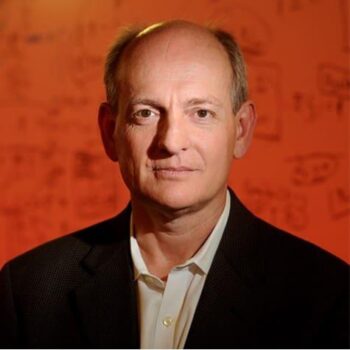
Dr. Alessandro Curioni is an IBM Fellow, Vice President of IBM Research Europe and Africa and Director of the IBM Research Lab in Zurich, Switzerland. He is responsible for IBM corporate research in Europe and leads IBM’s global research strategies in Accelerated Discovery and Security. Dr. Curioni is an internationally recognized leader in the area of high-performance computing and computational science, where his innovative thinking and seminal contributions have helped solve some of the most complex scientific and technological problems in healthcare, aerospace, consumer goods and electronics. He was a member of the winning team recognized with the prestigious Gordon Bell Prize in 2013 and 2015. Currently, his research interests include accelerating the rate of discovery with AI, Quantum, and Hybrid Cloud. Dr. Curioni received his undergraduate degree and PhD in Theoretical Chemistry from Scuola Normale Superiore, Pisa, Italy. He started at IBM Research – Zurich as a PhD student in 1993 before officially joining as a research staff member in 1998. Since then, he has had several research and manager roles, including as the founding manager of the Cognitive Computing and Computational Sciences department. He is a member of the Swiss Academy of Technical Sciences.

Daniel Oliva Laucirica is the Founder and CEO of Emily.AI, a Barcelona-based healthtech company developing AI-powered systems to transform respiratory care. He leads the development of intelligent, real-time oxygen therapy solutions that personalize treatment for patients with chronic respiratory diseases, aiming to improve outcomes while reducing healthcare costs.
Daniel began working on Emily.AI in 2020, inspired by the need to transition from static oxygen delivery to adaptive, patient-centered care enabled by artificial intelligence. Under his leadership, the company has developed an explainable AI-driven system that continuously monitors multiple physiological parameters and automatically adjusts oxygen therapy in real time.
Prior to founding Emily.AI, Daniel held leadership roles across multinational companies and entrepreneurial ventures, combining business, technology, and healthcare innovation. He is focused on scaling AI-driven medical solutions globally and advancing equitable access to life-saving oxygen therapy.
CJ and Zack are the music hacker duo DADABOTS. They met at Berklee College of Music & formed DADABOTS at Music Hack Day MIT in 2012. From playing in metal, punk, and noise bands, to studying composition & programming, they realized machine learning was an even more extreme way to make sound & dove completely into eliminating themselves from music. In 2017 they published a paper at NeurIPS “Generating Black Metal and Math Rock” about SampleRNN (now considered vintage AI). Advancing from songs to endless streams, they run possibly the longest continuous 24/7 YouTube livestream, Relentless Doppelganger, generating techdeath for 5+ years. They co-founded Harmonai, the music research team within StabilityAI, and created Stable Audio, which was on TIME’s best inventions of 2023. Recently they published a documentary PROMPT JOCKEYS about live DJing music that doesn’t exist yet.

Michaela A. Ternasky-Holland is a Peabody-nominated and Emmy award-winning director who specializes in creating impactful stories using immersive and interactive technology. She is one of the first directors to create and premiere a short film utilizing Open AI’s SORA platform, which screened at Tribeca Festival. Her first original animated series garnered over 2.2 million views on YouTube within a month of release. More of her prolific work in animation has been recognized as Best Directing in XR by The Collision Awards, VR Film of Year Finalist by the International VR Awards, and Grand Prize Winner at The Philippine Animation Festival. As a nominee for the Producers Guild of America’s Innovation Award, she is also a consultant, speaker, and thought leader, who has been recognized as one of the 100 Original Voices of XR and listed as one of Blooloop’s 50 Immersive Influencers.

Prof. Subir Kumar Saha, is a 1983 Mechanical Engineering graduate from RE College (Now NIT), Durgapur, India, completed his M. Tech from IIT Kharagpur, India, and PhD from McGill University, Canada. He has held a 4 year stint with Toshiba Corporation’s R&D Center in Japan, post which he has been with IIT Delhi since 1996.
He is actively engaged in teaching, research, and technology transfer. He is the brain behind the establishment of the Mechatronics Laboratory at IIT Delhi in 2001, and contributed significantly in the development of the Programme for Autonomous Robotics. Prof. Saha’s “Introduction to Robotics” is the go to book for learning robotics, and developed RoboAnalyzer software. He has several books on Robotics and Dynamics of Mechanics under his kitty.
Prof. Saha is the Vice-President (Academic) of The Robotics Society (formally known as Robotics Society of India), and National judge of the DD-Robocom competitions in India since 2005 as well on the panel of judges on the International ABU Robocon in 2022.

Dr. Kiran Trivedi is the Head of Discipline and Associate Professor of Computer Science at the University of Wollongong, GIFT City campus, Gandhinagar, Gujarat, India. Before joining UoW India, he served as an Associate Professor for Data Analytics Engineering at Northeastern University, Seattle, Washington, USA, and as a Professor at Gujarat Technological University for over two decades. Dr. Trivedi holds a Ph.D. in Human Brainwave Analysis and the Development of Communication Devices and has 30 years of experience teaching undergraduate and postgraduate students in India and the USA.
Dr. Trivedi has organized numerous workshops on wireless and mobile technologies in India and has delivered expert talks on Artificial Intelligence, Edge Computing, and Deep Learning. He is involved in developing AI-enabled embedded device applications for health and ICT. He has been invited to speak at various prestigious venues, including UNESCO in France for SDG 3 and 4, SEE 2010 in the Netherlands, ICTP in Italy, Symbian in the UK, Nepal, and the Georgia Tech Research Center in the USA. He contributed to a free book on mobile learning published jointly by ICTP Italy and UNESCO and participated in the MIT Media Lab and LVPEI RedX Hackathon in 2014. Dr. Trivedi has collaborated with the research team at ICTP Italy for training workshops and demonstrated the Emergency Messenger System to the Honourable President of India, Dr. Abdul Kalam. He was the global winner of the Hackathon on Designing a Sustainable Future using ICTs organized by the ITU WSIS Forum and TDRA UAE.
From 2007 to 2011, he was recognized as a Nokia Developer Champion for his contributions to mobile technologies. He has received NVIDIA Artificial Intelligence Research grants in 2018 and 2022 and TinyML kits grants from EdgeImpulse in India and the USA. In recognition of his contributions at the University of Wollongong, he was awarded the Passion Award in 2024 and the Courage Award in 2025. Dr. Trivedi has been awarded the Best Professor for Broader Outlook Learner Teacher and the AIR INDIA “Rank & Bolt Award” in 2003. He was the global winner of Nokia’s Ovi App Wizard contest in 2010 and received the Dr. APJ Kalam Innovation Award at the IABS 2017 Conference on Biomedical Sciences. He has published over 40 papers in various conferences and journals, and his two patents were published in the Indian Patent Journal. He enjoys speaking on AI and Intellectual Property Rights.
Dr. Trivedi has organized ITU’s “Girls in ICT” Day and was invited to promote Girls in ICT on India’s leading FM Radio station, AIR. His student teams have won state-level hackathons, and he has published science and technology articles in leading newspapers. He has served on the board of studies for curriculum development and participated in various government committees, including TEQIP Research Coordinator and Student Start-up Innovation Policy Coordinator.
Recently, his course on “Data Mining for Engineering” was launched on Coursera by Northeastern University’s MS program in Data Analytics Engineering, and he was invited to speak at the “Women in Tech Regatta” in Seattle on AI sniffers using TinyML. In 2024, he served as a jury member for the City of Seattle Data Hackathon. Besides his professional achievements, Dr. Trivedi is an avid cyclist, having ridden over 27,000 km, and he loves music.

Victoria Xiang is the Chief Operating Officer for Europe and Latin America at EHang (NASDAQ: EH). She spearheads the company’s international business development, industrial operations, and regulatory strategy—encompassing certification, government partnerships, and executive-level media positioning.
An accomplished executive and serial entrepreneur, Victoria brings over 15 years of global leadership experience spanning Europe, Latin America, and China. Before joining EHang, she served as a founding partner and CEO of several private investment and advisory firms. Earlier in her career, she was a member of the founding team for CCTV’s Spanish Channel. She holds an Executive MBA from IE Business School, a Master’s degree from the Complutense University of Madrid, and a Bachelor’s degree from Beijing International Studies University.
EHang is a pioneering Urban Air Mobility (UAM) technology company and, in 2019, became the world’s first publicly listed Advanced Air Mobility (AAM) company on Nasdaq. The company’s flagship EH216-S pilotless eVTOL has achieved historic airworthiness milestones with the Civil Aviation Administration of China (CAAC), including the Type Certificate (TC) and the Standard Airworthiness Certificate (AC). These achievements represent an unprecedented milestone in the history of civil aviation.
Under Victoria’s leadership, EHang has cemented its position as a global industry leader through several landmark achievements:

Remi received his engineering diploma from ECAM in 1980. He joined the RENAULT group in 1982, and after different responsibilities, he was Vice- President for Research and Innovation for RENAULT Group (2009-15), before becoming Global Director for Autonomous Driving Prospective at the Renault/Nissan Alliance (2015-16) and finally Vice President, Automobile Prospective for RENAULT Group till 2021. He is an honorary chairman of NEXT MOVE (French cluster dedicated to mobility), CTO of FISITA and member of the Shift Project (think tank for sustainable economy). He was a member of the EUCAR council (former chairman in 2012), Chairman of VEDECOM (French cooperative research institute) from 2017 to 2020, and Director of the program “Power Electronics” for the French Automotive Industry and French Electronic Industry from 2020 to the end of 2021. He is the co-author with Luc JULIA of the book “On va droit dans le mur?”

Roger is President of the Mobile Satellite Users Association and CEO and Founder of StrategiaNow Consulting. Roger draws on 30+ years’ experience in the technology industry as an analyst, journalist and consultant. Roger is a graduate of Dartmouth College.

Bill’s experience is in the combination of passenger and freight surface transportation planning, energy, environmental, and security research, product and process development, and legislative and regulatory policy for Federal, state, local and international entities. He has published articles and made presentations on the subjects of emerging and developing technologies, operations, regulations, and enforcement for vehicles and impacts to the environment, energy efficiency and security enhancements. He has several patents for both products and processes (one project displayed in the Smithsonian Institution). He studied mechanical engineering at Georgia Tech and has taken the executive master’s program in transport emissions at the University of Leeds (UK). He is the Co-Secretary of the United Nations ECE Working Group for Validation Methods of Automated Driving. Or, he started playing with cars and trucks when he was about a year old and has never stopped. Bill has been working on intelligent vehicles, drive assistance and automated driving systems for passenger cars and commercial vehicles for over twenty years. While he was at Freightliner (the largest truck manufacturer in North America), he was the project manager for the world’s first roll stability control system – the precursor to electronic stability control which is present on virtually every late model vehicle in the USA. He has several patents for both products and processes (one project displayed in the Smithsonian Institution). He studied mechanical engineering at Georgia Tech and has taken the executive master’s program in transport emissions at the University of Leeds (UK). He is the Co-Secretary of the United Nations ECE Working Group for Validation Methods of Automated Driving.

Duncan works in the International Vehicle Standards Division within the UK government’s Department for Transport, where he is the Head of Vehicle Engineering overseeing four teams of engineers working on vehicle type approval legislation at both national and international level. He was the main author of the Department’s 2015 review of regulations for driverless cars and other automated vehicle technologies, and the first version of the Code of Practice for testing of driverless vehicles on UK public roads published later that year. He has since led the UK Government’s involvement in negotiating the United Nations Regulation on Automated Lane Keeping Systems and his work at the Department includes overseeing development of the UK government’s policies on security assurance for automated vehicle technologies. Duncan is a mechanical engineer with over 30 years’ experience. He started his career at Ford Motor Company where he spent 16 years in Research and Development at Dunton Technical Centre. He is passionate about making road transport cleaner, safer and more sustainable.


Marta Koch is a Researcher and Teaching Facilitator at Imperial College London and UN Research Consultant (UNOPS, UN-Habitat, UNDP, UNICEF) specialising in AI, Earth intelligence and digital technology development, deployment and Policy for climate action and progress towards the UN SDGs.
She is a Coordinating Lead Author for the UNESCO Science Report (Edition 8), Policy Lecturer & Curriculum Reviewer for the MIT Sustainable AI course, Research Associate at Oxford University, ITU Global Initiative on Resilience to Natural Hazards through AI Solutions Focus Group Member and UNFCCC Technology Executive Committee RD&D and Technological Transition Pathways Activity Groups Member.
She has acted as Moderator and Chair at UNECE Regional Forum and STI Forum events and serves as a UK Expert Reviewer for IPCC and IPBES Assessment reports and the UNEP Global Environment Outlook. Previously, she was a Digital Public Infrastructure (DPPI) Junior Officer at the ITU-D Special Initiatives Unit.
Her work has been endorsed by the UNESCO International Decade of Sciences for Sustainable Development, published in leading journals including International Affairs, Science of the Total Environment, The Innovation, Journal of Education and Training Studies, Journal of Interactive Media in Education and Nature Portfolio publications and she has authored technical reports and policy contributions for organizations such as the UN Climate Technology Centre and Network, WMO Group on Earth Observations, IEEE Communications Society, London School of Economics, University College London, International Institute for Sustainable Development, UN Sustainable Development Solutions Network and the UN Office of Information and Communications Technology.

Kaname Hayashi, born in Japan in 1973, began his career at Toyota Motor Corporation, contributing to the aerodynamic development of the LFA supercar and Formula 1 vehicles before leading mass-production programs. He later joined SoftBank, where he played a key role in the Pepper project. In 2015, he founded GROOVE X Inc. and introduced LOVOT in 2018. His work has received global recognition, including the CES Innovation Award and Good Design Gold Award.

As a leading Member of the Young AI Leaders Zurich Hub within the UN’s AI for Good initiative, Ladina Neubert focuses on building a strong local ecosystem of young professionals, researchers, and industry leaders who want to shape artificial intelligence responsibly and collaboratively. In her role within the executive committee, she drives partnerships and cross-sector collaboration, bringing together academia, corporates, and impact-driven stakeholders to foster practical and ethical AI solutions.
Building on this mission-driven work, Ladina is pursuing a Master’s Double Degree in Business Innovation at the University of St. Gallen and the CEMS Master in International Management at Cornell University. Her work spans corporate AI strategy, applied research on responsible board-level AI Policy, and the intersection of AI, design thinking, and human-centered innovation.
She firmly believes that meaningful and lasting impact is created through collaboration and is passionate about bringing diverse perspectives together to design technology that strengthens both business and society.

I thrive at the crossroads between business and creativity — particularly, I have a passion for tech, entrepreneurship, and innovation. I’m devoted to managing projects in an integrative, collaborative, and pragmatic manner.
Currently writing my thesis about human-AI collaboration in design thinking ideation stages.

Joan Nadal, an Industrial Designer, inventor and tech enthusiast, wanted to share the magic of robotics with his daughter. When he couldn’t find a tool that was fun, educational, and accessible, he built one himself: a robot made from a 3D-printed body and the “brain” of a smartphone. More than a toy, it was a hands-on lesson in coding, engineering, and sustainability.
The E3bot quickly garnered attention, exhibited at prestigious events like the Rome and Paris Maker Faires. Its innovative design truly shone when showcased at the UNESCO headquarters in Paris. There, it caught the eye of UNESCO’s STEM education lead who, proposed Joan become a trainer, sharing how he designed and built his robot. For five years, the E3bot project grew and improved through extensive UNESCO missions, with Joan traveling the globe, sharing his knowledge and empowering educators.

Mohammad Hammoudeh is the Aramco Cybersecurity Chair Professor and an internationally recognised, award-winning expert in cybersecurity. His work focuses on developing quantum-resilient architectures and AI-powered defence mechanisms to protect critical national infrastructure, with a particular emphasis on the security of operational technology (OT) and quantum-safe cryptography. His mission is to fortify industrial control systems against emerging and next-generation cyber threats. Dr. Hammoudeh is the Founding Editor-in-Chief of ACM’s Distributed Ledger Technologies journal.

Received BS Degree in Electronic Engineering in 1991, and Master In Information Technology and Telecommunication in 1992 by Politecnico of Turin.
Joined CSELT, R&D Telecom Italia Group in 1993. In 2000 Giulio joined TIM (Telecom Italia Mobile) in Core Network Acceptance Testing.
In 2006 he joined Telecom Italia in the Service Layer Engineering group. Since 2008 he is in Telecom Italia Mobile Core Network Engineering Group dealing with Mobile IMS, Packet Switch, WiFi offload, customer experience driven engineering, and Core Network Quality and Optimizations. Present job since 2020 is dealing with Vendor Management in Network Operation Planning Group.
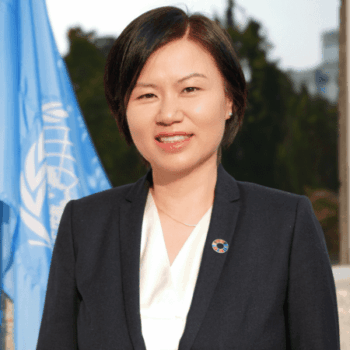
Member of IEEE and GSMA where in 2010 he led Network Efficiency Task Force Group
Vice Chairman of ETSI Methods of Testing and Specification (MTS) Technical Committee from 2010 to 2012
Chairman of CME Mobile User Group from 2010 to 2017
Chairman of Test Sub Group within CME Mobile User Group from 2006 to 2019
Chairman of ETSI Core Network and Interoperability Testing (INT) Technical Committee since 2008
Vice Chairman of ETSI Methods of Testing and Specification (MTS) Technical Committee from 2010 to 2012
Chairman of ITU-T Focus Group on Testbed Federations from 2021 to – 2024
From 2024 in Fibercop dealing with Technical Management and Network Digital Applications – AI use
Giulio is Technical Program Committee member of several conferences, and author of several papers and lectures.
Patent Granted for the VoLTE MOS calculation for the Voice calls.

After graduating from Leningrad University of Telecommunications in 1974, A. Koucheryavy joined Telecommunication Research Institute LONIIS, where he worked till October 2003 (from 1986 to 2003 as the First Deputy Director). Dr. A. Koucheryavy holds Professor position at the Bonch-Bruevich St. Petersburg State University of Telecommunications (SUT) since 1998. There, in 2011 he became a Chaired Professor in “Telecommunication Networks and data transmission” department. Dr. A.Koucheryavy was an advisor of the Central Science Research Telecommunication Institute (ZNIIS) from 2003 to 2010. Co-founder of the International Teletraffic Seminar (1993, 1995, 1998, 2002); founder of the model network for digital networks at LONIIS (1997); co-founder of the model network for packet networks at ZNIIS (2004); co-founder of the Internet of Things Laboratory (2012) and Quality of Experience and IPTV Laboratory (2014) at SUT. Chair of the Scientific school on teletraffic theory in LONIIS (1990 – 2003); Founder and scientific school chair “Internet of Things and self-organizing networks” in SUT (2010 up to now); Steering committee member of IEEE technically co-sponsored series of conferences ICACT, NEW2AN and ICFNDS, Chair of ICACT 2020 International Steering Committee. SG11 ITU-T vice-chairman 2005 – 2008, 2009 – 2012. WP3/WP4 SG11 chairman 2006 – 2012, WP4 SG11 vice-chairman 2015-2016, Chairman of SG11 from 2016 up to March 2022. Co-founder of International Testing Center for new telecommunications technologies at ZNIIS under ITU-D competence. Host and technical program committee member of the “Kaleidoscope 2014” at SUT. Founder of the model network for telepresence services in SUT (2021) and MEGANETLAB 6G (2022). Chairman of the ITU-T SG11 regional group (2025). Honorary member of Popov’s society (2002).

Alexey Borodin has served as Director General of the Regional Commonwealth in the field of Communications (RCC) since January 1, 2024. He holds PHD in technical and political sciences and has extensive experience in telecommunications. Beginning his career in 2003 with the Federal Agency for Government Communications and Information Under the President of the Russian Federation, he later joined PJSC Rostelecom, holding key roles including Head of the Rostelecom representative Office in Geneva. In 2022, he became Advisor to the Director General of the Russian Satellite Communications Company and later Director of its Centre for Support of Scientific and Technical Activities and International Cooperation. A delegate to major ITU events, he has led RCC’s preparations for conferences, assemblies, sessions of the ITU Council and other ITU working bodies since 2008. Borodin has co-authored a number international standards in IoT, next-gen networks, and communication protocols, with over 60 scientific publications in Russian, English, and Arabic.

Dr. Malika Meghjani is an Associate Professor in the Computer Science and Design Pillar at Singapore University of Technology and Design (SUTD). She directs the MultiAgent Robot Vision and Learning (MARVL) Lab, with the focus on algorithm design for efficient, reliable and scalable robots that can work independently and collaboratively with humans. Her research interests are in planning under uncertainty, reinforcement learning, computer vision, deep learning, and game theory. The applications of her work are in field robotics ranging from marine robots specifically, underwater and surface vehicles to self-driving cars and other ground vehicles in unstructured environments.
Malika has been recognized with the 2025 Asia Women in Tech Leaders Award and 2024 Google South Asia & Southeast Asia Research Award for her work on “Heterogeneous Multi-Robot Systems for Marine Environment Monitoring”. She has also been cited by Analytics Insight in 2020 as one of the World’s 50 Most Renowned Women in Robotics.
She is a 2017 SMART Postdoctoral Scholar, 2015 McGill Scarlet Key recipient, 2013 IEEE Canada Women in Engineering Prize awardee and 2013 Google Anita Borg Scholar.

Goal-oriented ICT Researcher with a strong focus on advancing global digital transformation through Metaverse, AI and Fog Computing as key enablers of 5G/6G ecosystems.
Artem Volkov currently serves as an Associate Professor at St. Petersburg State University of Telecommunications (research lab “MeganetLab 6G”) and Scientific Consultant of National Research institute of telecommunications (Russian Federation), driving cutting-edge research at the intersection of telecommunications, AI and immersive technologies.
His PhD thesis “Future Infrastructure & Services Based on AI” (2021, SPbSUT), explored the transformative role of AI in future networks. With a multidisciplinary background spanning system architecture, product management, and business analysis, Artem Volkov brings a holistic approach to innovation – from concept to implementation and standardization. He actively contributes to international standardization within the ITU as a delegate and editor of draft Recommendations, supporting the development of globally interoperable digital technologies.
His current work focuses on shaping future digital ecosystems, including telepresence and Metaverse-driven services, aligned with sustainable and inclusive development goals. He is the author of more than 77 scientific publications, as well as the books “Software-defined Networks” (Russian) and “Enabling Metaverse and Telepresence Services in 6G Networks” (River Publishers).

Huifen was graduated from Zhejiang University, China, with Master Degree in Control Science and Engineering in 2011. Currently, she is the director of the Multi-modal Research Center at the China Telecom Research Institute. She had served as the head of the Wireless Radio Frequency Business and Industrial Intelligent Detection Expert at BaoSteel Information Company, as well as the head of the Data Department at a leading Asset Management firm. Now Huifen is focused on research in the fields of machine vision and the crossing of AI and network, leading studies in semantic communication, agent interconnection, and multi-modal fusion. As the expert in ITU-T Study Group 11, focused on network monitoring and Study Group 21 which deals with machine vision and multi-modal models, she has launched a number of ITU-T work items as editor on development of a series of ITU-T Recommendations, including “methods and metrics for monitoring machine learning/artificial intelligence in future networks including IMT-2020” (ITU-T Q.4081), “Requirements and capability framework of the multi-modal fusion system for vision”(ITU-T F.747.14) and “Requirements and framework of multi-modal generative artificial intelligence (AI)-enabled multi-view transformation” (ITU-T F.748.72). Huifen has also been a member of national delegations of China and responsible for the work in ISO/IEC JTC1 SC29 (MPEG) for China.
Telecom, leading the formulation of standards such as video coding for machines (VCM) and feature coding for machines (FCM). She holds numerous international patents and papers in the field of artificial intelligence, which are widely applied in areas such as Internet of Video, satellite communication and so on.

Dr Sebastian Hallensleben is the Chair of CEN-CENELEC JTC 21 where European AI standards to underpin EU regulation are being developed, and co-chairs the AI risk and accountability work at OECD. As Chief Trust Officer at Resaro, he works towards drilling down to ground truths about capabilities of AI systems and towards standards for measuring use-case-specific AI quality characteristics, including in ETSI MTS. Sebastian is the initiator and Programme Chair of the Digital Trust Convention and is Principal Advisor Digital Trust at KI Park. Previously, Sebastian headed Digitalisation and Artificial Intelligence at VDE Association for Electrical, Electronic and Information Technologies. He focuses in particular on operationalising AI ethics, on characterizing AI quality and on building privacy-preserving trust infrastructures for a more resilient digital space.

Boris Wrubel has dedicated himself to software testing with a focus on test automation in agile projects for over 20 years. His professional experience ranges from large-scale projects in the banking and telecommunications industries to the municipal sector. Alongside these projects, Boris Wrubel worked for ten years in the research group for industrial software (INSO) at the Vienna University of Technology (TU Wien), where he also organized and talked in the academic course “Software Testing”. He studied Business Informatics specializing in project and quality management at the Vienna University of Technology.

Fleur Prince currently serves as the Community Manager Programs at The Hague Tech, a hub for innovation and collaboration in the heart of the Netherlands. With extensive experience in community building, strategic communication, and partnership development, Fleur has successfully grown and engaged diverse communities. At Kickstart AI, she grew the community to over 7,500 members from 500 organizations through targeted strategies, organizing over 30 impactful tech meetups, and building 40+ partnerships with key AI-sector stakeholders.
Fleur’s professional foundation includes a Bachelor’s in International Communication and additional certifications in Social Media & Brand Management, as well as 100 Days of Code. Recognized for her contributions to the tech industry, she was nominated for the Diversity Leader in AI (2023) and AI Leader (2024) awards and AI Leader of the Year at the Women in Tech Global Awards (2024).
As a multilingual professional fluent in English, Dutch, and French, Fleur actively volunteers for programs such as Women in AI Benelux, advancing initiatives to promote gender diversity in technology and innovation. She is also the co-host of the “AI Insights” podcast, where she delves into the latest trends in artificial intelligence and their impact on society, particularly Gen Z.
Fleur’s dedication to fostering inclusive, innovative communities ensures she remains a driving force in the AI and tech ecosystem, building bridges between people, ideas, and industries.

Thuso is a multi-award-winning technologist and Educator. Currently he is the Vice Chairman of STEAMLes Robotics which is a non-profit organization whose aim is to ignite the passion for robotics and STEAM (Science Technology Engineering, Arts and Mathematics) among youth in Lesotho. Thuso is also an Adjunct Lecturer at Botho University under the Faculty of Engineering and Technology.
He has multiple awards that include winning the Huawei ICT Competitions 1st prizes twice, winning the SADC Innovation Challenge, the Vodacom Farmer’s App hackathon and many more. Due to his passion for cutting-edge technologies, he is a Certified AI Engineer, Cloud Engineer, Cyber Security certified, API Architect and certified Information Communications Technology Professional with certifications and recognition from vendors such as Huawei, Cisco, Microsoft, Fortinet, Oracle and many more. He has an Honours in Computing from Botho University and he is currently an Information Systems Management candidate.
With over six years combined experience in Network Engineering, Software Engineering, Leading Robotics programmes and Academia, Thuso has worked on impactful projects in the private, public and non-profit sector. With roles ranging from being an ICT Talent Ecosystem Ambassador, Software Development consultant, Project Manager, Robotics Coach and an Award-winning technology startup Founder. As a Young AI Hub Leader, his aim is to contribute to impactful SDG-based solutions using Artificial Intelligence. He is dedicated to empowering young AI innovators through the establishment of impactful projects harnessing the power of AI to create a better world for all, ensuring inclusiveness, transparency, security, accountability, robustness of AI innovation in society for a sustainable tomorrow.

Dino Osmanagić is a versatile and driven professional with a strong foundation in business informatics, leadership, and innovation management. With over a decade of experience spanning entrepreneurship, project management, and community engagement, Dino has established himself as a changemaker committed to fostering innovation and empowering others.
Currently serving as the Head of Innovation & Product at Incert eTourismus, Dino established the department from the ground up, leading the company’s transformation through innovation management and organizational restructuring. He heads an interdisciplinary team focused on product development and innovation, serving as a key link between departments and the management board. His efforts have created robust structures and processes while fostering a collaborative and forward-thinking culture.
Dino’s entrepreneurial experience includes co-founding Nova Mundi, where he transformed the “Future Skills for Good” educational initiative into an agency delivering AI-driven automation solutions, and formerly Seasy, a maritime start-up recognized with multiple accolades, including being a finalist in the European Space Agency’s BIC program.
Beyond his professional roles, Dino has contributed to social and educational initiatives, supporting underprivileged communities as an educational guide and honing conflict-resolution skills as a peer mediator. His leadership extended to serving as Curator of the Global Shapers Salzburg Hub, an initiative of the World Economic Forum, where he strengthened Policy, fostered community engagement, and led strategic projects aimed at driving social impact. He continues to mentor and advise young entrepreneurs through initiatives like Youth Entrepreneurship Week and Moonshot Pirates, helping them navigate the challenges of launching and scaling ventures.
Currently pursuing an MSc in Business Informatics at the University of Linz with a focus on AI in business, Dino combines academic knowledge with certifications in AI, Scrum, digital transformation and innovation. Multilingual and adaptable, he excels in connecting people and driving forward-thinking solutions that bridge technology and social impact.

Felix Rank co-founded the German Forum for Ethical Machine Decision Making (EME), a think tank for the responsible use of algorithms and Artificial Intelligence. In EME, leading experts from business, politics and science shape the ethical guidelines of the future in dealing with machine-aided decisions. The focus lies on promoting general awareness and creating transparency and understanding of the pitfalls in the use of artificial intelligence. EME is directly committed to protecting people and the environment by creating an institutional framework and strengthening the transfer between science and practice. Felix regularly gives keynotes and engages in policy discussions with stakeholders on a German and European level.

Felix is Practice Lead Machine Learning at a business & IT consultancy and currently Product Owner for Data Insights & Analytics P&C at a leading insurance company in Munich. He is leading the Data Insights & Analytics (DIA) Property & Casualty (P&C) team, working closely with the P&C business unit in Germany to identify use cases, develop customized data products and design their data analytics strategy in Germany.
In the World Economic Forum’s community, Felix is Global Shaper, WEF Agenda Contributor and Co-Curator for the Strategic Intelligence platform on the topics “Future of Work” and “Education”.

Alexandra currently serves as the Social Media Officer and Young AI Leaders Programme Lead for the AI for Good team at the International Telecommunication Union (ITU), the United Nations agency dedicated to information and communication technologies (ICTs). Alexandra’s expertise spans social media, communication, and digital marketing content creation initiatives, with a strong linguistic background in four languages.
Her expertise in communication and digital marketing is underpinned by an MBA from Anglia Ruskin University and a Master’s in International Management with a specialization in Digital Marketing from Geneva Business School. With a strong interest in strategic management, Alexandra is pursuing a PhD in Strategic Management at the European Center for Peace and Development (ECPD), associated with the United Nations-established University for Peace.
Driven by a passion for strategic management and the transformative potential of artificial intelligence, Alexandra developed and now oversees the Young AI Leaders Community launched in 2024. This initiative aims to harness AI’s evolution for global good, empowering a worldwide network of young individuals with the skills, platforms, and support needed to lead in creating a more inclusive and sustainable digital future. Through efforts like these, AI for Good ensures that young people are at the forefront of digital innovation and societal progress.

Denis Andreev started his carrier as an engineer of the testing laboratory of ZNIIS in 2000. He became a head of telecommunication Testing Centre (Technopark) in 2007. Under his supervision, Technopark tested key technologies which were further implemented on public telecommunication networks. He had been contributing to ITU-T SG11 for 12 years and was appointed as a Rapporteur of Q10/11 and Q11/11 which focused on testing and benchmarking study areas. He is the editor of nine ITU-T Recommendations related to NGN and IMS testing developed from 2006 -2011. From 2008, he managed the joint ZNIIS/ITU project, aimed at establishing the International Telecommunication Testing Centre (ITTC). In 2012 he joined the ITU-T HQ as the TSB C&I Programme Coordinator.
Since 2017, he is Advisor of ITU-T SG11 “Signalling requirements, protocols, test specifications and combating counterfeit telecommunication/ICT devices”. His current activities focused on facilitating ITU-T SG11 on development signalling protocols and test specifications for existing and future networks (4G/5G interconnection, flat ENUM signalling architecture, securing telephone networks on the signalling level to prevent spoofing numbers and telephone fraud, IMS testing, remote testing etc.). Also, he assists ITU-T SG11 on research and studies related to combating counterfeiting and stolen ICT devices. Among areas of his key interest are the signalling, protocols, combating fraudulent communications, testing and implementations of ICT equipment and services. He is author of several papers on the NGN implementations and telecommunication services, including QoS assessment (e.g. IEEE Springer Verlag, Electrosvyaz, etc.).

Sawyer Fuller creates biologically-inspired sensors, control systems, and mechanical designs targeted at insect-sized air and ground vehicles, and investigates the flight systems of aerial insects. He completed his Ph.D. in Biological Engineering at the California Institute of Technology and B.S. and M.S. degrees in Mechanical Engineering at the Massachusetts Institute of Technology, and postdoctoral training at Harvard. In addition to his work in insect flight control, he also developed a frog-hopping robot at the NASA Jet Propulsion Laboratory and invented an ink-jet printer capable of fabricating millimeter-scale 3D metal machines at the MIT Media Lab. His work at the intersection of robotics and biology has appeared in journals such as Science and Proceedings of the National Academy of Sciences.

Carlee Joe-Wong is the Robert E. Doherty Associate Professor of Electrical and Computer Engineering at Carnegie Mellon University. She received her A.B. degree (magna cum laude) in Mathematics, and M.A. and Ph.D. degrees in Applied and Computational Mathematics, from Princeton University in 2011, 2013, and 2016, respectively. Her research interests lie in optimizing various types of networked systems, including applications of machine learning and pricing to cloud computing, mobile/wireless networks, and transportation networks. From 2013 to 2014, she was the Director of Advanced Research at DataMi, a startup she co-founded from her research on mobile data pricing. She received the NSF CAREER award in 2018 and the ARO Young Investigator award in 2019.

Riccardo Trivisonno (Senior Member, IEEE) received M.Sc. and Ph.D. degrees in telecommunications engineering from the University of Bologna in 2000 and 2005, respectively. He joined Huawei Technologies in 2011 and he is currently serving as Head of Network Architecture — Research and Standardization — for the Advanced Wireless Technologies Laboratory, Munich Research Center. Over the past ten years, he has been a leading contributor to the definition and the standardization of 5G network architecture and technologies, delivering to 3GPP Releases 15 – 18 — in the areas of architecture modularization, network slicing, network analytics, and QoS—filing ~100 Standard Essential Patent applications. His research focus shifted to 6G enabling technologies since 2020. He has been the Chairman of 6G-IA Pre-standardization WG since 2020, a Board Member of one6G Association since its foundation, in 2021, and was elected one6G Board Vice-Chair in 2023.

NADA GOLMIE (a Fellow of IEEE) received her Ph.D. in computer science from the University of Maryland at College Park in 2002. Since 1993, she has been a research engineer at the National Institute of Standards and Technology (NIST). From 2014 until 2022, she served as the chief of the Wireless Networks Division at NIST. She is currently a NIST Fellow in the Communications Technology Laboratory. Her research in wireless communications systems and protocols, propagation measurement and modeling, next generation wireless, and millimeter-wave communication systems led to over 200 technical papers presented at professional conferences and journals and contributed to international standard organizations and industry-led consortia. She is the author of “Coexistence in Wireless Networks: Challenges and System-level Solutions in the Unlicensed Bands,” published by Cambridge University Press (2006). She leads several projects related to modeling and evaluating future generation wireless systems and protocols, and serves as the chair of the NextG Channel Model Alliance.

Lina Bariah (Senior Member, IEEE) received the M.Sc. and Ph.D. degrees in communications engineering from Khalifa University, Abu Dhabi, UAE, in 2015 and 2018, respectively. She is currently a Lead AI Scientist at Open Innovation AI, an Adjunct Professor at Khalifa University, and an Adjunct Research Professor, Western University, Canada. She was a Visiting Researcher with the Department of Systems and Computer Engineering, Carleton University, Ottawa, ON, Canada, in 2019, and an affiliate research fellow, James Watt School of Engineering, University of Glasgow, UK. She was a Senior Researcher at the technology Innovation institute. Dr. Bariah is a senior member of the IEEE, IEEE Communications Society, IEEE Vehicular Technology Society, and IEEE Women in Engineering. She is the founder and lead of Women in Machine Learning and Data Science (WiMLDS)-Abu Dhabi Chapter. She was recently listed among the100 Brilliant and Inspiring Women in 6G”, by Women in 6G organization. She was an Associate Editor for the IEEE Communication Letters, an Associate Editor for the IEEE Open Journal of the Communications Society, and an Area Editor for Physical Communication (Elsevier). She is a Guest Editor in IEEE Communication Magazine, IEEE Network Magazine, and IEEE Open Journal of Vehicular Technology.

Wei Meng is the director of standard and open-source planning at ZTE Corporation for more than 10 years. Wei is an active Project Team Lead (PTL) of OF-CONFIG in Opendaylight. He is mainly engaged in pre-research and development on Networking and AI. He also has a rich experience in SDN, NFV, IPv6, SFC.

Kato Steven Mubiru is the CEO and Co-Founder of Crane AI Labs and a sovereign technology advisor building the foundational AI infrastructure layer for African languages — offline-first, open-source, and deployable on sub-$100 devices without internet connectivity.
He is a member of 2 Thematic Working Groups of the Africa AI Council — the continental AI Policy body whose policy recommendations reach 42 African heads of state. He has contributed to Uganda’s National Emerging Technologies Strategy and the East African Community Regional AI Strategy.
Crane AI Labs is the first African team selected as a Google DeepMind Gemma 4 Trusted Tester and Partner, and built the Uganda Cultural Context Benchmark — the only African-originated AI benchmark adopted by the UK AI security Institute. Kato is a Stanford GSB LEAD Fellow, a World Bank AI Atlas Peer Reviewer across seven multilateral development banks, and a founding cohort member of the Shangri La Series: AI for Middle Powers, co-hosted by New America and the Doris Duke Foundation.

Franziska Weindauer is the CEO of TÜV AI.Lab, a joint venture founded by some of the largest and most important companies in the certification industry in Germany and beyond. The TÜV AI.Lab is paving the way for trustworthy AI by developing conformity criteria and test methods for AI systems. Previously, Franziska has been a senior advisor on digital policy in the German Federal Chancellery, head of policy at Bitkom, Europe’s largest digital industry association and an advisor to a key MEP in the European Parliament. She has a background in European Studies from Universities in the Netherlands, UK and Turkey.

Dr. HE Bo is the Director of the Internet Law Research Center at the China Academy of Information and Communications Technology (CAICT). He was among the inaugural cohort of scholars for the ITU AI for Good Global Summit. Additionally, he serves as the Deputy Head of the Policy and Regulation Group of the China Artificial Intelligence Industry Development Alliance (AIIA).
Dr. He specializes in legal research and legislative support within the fields of data and AI Policy. He has been deeply involved in the drafting and legislative support of major Chinese digital regulations, including the Personal Information Protection Law of the People’s Republic of China and the Interim Measures for the Management of Generative Artificial Intelligence Services.
A prolific scholar, he has authored over ten monographs, such as AI for Good: Rule of Law Practices in the Age of Artificial Intelligence, and has led several high-level national research projects. His work on AI Policy has appeared in prestigious journals, including Science.

Venkatesen Mauree is the Head of the Strategic Tech and Academia Initiatives Division, Standardization Bureau at the International Telecommunication Union (ITU). He joined the ITU in 2010 and has over 30 years of experience in project management and cybersecurity. He leads the work of TSB for academia initiatives, AI Skills development and the AI Impact Initiative. He coordinates the work for the AI and Multimedia Authenticity Standards Collaboration and the AI Standards Exchange Database under the World Standards Cooperation. He manages the collaboration with OpenWallet Foundation for the OpenWallet Forum project which aims at global interoperability for digital wallets and credentials. He assists the OpenWallet Forum Government Consultative Committee in its work on government policies for digital wallets. He leads the ITU Digital Financial Services Security Lab which conducts security audits on mobile payment applications used in emerging economies and provides technical assistance to telecom regulators in emerging economies to enhance security of digital finance and adoption of international standards and best practices for security of digital financial inclusion and fintech. He supervises the Academia activities such as the Kaleidoscope academic conference and the publication of the ITU Journal

Irakli Beridze, PhD, is the Head of the Centre for Artificial Intelligence and Robotics at UNICRI, United Nations. More than 25 years of experience in leading multilateral negotiations, developing stakeholder engagement programmes with governments, UN agencies, international organisations, private industry and corporations, think tanks, civil society, foundations, academia, and other partners on an international level. Mr Beridze is advising governments and international organizations on numerous issues related to international security, scientific and technological developments, emerging technologies, innovation and disruptive potential of new technologies, particularly on the issue on crime prevention, criminal justice and security. He is supporting governments worldwide on the strategies, action plans, roadmaps and policy papers on AI. Since 2014, Initiated and managed one of the first United Nations Programmes on AI. Finding synergies with traditional threats and risks as well as identifying solutions that AI can contribute to the achievement of the United Nations Sustainable Development Goals. He is a member of various international task forces, including the World Economic Forum’s Global Artificial Intelligence and Global Future Council, the United Nations AI Inter Agency Task Force, the High-Level Expert Group on Artificial Intelligence of the European Commission. He is frequently lecturing and speaking on the subjects related to technological development, exponential technologies, artificial intelligence and robotics and international security. He has numerous publications in international journals and magazines and frequently quoted in media on the issues related to AI. Irakli Beridze is an International Gender Champion supporting the IGC Panel Parity Pledge. He is recipient of recognition on the awarding of the Nobel Peace Prize to the OPCW in 2013.
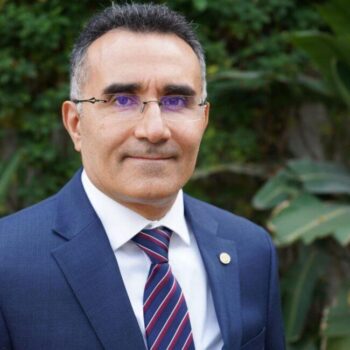


Charbel-Raphaël Segerie is the Executive Director and Co-Founder of CeSIA (Centre pour la Sécurité de l’IA), the French Center for AI security, serving as an official Evaluator for the EU AI Office’s Code of Practice on harmful manipulation risks. He also currently serves as Expert to the EU Expert Forum on AI in the context of the EU AI Frontier Initiative and Expert to the OECD.AI Observatory.
Charbel-Raphaël initiated the Global Call for AI Red Lines presented at the 2025 UN General Assembly and highlighted at the UN Security Council. The Call was endorsed by 12 Nobel laureates and more than 300 eminent personalities from Europe, America, Asia and Africa.
He founded ML4Good, an EU Commission-funded AI security programme replicated 20+ times worldwide, and created the first EU university-accredited course on general-purpose AI security at ENS Paris-Saclay. His research on AI risks has been published at ACM FAccT, ICML, and TMLR. He has convened international workshops from Delhi to New York and presented at the French Senate.

Kirsty Tan has spent more than two decades helping the world’s leading organizations navigate complexity—as a management consultant, academic institution-builder, and trusted advisor to enterprises across three continents. At AI Aspire, she brings that experience to one of the most consequential challenges facing business leaders today: turning AI from a buzzword into a lasting organizational capability.
Her approach is built on a simple premise. AI transformation doesn’t happen in the boardroom or the IT department alone—it has to move through the entire organization, from the executive team to the front line. Working with clients from the C-suite down, Kirsty helps enterprises identify their most pressing challenges, build internal teams that can act on them, and develop the leadership habits that sustain progress long after the engagement ends.
That philosophy was forged over a decade leading executive MBA programs at some of the world’s most respected institutions—including École des Ponts ParisTech and Tsinghua University—where she designed curriculum for future technology and aerospace leaders across Beijing, Paris and Toulouse. She knows what it takes to build capability at scale, and she knows that real transformation requires more than a workshop. Kirsty also serves as General Partner of AI Fund’s Growth Fund, giving her a direct line to the most promising AI companies in the market and the ability to connect enterprise clients with solutions built for their specific needs.
She is fluent in English, Mandarin, Cantonese, and Bahasa, and holds a PhD in international business with high honors from the International School of Management in Paris, an MBA from Deakin University, a bachelor’s degree with a triple major in commercial law, information systems, and accounting, and is a Chartered Accountant.


Elias Stahl is the CEO and Co-Founder of HILOS, the Human Innovation Lab Operating System building the first 3D design platform made specifically for footwear – no CAD required. Powered by machine learning, HILOS’ core geometry engine connects 2D and 3D workflows to streamline how footwear is designed, developed, and brought to market. HILOS works with leading brands such as Steve Madden, Dolce Vita, and Alexander Wang. Stahl founded HILOS to modernize product creation by uniting advanced computation with shoemaking.
Prior to HILOS, he served in the Israeli special forces, worked on urban policy at the National League of Cities, and led product at Handshake, where he helped Fortune 50 brands leverage their influence for social impact. He holds an MA from Johns Hopkins University and a BA from the University of Toronto. He’s also an avid history reader, a casual swing dancer, and an amateur distiller.

Elliott J Rouse is an Associate Professor in the Departments of Robotics and Mechanical Engineering at the University of Michigan. He directs the Neurobionics Lab, who studies the dynamics of how and why people use wearable robotic systems. His group uses this understanding to develop novel hardware designs, including the Open-Source Leg. In addition, Dr. Rouse is a Senior Research Scientist at the Institute for Human and Machine Cognition (IHMC). He is a recipient of the NSF CAREER Award and the Henry Russel Award at UM. He is on the Editorial Board of Wearable Technologies and is the Co-Chair of the IEEE RAS Technical Committee on Biorobotics. He received the BS degree in mechanical engineering from the Ohio State University and the PhD degree in biomedical engineering from Northwestern University. Subsequently, he joined MIT as a Postdoctoral Fellow in the MIT Media Lab. Prior to joining U-M, Dr. Rouse was a principal investigator at the Shirley Ryan AbilityLab / Northwestern University, and worked as a mechanic in professional Le Mans autoracing. In 2019 – 2020, he was visiting faculty at (Google) X where he co-founded their exoskeleton development team. In 2024-2025, he was on sabbatical at the Robotics and AI (RAI) Institute, where he worked on advanced machine design workflows.

Founder & President, IPv6 FORUM www.ip6forum.org,
Chair, AI & Blockchain Global Forum
Emeritus Trustee, Internet Society www.isoc.org.
Founding Co-Chair, IEEE Future Networks World Forum 2024 https://fnwf2024.ieee.org/
Board Chair IPv6 Ready Logo Program https://www.ipv6ready.org/
Board Chair, IPv6 Education Program: https://education.ipv6forum.com/
Member of 3GPP PCG (Board) (www.3gpp.org)
Former Co-Chair, IEEE Blockchain World Forum
Former Chair, IEEE IoT World Forum
Former Chair, ETSI IPv6 Industry Specification Group
Former Founder of the EU Public security Forum from an EU Project called u2020.
Former Member of UN Strategy Council Member of Future Internet Forum EU Member States (representing Luxembourg).
Founder of EU Public security Forum
Former Research Fellow @ University of Luxembourg (since 2006) on multiple European Commission Next Generation Technologies Projects.
IPv6 Forum Internet Pioneer Award, 2002, IPv6 Life Time Achievement Award, 2016.

Kit Kitamura is a Principal Expert at the Japan AI security Institute (J-AISI) and an Expert at the Information Technology Promotion Agency (IPA), Japan, where he leads and contributes to technical initiatives on AI security, Policy, and related areas, with a particular focus on Policy frameworks, management systems, and trustworthy AI deployment. He also serves as an Instructor in AI Policy at the Faculty of Information Sciences and Arts, Toyo University, where he teaches AI Policy and fundamentals of systems informatics, and is engaged in educational and research activities related to AI security, auditing, risk management, and global Policy frameworks.
His work spans government, academia, and industry, contributing to the development of the national AI Guidelines for Business. He has been involved in AI Policy-related initiatives led by METI, as well as advisory and research efforts on AI auditing, civil liability, and responsible AI utilization.
He is also a member of the Advisory Board on Advanced AI Utilization at the Digital Agency of Japan. In addition, he is a Visiting Researcher at the University of Tokyo and the National Institute of Advanced Industrial Science and Technology (AIST), conducting research on AI Policy and quality management. Through these roles, he works to bridge technical, legal, and institutional perspectives in the Policy of advanced AI systems.
At Toyo University, the Faculty of Information Sciences and Arts promotes an interdisciplinary approach that connects technology and society across a broad range of fields, including AI and data science. The university’s founding philosophy, “The basis of all studies lies in philosophy,” underpins a systematic approach to education that is highly relevant to AI ethics in an era of increasingly complex and advanced AI systems. Within this environment, his teaching emphasizes not only the development of AI systems, but also their evaluation and assurance from a Policy perspective in real-world contexts, preparing students to address emerging global challenges in AI security and trustworthiness.
Kitamura’s areas of expertise include AI security, AI Policy, AI risk management, AI management systems (including ISO/IEC 42001), and AI ethics. He has contributed to a range of publications and collaborative works in these areas, including AI Policy frameworks, audit methodologies, and risk management approaches, as well as contributions to policy-oriented guidelines and international discussions on trustworthy AI. Through his professional and academic activities, Kitamura aims to advance practical and globally aligned approaches to AI Policy, while fostering the development of future professionals capable of responsibly designing, evaluating, and managing AI systems in an increasingly complex socio-technical landscape.

Mr. Yamamoto has worked at NTT, Inc, where he has been involved in research and development in the field of communications quality and traffic, and network architecture, as well as in international standardization activities. Since 2015, he has served as the company’s Primary U.S.A. Liaison, representing the company in various U.S.-based standardization organizations, such as TIA, ATIS, Broadband Forum, MEF, and IEEE, as well as OSS organizations such as the Linux Foundation, and contributing to the widespread dissemination of the company’s R&D results around the world. He has also been active and contributed to the field of research funding, such as obtaining R&D funds in the quantum field from the National Science Foundation (NSF). In 2023, he was appointed Director, Head of the Standardization Office, which oversees entire NTT Group standardization planning and activities, and has been involved in the overall management of the group’s international standardization activities. He has also served in various international standardization roles both in Japan and overseas, including Member of Information and Communications Council ITU Division, Chair of Asia-Pacific Telecommunity (APT) WTSA WG1, member of the Japan Industrial Standards Committee (JISC) Electronics Technical Committee and Information Technology Technical Committee, member of the IEC High Level Correspondence Committee and Market Strategy Board (MSB) Correspondence Committee, Chair of the Telecommunications Committee (TTC) IOWN GF Technical Committee, and leader of the International Cooperation Advisory Group, etc.

Ved P. Kafle is a Research Manager at the National Institute of Information and Communications Technology (NICT), Tokyo, and concurrently holds a visiting faculty position at Waseda University. He has been serving as a Rapporteur of ITU-T Study Group 13 since 2014. His research interests include network architectures, next-generation networks (Advanced 5G and 6G), artificial intelligence and machine learning, network control automation, and the integration of terrestrial and non-terrestrial networks. He has published over 150 research papers in refereed journals and conference proceedings.
He received the ITU Association of Japan’s Encouragement Award and Accomplishment Award in 2009 and 2017, respectively. He was awarded the Information and Communications Technology Award by the Telecommunications Technology Committee in 2023. He received four Best Paper Awards from the ITU Kaleidoscope Academic Conference in 2009, 2014, 2018, and 2020.
He received a B.E. (Honours) degree in Electronics and Communications Engineering from Punjab Engineering College, an M.S. degree in Computer Science and Engineering from Seoul National University, and a Ph.D. degree in Informatics from The Graduate University for Advanced Studies (SOKENDAI). He is a Fellow of ITU-T Study Group 13, a Life Member of the Nepal Engineers’ Association, a Senior Member of IEEE, and a member of IEICE.

Marco Carugi is a senior consultant with Huawei Technologies on advanced ICTs and related standardization since 2018. He has professional experience in R&D and technology strategy, with past positions in different roles within Solvay group, Orange Labs, Nortel Networks CTO division, ZTE R&D Technology Strategy, as well as consultant with various customers, including NEC (2015-2018). IMT-2020/5G and Future Networks (IMT-2030/6G), AI/ML for Networks and Autonomous Networks, Internet of Things, Digital Twins and Smart Cities are the main technical areas he is currently involved in. Active in standardization since long time, he has led specifications in different domains and held various leadership positions. He currently serves as Rapporteur for ITU-T Q20 of SG13 (“IMT networks and Artificial Intelligence/Machine Learning: Requirements and Architecture”) and as Rapporteur for ITU-T Q2 of SG20 (“Requirements, capabilities and architectural frameworks of IoT and smart sustainable cities and communities across verticals”). He also acts as Vice-Chair of the ITU-T Joint Coordination Activity on AI, co-Convener of the ITU-T Correspondence Group for datasets applicable for AI/ML in networks, ITU-T SG20 Mentor and SG20 Liaison Officer to ISO/IEC JTC1/SC41. Marco holds an Electronic Engineering degree in Telecommunications from University of Pisa (Italy), a M.S. in Engineering and Management of Telecommunication Networks from National Institute of Telecommunications (France), a Master in International Business Development from ESSEC Business School (France), and completed an Executive Program on Big Data Science at Ecole Centrale Supelec (France).

Antonio De Domenico received his M.Sc. degree in Telecommunication Engineering from the University of Rome La Sapienza in 2008 and his Ph.D. degree in Telecommunication Engineering from the University of Grenoble in 2012. From 2012 to 2019, he was a Research Engineer with CEA LETI MINATEC in Grenoble, France. In 2018, he was a Visiting Researcher with the University of Toronto in Canada. Since 2020, he has been a Principal Researcher with Huawei Technologies in Paris, France. He is the co-inventor of more than 25 patents and has authored over 100 research articles. He is currently co-leading the architecture WG in the ITU-T Focus Group on Artificial Intelligence Native for Telecommunication Networks (FG AINN) and co-leading the Energy Efficiency WG of the NGMN Alliance Green Future Networks. His research interests include AI for network modelling and optimization, benchmarking AI capabilities for telcos, and sustainable AI for telecom networks.

Xiaoou Liu is Vice President of AI Research Institute at China Telecom Jiangxi and Deputy Director of AI Research Center at China Telecom Research Institute.
She serves as Vice Chair of ITU-T SG13 FG AINN and Associate Rapporteur of ITU-T SG13 Q17, and is a registered expert of ISO/IEC JTC1 SC42.
Her research focuses on AI-enabled networking, visual intelligence, semantic communication, multi-agent networks and Web3.0. She leads core product development including AI-based cloud data center energy saving, Jiangxi Intelligent Customer Service Platform, Jiangxi AI Store Platform and blockchain-enabled P-RAN platform. Her research outcomes have been widely deployed in smart city, transportation and maritime industries.
She drives international standardization in AI for Network, Network for AI and AI in cloud, having led the development of over 20 international standards in ITU-T, including the AI in Cloud Computing series standards. She has published more than 10 SCI/EI-indexed papers and one monograph, and received awards including the First Prize of the Web3.0 Innovation Competition and the Second Prize of China Telecom Science and Technology Progress Award.

Dr. Kangchan Lee, ITU-T SG13 Vice-chair, WP2/13 Chair, is Director of the Strategic Standards Research Section at ETRI and a Principal Researcher in the Protocol Engineering Center. He holds a Ph.D. in Computer Engineering from Chungnam National University, Korea. Dr. Lee has over two decades of experience in standardization, particularly in cloud computing, big data, IoT, AI/ML, and next-generation web technologies. He currently serves as Chair of the ITU-T JCA-AI, Chair of ITU-T SG13 WP2, and Vice-chair of ITU-T SG13. Dr. Lee has authored over 20 ITU-T Recommendations and brings deep technical expertise, strategic leadership, and a strong record of international collaboration in fields of cloud computing.

Sooji Yeom leads strategic partnerships and global collaborations at MORAI, a South Korea based company specializing in autonomous driving simulation and digital twin technologies.
Her work focuses on connecting simulation innovation with real world validation, industry partnerships, and international mobility programs.
She leads multiple international R&D programs and collaboration initiatives across Europe and Asia, working with automotive, research, and public sector stakeholders
to support the development, validation, and deployment of next generation mobility solutions.

Ritu Ranjan Mittar brings over 35 years of distinguished experience in the telecommunications sector. Throughout his career, he has led and contributed to numerous initiatives focused on the development, deployment, and advancement of telecommunications networks. His expertise extends to policy formulation within the Department of Telecommunications, Government of India, as well as the creation of technical standards and specifications across emerging technologies, including Quantum, 5G, IoT, and M2M He actively engages with global standards development organizations such as ITU, ETSI, APT, and WRC, while also collaborating with international forums including 3GPP, IETF, and OneM2M. Notably, he served as Chairman of the ITU-T Study Group 11, representing India in the international standardization of signaling requirements, protocols, test specifications, and measures against counterfeit ICT devices. He has also held the position of Advisor and Head of the Telecommunication Engineering Centre, the technical and Opening remarks
standardization arm of the Department of Telecommunications, Government of India. In 2024, he chaired the World Telecommunication Standardization Assembly (WTSA). Currently, Mr. Mittar serves as a Member of the Telecom Regulatory Authority of India (TRAI), continuing his leadership and contributions to shaping the future of telecommunications.

Frédérique Chessel-Lazzarotto is a Project Coordinator at the Center for Learning Sciences (LEARN) at EPFL in Lausanne. She leads initiatives at the intersection of artificial intelligence, digital literacy, and education. She has co-directed large-scale teacher training programs in the canton of Vaud, focusing on digital citizenship, computational thinking, and creative use of educational technologies like Thymio. Additionally, she has developed AI literacy workshops for seniors, helping them engage with AI tools. Her work bridges research and practice to promote inclusive, critical, and creative digital education across generations.

Based at EPFL, Adrien Garcia is a multifaceted innovator working at the intersection of sound, education, and technology. With advanced degrees in Musicology, Interactive Media, and Sound Design, he focuses on blending art with pedagogy.
Adrien’s work has earned him prestigious awards from institutions like Sennheiser and IRCAM. As a Digital Skills Trainer, he specializes in educational robotics, including the creation of multidirectional mats and programming suites for the Thymio robot. He is heavily involved in digital innovation projects across Europe and the US.

Ritu Yadav is a postdoctoral researcher at the Division of Geoinformatics, KTH Royal Institute of Technology, and a member of the GEO AIO4EO working group. She holds a PhD in Geoinformatics and a Master’s degree in Computer Science with a specialization in Artificial Intelligence. Her research focuses on spatio-temporal representation learning, uncertainty quantification, and disentangled latent space learning for Earth observation applications. She has experience working with large-scale optical, multispectral, LiDAR, and SAR data from satellite and airborne platforms, developing supervised and unsupervised models for object detection, flood mapping, forest biomass estimation, and building height retrieval. Her current work investigates how embeddings from geospatial foundation models can be structured so that individual latent dimensions align with physically meaningful quantities, enabling more interpretable and compressible representations.

Kevin White serves as a Senior Director of Data Science at Microsoft’s AI for Good Lab, developing innovative solutions for pressing societal challenges. In collaboration with global experts, Kevin focuses on information integrity, sustainability, and humanitarian disaster response and resilience initiatives.

Egemen Tavşancı is a Turkish entrepreneur and the Co-CEO and Co-Founder of RareSum, where he focuses on helping healthcare professionals diagnose rare diseases using data and AI. Prior to this, he served as Europe Regional Marketing Director at Pfizer and went on to co-found multiple businesses in Paris and Barcelona. His experience spans pharmaceuticals, healthcare, sustainability, entrepreneurship, and growth strategy.

Patricia Maluti is a Senior Engineer who has spent over 15 years at Zambia Information and Communications Technology Authority (ZICTA) at the forefront of how Zambia adopts, governs, and benefits from new technologies.
She’s been part of some of Zambia’s landmark digital milestones — from the transition to digital terrestrial television (DVB-T2) to the establishment of the country’s first national data centre through her work on cloud computing adoption.
These days, her focus is squarely on AI and data science — specifically how they can drive real, practical outcomes across sectors, improve decision-making, and support sustainable development. She’s been an active contributor to international AI standardisation efforts through the ITU, particularly around AI Readiness, and has played a hands-on role in developing Zambia’s ICT Sandbox Guidelines and advancing the country’s AI policy frameworks.
Patricia is passionate about bridging the gap between global frameworks and what actually works on the ground in Zambia, and that’s exactly what today’s conversation is about.
When she’s not navigating the world of AI and policy, you’ll find her indulging in culinary arts, music, painting, or exploring different cultures.

Emmanuel Kifalu Mkina holds a Bachelor of Science in Telecommunication Engineering from the University of Dodoma, Tanzania. He was awarded by CRDB Bank as the best student at the College of Informatics and Virtual Education in 2022. He is interested in radio access network and transmission, as well as AI in revolutionizing the telecom sector. Currently, he is working as a tutorial assistant at the University of Dodoma, Department of Electronics and Telecommunication Engineering.

Dr. Florence Upendo Rashidi is an accomplished lecturer and academic leader currently serving as the acting principal of the College of Informatics and Virtual Education at the University of Dodoma. With a background in Electronics and Telecommunication Engineering, she has 10 years of experience in teaching, research, and consultancy. Her areas of expertise include Wireless Optical communication, Security, Networking, Machine Learning, Artificial Intelligence, and ICT research. Dr. Rashidi holds a Ph.D. in Computer Science and Technology from Hunan University, China, a Master of Engineering in Communication and Information Systems from Wuhan, China, and a B.Sc. in Computer Science from Makerere University, Kampala, Uganda. She is also a member of the Organization for Women in Science for the Developing World (OWSD). Beyond her academic accomplishments, Dr. Rashidi is actively involved in promoting gender equality and empowering women in the field of science. Her membership in the Organization for Women in Science for the Developing World (OWSD) reflects her commitment to fostering inclusivity and creating opportunities for women in academia.

2024.04. – Now
Worked as special-invited expert in Zhejiang Lab, leading the teams to build zero2x Open Platform, an initiative to open the facilities in Zhejiang Lab supporting worldwide open research.
2017.04. – 2024.03. Work for AliCloud
– Support the academician on the City Brain initiative, leading a hybrid-team to develop an online platform as the city innovation workspace.
– Lead an industrial product design team to help customers perform digital transformation by adopting AI, data intelligence and cloud technology.
2004.02. – 2017.03. Worked for IBM
– Worked as Chief Architect in Smarter City Solution Lab
– Worked as Leading Consultant in “Executive Advisory Practice” team
– Worked as SOA architect to help worldwide customers optimize the application architecture
– Specialty on Big Data, Cloud, SOA, Power and Mainframe on Linux
Certification
– AliCloud Certified Professional – Cloud
– IBM Certified Architect – EA
– RHCT

Yi (Elaine) Chen leads global public affairs and international partnerships at DAMO Academy, Alibaba Group’s research arm. Previously, she served as a member of multiple global initiatives such as the G20 Business Summit (B20) Task Force on Digital Transformation and the United Nations Secretary General’s Task Force on Digital Financing of the Sustainable Development Goals (SDGs). She was invited as a guest lecturer at Peking University and Tsinghua University in China.
Elaine Chen graduated from Columbia University with a master’s degree in international affairs, specializing in technology, media, and innovation.

Dr. Lilibeth Acosta is a Principal Specialist in the Climate Action and Inclusive Development Division in the Global Green Growth Institute (GGGI) and Deputy Director, Program Manager for GGGI’s Green Growth Performance Measurement (GGPM). The GGPM is responsible for developing the Green Growth Index and Simulation Tool, which GGGI applies to measure performance in achieving SDG targets and assess SDG co-benefits of climate actions in its Member Countries and Partners. Lilibeth has over 20 years of experience in indicator development, integrated assessment, and scenario modeling of climate change vulnerability and adaptation, as well as sustainable development in the fields of ecosystem and biodiversity, agriculture and land use, and renewable energy. Before joining GGGI, she worked as an international consultant in the ADB, UNCCD, and UNCTAD. She also worked as a development specialist at the National Economic Development Authority in the Philippines, a senior scientist at the Potsdam Institute for Climate Impact Research in Germany, an adjunct professor at the University of the Philippines, and a researcher in the Environmental Science departments at universities in Japan, Belgium, and the UK. She holds a PhD in Agricultural Policy from the University of Bonn (Germany), an MPhil in Economics and Politics of Development from the University of Cambridge (England), and a BSc in Agricultural Economics from the University of the Philippines.

Linbi DENG works in the International Cooperation and Technical Services Department of AI Research Institute of China Academy of Information and Communications Technology (CAICT). She is the manager of International Cooperation Group of the China Artificial Intelligence Industry Development Alliance (AIIA), and had served as the deputy convener of the Development Steering Working Group of APEC Telecommunication Working Group. She has applied and been responsible for APEC project “Facilitate Innovative Development of ‘Internet + Service Industry'”. She was deeply involved in supporting G20, APEC, BRICS and other international organizations in the fields of artificial intelligence, smart cities, and digital economy. She is responsible for docking various multilateral and bilateral international resources, building an international cooperation ecosystem of artificial intelligence. She has considerable expertise in supporting high-level activities such as ITU’s AI for Good- innovate for impact forum in WAIC, and organizing the launching ceremony of the China-BRICS Artificial Intelligence Development and Cooperation Center, and China-ASEAN Smart City forum so on.

Dr. Asrat Mulatu is an accomplished Associate Professor and technology consultant with a passion for teaching, mentoring, and pioneering research. With a strong academic foundation in Electrical Engineering and a specialization in Computer Engineering, he holds a terminal degree in Wireless Communication Systems.
He is a faculty member at the Department of Electrical and Computer Engineering at Addis Ababa Science and Technology University, where he teaches postgraduate candidates and spearheads impactful research and consultancy initiatives. Dr. Asrat has managed and contributed to numerous national and international projects across sectors, leveraging his expertise to provide innovative IT development solutions.
His research spans cutting-edge areas including Wireless Communication Systems, Distributed and Cloud Computing, Open-Source Technologies, and Artificial Intelligence. As a prolific scholar, he has authored over 35 peer-reviewed publications in leading international journals, conferences, and book chapters.
Since 2023, Dr. Asrat has served as President of the Internet Society Ethiopian Chapter, where he champions an open, secure, and inclusive Internet. His work brings together diverse stakeholders to advance digital equity and innovation in Ethiopia and beyond.
A strong advocate for the UN Sustainable Development Goals, the open Internet, and the ethical use of AI, Dr. Asrat is committed to harnessing technology for social good and sustainable development.

Jan Van Mol is a Belgian creative strategist, publisher, and founder of Addictlab, an international collaborative platform for art, innovation, design, and collective intelligence. Since launching Addictlab in 1997, he has connected thousands of creatives worldwide through experimental projects, exhibitions, publications, and interdisciplinary innovation labs.
He is also the driving force behind Addictlab Academy, an educational initiative dedicated to rethinking learning through creativity, systems thinking, collective intelligence, and cross-sector collaboration. The academy develops innovative educational formats that connect students, researchers, artists, entrepreneurs, and institutions around real-world societal challenges, with a strong focus on sustainability and future-oriented learning ecosystems.
As publisher of SDGzine, Jan Van Mol brings together international contributors to explore the United Nations Sustainable Development Goals through art, research, education, and innovation, fostering dialogue and collaborative action across disciplines and cultures.
In Pays de Gex and Grand Geneva, Jan Van Mol organises the Fête de la Science, that combined 28 different locations in 2025, including local towns and organisations such as UNIGE and CERN.

Ivonne A-Baki is an Ecuadorian diplomat, peace negotiator, and global advocate for biodiversity, responsible innovation, and multilateral cooperation. With over four decades of public service across diplomacy, government, education, and cultural leadership, she has built a distinguished career advancing dialogue among nations and promoting collaborative solutions to global challenges.
She has served as Ambassador of Ecuador to the United States, France, Monaco, and the Gulf region, and played a key advisory role in peace negotiations contributing to the 1998 Ecuador–Peru Peace Agreement. Throughout her diplomatic career, she has worked to strengthen cooperation between Latin America, the Middle East, Europe, Africa, and North America, fostering partnerships grounded in mutual respect and shared progress.
A recognized leader in environmental diplomacy, A-Baki has championed initiatives to protect the Amazon and the Galápagos, including support for multinational ocean conservation agreements and innovative financing mechanisms for biodiversity protection. She has consistently emphasized the connection between peace, sustainable development, and environmental stewardship, advocating for inclusive models that elevate local and Indigenous leadership while advancing global cooperation.
Beyond diplomacy, she has held senior government and multilateral leadership roles, including Minister of Foreign Trade and President of the Andean Parliament, and has served as a UNESCO Goodwill Ambassador for the Dialogue of Civilizations. Her work spans public policy, economic development, intercultural dialogue, and education, supported by graduate studies in public administration and public policy at Harvard Kennedy School.
At the AI for Good Summit, Ivonne A-Baki brings a global perspective focused on ensuring that emerging technologies, including artificial intelligence, are developed responsibly and used to advance peace, sustainable development, and equitable opportunity. Her approach emphasizes ethical innovation, international cooperation, and practical solutions that help the United Nations and the global community respond effectively to the challenges of a rapidly changing world.

Elçin Biren is an award-winning cybersecurity leader with nearly 20 years of international experience spanning ethical hacking, cyber risk management, executive leadership, and digital resilience. With a background in industrial engineering and cybersecurity, she brings a multidisciplinary perspective to the evolving intersection of technology, human behaviour, and emerging digital threats.
As the CEO of SwissCyberSmart, Elçin is a globally recognized cybersecurity executive, author, educator, and advocate for responsible technology and digital resilience. Throughout her career, she has led major cyber risk and security initiatives and advised international organizations, including UBS AG, on cybersecurity strategy, governance, risk management, and compliance. Her experience spans diverse leadership roles including vCISO, IT Lead Auditor, Cyber Risk Manager, and Ethical Hacker.
Today, Elçin also serves as the Global Ambassador and Switzerland President for the Global Council for Responsible AI, where she supports global efforts around ethical AI adoption, cybersecurity governance, regulatory readiness, and responsible innovation.
She has held advisory and leadership positions with organizations including the Swiss Cyber Institute, IDC EMEA CISO Xchange, and Women in Tech initiatives, where she actively champions diversity, inclusion, and the next generation of women in cybersecurity and technology. She is a sought-after keynote speaker and guest lecturer at institutions including IMD Business School and University of St. Gallen.
Elçin is also the author of the cybersecurity-themed sci-fi novel Guardians of the Digital Age: Securing the Future, published by Routledge (Taylor & Francis Group), which explores cybersecurity, AI, and digital resilience through storytelling designed to engage both young people and adults. She is currently pursuing a Master’s degree in Cyber Psychology, further deepening her research and work at the intersection of technology, behaviour, and society.

Ayumi Moore Aoki is an international leader at the intersection of technology, diplomacy, and gender equality. She is the Founder and President of the Tech Diplomacy Global Institute and the Founder and CEO of Women in Tech® Global, organizations advancing international collaboration and inclusive digital transformation. She contributes her expertise to UNESCO’s International Consultative Group of Experts for Closing the Gender Gap in Science, the World Economic Forum’s Global Future Council on Advanced Manufacturing and Value Chains, and the Advisory Board of the Global Center on AI Governance. A Forbes-recognized innovator and Doctoral Candidate at École des Ponts Business School, Ayumi brings a global perspective shaped by a lifelong commitment to equity and cooperation.

Annariina helps leaders address high-impact business challenges through rapid prototyping and digital innovation, currently serving as VP Strategic Alliances at Valantic. She previously held significant roles at Amazon Web Services (AWS) and tech consulting firms, where she focused on enterprise transformation and cloud adoption. She is also recognized as a prominent woman in IT, she is a public speaker and advocate for accelerating innovation and supporting women in STEM.

Tania Gómez Herazo specializes in strategic orchestration of Cloud and AI ecosystems to drive sustainable business growth, globally. With two decades of leadership in digital transformation, she advises organizations on leveraging emerging technologies to create value and deliver measurable social and corporate impact. Currently serving as Expert Director at Devoteam. She is a public speaker and a recognized voice for women in Leadership and in STEM, she bridges the gap between IT strategy, and the ethical and sustainable implementation of AI.
As Advocacy AI Advisor for Soroptimist International, she promotes ethical and sustainable frameworks to ensure all women and girls are the architects of the digital future.

Adriana Pricope is the founder and CEO of AI Everywhere®, a strategic AI marketing consultancy and AWS Agency for B2B tech companies across EMEA.
A former Senior EMEA Strategic Partner Marketing lead at AWS, Adriana now helps AWS partners and tech companies build smarter go-to-market strategies, adopt AI tools, and grow qualified pipeline.
She’s the creator of the AI Visibility Pyramid — a five-layer framework for making brands discoverable by AI tools, and author of The Trifecta Advantage, which argues that aligning Marketing, Sales, and Technical teams is the prerequisite to any successful AI investment.

Karolien Vanhuffel is a global cybersecurity leader and digital risk expert with over 15 years of experience securing complex enterprise landscapes. Currently she serves as a Global Director Digital Risk Management at Becton Dickinson.
As a Board Director for ISACA Belgium, she spearheads the SheLeadsTech initiative to bridge the gender gap and empower women in technology leadership. A prominent industry advocate, she volunteers on international forums to drive inclusive innovation.

Dr. Newton Campbell Jr. is a leading expert in applying artificial intelligence to global challenges. He currently serves as an AI Subject-Matter Expert for the UN’s ITU “Early Warning for All” program and as a Senior AI Researcher with the NASA OCIO. His research has focused on geospatial AI for disaster alerts, urban air mobility, geomagnetics modeling, multiomics analysis for space radiation, AI for space exploration, virtual reality, and high-performance computing.
With 18 years of experience across the NASA (8 years) and Defense (10 years) ecosystems, Dr. Campbell has a proven track record of leading high-impact initiatives. From 2021-2024, he led programs with the Environmental Defense Fund, using OSINT and network analysis to uncover how environmental policy shifts connect to professional ecosystems—informing advocacy and regulation. As the inaugural Space Director for the Australian Remote Operations for Space and Earth Consortium (2022–2024), he oversaw the development of lunar-rover, remote-operations, and climate mitigation technologies to accelerate the growth of Australia’s space industry.
In 2024, Dr. Campbell became the youngest member of the Board of Directors for The Planetary Society and co-founded the non-profit Heritage Space Food, which was awarded NASA’s Space Tech Catalyst Prize for its work integrating culture and exploration through gastrodiplomacy. He is a recognized 2020 Young Leader by both the French-American Foundation (FAF) and the Australian-American Leadership Dialogue (AALD).
Dr. Campbell is a non-resident fellow at the Atlantic Council’s Digital Forensics & GeoTechLab, a Technology Fellow at American University’s Washington College of Law, and an advisor at UC Boulder Law’s Silicon Flatirons, with a focus on AI ethics, sustainability, and the space sector. He is currently incubating Climate Links, a trans-Atlantic consortium using OSINT and AI to solve the “last mile” of sustainability and realizing SDG 17.
He earned his PhD in Computer Science (machine learning & applied mathematics) from Nova Southeastern University in 2016.

Cosmas Zavazava took office as Director of the Telecommunication Development Bureau (BDT) at the International Telecommunication Union (ITU) on 1 January 2023.
With more than 30 years in telecommunications, including over 20 years in ITU’s Development Sector, Dr Zavazava has promoted and implemented impactful information and communication technology projects around the world.
Prior to his election as BDT Director, he served as ITU’s Chief of Partnerships for Digital Development, overseeing development-related projects, strategic partnerships, and resource mobilization between 2019 and 2022, while launching new initiatives that have boosted the engagement of industry, private-sector and academia members in ITU’s work.
Previously, as ITU’s Chief of Projects and Initiatives, he oversaw development projects focused on gender, youth, and people with special needs, along with capacity building, emergency telecommunications, climate change mitigation and adaptation, and e-waste management.
Earlier, Dr Zavazava headed the Republic of Zimbabwe’s Government Telecommunications Agency and served as a senior diplomat. He also taught MBA classes at the UK’s Nottingham Trent University.
Throughout his career, he has focused on closing the digital and skills divide and accelerating digital transformation to achieve socio-economic development for all.
Dr Zavazava holds a PhD in Multilateral Trade from Business School Lausanne (Switzerland), and a Master of Laws degree in Telecommunications and Information Technology from the University of Strathclyde (UK), as well as a Master’s in International Relations from Webster University (US), and an MBA from the University of Zimbabwe. He also holds a Bachelor’s in Business Administration and diplomas in Telecommunications and Systems Engineering.

Ms. Loretta Hieber Girardet is the Chief of the Risk Knowledge, Monitoring and Capacity-Development Branch covering risk information and analytics, climate change, disaster loss and monitoring data and capacity-building for UNDRR globally. Previously, she served as Chief of the UNDRR Asia-Pacific regional office, covering 38 of the world’s most disaster-prone countries. Loretta served in various management positions at OCHA for over a decade before joining UNDRR, including overseeing the global Cluster coordination mechanism and having responsibility for IASC mechanisms on coordinated humanitarian needs assessments. She also has a background in public health and worked for the World Health Organization in various capacities, including in emergency contexts in Afghanistan, Pakistan and sub-Saharan Africa. Her experience in emergency contexts spans more than 25 years and she is the author of several publications including Lifeline Media: Reaching Populations in Crises which promotes greater accountability to people affected by disasters. Her academic background includes fellowships and degrees from the Harvard School of Public Health and University of Paris-Assas.

Mark Harvey is the Founder and CEO of Resurgence, a global social enterprise that supports urban climate risk reduction and resilience. Resurgence clients and partners include the World Bank, UNDRR, the Met Office, FCDO, the Red Cross Climate Centre and Climate KIC. He has over 30 years experience of international climate, environment and humanitarian partnerships.
Mark is currently leading DARAJA, an award winning weather, climate and early warning services initiative, which has won awards from the Global Resilience Partnership, British Expertise International, the World Habitat Awards, and more recently recognition of DARAJA + AI as a winner in the “AI for Early Warnings for All Innovation Challenge” (2025).
Mark is a contributor to the World Disasters Report of the International Federation of Red Cross and Red Crescent Societies (IFRC) and a co-founder of the Communicating with Disaster Affected Communities (CDAC) Network.
Mark has degrees from Oxford and Harvard Universities, where he obtained a Masters in Public Administration (MPA) and won a William Starr Innovations Fellowship.

John Harding has over 25 years of experience working on resilience, climate change, and development programmes. He is currently the Director of the Climate Risk and Early Warning Systems (CREWS) Secretariat at the World Meteorological Organization (WMO). His experience includes positions at the United Nations in Geneva and New York, the World Bank in Washington, D.C, the United Nations Development Programme (UNDP) in Haiti and the UN Resident Coordinators Office in Pakistan.

Roar Skålin (b. 1964) joined the Norwegian Meteorological Institute (MET Norway) in 1997 as Head of the IT Division. In 2000, he was appointed Director of Information Technology, a role he held for 12 years. In 2012, he transitioned to the Research Council of Norway, Since January 1, 2017, Skålin has served as the Director General of MET Norway. Skålin is currently President of the European Centre for Medium-Range Weather Forecasts (ECMWF) and an elected member of the World Meteorological Organization Executive Council. Skålin holds an MSc and a Dr. Ing. in Mathematics from the Norwegian University of Science and Technology (NTNU), as well as an Executive Master of Management from the Norwegian Business School. He began his career in 1988 as a research scientist and project manager specializing in applied mathematics and high-performance computing at SINTEF, one of Norway’s leading research institutes.

Florian Pappenberger is Director‑General of the European Centre for Medium‑Range Weather Forecasts (ECMWF). He leads ECMWF’s strategy, delivery and partnerships across ECMWF’s Member and Co‑operating States, ensuring that ECMWF continues to provide trusted, high‑quality Earth system products and services that support decision‑making for society, government and industry.
Before becoming Director‑General, Florian served as ECMWF’s Deputy Director‑General and led ECMWF’s forecasting operations and service development. In these roles, he was responsible for round‑the‑clock global forecasting activities, forecast quality control (verification and diagnostics), and the development of new forecast products and services, strengthening the links between research, operations and user needs.
As Director‑General, Florian’s leadership combines scientific ambition with strong operational discipline. His focus is on sustaining forecast quality and trust while guiding ECMWF through technological change and organisational growth, strengthening collaboration with Member States and partners, maintaining resilience across ECMWF’s multi‑site operations, and ensuring that new capabilities are delivered reliably and transparently.
He has been closely involved in major technology transitions at ECMWF, including the migration of operational forecasting systems to the high‑performance computing data centre in Bologna (Italy), supporting continuity of service delivery while modernising infrastructure. A defining theme of his work has been the responsible operational adoption of artificial intelligence and machine learning alongside physics‑based numerical modelling, including the development and operational use of ECMWF’s Artificial Intelligence Forecasting System (AIFS), with rigorous evaluation and clear communication of strengths and limitations.
Florian has also been closely involved in ECMWF’s contributions to major European initiatives, including Copernicus services and the European Union’s Destination Earth (DestinE) initiative, with a focus on strengthening the link between scientific capability, operational delivery and user impact.
Career background:
Florian Pappenberger joined ECMWF in 2004 and has held a range of scientific and leadership roles within the organisation. He is a hydrologist by training, with a scientific background in probabilistic forecasting and the prediction of weather‑driven natural hazards, including floods and fires.
He played a central role in establishing and operationalising ECMWF’s contributions to the Copernicus Emergency Management Service (CEMS), including global and European flood awareness systems and fire danger services, supporting early warning and risk‑informed decision‑making. He later served as Director of Forecasts (2016–2023), Deputy Director‑General (2021–2025), and Director of Forecasts and Services (2024–2025), before becoming Director‑General. In these roles, he led ECMWF’s operational forecasting activities, service development and major organisational and infrastructure transitions, and represented ECMWF in national, European and international fora on scientific, operational and strategic matters.

Arif Albayrak is a Senior Research Engineer at the University of Maryland, Baltimore County (UMBC) through the Goddard Earth Sciences Technology and Research (GESTAR) II program, currently working at NASA Goddard Space Flight Center within the Biospheric Sciences Laboratory. He has over 20 years of experience in engineering, applied mathematics, computer science, and machine learning (ML), with a focus on estimation, classification, and extraction of information from satellite-based sensor data. His research interests include knowledge graphs and semantic image segmentation using deep learning algorithms. He also serves as Co-Chair of the Data Working Group within the Global Initiative on Resilience to Natural Hazards through AI Solutions (ITU). He is also a member of the NASA Earth Science Disaster Group (HQ), the Association for the Advancement of Artificial Intelligence (AAAI), and the Institute of Electrical and Electronics Engineers (IEEE).

Dr. Rakiya holds a PhD in Geosciences and Civil Engineering from University of Missouri, USA, MSc in Environmental Resources Management from Lagos State University, Nigeria and MSc in Space Management from International Space University (ISU), Strasbourg, France. B.Tech. in Geology from Federal University of Technology Yola, Nigeria. Her PhD dissertation/research is on Lake Chad Basin hydrological analysis sponsored by NASRDA/UMKC/NSF/NASA. She is a member of the Team that drafted the Action Plan for the Restoration of the Lake Chad and also one of the team members that conducted Regional Risk and Vulnerability Assessment of Lake Chad Basin (Chad and Cameroun) sponsored by Early Warning Directorate, ECOWAS. A Member of Project Implementation Team (PIT) for Geo-referenced Infrastructure and Demographic Data for Development (GRID3) Nigeria. Presently, Dr. Rakiya is the Vice Chairman Africa Union Science and Technology Advisory Group on Disaster Risk Reduction (Af-STAG DRR) and member of the United Nations Disaster Risk Reduction Global Risk Assessment Framework (UNDRR-GRAF) Steering Group. Finally, an Assistant Professor, Institute of Space Science Engineering, African University of Science and Technology Abuja.

Lorenzo is a Senior Lecturer and AI+ Senior Fellow at King’s College London working at the intersection of artificial intelligence, Earth observation, and natural hazard science. His research investigates how complex hazard systems evolve and develops AI-driven approaches to monitor, forecast, and manage cascading mountain risks.
He serves as Chair of the Working Group on Educational Materials within the UN Global Initiative on Resilience to Natural Hazards through AI Solutions, where he coordinates international activities on capacity building for AI use in disaster risk reduction.
Before joining King’s, Lorenzo was a Research Associate at the University of Cambridge. He holds a PhD in Geosciences from the University of Padova.

Magan Naidoo is the World Food Programme’s (WFP) first-ever Chief Data Officer, leading the development and implementation of the organization’s inaugural Data and Artificial Intelligence strategies. Under his leadership, WFP is transforming data into a strategic asset to enhance decision-making, accelerate emergency response, optimize resources, and strengthen food systems worldwide.
With a background in large-scale data transformations across the private sector, Naidoo brings deep expertise in building data ecosystems that drive meaningful change. At WFP, he is laying the groundwork for responsible AI adoption in humanitarian operations, ensuring its use is ethical, scalable, and designed to drive lasting impact.

Sebastian Bosse is head of the Interactive & Cognitive Systems group at Fraunhofer Heinrich Hertz Institute (HHI), Berlin, Germany. He studied electrical engineering and information technology at RWTH Aachen University, Germany, and the Polytechnic University of Catalonia, Barcelona, Spain. Sebastian received the Dr.-Ing. degree in computer science (with highest distinction) from the Technical University Berlin in 2018.
During his studies, he was a visiting researcher at Siemens Corporate Research, Princeton, USA. In 2014, Sebastian was a guest scientist in the Stanford Vision and Neuro-Development Lab (SVNDL) at Stanford University, USA.
After 10 years as a research engineer working in the Image & Video Compression group and later in the Machine Learning group, he founded the research group on Interactive & Cognitive Systems at Fraunhofer HHI in 2020 that he has headed since.
Sebastian is a lecturer at the German University in Cairo. He is on the board of the Video Quality Expert Group (VQEG) and on the advisory board of the Interational AIQT Foundation. Sebastian is an affiliate member of VISTA, York University, Toronto, and serves as an associate editor for the IEEE Transactions on Image Processing. Since 2021 he has been appointed a chair for the ITU focus group on Artificial Intelligence for Agriculture.
His current research interests include the modelling of perception and cognition, machine learning, computer vision, and human-machine interaction over a wide field of applications ranging from multimedia and augmented reality, through medicine to agriculture and industrial production.

Simon started with Rockefeller Foundation in August 2025 to lead a new initiative that looks to develop next generation integrated models to deliver resilient food and nutrition security in fragile regions. At the end of 2024, he founded Sustainable Agriculture Foundations’ International Association, to support the legacy Asia and African country organizations spun out of the Syngenta Foundation for Sustainable Agriculture (SFSA). He was SFSA Executive Director from 2017 to 2024, during which time SFSA saw a 5-fold increase in pre-commercial smallholder farmers supported. He joined from TechnoServe, where he had been SVP, Development, and led operations in sub-Saharan Africa. From 2015-2017, Simon was a Senior Fellow of the Mossavar-Rahmani Center at the Harvard Kennedy School. He serves on a range of boards including chair of the Dalberg Trust, the Scaling Community of Practice, and Griffith Foods Sustainability Advisory Council and is an Associate Director of Morphosis (an organization boosting investment in climate adaptation). His earlier career included positions at McKinsey & Co, a Ministry in Botswana, and Barclays Bank. A UK and German citizen, Simon holds a PhD in Economics from SOAS, London.

Maria Antonia Brovelli is a distinguished academic and researcher with a background in Physics and a Ph.D. in Geodesy and Cartography. She is a Professor of GIS, Earth Observation and The Copernicus Green Revolution for Sustainable Development at Politecnico di Milano (PoliMI). Having dedicated her entire career to PoliMI, she began as a researcher and later became a Full Professor, also serving as the Vice-Rector of PoliMI for the Como Campus.
Her contributions extend beyond academia and currently she holds key positions in various international organizations. She serves as one of the Vice Presidents of the International Society of Digital Earth, Vice President of the ISPRS Technical Commission on Spatial Information Science, co-chair of GEOAI Working Group of the UN Open GIS Initiative and former chair and current member of the Advisory Board of the UN-GGIM Academic Network. Moreover she is the curator of the GEOAI series of the AI For Good Initiative of ITU and she was involved in ESA’s Advisory Committee of Earth Observation (ACEO).
Her research in geomatics covers diverse areas, including GIS, webGIS, VGI, Citizen Science, Big Geo Data, and GEOAI. Brovelli is a global leader in Open-Source GIS. She has a strong publication record and has been involved in numerous national and international research projects. Her recent research projects include collaborations in Horizon2020, Interreg, Erasmus+, and initiatives with organizations like ESA and ASI. Recognizing her contributions, she has received awards such as the ISPRS President’s Honorary Citation in 2020 and the Sol Katz Award from OSGeo in 2015. She also holds editorial roles in reputable journals, emphasizing her influence and leadership in the field.

Andrea Tribelhorn is an Executive Board Member at Detecon with over 15 years of experience in cybersecurity, data privacy, risk management, and resilience across industries. She serves on the board of the Information Security Society Switzerland, is President of the ISACA Switzerland Chapter, and has been appointed SheLeadsTech Regional Advocate for Europe 2026, where she advances best practices and knowledge sharing in digital trust.

Monica Maghami is the Founder and CEO of SUSTAIN-NOBILITY Advisory and an international regulatory lawyer based in the United Kingdom, qualified in the European Union (Portugal) and Brazil. Recognised among the Davos 100 Global Women in AI, she advises SMEs, organisations, policymakers, and global leaders on responsible AI, regulatory readiness, and the governance of emerging technologies, advancing ethical innovation and bridging the Global North–South divide for the betterment of the world.

Sarah Barnbrook is a digital safety researcher and Founder of Away from Keyboard Inc., specialising in ethical AI, human rights due diligence, and the prevention of technology-facilitated harm.
She works at the intersection of policy, systems design, and lived experience to help organisations build safer, more equitable AI from the ground up.

Full professor of Design at the Department of Design at the Politecnico di Milano. Teaching UX Design at the MSc on Digital and Interaction Design. Member of the Scientific Committee of the Design Department of Politecnico di Milano, also coordinator of the department section on Services, Products, Strategies.
Her main interests are user-centred design methodologies for interaction and service design; design research for innovation, and AI. She also conducts research in systemic design and gender studies. A published author with over 110 papers in international scientific journals and conference proceedings, and six books.

Suzy Madigan is Founder of The Machine Race, a Responsible AI consultancy, and co-author of the UK government-funded SAFE AI framework with CDAC Network and The Alan Turing Institute. Named in 100 Brilliant Women in AI Ethics™ 2025, she bridges technology, policy and civil society, drawing on 15 years of frontline humanitarian work across 20 crisis contexts.
Published recently the article: Responsible AI in Humanitarian Delivery: Turning Principles into Practice.

Fernando Guerra Alves operates at the intersection of frontier tech, commercialisation, and international partnerships. At Quantum Australia, the national quantum centre, he works with researchers and industry to design use cases across quantum computing, sensing, and secure communications, and supports quantum companies in navigating semiconductor fabrication and supply chain requirements.
He serves as Quantum Australia’s primary liaison to the United Nations, including the ITU, on quantum-related matters, and leads Quantum Australia’s engagement with the European member states. On the standards side, he is a member of Standards Australia’s QT-001-03 Quantum Computing committee and of IEC/ISO JTC3 WG11 on Quantum Computing Supply Chain, contributing to both national and international standards development.
He co-authored the Australian Quantum Technology Industry Capability Report. Previously, as a Director at the French Government in Australia, he advised over 200 businesses on market entry, FDI, and cross-border partnerships including technology transfer on defence programmes, digital twin technologies in Pilbara mining operations, new technologies for Great Barrier Reef conservation, and technology deployments in Antarctica.
Fernando is a Guest Lecturer at the University of Sydney Business School, Mentor at UNSW Founders and CSIRO ON Prime, and Quantum Sector Lead for AFRAN, advancing bilateral R&D collaboration.

Elisa Torres Durney is a Chilean social entrepreneur and STEM activist. She is the founder and executive director of Girls in Quantum. In 2023 she became one of the 10 best students in the world. She has reached 20k+ attendees and students by speaking at 50+ international conferences having been recognized by IBM, The Economist, United Nations, The Lancet, Women Economic Forum, Ernst & Young, TEDx, John Hopkins University, Quantum Basel Global Symposium, Mercado Libre, Swiss Cyber Security Days, MetLife Triangle TechX and schools in different countries. She has also been featured on national & international television for her work in making quantum computing accessible.

Cierra Lunde Choucair is a founder, science communicator, and global speaker working across quantum technology, AI, scientific discovery, and public understanding.. She is the co-founder and CEO of Universum Labs, an early-stage initiative structuring data into a relational map of problems, use cases, tools, evidence, and readiness signals, with a longer-term vision to develop scientific intelligence infrastructure for discovery and decision-making across frontier domains. Cierra is also the creator of Android Dreams, a digital magazine exploring frontier technology, inspiration from science-fiction, and the human future of emerging systems.
Through her work as a Director at The Quantum Insider, she contributed to strategic editorial initiatives, client storytelling, and market intelligence across quantum computing and AI. She is an active member of QED-C, serves as an advisor to Girls in Quantum, and is a founding member of QUALIA, a research-driven quantum education initiative. She is also involved in global efforts, including co-founding the Quantum Pioneer Legacy Initiative and co-hosting the Quantum World Tour in partnership with the International Telecommunication Union. She was named one of IYQ’s Quantum 100.
Her broader work brings together science, storytelling, and systems thinking, with a focus on making emerging technologies more understandable, equitable, and connected to the future of discovery

Prof. Emily Edwards is an expert in science communication with a focus on developing and studying multimedia content to increase awareness, interest, and knowledge about quantum information science and physics. Since 2011, she has co-created multiple resources for the public of all ages to learn about this complex, yet critical area research and technology. This includes the online glossary “The Quantum Atlas,” and a quantum computing game world for middle grade students. Edwards is a Fellow of the American Physical Society. She received a PhD from the University of Maryland in the area of ultracold atomic physics and was a postdoctoral researcher in ion trap quantum information science.

Tamás Varga received his PhD in Computer Science in 2006 from the University of Bern, Switzerland. Following his PhD, he spent 15 years in the banking and insurance industry, holding various software engineering roles within financial risk management and FX derivatives IT departments. In 2018, he founded q-edu-lab.com with the mission of making quantum computing and quantum cryptography more accessible to IT professionals. From September 2023 to August 2024, he served as a postdoctoral researcher in Quantum Software Engineering at the Constructor Institute of Technology in Schaffhausen, Switzerland.

Enrique is the AI Research Lead at GSMA, the lobbying organisation representing mobile operators worldwide, where he leads research on measuring AI progress. He believes AI agents and their autonomous capabilities could reshape telecoms, but only if infrastructure and evaluation methodologies catch up. Enrique’s research focuses on agentic evaluations: benchmarks that measure the outcomes of model actions rather than knowledge alone. He previously worked at METR and the UK AI Security Institute, evaluating frontier models pre-deployment.


Simon Lucas is a full professor of AI in the School of Electronic Engineering and Computer Science at Queen Mary University of London where he leads the Game AI Research Group. He was previously Head of School of EECS at QMUL. He recently spent two years as a research scientist / software engineer in the Simulation-Based Testing team at Meta, applying simulation-based AI to automated testing.
Simon was the founding Editor-in-Chief of the IEEE Transactions on Games and co-founded the IEEE Conference on Games, was VP-Education for the IEEE Computational Intelligence Society and has served in many conference chair roles. His research is focused on simulation-based AI (e.g. Monte Carlo Tree Search, Rolling Horizon Evolution), bandit-based optimisation, and LLMs

Fabian Schenker is a Generative AI Blackbelt and Staff Software Engineer within the Applied AI Engineering organization at Google Cloud. Based in Zurich, he partners with strategic enterprise customers to unlock business value and drive innovation through advanced Artificial Intelligence solutions. When not architecting solutions at Google, Fabian shares his expertise as a guest lecturer, focusing on the latest advancements in Generative AI

Danielle Timmins is Chief Digital, Data & AI Officer and Co-Founder of Freerange Creatives, where she bridges marketing science, strategy and AI innovation for African and global markets. An Advisory Council Member for Harvard Business Review and an advocate for AI for Good, she combines analytical rigour with creative execution to drive measurable digital transformation. A lifelong learner and strategist at heart, Danielle is passionate about turning AI thinking into real-world implementation that delivers impact.

Dr. Wafae Bakkali is a Staff Generative AI Specialist, Blackbelt at Google. Through her role, she guides organizations across various industries and geographies in adopting and building Generative AI solutions. She holds a PhD from IMT Atlantique, France, and was a postdoctoral researcher at CentraleSupélec, Paris-Saclay University. Wafae also actively contributes to the AI community as a speaker at international tech conferences and a mentor in AI hackathons and startup events

Yue QIN, Researcher of Center for Global Digital Policy, China Academy of Information and Communications Technology (CAICT). Her research focuses on digital cooperation under multilateral mechanisms and platforms such as the G20 and BRICS, as well as global AI Policy. She has contributed to reports including China-ASEAN Cooperation on AI Development and Policy. She holds a Master of Public Policy from the University of Southern California.

Dr Erica Moret is Director for United Nations Affairs and International Organizations at Microsoft, Geneva. In her work, she supports the UN in tackling global challenges through technology innovation (including Artificial Intelligence) and multi-stakeholder engagement. A former diplomat, she has a DPhil (Ph.D.) from the University of Oxford and is a graduate of France’s Ecole Nationale d’Administration (ENA). She is co-founder and former Policy Director at the Swiss Centre for International Policy Engagement, Polisync, where she convened multi stakeholder dialogues and led applied research projects for the United Nations, World Bank, European Union and humanitarian organisations. Until 2024, she was Senior Researcher at the Geneva Graduate Institute’s Global Policy Centre and Centre of Humanitarian Studies, as well as Visiting Professor at Sciences-Po’s Paris School of International Affairs. She has provided testimonies and strategic advice on humanitarian affairs and global security to the United States (State Department, Treasury, Congress); Canada (Global Affairs, Senate and House of Commons), Switzerland (Federal Department of Foreign Affairs), EU (European Parliament, European Commission, European External Actions Service) and UK (Foreign, Commonwealth and Development Office, HM Treasury, both UK Houses of Parliament).

Mr. Guangming Liu leads AI privacy security and Policy initiatives at vivo Mobile Communication, with profound expertise spanning AI security and Android security. Prior to joining vivo, he served as a Senior Security Expert at Tencent Security Lab, where he oversaw operating system security—during this tenure, he identified multiple critical vulnerabilities in Windows and Linux systems, solidifying his track record in foundational security research.
A recognized authority in the global security community, Mr. Liu is a frequent speaker at premier international conferences, including the International Telecommunication Union (ITU), HITB, POC, BSides, and Acod. His presentations cover core domains such as vulnerability discovery, analysis & exploitation, and security engineering, as well as cutting-edge topics in large model security and Policy, consistently delivering forward-looking insights to the industry.

Debora Comparin is Standardization Expert at Thales Digital Identity & Security, founder and chair of the OSIA Initiative, co-founder of SIDI Hub and Advisory Board member of the Linux Foundation Europe and the Open Identity Exchange (OIX). Within ITU-T Study Group 17, Debora serves as the chair of Working Party 1 “Digital identity, Quantum based security, PKI and Fundamental security technologies”.
She is a strong advocate for achieving the UN Sustainable Development Goal (SDG) 16.9 ‘Identity for all by 2030’ and in 2019 founded the OSIA initiative, a public-private sector partnership to build interoperability for national identity infrastructures. OSIA is recognized as an International Telecommunication Union (ITU) standard by its 193 governments. Today, Debora oversees the initiative, guiding its open-source reference implementation developed in partnership with the United Nations Development Programme (UNDP). In 2023 Debora co-founded SIDI Hub, a platform for standard organizations, governments and non-profits to define a solution for cross-border digital Identity interoperability.
Debora started her career as graduate engineer at SAFRAN where she acted as the seconded representative at the Aerospace Growth Partnership (AGP), a public-private sector partnership between the UK government and the industry established to secure the future of the UK aerospace sector. She frequently speaks on the interplay of standardization with open source software in the context of digital government infrastructures, open standards for digital identity, and interoperability.
Debora holds an MSc in Mechanical Engineering from University of Padova and a Business Strategy & Consulting qualification from Imperial College.

Arnaud Taddei is a Global Security Strategist for the CISOs and executives of the top 50 customers and Catalysts of Symantec/Carbon Black by Broadcom. He too participates in International Standardization Defining Organizations and in particular, was diplomatically and historically elected ITU-T SG17 Chair for the UK. He contributes at the IETF. He started his career in 1993 at the CERN IT Division in Geneva which created the World Wide Web. In 2000, he joined Sun Microsystems where he became one of the 100 elected global Principle Engineers. In 2007 he joined Symantec from Chief Architect roles up to Director of Research as direct report to the CTO. He graduated in 1992 from ENSTb and INRIA, France, which led him to the Russian Academy of Sciences, Moscow in 1992.

Jessica Minh Anh is an internationally acclaimed show producer and founder of JMA Global, known for transforming iconic landmarks, renewable energy sites, airport infrastructure, and luxury destinations into high-impact global productions.
For over a decade, she has pioneered Fashion x Sustainability projects that connect culture, innovation, and public narrative for governments, corporations, and institutions across tourism, logistics, technology, fashion, and beauty.
A technology graduate with an East-meets-West perspective, Jessica bridges creative direction, engineering-minded execution, and cinematic storytelling. Her work offers a distinctive lens on how human vision can shape the future of responsible technology.
Jessica made history by hosting the first event at One World Trade Center, six months before its official opening. Her landmark catwalks have also taken place on the Eiffel Tower, London’s Tower Bridge, JFK Airport, the Grand Canyon Skywalk, Hoover Dam, Gemasolar power plant, and onboard international cruise ships across five continents.
Beyond production, Jessica has inspired emerging leaders through talks on entrepreneurship, disruptive branding, media production, and sustainability. She has served on the International Advisory Council of University Technology PETRONAS and joined New York University in 2025 as a guest lecturer, teaching Master’s students how to design branding strategies in a digital-first world.
At AI for Good Global Summit 2026, Jessica Minh Anh brings a global cultural perspective to the future of AI, showing how imagination, creativity, and responsibility can make technology feel human.

Barbara Webb obtained a BSc in Psychology at the University of Sydney followed by a PhD in Artificial Intelligence at the University of Edinburgh, where she began her exploration of insect-inspired robots by building a robot cricket (featured in Scientific American). She held faculty positions at the University of Nottingham and University of Stirling before returning to the University of Edinburgh where she is now Professor of Biorobotics in the School of Informatics. She leads the Insect Robotics group, investigating navigation, learning and sensorimotor control, and holds an EPSRC Advanced Career Fellowship to study how insect grasp objects. She has been invited to write reviews describing her pioneering approach to using robots to understand animal behavior for Nature and Science. She was elected a Fellow of the Royal Society of Edinburgh in 2022.

Fredrik Gran is a Swedish composer, roboticist, and artistic researcher working at the intersection of contemporary music, performance, and robotics. He is the creator of the Robot Cellist, a custom-built robotic musical system developed through long-term artistic research into non-human musical expression. His work has been presented internationally at festivals, institutions, and interdisciplinary platforms, and explores how robotic performers can function as instrumental, sonic, and scenographic agents.

On 27 March 2024, the United Nations Secretary-General announced the appointment of Kamal Kishore as Assistant Secretary-General and Special Representative of the Secretary-General for Disaster Risk Reduction.
Kamal Kishore is the Special Representative of the United Nations Secretary-General (SRSG) for Disaster Risk Reduction, and Head of the United Nations Office for Disaster Risk Reduction (UNDRR), based in Geneva, Switzerland.
Mr. Kishore brings to this position nearly three decades of experience in disaster risk reduction, climate action and sustainable development at the global, regional, national and local levels, having worked in government, the United Nations and civil society organizations.
Prior to joining UNDRR, Mr. Kishore was the Head of Department of the National Disaster Management Authority of India, where he led the G20 Working Group on Disaster Risk Reduction and contributed to the development of the Coalition for Disaster Resilient Infrastructure.
Mr. Kishore spent nearly thirteen years with the United Nations Development Programme (UNDP) in New York, Geneva, and New Delhi where he contributed to advancing policy and supported post-disaster recovery in Bangladesh, Iran, Maldives, Myanmar, Pakistan, the Philippines, and Sri Lanka.
Prior to UNDP, he served as Director of Information and Research, and Manager of Extreme Climate Events Programme at the Asian Disaster Preparedness Centre in Bangkok (1996-2002), covering Indonesia, the Philippines, and Vietnam and as an Architect at the Action Research Unit for Development (1992-1994) in New Delhi where he worked on post-earthquake reconstruction projects.

Mr Dejan Jakovljevic is the Chief Information Officer (CIO) and the Director of Digital FAO and Agro-Informatics Division of the Food and Agriculture Organization of the United Nations (FAO), based in Rome, Italy. He has more than 20 years of IT experience and use of technology in International Development. He is a strategic leader in the field, aiming to harness the power of technology towards achieving SDG goals. His work focuses on driving digital transformation in agrifood systems. Mr. Jakovljevic has extensive experiences focusing on strategic aspects of IT, driving organizational modernization and transformation in the International Development domain. He is passionate about bringing digital capabilities and innovation into accelerating impact in support of Sustainable Development Goals. His previous experience includes IT leadership roles in South East Asia and European Region, with UNICEF, WHO, and OSCE. In FAO, he advocates and mainstreams agro-informatics research and application to bring positive impacts in the digital transformation in agrifood systems, including geospatial information technology, big data, and AI. He led the team to get remarkable results with international recognitions, including Geospatial World Excellence Award for FAO Geosptial Platform and World Summit of the Information Society (WSIS) Champion for FAO Digital Services Portfolio.

Sameer led the development and negotiations with 194 countries on the WHO Global Strategy on Digital health and is currently leading all initiatives on Ai for health at the Digital health and innovations department of WHO, he is also the Vice chair – WHO and ITU Focus group on AI4 Health
Sameer joined WHO headquarters in Geneva in Feb 2008. With WHO, he has worked extensively on Digital Health including mHealth, Big Data and AI and setup several digital global initiatives. He has provided in country support in over 75+ countries across all WHO regions of WHO & has provided oversight for work with several partners. Has contributed close to 100 publications, guidance and reports on digital health and Ai and is a core digital enthusiast and has been coveted with the WHO DGs reward for excellence in 2016 and the Greenpeace Innovations Award in 2018 for his work.

Robert Opp is the Chief Digital Officer of the United Nations Development Programme, the United Nations’ global sustainable development organization working across 170 countries globally. UNDP adopted its second Digital Strategy in 2022, which sets out a vision to create a world in which digital is an empowering force for people and planet. Rob leads the agency’s digital transformation, an organization-wide effort, to accelerate achievement of the Sustainable Development Goals and ensure no one is left behind.
Under his leadership, UNDP’s Chief Digital Office supports more than 120 countries in building open, inclusive and rights-based digital transformations. It also brings expertise, insights and lessons from the country-level to inform global digital policy, to ensure that technologies, including digital public infrastructure and artificial intelligence accelerate sustainable development. Robert also leads UNDP’s own internal digital transformation effort.
Prior to this role, Robert served as Director of the Innovation and Change Management Division within the United Nations World Food Programme (WFP) where he established an in-house ‘Zero Hunger’ innovation accelerator and created an award-winning crowdfunding smartphone app, ShareTheMeal.

Professor Celeste Saulo was appointed as the first female and South American Secretary-General of the World Meteorological Organization (WMO) by the Nineteenth World Meteorological Congress (Cg-19). Her four-year term began on 1 January 2024. Prior to this, she served as the Director of the National Meteorological Service of Argentina since 2014 and was the First Vice-President of the WMO.
Professor Celeste Saulo has been the Director of the Argentinean National Meteorological Service (SMN) and Permanent Representative of Argentina at WMO since July 2014. She was elected to the WMO Executive Council in June 2015. She has been a member of the WMO World Weather Research Programme (WWRP) Scientific Steering Committee since 2011 and has served on various WMO panels related to her field of knowledge. She is full professor at the University of Buenos Aires and research scientist at the National Council for Scientific and Technical Research.
As the Director of the Argentinean National Meteorological Service, she has pursued its modernization based of the three axes: enhancement of monitoring, of quality of forecasts and of communications with society. Thus, she has given rise to interinstitutional and interdisciplinary effort and dedication to contribute to the commitments made by the country with regards to the 2030 Agenda for Sustainable Development and the Sendai Framework.
Under her direction, the Argentinean National Meteorological Service has been a venue for various capacity development activities for Meteorological and Hydrological Services of developing countries, with a specific focus on training in accordance with the country’s role of Regional Training Centre.
Her intervention in regional and international activities is extensive, mainly oriented towards capacity building at the regional level and to the inclusion and integration of the younger generations of scientists in all relevant areas. A proof of that is the creation of the WMO YESS (Young Earth System Scientists) Office at the Argentinean National Meteorological Service.

Dr. LIANG Zheng now serves as the Professor of the School of Public Policy and Management, Tsinghua University, as well as the research fellow and vice president of Institute for AI International Policy, Tsinghua University (I-AIIG), the director of the Research Center on AI Policy at Tsinghua, the research fellow and deputy director of China Institute for Science &Technology Policy at Tsinghua University (CISTP).
Dr. Liang got his doctor’s degree of economics at Nankai University (2003) and accomplished the senior executive training program on leadership at Kennedy School of Government, Harvard University (2010). He had visited at MIT Industrial Performance Center (MIT IPC) as the Fulbright Visiting Research Scholar for one year (2012).
The main areas of his research now focus on Science, Technology and Innovation Policy, Globalization of R&D, IPRs and Standardization, Emerging Technology and Innovation Policy etc. Besides academic publishing on peer review journals such as National Science Review, Regional Studies, Journal of Informetrics, Industry and Corporate Change, World Economy etc. Dr. Liang also participated in some important research projects such as the Strategic Research for National Medium and Long Term Science and Technology Development Program (MLP) of China. He used to be the member of National Innovation Survey Expert Group (2014-2017), as well as the member of Sino-US Innovation Dialogue Expert Group (2015-2018).

Shakir is a scientist and engineer in the fields of statistical machine learning and artificial intelligence. He is most interested in research that combines multiple disciplines and views of machine learning and its applications. Shakir shapes his efforts around three conceptual pillars: Probabilistic Foundations of Learning and Intelligence, Addressing Global Challenges, and Transformation. He works towards developing methods focussed on probabilistic reasoning that lead to systems for agent-based decision-making. He works towards the application of machine learning to global challenges in healthcare and environment, and towards social Transformation that supports greater diversity, responsibility, and freedom. Shakir loves exploring and writing about the connections between different computational, epistemological, and social paradigms.

Andrew Sanchez is the CEO and Co-Founder of Udio, where he oversees the general operations of the company and explores how generative AI can expand the music industry and augment the artist experience. Udio is a music creation tool that harnesses AI to empower creators to make extraordinary, original music.
He completed his PhD at the University of Oxford, where he wrote a dissertation on cybernetics and the effects of technological change on social and economic policy. Prior to Udio, Andrew was a product manager at Yext and Vision Government Solutions.
Andrew is an ardent fan of classical music, choral singing, and opera and loves attending concerts in and around New York City. As a singer, Andrew sang with the Harvard University Choir, the Harvard Glee Club, and the Queen’s College Choir in Oxford.

Dr David MANSET is Senior Project Coordinator of the EC-funded OSEE project (Open Source Ecosystem Enablement for Public Services Innovation) at United Nations ITU.
Formerly researcher-entrepreneur, Dr David MANSET created 4 IT companies at the international level specialized in deeptech (artificial intelligence, blockchain and big data) and sensitive data processing. Over the last decade, he architected large-scale international big data and blockchain platforms for various market sectors, including e.g., www.MyHealthMyDaya.eu. He received 15 awards, amongst which the gold medal at the International Exhibition of Inventions of Geneva, in 2007; the Best Exhibit 1st Prize at European Commission’s largest conference on Information and Communication Technologies in 2008 and in 2013; and in 2016 ranked 2nd Best at the Global SME Award competition of the United Nations ITU Telecom World conference, in Bangkok.
Dr David MANSET holds a Habilitation thesis to conduct research (HDR) from Paris 1 Pantheon-Sorbonne and a DPhil in Model Driven Engineering of Distributed Computing Systems, from the University of the West of England in Bristol, as well as an Executive Master of Business Administration from the Geneva School of Economics and Management, specialized in digital transformation, crypto-currencies, digital trust, big data and data privacy.

Mariela Machado is an executive with nearly two decades of experience at the intersection of technology, social innovation, sustainability, and public policy across the private, public, and academic sectors. Currently, she is the Senior Director, Technology for Social Impact & Sustainability where she leads global programs that integrate technology with social and environmental impact across the 190 countries where the organization has a presence.
Previously, Mariela served as Director of Programs at Newlab, driving the expansion of emerging technologies in Latin America and Ethical AI programs. She also held a senior role at ASME & Engineering for Change, supporting global technology for development initiatives focused on entrepreneurship and engineering in Africa, India and Latin America.
Prior to working in the tech for good space, Mariela worked in the telecommunication industry deploying hardware, software and AI infrastructure for almost one decade. Mariela holds dual degrees in Telecommunications Engineering, a Master’s in Information and Communication Technologies specialized in AI, and a Master’s in Public Administration from Columbia University. She also teaches at Columbia’s School of International and Public Affairs a class called Emerging Digital Tech for Impact and has contributed to various notable publications and media outlets.

Mary Ellen Randall is the 2026 IEEE President and CEO, an IEEE Fellow and member of the IEEE-Eta Kappa Nu honor society.
She held technical and management positions in IBM, including an international assignment, hardware and software development, digital video chips, client/server services, network management, operating systems, and test design automation. She routinely managed projects on an international scale.
She served on the IEEE Board of Directors as IEEE Treasurer, IEEE Vice President of MGA, and Region 3 Director, and has served as IEEE WIE Committee Chair among other leadership positions.
She created and developed the IEEE MOVE International Community Outreach Program for Disaster Relief and STEM education. She received awards for this work, including the IEEE Haraden Pratt Award.
Randall is founder/CEO of Ascot Technologies, Inc., an award-winning software company that develops enterprise applications utilizing mobile delivery technologies. As a result, she was named a top “Woman in Business” in the Research Triangle North Carolina area and made Business Leader Magazine’s “Impact 100” List.
She holds a M.S. in Computer Science and a B.A. Mathematics from Binghamton University, NY, USA.

Grayson Randall is an IEEE Senior Member, serving as the 2025–2026 Chair of the IEEE Humanitarian Technologies Board and as Operations Lead for IEEE MOVE in the United States. In this role, he oversees the IEEE MOVE emergency response trucks and associated systems, which are deployed nationwide to provide communications support during natural disasters. He also contributes to the IEEE Future Directions Committee and remains actively engaged in IEEE Region 3 initiatives. Professionally, his background spans digital communications, robotics, public safety, and emergency response.

As Standards Lead at the DPGA, Amreen spearheads the management, development, and promotion of the Digital Public Goods Standard. In her role Amreen builds on her 9 years of experience in innovation, digital transformation, and technical standardisation. She holds an LL.M. degree from UC Berkeley School of Law, with dual specialisations in Technology Law and International Law equipping her with the expertise to navigate intricate legal and policy matters in the digital innovation and global development sectors. Prior to her current position, Amreen managed and led various digital innovation, standards, and frontier technology projects with the World Intellectual Property Organization (WIPO), United Nations, and UN Permanent Observer NGO NIPO, aimed at advancing digital development for public good. Her vision for her role is to ensure digital public goods are built on a robust foundation of technical standards, fostering interoperability, security, and accessibility. She firmly believes standardised technical frameworks are key to driving innovation and inclusivity in the digital sphere.

Linda (she/her) founded the MERL Tech Initiative (MTI) in 2014, building on two decades of work at the intersection of community development, gender, youth participatory media, rights-based approaches and digital development. She is a well-known expert on responsible data approaches, AI policy and governance, inclusive digital approaches, safeguarding and safe tech-enabled program design, and MERL Tech. Linda excels at organizational and sector strategy in times of political flux and technological change. She runs sector-wide convenings through MTI and the New York City Technology Salon, which she started in 2011. Linda is a Certified Information Privacy Professional (CIPP & CIPM). She also serves on CDAC’s SAFE AI Pool of Experts and teaches AI and MERL at Columbia University’s School of International and Public Affairs. Linda leads and manages MTI overall, joins MTI teams for specific projects, and takes on independent projects in her areas of expertise.

Alexandra Machado leads the Social Innovation Program at Red Hat. She is a thought leader in the open source and cross sector collaboration space. Machado is passionate about defining new and better technological and corporate culture strategies to help the world be better equipped to overcome global problems. She holds an MBA and MSc in Information and Communications Technologies. She currently lives in New York City.

Gerard Sylvester is currently positioned as Knowledge and Information Management Officer at the Food and Agriculture Organization of the United Nation (FAO, http://www.fao.org/) at its regional office for the Asia and the Pacific, Bangkok. He has worked extensively on ICT related development projects in Africa and Asia. At FAO, he is responsible for initiating and managing collaborations with partners around the region to improve sustainable development through the application of modern information and communication technology (ICT). Also responsible for the conducting information assessments, formulated knowledge strategies, increasing the impact of good practices, and expanded the dissemination of the Organization’s regional information and for promoting efficient and effective methodologies in ICT4D among member countries in the region through FAO’s activities. His most recent work is the development of the e‐Agriculture Strategy Guide in partnership with the International Telecommunication Union (ITU).
For important information regarding the classification, please go to the Division’s website and review the last two questions in the Q&A page. Please be advised that the utilization of this list by AI for Good is exclusively for the purpose of ticketing for the 2024 AI for Good Global Summit, unless otherwise specified
| Country or Area | ISO-alpha2 Code | ISO-alpha3 Code | Developed / Developing regions |
| Algeria | DZ | DZA | Developing |
| Egypt | EG | EGY | Developing |
| Libya | LY | LBY | Developing |
| Morocco | MA | MAR | Developing |
| Sudan | SD | SDN | Developing |
| Tunisia | TN | TUN | Developing |
| Western Sahara | EH | ESH | Developing |
| British Indian Ocean Territory | IO | IOT | Developing |
| Burundi | BI | BDI | Developing |
| Comoros | KM | COM | Developing |
| Djibouti | DJ | DJI | Developing |
| Eritrea | ER | ERI | Developing |
| Ethiopia | ET | ETH | Developing |
| French Southern Territories | TF | ATF | Developing |
| Kenya | KE | KEN | Developing |
| Madagascar | MG | MDG | Developing |
| Malawi | MW | MWI | Developing |
| Mauritius | MU | MUS | Developing |
| Mayotte | YT | MYT | Developing |
| Mozambique | MZ | MOZ | Developing |
| Réunion | RE | REU | Developing |
| Rwanda | RW | RWA | Developing |
| Seychelles | SC | SYC | Developing |
| Somalia | SO | SOM | Developing |
| South Sudan | SS | SSD | Developing |
| Uganda | UG | UGA | Developing |
| United Republic of Tanzania | TZ | TZA | Developing |
| Zambia | ZM | ZMB | Developing |
| Zimbabwe | ZW | ZWE | Developing |
| Angola | AO | AGO | Developing |
| Cameroon | CM | CMR | Developing |
| Central African Republic | CF | CAF | Developing |
| Chad | TD | TCD | Developing |
| Congo | CG | COG | Developing |
| Democratic Republic of the Congo | CD | COD | Developing |
| Equatorial Guinea | GQ | GNQ | Developing |
| Gabon | GA | GAB | Developing |
| Sao Tome and Principe | ST | STP | Developing |
| Botswana | BW | BWA | Developing |
| Eswatini | SZ | SWZ | Developing |
| Lesotho | LS | LSO | Developing |
| Namibia | NA | NAM | Developing |
| South Africa | ZA | ZAF | Developing |
| Benin | BJ | BEN | Developing |
| Burkina Faso | BF | BFA | Developing |
| Cabo Verde | CV | CPV | Developing |
| Côte d’Ivoire | CI | CIV | Developing |
| Gambia | GM | GMB | Developing |
| Ghana | GH | GHA | Developing |
| Guinea | GN | GIN | Developing |
| Guinea-Bissau | GW | GNB | Developing |
| Liberia | LR | LBR | Developing |
| Mali | ML | MLI | Developing |
| Mauritania | MR | MRT | Developing |
| Niger | NE | NER | Developing |
| Nigeria | NG | NGA | Developing |
| Saint Helena | SH | SHN | Developing |
| Senegal | SN | SEN | Developing |
| Sierra Leone | SL | SLE | Developing |
| Togo | TG | TGO | Developing |
| Anguilla | AI | AIA | Developing |
| Antigua and Barbuda | AG | ATG | Developing |
| Aruba | AW | ABW | Developing |
| Bahamas | BS | BHS | Developing |
| Barbados | BB | BRB | Developing |
| Bonaire, Sint Eustatius and Saba | BQ | BES | Developing |
| British Virgin Islands | VG | VGB | Developing |
| Cayman Islands | KY | CYM | Developing |
| Cuba | CU | CUB | Developing |
| Curaçao | CW | CUW | Developing |
| Dominica | DM | DMA | Developing |
| Dominican Republic | DO | DOM | Developing |
| Grenada | GD | GRD | Developing |
| Guadeloupe | GP | GLP | Developing |
| Haiti | HT | HTI | Developing |
| Jamaica | JM | JAM | Developing |
| Martinique | MQ | MTQ | Developing |
| Montserrat | MS | MSR | Developing |
| Puerto Rico | PR | PRI | Developing |
| Saint Barthélemy | BL | BLM | Developing |
| Saint Kitts and Nevis | KN | KNA | Developing |
| Saint Lucia | LC | LCA | Developing |
| Saint Martin (French Part) | MF | MAF | Developing |
| Saint Vincent and the Grenadines | VC | VCT | Developing |
| Sint Maarten (Dutch part) | SX | SXM | Developing |
| Trinidad and Tobago | TT | TTO | Developing |
| Turks and Caicos Islands | TC | TCA | Developing |
| United States Virgin Islands | VI | VIR | Developing |
| Belize | BZ | BLZ | Developing |
| Costa Rica | CR | CRI | Developing |
| El Salvador | SV | SLV | Developing |
| Guatemala | GT | GTM | Developing |
| Honduras | HN | HND | Developing |
| Mexico | MX | MEX | Developing |
| Nicaragua | NI | NIC | Developing |
| Panama | PA | PAN | Developing |
| Argentina | AR | ARG | Developing |
| Bolivia (Plurinational State of) | BO | BOL | Developing |
| Bouvet Island | BV | BVT | Developing |
| Brazil | BR | BRA | Developing |
| Chile | CL | CHL | Developing |
| Colombia | CO | COL | Developing |
| Ecuador | EC | ECU | Developing |
| Falkland Islands (Malvinas) | FK | FLK | Developing |
| French Guiana | GF | GUF | Developing |
| Guyana | GY | GUY | Developing |
| Paraguay | PY | PRY | Developing |
| Peru | PE | PER | Developing |
| South Georgia and the South Sandwich Islands | GS | SGS | Developing |
| Suriname | SR | SUR | Developing |
| Uruguay | UY | URY | Developing |
| Venezuela (Bolivarian Republic of) | VE | VEN | Developing |
| Kazakhstan | KZ | KAZ | Developing |
| Kyrgyzstan | KG | KGZ | Developing |
| Tajikistan | TJ | TJK | Developing |
| Turkmenistan | TM | TKM | Developing |
| Uzbekistan | UZ | UZB | Developing |
| China | CN | CHN | Developing |
| China, Hong Kong Special Administrative Region | HK | HKG | Developing |
| China, Macao Special Administrative Region | MO | MAC | Developing |
| Democratic People’s Republic of Korea | KP | PRK | Developing |
| Mongolia | MN | MNG | Developing |
| Brunei Darussalam | BN | BRN | Developing |
| Cambodia | KH | KHM | Developing |
| Indonesia | ID | IDN | Developing |
| Lao People’s Democratic Republic | LA | LAO | Developing |
| Malaysia | MY | MYS | Developing |
| Myanmar | MM | MMR | Developing |
| Philippines | PH | PHL | Developing |
| Singapore | SG | SGP | Developing |
| Thailand | TH | THA | Developing |
| Timor-Leste | TL | TLS | Developing |
| Viet Nam | VN | VNM | Developing |
| Afghanistan | AF | AFG | Developing |
| Bangladesh | BD | BGD | Developing |
| Bhutan | BT | BTN | Developing |
| India | IN | IND | Developing |
| Iran (Islamic Republic of) | IR | IRN | Developing |
| Maldives | MV | MDV | Developing |
| Nepal | NP | NPL | Developing |
| Pakistan | PK | PAK | Developing |
| Sri Lanka | LK | LKA | Developing |
| Armenia | AM | ARM | Developing |
| Azerbaijan | AZ | AZE | Developing |
| Bahrain | BH | BHR | Developing |
| Georgia | GE | GEO | Developing |
| Iraq | IQ | IRQ | Developing |
| Jordan | JO | JOR | Developing |
| Kuwait | KW | KWT | Developing |
| Lebanon | LB | LBN | Developing |
| Oman | OM | OMN | Developing |
| Qatar | QA | QAT | Developing |
| Saudi Arabia | SA | SAU | Developing |
| State of Palestine | PS | PSE | Developing |
| Syrian Arab Republic | SY | SYR | Developing |
| Turkey | TR | TUR | Developing |
| United Arab Emirates | AE | ARE | Developing |
| Yemen | YE | YEM | Developing |
| Fiji | FJ | FJI | Developing |
| New Caledonia | NC | NCL | Developing |
| Papua New Guinea | PG | PNG | Developing |
| Solomon Islands | SB | SLB | Developing |
| Vanuatu | VU | VUT | Developing |
| Guam | GU | GUM | Developing |
| Kiribati | KI | KIR | Developing |
| Marshall Islands | MH | MHL | Developing |
| Micronesia (Federated States of) | FM | FSM | Developing |
| Nauru | NR | NRU | Developing |
| Northern Mariana Islands | MP | MNP | Developing |
| Palau | PW | PLW | Developing |
| United States Minor Outlying Islands | UM | UMI | Developing |
| American Samoa | AS | ASM | Developing |
| Cook Islands | CK | COK | Developing |
| French Polynesia | PF | PYF | Developing |
| Niue | NU | NIU | Developing |
| Pitcairn | PN | PCN | Developing |
| Samoa | WS | WSM | Developing |
| Tokelau | TK | TKL | Developing |
| Tonga | TO | TON | Developing |
| Tuvalu | TV | TUV | Developing |
| Wallis and Futuna Islands | WF | WLF | Developing |
AI for Good Agent
AI-generated. May contain errors.
New membership are not allowed.
Are you sure you want to remove this speaker?