

A few years ago, Sonya Dukhon, a film director and creative producer, showed her co-writer Anna Pimen a short teaser she had made using AI tools. It captured exactly what the two of them had been struggling to picture for years: the visual language of Elderberry, a horror short about how children mistake danger for play. They had spent months trying to finance the project through traditional channels, with little success. The story’s unusual setting and demanding atmosphere made it a hard sell, but having the teaser changed that instantly.
“I realized AI wasn’t just another technology,” Pimen says. “It could open the door to stories that independent filmmakers might otherwise never have the chance to tell.”
The more interesting story though, isn’t the technology. It’s who finally gets to use it, and what they choose to make once they can.
The real barrier was never imagination
Ask most independent creators what stood between them and the work they wanted to make, and the answer is rarely a lack of ideas. It’s money, time, and permission from someone willing to take a chance on them.
For Dukhon, the economics of traditional filmmaking meant spending the majority of her working life not making films.
“I often feel that around 70 percent of my working time goes into selling myself and my projects, instead of actually creating them,” she says. It can take one to three years just to secure financing and assemble a production, and the people who succeed are often not the most talented, but the ones best equipped to navigate the system.
Orri Bogdan and Joseph Weinerman, co-founders of Anthum AI, encountered a version of the same frustration in commercial content. Agencies and influencer campaigns weren’t producing results that felt worth the investment. When AI video tools began generating usable results, they built a platform on top of the shift, helping brands close the same gap.
“Ads should be something worth watching, not just a trick to get audiences to buy a given product,” Bogdan says.
For Daria Grin, CEO of the AI platform BrightBox, the barrier was even more absolute. She spent years trying nearly every workaround available, from traditional 3D animation to teaching herself programming to stage scenes by hand, before concluding that a feature film simply wasn’t something she could attempt alone.
“I thought maybe I could tell two or three long stories in my entire life,” she says, “and making just one movie would have been a lifelong dream.” When she first used AI tools to illustrate a story in a single day, work that would have taken three months by hand, Grin describes it as feeling “like a scientist discovering a supernova.”
What these stories share isn’t the tools. It’s the distance that used to exist between having something to say and having the means to say it.
Ken Wu came to AI filmmaking from a background as a professional actor, known for the Creation of the Gods trilogy. Working across both worlds has given him a particular perspective on what AI actually changes. Rather than trying to control AI output precisely, Wu found that the more productive approach was to hand some of that control over – letting AI generate, then finding the useful moments within what it produces.
“I discovered that AI could give creators a lot of imaginative space aesthetically,” he says. “I started giving creative initiative to AI in parts of my work, then selecting from what it created, rather than forcing it to make micro-adjustments it wasn’t suited for.” For many of the creators now working with these tools, that shift in approach is where the real change begins.
What’s next
The film Dukhon and Pimen once couldn’t finance through any conventional channel is now in production. So is Grin’s animated feature Aisha and the Sands of Destiny, made possible by tools that didn’t exist in the form she needed them when she first imagined it. “PixVerse gave us the tools, the support, and the possibility to make the film now,” Dukhon says. “You stop treating the project as a hypothetical thing and start treating it as cinema.”
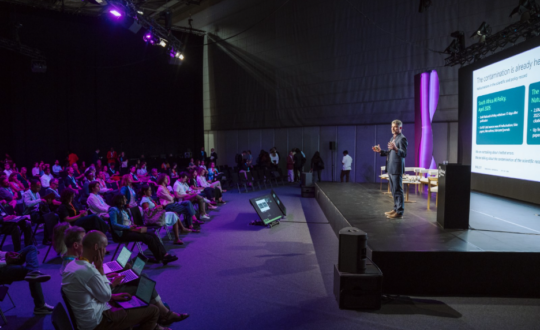
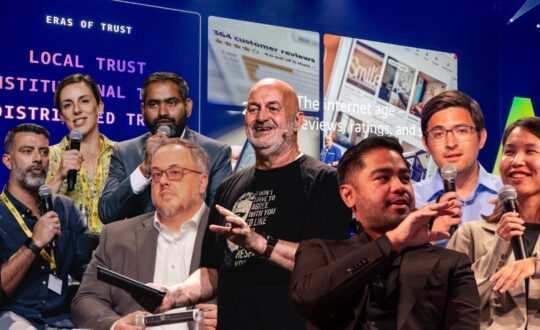
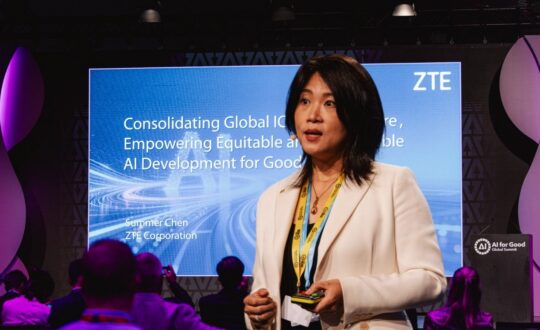
This July, PixVerse will be in Geneva for the AI for Good Global Summit, hosting a workshop, supporting the Film Festival, and offering the PixVerse Special Prize to creators worldwide who want to bring their own stories to the same stage. For Weinerman, that context matters. “Responsible AI means performing work for brands that respects their values, avoids actions that could cause trouble, and refrains from infringing on an individual’s likeness without consent,” he says. It is a principle that sits alongside the AI for Good mission: technology that expands what’s possible, used with care for the people it affects.
“None of this would have been possible without PixVerse,” Grin says. “It gave me the motivation that this can actually be done. And here we are.”
Pimen puts it simply: “When we recognize our own fears in someone else’s story, we become a little less alone.” That is what the work is for – and why it matters who gets to make it. “None of this would have been possible without PixVerse,” Grin says. “It gave me the motivation that this can actually be done. And here we are.”