


Digital Solutions Integration
We focus on embedding cutting-edge AI and complementary digital technologies throughout the entire food value chain for optimizing real-time, hyperlocal agri-interventions for enhanced efficiency.

Knowledge-sharing
Facilitating the exchange of best practices, research findings, and insights to build collective understanding and expertise in digital agriculture, closed-loop agroproduction platforms and food systems.

Synergistic Partnerships
Building and fostering collaborative relationships between diverse stakeholders to drive innovation for mixed food models and amplify impact across the sector.

Proof-of-Concept
Developing and testing innovative AI applications in real-world scenarios to demonstrate their feasibility and potential for scalable solutions for food science and Agricommons platforms.

Seizo Onoe took office as Director of the Telecommunication Standardization Bureau (TSB) at the International Telecommunication Union (ITU) on 1 January 2023.Before his election as TSB Director by ITU Member States, he completed an over 30-year career with Japanese mobile operator NTT DOCOMO. In 2021, he became Executive Vice President and Chief Standardization Strategy Officer for the Nippon Telegraph and Telephone (NTT) Corporation and a Fellow of NTT DOCOMO, INC. From 2017, he served as NTT DOCOMO’s Chief Technology Architect and President of its subsidiary DOCOMO Technology.Between 2012 and 2017, he served as NTT DOCOMO’s Chief Technology Officer and Executive Vice President, a Member of the Board of Directors, and Managing Director of R&D Innovation Division. Earlier, he served as Senior Vice President and Managing Director of NTT DOCOMO’s R&D Strategy Department and Managing Director of the company’s Radio Network Development Department.As TSB Director, he heads the part of ITU responsible for the coordination of technical standards and collaborative standardization processes that enable the interconnection and interoperability of information and communication technologies (ICTs) worldwide.Mr Onoe is committed to facilitating open and inclusive standardization processes, along with promoting digital technologies to address global issues, building a new ecosystem that reflects evolving technologies, and strengthening cooperation and collaboration in ICT standardization worldwide.Known in the industry as “the father of LTE” (Long-Term Evolution), he helped upgrade the wireless broadband standard for mobile devices and networks. He now aims for global outreach to bridge standardization gaps, deliver the benefits of technology widely and speedily, and ensure meaningful and affordable broadband access for everyone.Mr Onoe holds a Master’s degree in electronics from the Kyoto University Graduate School of Engineering.
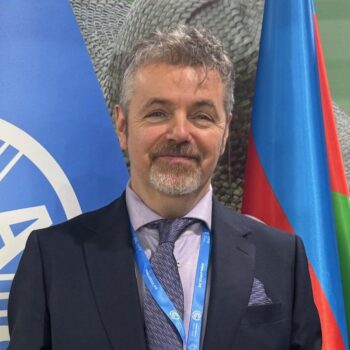
A national of Ireland, he holds a PhD in Plant Genetics and Biotechnology from Trinity College Dublin, and a Bachelor of Science in Biotechnology from Dublin City University. He has held scientific positions in leading international research institutions, including the John Innes Centre (United Kingdom), Cold Spring Harbor Laboratory (United States of America), the Friedrich Miescher Institute (Switzerland) and the University of Zurich (Switzerland).
Prior to his appointment at FAO, he served since September 2009 as Established Professor (Chair) of Plant Science, and Leader of the Agriculture, Food Systems and Bioeconomy Research Centre at the University of Galway, Ireland. From 2017 to 2024, he was Director of the interdisciplinary Ryan Institute, providing strategic leadership for interdisciplinary research by over 100 research teams addressing sustainable development challenges.
Prior to joining FAO, he was a Member of the Board of Trustees of the International Center for Agricultural Research in the Dry Areas (ICARDA), within the Consultative Group on International Agricultural Research (CGIAR) system. He was also a co-founder and Chair of the Irish Forum for International Agricultural Development (IFIAD) multistakeholder platform.
Over the past three decades, he has led interdisciplinary research in agri-biosciences, food security and climate change, overseeing projects, partnerships and capacity-building activities in more than 60 countries worldwide. His interdisciplinary work has consistently focused on advancing science-based, inclusive and sustainable solutions to support agricultural development and global food security.
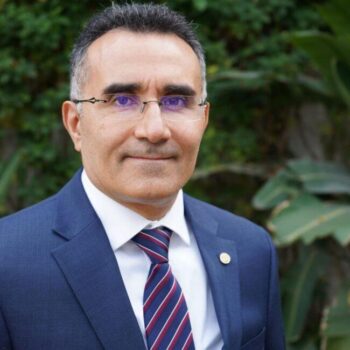
Dr Bilel Jamoussi, a distinguished engineer and diplomat, is the Deputy Director of ITU Telecommunication Standardization Bureau and Chief, Study Groups & Policy Department (SPD) in Geneva, Switzerland. His primary mission is to establish the international standards essential for ensuring global telecommunications and ICT interoperability, promote universal, meaningful connectivity and champion sustainable digital transformation. Key achievements under his tenure have been important new standards, ensuring increased industry engagement, bolstering cooperation with other standardization bodies, as well as leading in emerging tech discussions and building strategic partnerships. Before 2010, he held executive roles, including Director of Standards for Nortel, and contributed to over 90 international standards bodies. With a PhD in Computer Engineering from Pennsylvania State University, he is an IEEE Senior Member and has served on the IEEESA Board of Governors. A key voice in the global ICT arena, he is a regular keynote speaker at events like the Global Cybersecurity Forum and is frequently interviewed by top media outlets. Fluent in Arabic, French, and English, with knowledge in Spanish and German, Bilel’s global perspective has been shaped by living and working in Tunisia, Canada, the USA, and Switzerland.

Dr. Vincent Martin is the Director of the FAO Office of Innovation (OIN), where he is responsible for leading the Organization’s innovation agenda as part of the Science and Innovation strategy.
Dr. Martin brings 28 years of experience in science, research, and policy as they relate to issues surrounding agrifood systems. Prior to serving as Director of OIN, Dr. Martin served as the United Nations Resident Coordinator in the Republic of Guinea. There, he oversaw 24 UN agencies, driving efforts towards the Sustainable Development Goals, leading humanitarian initiatives, and tackling critical matters in development, politics, peace, and security, always bringing innovation into UN programmatic interventions.
He also served as FAO’s representative to China and DPR Korea, where he played a key role by leveraging his knowledge of food security, global health and nutrition issues in shaping strategies for preventing epidemic diseases and foster agricultural policies for innovation.
Before his work in China, Dr. Martin earned recognition as “Knight of the Order of the Lion” in Senegal for his notable contributions in the same fields, as FAO Representative and Head of the FAO Regional Hub for emergency and humanitarian interventions in the Sahel and West Africa.

Sebastian Bosse is head of the Interactive & Cognitive Systems group at Fraunhofer Heinrich Hertz Institute (HHI), Berlin, Germany. He studied electrical engineering and information technology at RWTH Aachen University, Germany, and the Polytechnic University of Catalonia, Barcelona, Spain. Sebastian received the Dr.-Ing. degree in computer science from the Technical University Berlin in 2018.
During his studies, he was a visiting researcher at Siemens Corporate Research, Princeton, USA. In 2014, Sebastian was a guest scientist in the Stanford Vision and Neuro-Development Lab (SVNDL) at Stanford University, USA.
After 10 years as a research engineer working in the Image & Video Compression group and later in the Machine Learning group, he founded the research group on Interactive & Cognitive Systems at Fraunhofer HHI in 2020 that he has headed since.
Sebastian is a lecturer at the German University in Cairo. He is on the board of the Video Quality Expert Group (VQEG) and on the advisory board of the Interational AIQT Foundation. Sebastian is an affiliate member of VISTA, York University, Toronto, and serves as an associate editor for the IEEE Transactions on Image Processing. Since 2021 he has been appointed a chair for the ITU focus group on Artificial Intelligence for Agriculture.
His current research interests include the modelling of perception and cognition, machine learning, computer vision, and human-machine interaction over a wide field of applications ranging from multimedia and augmented reality, through medicine to agriculture and industrial production.
For further information, please contact Mythili Menon (ITU)


Partners


Strategic Collaborators