
 Register here
 Reset search
Secretary-General
, International Telecommunication Union (ITU)
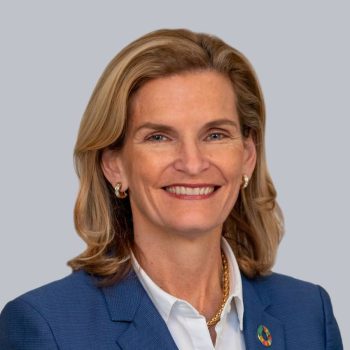
Doreen Bogdan-Martin took office as Secretary-General of the International Telecommunication Union (ITU) on 1 January 2023. Ms Bogdan-Martin was elected as ITU’s first-ever female Secretary-General by Member States at the Union’s Plenipotentiary Conference in Bucharest, Romania.
Ms Bogdan-Martin was previously the Director of the ITU Telecommunication Development Bureau. She took office on 1 January 2019, becoming the first woman in ITU history to hold one of the organization’s top elected management positions.
Ms Bogdan-Martin is a strategic leader with more than 30 years’ high-level experience in international and inter-governmental relations and a long history of success advising governments around the world on policy and regulatory issues.
From 2008-2018, she led ITU’s Strategic Planning & Membership Department. She was instrumental in establishing the Broadband Commission for Sustainable Development, on which she has served as Executive Director for more than a decade, and was an architect of the annual Global Symposium for Regulators, the pre-eminent global event for digital policymakers, as well as director of ITU’s first global youth summit, #BYND. She pioneered and oversees ITU’s ongoing contribution to the EQUALS Global Partnership for Gender Equality in the Digital Age, and is leading ITU’s collaboration with UNICEF on the Giga project to connect all the world’s schools.
Ms Bogdan-Martin is a frequent speaker at top-level international policy events and has spearheaded ITU’s new Youth Strategy to more actively engage with the young people who are driving the next wave of digital transformation.
During her tenure as Director of BDT, she has led the implementation of a Results-Based Management system, improved internal accountability frameworks, and initiated a comprehensive review of reporting mechanisms across BDT’s global network of field and area offices, with a view to creating a more dynamic, responsive and fit-for-purpose organization.
Ms Bogdan-Martin holds a Master’s degree in International Communications Policy from American University in Washington, DC, post-graduate certification in Strategies for Leadership from the Institute for Management Development in Lausanne, Switzerland, and is certified in Accountability and Ethics by the United Nations Leaders Programme.
She is an affiliate of the Harvard University Berkman-Klein Center for Internet and Society, a Generation Unlimited Champion, and a Champion of the EDISON Alliance led by the World Economic Forum. She serves on a number of advisory bodies, including the Geneva-Tsinghua Initiative, the SDG Lab Advisory Board, the UN Technology Innovation Labs, and the Alumni Expert Council of the Internet Governance Lab of American University in Washington D.C. She is also a qualified amateur radio operator.
Ms Bogdan-Martin is married with four children.
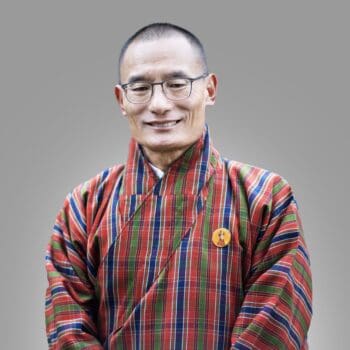
Prime Minister
, Kingdom of Bhutan
- Born on 19th September 1965.
- Completed early education in Bhutan.
- Obtained Bachelor’s degree in mechanical engineering from the University of Pittsburgh, USA.
- Obtained Master’s degree in Public Administration from the John F. Kennedy School of Government at Harvard University, USA.
- Opposition Leader in the National Assembly of Bhutan from 2008 to 2013.
- Prime Minister of Bhutan from 2013 to 2018; re-elected in January 2024.
- A dedicated civil servant before entering politics, with particular focus on developing policies and programs to enhance technical education and vocational training in Bhutan.
- Commitment to social welfare extended beyond official duties – volunteered to establish Bhutan’s first Youth Center and form the Education Staff Welfare Scheme.
- First official to resign from his civil service position to participate in Bhutan’s transition to a parliamentary democracy; played a pivotal role in founding the People’s Democratic Party, the first registered political party in Bhutan for which he continues to serve as president.
- A strong advocate of Gross National Happiness; has spoken on leadership, conservation, climate change, poverty, democracy, and happiness at the United Nations, TED, and various international conferences.
- In recognition of his contributions, His Majesty The King conferred the Royal Orange Scarf in 2008 and again in 2013.
- In 2014, received the Royal Lungmar Scarf from His Majesty The King.
- Internationally recognized for his efforts in promoting sustainability, with the German Sustainability Award in 2016 and the Distinguished Leadership Award from the Hospitality Committee for United Nations Delegations in 2022.
- Married to Tashi Doma; has two children.
- Hobbies include volunteering, reading, trekking, bicycling, jogging, archery, yoga, music, and drama.

Chief Executive Officer
, TIME
Jessica Sibley is the Chief Executive Officer of TIME.
As CEO, Sibley oversees the global media brand which includes TIME’s iconic magazine and digital platforms that reach the largest audience in its history of 120 million people worldwide; TIME Studios, the Emmy Award-winning film and television division and producer of award-winning branded content; a rapidly growing global live events business; TIME for Kids, which provides trusted news with a focus on news literacy for children; and more.
Since joining as CEO in 2022, Sibley has accelerated TIME’s digital transformation, expanded into new platforms, and revitalized the TIME brand overall—leading TIME to be named Media Brand of the Year by the Digiday Media Awards in 2024. She has diversified TIME’s revenue streams, launched new products, supercharged its global live events business, increased advertising revenue and meaningfully engaged new audiences, all while upholding TIME’s vision of covering leaders who shape the world and providing trusted guidance to its global audiences.
Prior to joining TIME, Sibley was the Chief Operating Officer of Forbes, where she led all revenue and growth initiatives for the world’s largest business media brand and achieved five consecutive years of growth from 2018 to 2022. Previously, Sibley held senior leadership positions at The Wall Street Journal, Bloomberg, and Condé Nast.
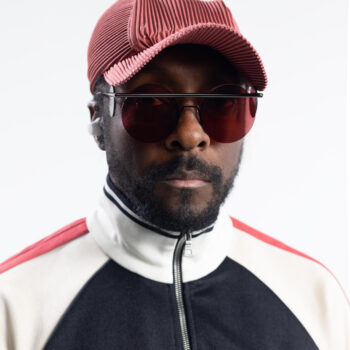
Musician, tech founder and philanthropist, Goodwill Ambassador, AI Skills Coalition
As a creative artist, tech entrepreneur, the Founder & CEO of FYI.AI, a Goodwill Ambassador, AI Skills Coalition for the United Nations International Telecommunications Union, and Professor of Practice in the GAME School at Arizona State University, will.i.am has been recognized by a CLIO Award, an Emmy Award, nine Grammy Awards, the James C. Morgan Global Humanitarian Award, a TIME 100 Impact Award, the World Economic Forum’s Crystal Award, and an Honorary Fellowship by the Institution of Engineering and Technology (IET – UK).
He is simultaneously a creative innovation advisor, futurist, multi-platinum Grammy-winning music artist, producer, entertainer and a tech entrepreneur as part of his cross-disciplinary career. He invests in and develops businesses in a range of sectors including the FYI Web 3.0 creativity & productivity tool, automotive, consumer-tech, fashion, food & beverage, software (AI, Natural Language Understanding, Voice Computing) and telecom.
His early work as Futurist and market opportunity spotter was with Beats Electronics. As a founding equity stakeholder in the company, will.i.am was instrumental in helping to transform Beats By Dre™ into a global consumer electronics brand. Beats Electronics was purchased by Apple in 2014 for US$3 billion.
will.i.am teams with the world’s leading companies helping them to embrace future technologies, what’s next in cultural trends and to develop new business initiatives. A sampling of multinational organizations he has collaborated with include Apple, Arizona State University, Coca-Cola, Deutsche Telekom, Formula 1, Honeywell, Intel, LG, Marvel Comics, Mercedes-AMG, Microsoft, NVIDIA, Qualcomm, Pepsi, Salesforce, SiriusXM and UPROXX Studios.
In philanthropy will.i.am established his i.am Angel Foundation in 2009 to transform lives through education, inspiration and opportunity incorporating STEAM (science, tech, engineering, arts and mathematics) education resources and robotics clubs in schools. i.am Angel Foundation programs also include after-school tutoring and scholarship aid for university-bound students in underserved areas. With a 99% graduation rate, participating students are often the first in their families to attend a four-year college or university.
Through a private-public partnership with Los Angeles Unified schools, the foundation has helped establish hundreds of after-school robotics clubs in high schools across the city. In collaboration with Arizona State University, his FYI.AI platform has been adapted to EDU.FYI to offer university-level courses, tutoring tools and student life resources. As a Professor of Practice at the GAME School at ASU, he is teaching a course, “The Agentic Self”, January – May 2026. Course students are using EDU.FYI and GPU technology provided by NVIDIA to build and maintain their personal AI agents.
As an education advocate, will.i.am serves on the boards of advisors and directors of College Track, FIRST Global (student robotics), Smithsonian Science Education Center Advisory Committee, and the Iovine-Young Academy at University of Southern California. In recognition of his work in Artificial Intelligence and education, will.i.am was appointed Goodwill Ambassador, AI Skills Coalition, United Nations International Telecommunications Union in 2025.

Inventor, Futurist & Best-selling author of ‘The Singularity is Near’
Ray Kurzweil is a world-class inventor, thinker, and futurist with a 36-year track record of accurate predictions. A leader in artificial intelligence for 63 years, he was the principal inventor of the first CCD flat-bed scanner, the first omni-font optical character recognition, the first print-to-speech reading machine for the blind, the first text-to-speech synthesizer, the first music synthesizer capable of recreating the grand piano and other orchestral instruments, and the first commercially marketed large-vocabulary speech recognition software.
Ray has won a Grammy, the National Medal of Technology, a place in the National Inventors Hall of Fame, and 21 honorary Doctorates. His latest book, The Singularity Is Nearer, debuted at #4 on the New York Times Best Seller list.
He served as a Director of Engineering and later Principal Researcher and AI Visionary at Google for 13 years where he developed an AI model that conversed in natural language with 100,000 books, a landmark precursor to today’s large language models.

First Secretary of Indigenous Peoples
, State of Pará (SEPI)
Puyr Tembé is one of the most important Indigenous leaders in Brazil. A woman from the Tembé people, she was born in the São Pedro village, located in the Alto Rio Guamá Indigenous Land, in the state of Pará. Since a young age, she has been active in defending Indigenous territories and rights, deeply inspired by the leadership of women in her family.
She is the first Secretary of Indigenous Peoples of the State of Pará (SEPI), a government department created in 2023, where she leads efforts in dialogue with Indigenous territories, the fight against environmental crimes, and the promotion of Indigenous participation in public policy.
Puyr is a co-founder of ANMIGA (National Articulation of Indigenous Women Warriors of Ancestry), has served as president of the Federation of Indigenous Peoples of the State of Pará (FEPIPA), and was part of UMIAB (Union of Indigenous Women of the Brazilian Amazon). She has also coordinated Indigenous School Education in the state and plays an active role both nationally and internationally.
Her journey is marked by the fight for environmental justice, women’s leadership, land demarcation, and the appreciation of ancestral knowledge. She is a mother, grandmother, and a protagonist of the international documentary We Are Guardians.
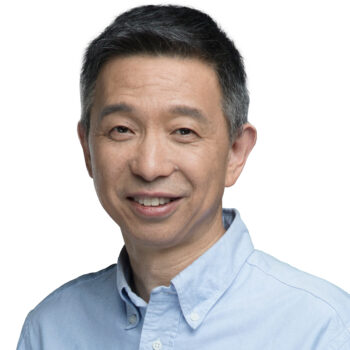
Director, Founder of Alibaba Cloud
, Zhejiang Lab
Appointed to the Independent International Scientific Panel on AI
Dr. Jian Wang is an Academician of the Chinese Academy of Engineering, Director of Zhejiang Lab, and Founder of Alibaba Cloud. The Cloud ranks third as a public cloud provider globally and first in Asia. He was also the chief architect of Apsara, its computing foundation, and took the lead in proposing the industrial model of using computing as a public service. In 2016, Dr. Wang pioneered and led the nonprofit City Brain initiative to develop a new digital infrastructure for sustainable “smart” cities as his personal effort and was the architect of Hangzhou City Brain. He founded the Yunqi Academy of Engineering, a private nonprofit research institute with a focus on scientific research for City Brain, and the Yunqi Science and Technology Innovation Foundation, a philanthropic private foundation that operates the free 2050 museum, which envisions the future through technology innovation and organizes the 2050 event every year in April, promoting the vision of science and technology bringing people together.

Chair and CEO
, Salesforce
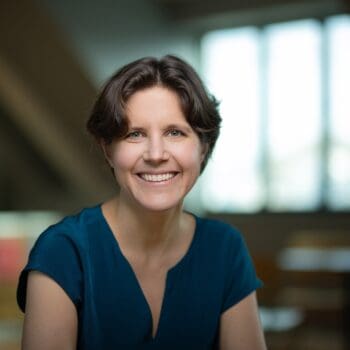
Senior Director of Research & Engineering
, Google DeepMind
Appointed to the Independent International Scientific Panel on AI
Joëlle Barral is a Senior Director of Research & Engineering at Google DeepMind (GDM). Based in Paris, she has a diverse portfolio of foundational research efforts, which includes theoretical and empirical aspects of frontier models as well as early-stage research in artificial intelligence and the life sciences. She is also in charge of GDM’s efforts in healthcare. She leads a team of researchers and engineers spread across Europe and North America.
Joëlle Barral was previously software lead at Verily, Google’s sister life sciences company, and the head of Verily Surgical. She joined Verily in 2014 and was part of the team who started Verb Surgical, Verily’s joint venture with Johnson & Johnson’s Ethicon, pioneering a vision for the future of robotic surgery that leverages machine learning and digital tools to enhance the surgeon’s judgment, improve decision making, and positively impact clinical outcomes.
Before joining Verily, she was with HeartVista, a spin-off from Stanford University, where she developed an MR software package for the comprehensive evaluation of ischemic and valvular heart diseases. Joëlle Barral has authored numerous patents on topics ranging from maternal health, digital pathology, surgical robotics, and medical imaging.
She holds a B.S. degree in Math and Physics from Ecole Polytechnique, France, and M.S. and Ph.D. degrees in Electrical Engineering, in the field of high-resolution Magnetic Resonance Imaging, from Stanford University, where she was also a Simon Stertzer Biodesign Innovation Fellow. She is the 2019 recipient of the Pierre Faurre Prize.

Head
, Federal Department of the Environment, Transport, Energy, and Communications DETEC
Albert Rösti was elected to the Federal Council on 7 December 2022. He holds a doctorate in technical sciences and a Master’s degree in agricultural engineering, and also earned an MBA through study in Bern and Rochester, New York. Prior to his election to the Federal Council, he owned a company active in public affairs and project management. Director of Swiss Milk Producers from 2007–2013, Dr Rösti had previously held various positions in the Bern cantonal government, including a period as secretary general of the Department of Economic Affairs from 2003–2006. Over the years he has also held a number of association and club roles.
In 2011 Dr Rösti was elected to the Swiss Parliament, where he was a member of the Environment, Spatial Planning and Energy Committee for 11 years and presided over the National Council’s Social Security and Health Committee in 2022. He was president of the Swiss People’s Party (SVP) from 2016–2019.
Dr Rösti is married with two adult children. He was born on 7 August 1967 in Frutigen, where he is also a citizen.
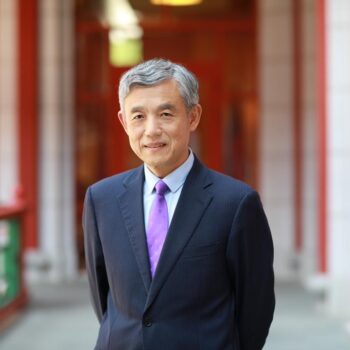
Director of Institute for AI International Governance, Director of China Institute for Science and Technology Policy, and Co-Director of Global Institute for SDGs
, Tsinghua University
Dr. Lan Xue is a Distinguished Professor and Dean at Schwarzman College Tsinghua University. His teaching and research interests include global governance, crisis management, and science, technology and innovation policy. From 2000 to 2018, he served as Associate Dean, Executive Associate Dean and Dean of the School of Public Policy and Management at Tsinghua University. He also holds adjunct positions at Carnegie Mellon University and the Brookings Institution. Dr. Xue advises the State Council, chairs China’s National Expert Committee on Next Generation AI governance, and is a member of the Standing Committee of the Chinese Association of Science and Technology. Internationally, he serves on the UN Sustainable Development Solution Network board, UN Committee of Experts on Public Administration, and UN Internet Governance Forum Leadership Panel.
Dr. Xue is a recipient of Distinguished Young Scholar Award from National Natural Science Foundation of China, Cheung Kong Chair Distinguished Professor of the Ministry of Education, the Fudan Distinguished Contribution Award for Management Science, the Distinguished Contribution Award from Chinese Association for Science of Science and S&T Policy, and the Second National Award for Excellence in Innovation in China. He holds a PhD in Engineering and Public Policy from Carnegie Mellon University.

Chief Digital Officer
, Universal Music Group
Michael Nash has worked at the forefront of entertainment media’s technological transformation for over 30 years. Labeled a “visionary” by The Atlantic, he’s led various digital enterprises and is widely recognized for his prominent role in revolutionizing the music business. Music Ally called him, “one of the most influential people in the global music industry.”
Nash currently serves as Universal Music Group’s EVP, Chief Digital Officer. He joined UMG in 2015 and oversees the industry leader’s global digital strategy, partnerships and business development. In his Corporate Management capacity, he works closely with operating units to align strategic direction and tactical execution. For “leading the industry’s response to AI” Fast Company designated UMG one of the world’s “50 Most Innovative Companies” of 2024. Nash has been named to every Billboard Power 100 List during his tenure.
Prior to joining UMG, Nash was a strategic advisor to digital media startups and served in senior management at Warner Music Group from 2000 to 2011, rising to EVP, Digital Strategy and Business Development, responsible for WMG’s global digital business.
Nash’s music industry career highlights include major deals—often first-of-their-kind partnerships—with companies such as Amazon, Apple, AT&T, Meta, Spotify, Tencent, Verizon, YouTube and many others.
Earlier in his career, Nash helmed the Madison Project, the music industry’s first digital distribution trial (1999). He founded Inscape, a digital media/games publisher backed by Time Warner that produced award-winning titles with artists such as William S. Burroughs, DEVO and The Residents (1994-1997). And he oversaw the Criterion Collection, working with luminaries such as Robert Altman, David Bowie, Terry Gilliam and Louis Malle, producing definitive editions of masterpieces like “Citizen Kane,” “Dr. Strangelove,” “The 400 Blows” and “Ugetsu” (1991-1994).
Nash’s quoted commentary on technology and culture has been featured in numerous periodicals including The Economist, the Financial Times, The New York Times and The Wall Street Journal.
Nash has art-world roots, with a wide range of publications and exhibitions to his credit, including presentations for the American Film Institute, Lincoln Center, The Museum of Contemporary Art and the Sundance Film Festival. Summarizing his career arc, the editors of “Give Them the Picture” wrote, “Nash used the interest he developed in emerging forms of digital culture while working as an art curator and critic, and became a pioneer of digital innovations in the business world.”
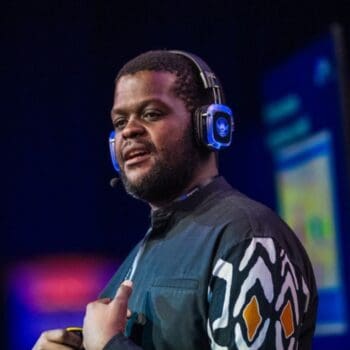
Director, African Institute of Data Science and Artificial Intelligence, Full Professor of Computer Science
, University of Pretoria
Appointed to the Independent International Scientific Panel on AI

Chief Technology Officer and Vice President
, Amazon
Dr. Werner Vogels is Chief Technology Officer at Amazon.com where he is responsible for driving the company’s customer-centric technology vision.
As one of the forces behind Amazon’s approach to cloud computing, he is passionate about helping young businesses reach global scale, and transforming enterprises into fast-moving digital organizations.
Vogels joined Amazon in 2004 from Cornell University where he was a distributed systems researcher. He has held technology leadership positions in companies that handle the transition of academic technology into industry. Vogels holds a PhD from the Vrije Universiteit in Amsterdam and has authored many articles on distributed systems technologies for enterprise computing.
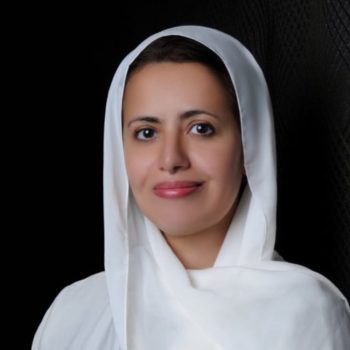
Founder & CEO
, Fadwa AlBawardi Consulting Office
Ms. Fadwa Saad AlBawardi, is a Saudi Arabian Entrepreneur who have established her own Consultancy office (FSAB), since 2022, to provide consulting services in Digital Transformation, Performance Management, Strategic Planning, Data and AI strategies.
Ms. AlBawardi is a Certified Strategy and Business Planning Professional, as well as an IT/Performance Management Senior Consultant, with more than 22+ years of working experience.
Moreover, she is a certified trainer as well as an Elsevier reviewer for international AI & technical research papers and articles. Ms. AlBawardi is also a public speaker and a workshop presenter in several national and international conferences including: United Nations ITU IGF2023 in Kyoto Japan, as well as UN ITU AI for Good Summits 2024 and 2025 (with more than 150 international workshop attendees) in Geneva Switzerland.
In addition, she is a trainer with United Nations Institute for Training and Research (UNITAR), and a certified trainer in KSA. She is also conducting several training and consultancy sessions with the African Tech community. Ms. AlBawardi also participated in the UN Digital Compact online meetings, as a stakeholder, providing insights and consultation reports on AI Governance.
Ms. AlBawardi is also an Author who have participated in writing several technical international publications, as well, including HiMSS Book of the Year (editions 2007, 2013 and 2018) in USA. She is also a USA Today Bestselling Author, as well as a weekly Columnist, with 200+ articles, in KSA digital journals, mainly about AI and Digital Economy themes.
Ms. AlBawardi has earned a Master’s degree in Computer Science from Boston University, USA, in 2003, as well as 2 certifications in Strategic Planning. Her Computer Science Bachelor Degree was from the American University in Cairo, in 1994, and she has also attended a Strategic Management course in Harvard University, USA, in 2019.

President
, Arizona State University
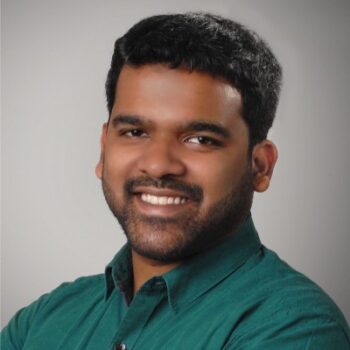
VP Strategy and Global Affairs
, Signal
Udbhav Tiwari is the VP for Strategy and Global Affairs at Signal. Udbhav’s experience in the technology sector spans both global and regional contexts, where he was formerly the Director for Global Product Policy at Mozilla, with prior roles at Google and the Centre for Internet and Society in India. He has testified before the U.S Senate Committee on Commerce, Science and Transportation and been quoted as an expert by CNN, The Guardian, Wired, Financial Times, BBC, and Reuters. Udbhav was previously affiliated with the Carnegie Endowment for Peace and was named to India Today’s “India Tomorrow” list in 2020.
Faculty member, Department of Computer Science and Engineering
, University of Louisville
Dr. Roman V. Yampolskiy is a tenured faculty member in the department of Computer Science and Engineering at the University of Louisville. He is the founding and current director of the Cyber Security Lab and an author of many books including “AI: Unexplainable, Unpredictable, Uncontrollable”. Dr. Yampolskiy’s main area of interest is Artificial Intelligence Safety and Security.
AI & Climate Lead
, Hugging Face
TIME100 AI
Dr. Sasha Luccioni is a leading scientist at the nexus of artificial intelligence, ethics, and sustainability, with a PhD in AI and a decade of research and industry expertise. She is the Climate Lead at Hugging Face, a global startup in responsible open-source AI, where she spearheads research, consulting and capacity-building to elevate the sustainability of AI systems. A founding member of Climate Change AI (CCAI) and a board member of Women in Machine Learning (WiML), Sasha is passionate about catalyzing impactful change, organizing events and serving as a mentor to under-represented minorities within the AI community. In 2024, Dr. Luccioni’s work was recognized by TIME Magazine’s 100 most influential people in AI and by Business Insider on its 2024 AI Power List.
Professor of Computer Science and Director of the Center for Human-Compatible AI
, University of California, Berkeley
Stuart Russell received his B.A. with first-class honours in physics from Oxford University in 1982 and his Ph.D. in computer science from Stanford in 1986. He then joined the faculty of the University of California at Berkeley, where he is Professor (and formerly Chair) of Electrical Engineering and Computer Sciences and holder of the Smith-Zadeh Chair in Engineering. He is also an Adjunct Professor of Neurological Surgery at UC San Francisco and Vice-Chair of the World Economic Forum’s Council on AI and Robotics.
Russell is a recipient of the Presidential Young Investigator Award of the National Science Foundation, the IJCAI Computers and Thought Award, the World Technology Award (Policy category), the Mitchell Prize of the American Statistical Association and the International Society for Bayesian Analysis, the ACM Karlstrom Outstanding Educator Award, and the AAAI/EAAI Outstanding Educator Award. In 1998, he gave the Forsythe Memorial Lectures at Stanford University and from 2012 to 2014 he held the Chaire Blaise Pascal in Paris. He is a Fellow of the American Association for Artificial Intelligence, the Association for Computing Machinery, and the American Association for the Advancement of Science.
His research covers a wide range of topics in artificial intelligence including machine learning, probabilistic reasoning, knowledge representation, planning, real-time decision making, multitarget tracking, computer vision, computational physiology, global seismic monitoring, and philosophical foundations. His books include “The Use of Knowledge in Analogy and Induction”, “Do the Right Thing: Studies in Limited Rationality” (with Eric Wefald), and “Artificial Intelligence: A Modern Approach” (with Peter Norvig). His current concerns include the threat of autonomous weapons and the long-term future of artificial intelligence and its relation to humanity.
Chief Executive Officer
, Turkcell
Dr. Ali Taha Koç was born in Ankara in 1980. He completed his undergraduate degree in 2001 at Bilkent University, Department of Electrical and Electronics Engineering with full scholarship. Later, he received his master’s and doctorate degrees in the Department of Electrical Engineering at the University of Texas at Dallas, both with full scholarships. Dr. Ali Taha Koç joined Intel in 2006 as a research and development (R&D) engineer in the USA. During his tenure at Intel, he developed 63 patents, published 23 scientific articles, and developed and managed several international projects. In 2013, he became one of the 10 awarded engineers who developed the most patents at Intel. After returning to Türkiye in 2014, he began working as the Chief Counsellor of the Prime Ministry and in the same year was appointed as the Head of Information Technologies of the Presidency. During his tenure at the Presidency, he also managed the formation of the State Information Coordination Center (SICC) in the Presidency Security Policies Department, and initiated the information flow from all ministries and security units to the Presidency. Koç was appointed as the Head of the Digital Transformation Office on 12 September 2018. Besides his duties at the Presidency, he also served as a board member of Türksat Uydu Haberleşme Kablo TV ve İşletme A.Ş. (Türksat Satellite Communications Cable TV and Business Inc.). As of October 2023, he is the Chief Executive Officer of Turkcell and serves as a board member of the International GSM Association (GSMA), Türkiye’s Automobile Joint Venture Group (TOGG), ULAK Haberleşme A.Ş., Mobile Telecommunication Operators Association (m-TOD) and Siro. He is also a licensed pilot, fluent in English, and married with one child.

Founder and Managing Partner
, Fusion Fund
Lu Zhang, Founder and Managing Partner of Fusion Fund, is a renowned Silicon Valley-based investor, a serial entrepreneur, and a Stanford Engineering alumna. With a strong technical background, Lu has extensive experience bringing a broad range of technologies to commercialization, and deep domain expertise in AI in healthcare, Enterprise AI/Networks, Edge Computing and Data Privacy. Founded by Lu in 2015, Fusion Fund is dedicated to supporting early-stage entrepreneurs working on innovation in healthcare, enterprise AI and industrial automation. With investments in over 90 companies across the U.S. and Canada, Fusion Fund has generated substantial exits over the years.
Prior to starting Fusion Fund, Lu was a serial entrepreneur and materials science researcher. Following the exit of her startup, Lu began investing in and supporting early-stage entrepreneurs. This eventually led her to create Fusion Fund in 2015. Since then, Lu has built a distinguished ecosystem and established her reputation in the VC industry. She was honored as Young Global Leader by World Economic Forum (Davos), Silicon Valley Women of Influence, Top 25 Female early-stage investor by Business Insider, Featured Honoree of VC of Forbes 30 under 30 and Town & Country 50 Modern Swans – Entrepreneurship Influencer.
Lu frequently speaks at high profile tech conferences such as World Economic Forum (Davos), Future Investment Initiative (FII), Web Summit, SuperReturn, etc. and she is a guest lecturer at Stanford University and Wharton. Lu serves as a board member of many portfolio companies, the Board Director of CommonSpirit Health Foundation, the Board and Chairwoman of the Youth Council of Future Science Award, and Jury Board of the Cartier Women Initiative and Young Leader Award. She holds an M.S. in Materials Science and Engineering from Stanford University.
Founder and CEO
, ProRata & Gist
Bill Gross is a lifelong serial and parallel entrepreneur who has started more than 150 companies with more than 50 successful IPOs and acquisitions. He started the first and longest-running technology incubator in the world – Idealab – in 1996 in Pasadena, California, near his alma mater, Caltech, where he graduated with a degree in Engineering and Applied Science.
Bill has been on the forefront of disruptive innovation his entire life and his mission is to challenge the status quo, to be bold, and to solve big challenges in the world that others would not.
Among the transformative changes that Bill has wrought is the invention of the business model that powers most of the monetization of the Internet. Bill invented the “paid click”, or CPC (bidded keyword cost-per-click) model with the company GoTo/Overture, which he founded in 1998. After a successful IPO and becoming the global market leader in paid search, the company was acquired by Yahoo in 2003. Today, Bill’s pioneering idea is used by Google and millions of websites around the world and remains one of his most significantly impactful inventions.
Bill is also at the forefront of climate tech and AI tech and is pioneering a new system of fair attribution, compensation, and monetization in generative AI with his newest company, ProRata.ai. Bill is a visionary who sees the future and relishes sharing that with the world and helping entrepreneurs globally with his lessons learned from a lifetime of business creation.
In addition to serving as Idealab’s board chairman and the CEO of ProRata & Gist, Bill is also a member of the Board of Trustees of the California Institute of Technology and of the ArtCenter College of Design.

Senior Director, Corporate sustainability
, NVIDIA
Josh Parker joined NVIDIA in 2023 to lead the company’s corporate sustainability program. Josh studied electrical engineering and spent several years practicing IP law at a large law firm and later for the computer storage company Western Digital. While at Western Digital, he was asked to lead the company’s ethics and compliance program in Asia and later to build a new corporate sustainability program for the company. At NVIDIA, Josh is pursuing a data-driven approach to sustainability, believing that accurate and credible data is a prerequisite for effectively managing impacts. Josh is also deeply persuaded that technology—especially AI—can play a critical and dramatic role in solving world-scale sustainability challenges.
Deputy Minister
, Ministry of Science and ICT, Republic of Korea
Mr. Kyeongman KIM serves as Deputy Minister at the Office of Artificial Intelligence Policy in the Ministry of Science and ICT (MSIT) of the Republic of Korea. In this role, he is responsible for shaping and implementing Korea’s national artificial intelligence policies and advancing strategies to strengthen the country’s digital and AI ecosystem.
Prior to his current position, Mr. Kim was the Director General of the Artificial Intelligence Policy Bureau and earlier, the Director General of the Telecommunications Policy Bureau at MSIT, overseeing the development of key telecommunications and digital policy initiatives. Throughout his career in public service, he has held several senior positions within the Korean government including Director of the AI Infrastructure Policy Division, Director of the Postal Business Information Center, and Director of the Telecommunications Competition Policy Division. He also served as a seconded official to the Organisation for Economic Co operation and Development OECD and as Secretary at the Korea Communications Commission, contributing to international and national digital policy development.
Mr. Kim joined the Korean civil service after passing the national civil service examination in 1997 and has since built extensive experience in telecommunications, digital infrastructure, and artificial intelligence policy.
He holds a Master’s degree in Public Administration from the University of Colorado Denver and completed doctoral coursework in Technology Policy at Yonsei University. He received his Bachelor’s degree in Business Administration from Korea University.

Professor of Responsible Artificial Intelligence, Department of Computing Science
, Umeå University
I am Professor of Responsible Artificial Intelligence at the Department of Computing Science at Umeå University, Sweden, where I lead the AI Policy Lab .
I am Wallenberg Scholar (2024) and Senior Advisor on AI Policy to the Wallenberg Foundations. I am a member of the Royal Swedish Academy of Engineering Sciences (IVA), and Fellow of the European Artificial Intelligence Association (EURAI) and of ELLIS (European Laboratory for Learning and Intelligent Systems). I am also Guest Professor at the Civic AI Lab, University of Amsterdam, and Honorary Professoral Fellow at the University of Melbourne.
Given the increasing importance of understanding the societal, ethical, and legal impact of AI, I am deeply involved in international AI governance, policy, and strategy initiatives. I am currently co-chair of the ACM Tech Policy Council, member of UNESCO’s High-Level Expert Group on the Implementation of the UNESCO AI Ethics Recommendation, and member of the OECD Expert Group on AI Futures. I am also founder of ALLAI, the Dutch AI Alliance, and former member of the United Nations High-Level Advisory Body on AI, the European Commission High-Level Expert Group on Artificial Intelligence, and co-chair of the World Economic Forum Global Future Council on Artificial Intelligence. As part of UNESCO’s AI Ethics Experts Without Borders, I advise governments worldwide on the development and operationalization of national AI strategies.
My research focuses on the interconnections between people, organizations, technology, and policy, with a strong emphasis on responsible and governance-aware AI systems. My work spans from formal and computational models of agency, norms, and institutions to applied AI policy, evaluation frameworks, and socio-technical system design, combining theory, engineering, and methodological design.
I have held major leadership roles in the AI research community, including Program Chair of AAMAS 2024 and Ethics Chair of AAAI 2024, and I currently serve on multiple international advisory boards and expert panels.
In recognition of my work, I am recipient of the AI Policy Leader 2025 Award (CAIDP), AI and Ethics Professional of the Year 2022, and the Medal of Honour of the City of Oeiras (Portugal). I have published over 300 peer-reviewed articles with over 19,000 citations. My newest book, The AI Paradox, is published by Princeton University Press (2026).
I regularly speak internationally on AI ethics, governance, and policy, advise public and private organizations, and contribute to major journals, conferences, and policy processes.
I also actively communicate about AI and its societal impact and can be followed on LinkedIn or Bluesky, or through my blog Thinking in Public.

Chief Executive Officer
, Raspberry Pi Foundation
Philip is chief executive of the Raspberry Pi Foundation, an educational charity with a global mission to enable young people to realise their full potential through the power of computing and digital technologies.
Philip was previously a non-executive director of the Foundation’s commercial business, Raspberry Pi Ltd and part of the team that led the successful IPO of the business on the London Stock Exchange in June 2024.
Prior to joining Raspberry Pi, Philip was the Deputy Chief Executive of the UK’s innovation foundation, Nesta, where he built programmes and ventures to address social problems through innovation.
He was a non-executive director of the Behavioural Insights Team (the Nudge Unit) and a founding trustee of the Centre for London. He served as an adviser on social innovation to the UK government, and has advised municipal and national governments, charities, and social enterprises all over the world.
Earlier in his career, Philip was a chief officer at the London Borough of Camden and a senior civil servant in the Home Office.
Philip has a degree in law from the University of Liverpool and qualifications in management and finance. He was awarded a CBE for services to Engineering and Technology for Societal Impact in the King’s Birthday Honours in 2025.
Outside of work he is a dad, craft cider maker, and a slow cyclist. He is an active member of the local community, having served as a scout volunteer, a school governor, and trustee of a local arts organisation.
CEO
, The Atlantic
Nicholas Thompson is the CEO of The Atlantic, a position he has held since 2021. During that time, the publication has won three National Magazine Awards for General Excellence, three Pulitzer Prizes, and been named Digiday’s Publisher of the Year. It has also significantly grown revenue, while reaching the highest level of subscribers in its 167-year history. Thompson is also the former editor-in-chief of WIRED, where he built successful subscription and affiliate revenue businesses. While at WIRED he also wrote and edited multiple stories that were cited in front of Congress and one that was turned into an Academy Award winning film. Another of his stories was recently turned into a documentary for HBO Max.
Thompson is a cofounder of The Atavist, a multimedia CMS that was sold to WordPress, and Speakeasy.ai, which was sold to Amplica Labs. He previously served as editor of NewYorker.com. He is a life member at the Council on Foreign Relations, a board member at The National Committee on American Foreign Policy, the author of The Running Ground and The Hawk and the Dove: Paul Nitze, George Kennan, and the History of the Cold War, and a former contributor to CNN and CBS News. He films a daily video on tech policy for Linkedin and has roughly two million followers across social media platforms. Thompson has long been a competitive runner. In 2021, he set the American record for men aged 45 and older in the 50K race, and in 2025, he became the top-ranked runner in the world in his age group for the 50-mile run. He is a Phi Beta Kappa graduate of Stanford where he earned degrees in Earth Systems, Political Science, and Economics.

Chief Legal Officer
, Cloudflare
Alissa Starzak is the Chief Legal Officer at Cloudflare, the cloud connectivity company on a mission to help build a better Internet. Cloudflare empowers organizations to make their employees, applications, and networks faster and more secure everywhere, while reducing complexity and cost. Powered by one of the world’s largest and most interconnected networks, Cloudflare blocks billions of threats online for its customers every day.
Prior to joining Cloudflare, Alissa worked for the U.S government in a variety of national security positions. Most recently, she served as the 21st General Counsel of the Department of the Army, after confirmation by the Senate. Before her appointment as Army General Counsel, Alissa served in a variety of senior positions in both the Executive branch and the Senate, worked in private practice in Washington, D.C., and clerked for the Honorable E. Grady Jolly, U.S. Court of Appeals for the Fifth Circuit. She graduated from Amherst College and the University of Chicago Law School.
Group CEO
, e&
Hatem Dowidar is the Group CEO of e&. He joined e& in September 2015, initially serving as Group Chief Operating Officer. He was appointed Chief Executive Officer, International in March 2016, and in May 2020, he became the Group’s Chief Executive Officer.
Ever since he took the company’s helm, Dowidar was the architect for the group’s transformation from a traditional telco to a technology group. He has spearheaded several ground-breaking strategic programmes that propelled the company’s business growth to new heights across the 38 markets where it now operates. As the company transformed into a global technology group in February 2022, and despite the ever-changing business landscape, his astute brand stewardship has been the foundation for enhancing e&’s brand equity, enhancing employee experience, and adding value to stakeholders.
Today, e& is the Fastest Growing Technology Brand and the most valuable brand portfolio in the Middle East and Africa , standing tall in global rankings. Dowidar also has been recognised by Brand Finance as the number one ranked telecom leader globally on the Brand Guardianship Index 2024. e& also attained the highest position in Brand Finance’s inaugural Employer Brand Report 2024, with its UAE entity ranking as the Top Global Telecoms Employer.
A highly skilled strategist and visionary, Dowidar has been instrumental in ushering in a new phase of strategic partnerships and key collaborations with global industry leaders that will digitally empower societies.
Prior to joining the group, Dowidar was the Group Chief of Staff for Vodafone Group based in London. He brings more than 30 years of experience in multinational companies and more than 25 years of these within the telecommunications industry across various leadership positions.
He initially joined Vodafone Egypt in 1999, served as Marketing Director (CMO), and later became the CEO of Vodafone Egypt from 2009 – 2014, where he steered the business growth with benchmark profitability in challenging and competitive environments. Dowidar has a long track record of achievements in the various leadership positions he held at Vodafone Group and its subsidiaries, including Group Core Services Director, Chairman and CEO of Vodafone Malta, CEO of Partner Markets with partnerships covering over 45 markets, and Regional Director Emerging Markets. He also has extensive Corporate Governance experience through his representation as Chairman and Board Member on several Corporate Boards within and outside the telecommunications industry.
Dowidar began his career in AEG/Deutsche Aerospace (Daimler Benz Group) in Egypt before moving into marketing at Procter & Gamble, where he held several managerial roles.
He is currently a board member of Vodafone Group, Etihad Etisalat Company (Mobily), Maroc Telecom, and Etisalat Misr (Etisalat Egypt).
On a global industry level, Dowidar is a member of the GSMA and the United Nations Internet Governance Forum (IGF) leadership panel. GSMA is an industry organisation representing the interests of global mobile operators and the broader mobile ecosystem. IGF leadership panel is a multi-stakeholder group for policies and practices relating to the Internet and technologies. Convened by the Secretary-General of the United Nations, the IGF facilitates knowledge exchange on how to maximise Internet opportunities and address risks and challenges.
Previously, Dowidar served as a board member for Hutch Lanka, Etisalat Nigeria, Attijariwafa Bank Egypt, Barclays Bank Egypt and Vodacom Africa, Vodafone Egypt and Malta, and ElSweedy Electrometers.
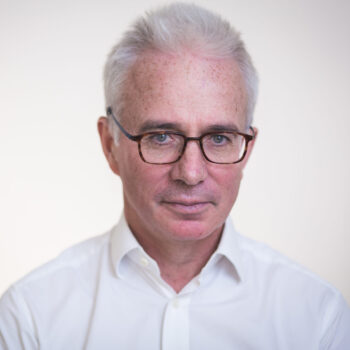
Executive Director
, The Global Fund
Peter Sands has been the Executive Director of The Global Fund to Fight AIDS, Tuberculosis and Malaria since March 2018.
Between 2015 and 2017 Peter was a Research Fellow at Harvard University, dividing his time between the Mossavar-Rahmani Center for Business and Government at Harvard Kennedy School and the Harvard Global Health Institute.
Peter was Group CEO of Standard Chartered PLC from November 2006 to June 2015, having joined the Board of Standard Chartered as Group CFO in May 2002.
Prior to joining Standard Chartered, Peter was a Senior Partner at McKinsey & Co.
Peter has served on various boards and commissions, including the UK’s Department of Health, the World Economic Forum and the International Advisory Board of the Monetary Authority of Singapore. He is currently Chair of the Board of Cera, a digital-first home healthcare company based in the UK.
Peter graduated from Oxford University with a First Class degree in Politics, Philosophy and Economics. He also received a Master in Public Administration from Harvard University, where he was a Harkness Fellow. Peter, who grew up in Singapore and Malaysia, is married to author Betsy Tobin and has four children.

Executive Director of the Office of AI and Advanced Technology at the Department of Finance, CEO and Founder of AIE3
, Chairperson of UN AI for Good Impact Initiative
Chair of the AI for Good Impact Initiative
Dr. Ebtesam Almazrouei is a pioneering force in artificial intelligence (AI) and advanced technology, with a wealth of experience spanning both government and the private sector. Her exceptional expertise in artificial intelligence, supercomputing, telecommunications, semiconductors, technology governance, advanced technology, and strategic innovation has positioned her at the forefront of AI leadership globally, earning recognition among H2o.ai’s world’s top 100 AI leaders. As a thought leader, entrepreneur, and patent inventor, Dr. Almazrouei has been instrumental in pioneering cutting-edge AI models and fostering global AI policy frameworks.
Dr. Ebtesam Almazrouei plays a key role in shaping AI strategies and frameworks, and building international collaborations on a global scale. She serves as Chairperson of the United Nations AI for Good Impact Initiative and as a Senior AI Consultant for the International Telecommunication Union (ITU), playing a critical role in shaping global AI policies, technology governance, and regulation frameworks.
Dr. Almazrouei’s exceptional contributions have garnered her notable honors, including the Leading AI Women in the World list, the Global Leadership Women in Tech® MENA Award, and a spot among the Top 100 Global Tech Speakers. She also holds various advisory roles and board memberships across various international organizations.
As the CEO and Founder of AIE3, Dr. Almazrouei continues to drive AI innovation, developing scalable AI solutions, building capacity, and leading industry-wide advancements. She previously held senior executive roles, including Executive Director, Acting Chief AI Researcher, and Founder of the AI Cross Center Unit (AICCU) at the Technology Innovation Institute (TII). She established and led the AI Cross Center, driving strategic planning and development. Dr. Ebtesam Almazrouei directed and spearheaded the development of the Falcon Large Language Models (LLMs)—Falcon 7B, 40B, and 180B. These AI models have made significant strides in AI research and development in the world, particularly in open-source generative AI models. Additionally, she developed NOOR, the first and the largest Arabic LLM in 2022.
Dr Ebtesam Almazrouei is the first Emirati woman to hold a Ph.D. in Artificial Intelligence for Wireless Communication Engineering and Computer Science. Her vision is to leverage AI to address global challenges and drive meaningful societal impact.

Emmy Award-Winning Television Journalist & Communications Coach
Emmy award-winning television journalist and coach Jane Hanson has spent over 30 years helping people learn to communicate better. Not only does it enhance their presence, and ensure they resonate with every type of audience, but in today’s fast paced world, it is imperative to be on one’s game 24/7. Hanson focuses on three core elements: what you say, how you say it, and how your body language keeps it all in sync.
Among her diverse array of media and presentation training clients: top tier leaders of corporations spanning the fields of finance, insurance, startups, technology, education, fashion and media; publishers and editors in chief of numerous national magazines; key opinion leaders in the pharmaceutical industry; politicians and world leaders, internet entrepreneurs; chefs and restaurateurs. She has also hosted programs on cable channels and private satellite broadcasts, covering nearly every subject, from healthcare to food to finance to religion. And she is a frequent speaker, emcee, host, and panel moderator. Events she has participated in range from the New York Emmys to Toys for Tots to the Race for the Cure to the Randall’s island Sports Foundation. She has hosted events for virtually every industry, many health care issues, dozens of schools and colleges, and many groups focusing on women and children. She is also a Forbes contributor and uses her experience working with executive leaders to offer her unique insight and expertise.
Jane Hanson grew up on the prairies of rural Minnesota, coming to New York three decades ago to join the NBC networks. She began as an anchor and correspondent for NBC New York in 1979. In 1988, Jane was named co-anchor of “Today in New York,” a position she held until 2003 when she became the station’s primary anchor for local programming and the host of “Jane’s New York”; She covered events ranging from the tragedy of 9/11 to the joy of Yankees victory parades to Wall Street and Washington; has interviewed presidents, business magnates, prisoners, and celebrities; traveled as far as the Gobi Desert of Mongolia and the great depths miles below New York City for her special reports. Most recently she hosted a daily entertainment and lifestyle program, New York Live, for NBC4 in New York City.
Jane has won 9 Emmy Awards. In addition, she was named Correspondent of the Year by New York’s Police Detectives and received a similar honor from New York’s Firefighters. She has also been the recipient of numerous other awards for her service to the community. Jane has served as the March of Dimes Walk-America Chairman, honorary chair for the Susan B. Komen Foundation’s Race for the Cure, and as a board member of Graham Windham, Phipps Houses, the Randall’s Island Sports Foundation, the Westhampton Beach Performing Arts Center, and Telecare. She has taught courses on communication at Long Island University, Stern College, and the 92nd Street Y. Hanson is a Past President of the New York Chapter of the National Academy of Television Arts and Sciences.

Associate Professor
, University of Pennsylvania
Dr. Michelle J. Johnson is an Associate Professor of Physical Medicine and Rehabilitation at the Perelman School of Medicine at the University of Pennsylvania. She has secondary faculty appointments in the Departments of Bioengineering and Mechanical Engineering and Applied Mechanics in the School of Engineering and Applied Sciences at University of Pennsylvania.
Dr. Johnson holds a Ph.D. in Mechanical Engineering from Stanford University, with a specialization in design, robotics and rehabilitation. Her pioneering work focuses on developing robotic and sensor-based technologies to assist individuals recovering from neurological injuries, such as stroke and other non-traumatic brain injuries.
As the Director of the Rehabilitation Robotics Lab (A GRASP Lab), Dr. Johnson leads an interdisciplinary team that designs and evaluates assistive robots and therapeutic devices to improve motor control, physical function, cognitive function and quality of life in older adults and adult and children with disabilities.
Her research integrates principles from robotics, neuroscience, and rehabilitation science to create innovative solutions for real-world clinical applications.
Dr. Johnson has published extensively in leading scientific journals and has secured significant research funding from prestigious agencies, including the National Institutes of Health (NIH) and the National Science Foundation (NSF). Her projects emphasize human-robot interaction, adaptive technology design, and equitable access to rehabilitation tools for local and global underserved communities. She is a Fulbright Scholar.

Professor of Computer Science (Machine Learning)
, University of Helsinki
Aapo Hyvarinen is Professor of Computer Science (Machine Learning) at the University of Helsinki, Finland.
He studied undergraduate mathematics at the universities of Helsinki (Finland), Vienna (Austria), and Paris (France), and obtained a Ph.D. degree in Information Science at the Helsinki University of Technology in 1997. After post-doctoral work at the Helsinki University of Technology, he moved to the University of Helsinki in 2003, where he was appointed Professor in 2008, at the Department of Computer Science. From 2016 to 2019, he was Professor of Machine Learning at the Gatsby Computational Neuroscience Unit, University College London, UK. Aapo Hyvarinen is the main author of the books “Independent Component Analysis” (2001), “Natural Image Statistics” (2009), and “Painful Intelligence” (2022). He is Action Editor at the Journal of Machine Learning Research and Neural Computation, and has worked as Area Chair at ICML, ICLR, AISTATS, UAI, ACML and NeurIPS. He is a Fellow at the European Laboratory for Learning and Intelligent Systems (ELLIS). His research focuses on probabilistic machine learning and its applications in neuroscience.
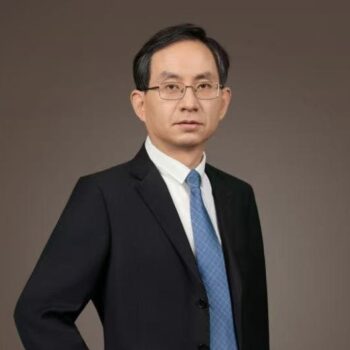
President
, China Academy of Information and Communications Technology (CAICT)
Mr. YU Xiaohui, President of China Academy of Information and Communications Technology (CAICT), Deputy Secretary of the Party Committee of CAICT, and a professorate senior engineer.
Mr. YU also serves as Vice Chairman and Secretary General of the Internet Society of China (ISC), Chairman of the Alliance of Industrial Internet (AII), Chairman of the Artificial Intelligence Industry Alliance (AIIA), member of the Expert Advisory Committee for the Development of Strategic Emerging Industries, member of the Intelligent Manufacturing Expert Committee of the National Manufacturing Strategy Advisory Committee, deputy-director member of the Communication Science and Technology Committee of the Ministry of Industry and Information Technology (MIIT), Chairman of the Expert Committee for Information and Communication Economy (ECICE) of MIIT, and member of the ChinaInfo100.
Mr. YU has long been engaged in the research in the fields of information and communication technology and industry, digital economy, informatization, integration of informatization and industrialization, digital infrastructure and digital governess. He has taken the lead in the systematic research in fields including industrial internet, digital economy, Broadband China, mobile internet, internet, IoT, and new infrastructure, supporting the formulation of national strategies, plans, and policies as well as technological and industrial innovation and development.

Senior Software Engineer
, Google DeepMind
Peter Danenberg is a Senior Software Engineer at Google DeepMind leading zero-to-one development for Gemini, creating production-ready features that gain visibility with top executives including Demis Hassabis and Sundar Pichai. He built the computer-use capabilities that became Gemini Agent and the artifact rendering system that became Gemini Canvas. He co-created Little PAIPer with Peter Norvig, a Socratic learning platform for AI education, and organizes biweekly Gemini workshops with ~350 attendees.
Previously at Google, Peter developed the fundamental reasoning loop for autonomous agents in Bard, launching Bard Extensions to 1.8 million daily active users. He holds a B.A. in Computer Science, Classics, Philosophy, and German from USC and pursued doctoral studies at Harvard, Freiburg, and USC. His work bridges ancient philosophy and modern AI, exploring questions of ethics, agency, and long-term alignment through classical frameworks.

Chief Digital Operations Officer
, VEON
Lasha Tabidze is leading the execution of the VEON’s DO1440 and AI1440 strategies. He plays a pivotal role in shaping VEON’s evolution into a digital operator, driving the development of local digital ecosystems, accelerating AI adoption, and strengthening operational performance across all markets.
With more than 16 years of senior leadership experience in telecommunications and digital businesses, Lasha has led major transformation programs and introduced sector-defining innovations. As former CEO of Veon Georgia, he pioneered fully digital customer experiences and launched successful new products that set new industry standards. His career also spans entrepreneurial ventures, combining strategic vision with execution to build impactful digital services.

Professor and Director of the Social, Therapeutic & Robotic Systems Lab
, Mississippi State University
Cindy L. Bethel, Ph.D. (IEEE and ACM Senior Member) is a Professor in the Computer Science and Engineering Department and holds the Billie J. Ball Endowed Professorship in Engineering at Mississippi State University (MSU). She was a 2019 U.S. Fulbright Senior Scholar to Australia sponsored by the University of Technology Sydney. She is the Director of the Social, Therapeutic, and Robotic Systems (STaRS) lab. Dr. Bethel has managed over $12 million dollars in grant funding since starting at Mississippi State University in August 2011. She has published over 100 peer reviewed journal articles, conference papers, and workshop papers in prestigious venues. She serves as a member of the Board of Directors for the Computing Research Association (2020-2023) and is a member of the CRA Government Affairs Committee (2021-2024). She also serves as a Co-Chair of the Socially Responsible Computing Working Group for the CRA. She has been active in her professional research community serving on the Steering Committee for the ACM/IEEE International Conference on Human-Robot Interaction (HRI) and the ACM Transactions on Human-Robot Interaction (2015-2019). She was an NSF/CRA/CCC Computing Innovation Postdoctoral Fellow in the Social Robotics Laboratory at Yale University. From 2005 – 2008, she was a National Science Foundation Graduate Research Fellow and was the recipient of the 2008 IEEE Robotics and Automation Society Graduate Fellowship. She graduated in August 2009 with her Ph.D. in Computer Science and Engineering from the University of South Florida with doctoral minors in Psychology and in Applied Statistics. Her research interests include human-robot interaction, human-computer interaction, robotics, and artificial intelligence. Her research focuses on applications associated with robotic therapeutic support, information gathering from children, and the use of robots for law enforcement, search and rescue, and military.
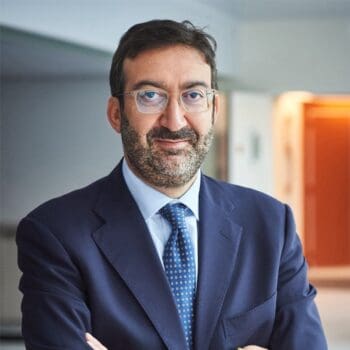
Director General of Human Rights and Rule of Law
, Council of Europe
Gianluca Esposito has been Director General of Human Rights and Rule of Law of the Council of Europe since 1 August 2024.
He was previously the Director of the Private Office of the Secretary General and the Deputy Secretary General of the Council of Europe. Prior to this, he served as Executive Secretary of the Group of States against Corruption (GRECO), Head of the Crime Problems Department, and Head of the Equality and Human Dignity Department.
Gianluca started his career at the Council of Europe in 1995 where he was involved in the negotiation of several conventions and other legal instruments, in the areas of nationality, anti-corruption, cybercrime, the efficiency of justice, combating trafficking in human beings, money laundering, terrorism and its financing. From 2005 to 2009, he was an adviser in the Private Office of the Council of Europe’s Secretary General and Deputy Secretary General. Gianluca served as the Council of Europe’s first Ethics Officer.
From 2009 to 2015, Gianluca was as a Senior Counsel in the Legal Department of the International Monetary Fund (IMF) in Washington, DC.
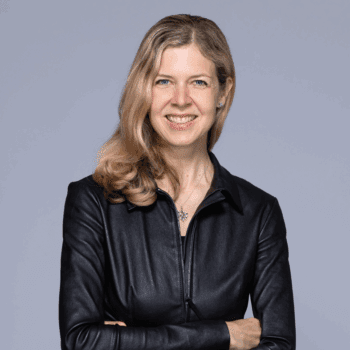
Head of Group Risk Management
, Nestlé
Lisa Bechtold is a global executive in Data & AI, Risk Management and Governance. As Global Head of Group Risk Management at Nestlé S.A., she is globally responsible for managing a complex spectrum of risks to enable the safe and sustainable growth of the organization. Before joining Nestlé, she served as Group Head of AI Governance at Zurich Insurance, and held various leadership roles within Technology & Operations, Digital Risk Management and Corporate Legal. She holds a Ph.D in Law, an LL.M. degree (Berkeley) and completed executive education at MIT CSAIL and Stanford GSB.

Founder and Managing Partner
, FoundersX Ventures
Helen H. Liang, PhD. is the Founder and Managing Partner of FoundersX Ventures based in Silicon Valley. Her investment focus is on AI-powered tech infrastructure and solutions across industries, from enterprise AI to Fintech and healthcare. She is an early investor in multiple tech unicorns, generating outstanding returns with multiple home runs. Helen is featured on the Wall Street Journal and Business Insider as a pioneering technology investor. She serves as a board director in multiple high growth tech companies. Helen is an invited speaker at TechCrunch and a guest lecturer at Stanford. Her select investments include SpaceX, Jeeves, Salt Security, Kapital, Kontigo, Universal Quantum, Glyphic Bio, Turion Space.

Chair, Department of Mechanical Engineering,
, Columbia University
Hod Lipson is a professor and Chair of the Mechanical Engineering department at Columbia University in New York. He is a co-author of the award winning books “Driverless: Intelligent cars and the road ahead” and “Fabricated: The New World of 3D printing”. His work on self-aware and self-replicating robots, recently featured by the New York Times, challenges conventional views of robotics. Lipson directs the Creative Machines Lab, which pioneers new ways to make machines that create, and machines that are creative. For more information visit http://hodlipson.com.
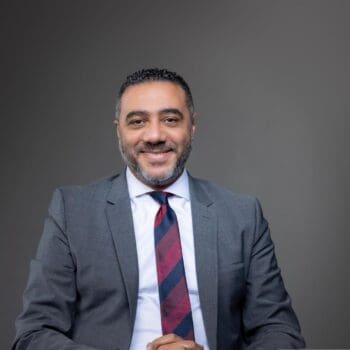
Chief External Affairs Officer
, Vodacom Group
Ayman Essam is a distinguished expert in legal and external affairs, bringing a wealth of experience and a profound commitment to driving strategic excellence across Vodacom’s diverse markets. He is the Chief External Affairs Officer for Vodacom Group.
Ayman’s career began at Vodafone Egypt in 2001, where he spent over a decade in the Legal Department, playing a pivotal role in major acquisitions. He later served as a partner at Zaki Hashem & Partners Law Firm (2010–2012), where he led the firm’s transformation and regional expansion. In 2012, he returned to the telecom sector as Legal & Corporate Affairs Director at Orange Egypt, expanding his expertise in corporate governance and regulatory compliance. Before joining Vodacom Group, Ayman served as the Director of External Affairs and Legal at Vodafone Egypt since January 2017; During his tenure, he enhanced Vodafone Egypt’s reputation as a reliable digital partner for the government, positioning the company as a standout performer within Vodacom’s portfolio.
In his role, Ayman is responsible for Vodacom Group’s external affairs strategy across its key markets. He reports directly to Shameel Joosub, Vodacom Group CEO, and is a Member of the Vodacom Group Executive Committee.
Ayman’s previous affiliations include:
- BEBA (British Egyptian Business Association) Affiliation Member
- AmCham (American Chamber of Commerce) Affiliation Member
- Rotary Member
- CEO Women Board Member
Previously, Ayman led key functions at Vodafone Egypt, including
- External Communications & PR
- Corporate Sustainability
- Vodafone Egypt Foundation
- Public Affairs & Public Policy
- Regulatory Affairs & Government Relations
- Corporate Security.
Ayman is known for his collaborative and inclusive leadership style. He has a proven track record of fostering a culture of sustainability, integrating social contract considerations into business decisions.
Ayman’s vision aligns closely with Vodacom’s purpose of “connecting for a better future”. His focus on creating a positive impact through technology resonates with the company’s mission to empower people, protect the planet and maintain trust.
Ayman’s deep sector knowledge and proven leadership are valuable assets to Vodacom Group as the company strengthens its engagement with governments, regulators, and partners across the African continent

Full Professor and Director of the Cognition, Aging & Rehabilitation Laboratory
, Ben Gurion University
Shelly Levy-Tzedek is a full professor and the director of the Cognition, Aging & Rehabilitation Laboratory at Ben-Gurion University.
Prof. Levy-Tzedek completed her undergraduate studies, summa cum laude, at UC Berkeley, where she won the Bioengineering departmental citation medal. At the Massachusetts Institute of Technology (MIT), she completed her M.S. and her Ph.D. degrees as an MIT Presidential Fellow and a Howard Hughes Medical Institute fellow, in the Biomedical Engineering department.
Chosen as one of Israel’s most promising 40-under-40 by The Marker Magazine for 2016, she also won the 2016 award from the Paedagogica Foundation’s special program entitled “Initiative for Excellence in the Negev”. In 2018, she won the Toronto Prize for excellence in research. In 2019 she participated in the Dagstuhl Seminar on Verification and Synthesis of Human-Robot Interaction. In the academic year 2018-19, Prof. Levy-Tzedek was a guest professor at the University of Freiburg in Germany as part of the Marie S. Curie FRIAS COFUND Fellowship Program, supported by the European Union through the Horizon 2020 research and innovation programme. In 2023 she was a visiting scholar at KTH’s Digital Futures center, in 2024 she gave a keynote address at the IEEE RO-MAN conference, and in 2025 was a Senior Fellow of the Human Rights Research Consortium at the Institute of Advanced Studies in Freiburg (FRIAS).
Her lab team researches how to best employ robotics to facilitate a fast and efficient rehabilitation process. She has employed the participatory-design approach in the study of diverse technologies – from rehabilitation robots to sex robots. In recent years, she has been co-leading a global initiative to promote regulation of social robots for vulnerable populations. She takes a multi-disciplinary approach to her studies: the students on her team come from varied backgrounds, including physical therapy, engineering and psychology, and she collaborates with colleagues from Canada, the UK, the United States, Germany and Sweden who come from diverse fields such as Industrial Engineering, Psychology, Computer Science, Robotics, Anthropology, Education, Law and Philosophy.
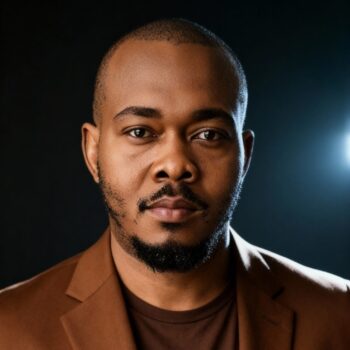
Founder and CEO
, Slickcity Media
Malik Afegbua is an award-winning Nigerian filmmaker, contemporary artist, designer, and creative technologist recognized globally for his pioneering work at the intersection of storytelling, culture, and technology. Ranked among the top five AI artists in Africa, he is widely regarded as one of the continent’s leading voices shaping the future of creativity and innovation.
He is the Founder and CEO of Slickcity Media and Executive Director of Gener8 and CELS AFRICA, where he leads groundbreaking projects merging African futurism, artificial intelligence, and immersive media to reclaim and reimagine African narratives.
A Salzburg Global Fellow, Malik serves on Nigeria’s Council for Creative Technology Futures and is an Advisory Council Member for Young Leaders in Art and Health. His acclaimed project The Elder Series sparked a global conversation on ageing and representation, featured by major international platforms and institutions.
Actively working to correct bias in the AI and digital space, Malik’s work and philosophy have been the subject of numerous academic studies, featured in art and academic books worldwide, and cited in several students final-year projects across disciplines. He has also contributed to roadmap policies on generative AI, helping shape ethical frameworks for the future of creative technology.
Through film, fashion, and technology, Malik continues to collaborate with global brands, cultural institutions, and development organizations to advance Africa’s creative digital economy and inspire the next generation of storytellers.

Deputy executive editor
, The Economist
Kenneth Cukier is the deputy executive editor at The Economist, following two decades as a foreign correspondent, technology writer and commentary editor.
He is the coauthor of the bestselling book “Big Data” with Viktor Mayer-Schönberger, which was translated into 20 languages and sold 2m copies. His latest book is “Framers” on AI and mental models, with Viktor and Francis de Véricourt.
Kenn was a research fellow at Harvard’s Kennedy School and Oxford’s Saïd Business School. He previously served on the board of directors of International Bridges to Justice and Chatham House. He is a member of the Council on Foreign Relations.

Professor of Cognitive & Social Neuroscience, Head of the Social Brain Sciences Group
, ETH Zurich
I am a cognitive neuroscientist and dancer based at ETH Zürich, where I lead the Social Brain Sciences (SBS) Lab. Through my research, I use complex social learning paradigms (often involving dance, acrobatics, and music), social interaction manipulations, and robots, in combination with brain imaging and other physiological measures, to explore how our brains and behaviours are shaped by different kinds of experience throughout the lifespan and across cultures.
I served as the Principal Investigator on the European Research Council Starting Grant entitled ‘Social Robots’, which ran from 2016-2024. Further funding of my research has been generously provided by the National Institutes of Health (USA), Humboldt Foundation (Germany), Netherlands Organisation for Scientific Research, Volkswagen Foundation (Germany), Economic and Social Research Council (UK), Ministry of Defense (UK), Marie Curie Actions, Coleg Cymraeg Cenedlaethol (Wales), Leverhulme Trust (UK), the Australian Research Council and the Swiss National Science Foundation.
In addition to my academic activities, I am a member of UNESCO’s International Bioethics Committee, where I have been involved in compiling reports on the Ethical Issues of Neurotechnologies and the Mental Health and Wellbeing of Children and Adolescents in the Digital Environment. I am passionate about raising the profile and participation of women in science, and enthusing the public about scientific research and how the arts and sciences and mutually benefit each other.
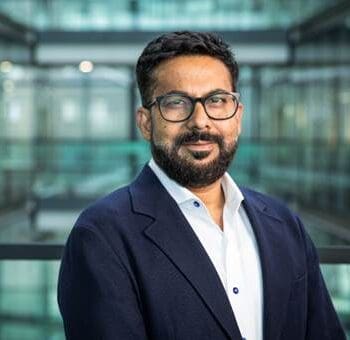
Global Managing Partner - Growth & Innovation
, EY
Raj is a technologist and global business executive with more than 25 years of experience in commercial and financial services, leading technology-driven growth initiatives and large-scale transformation programs. As EY’s Global Managing Partner for Growth & Innovation, he focuses on building next-generation capabilities that help organizations scale AI–powered transformations across our big bets like managed services, strategic alliances, sustainability and more. Previously, as Vice Chair for EY Americas Consulting, Raj led an USD$11 billion enterprise with a team of more than 40,000 consultants across the Americas. Raj holds a Master of Science degree in Computer Information Systems from the University of Miami and a Bachelor of Engineering degree in Computer Science from the Birla Institute of Technology in India.
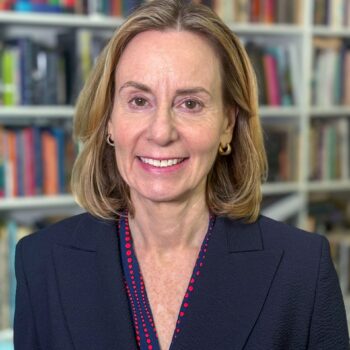
Chief Executive Officer
, Partnership on AI
Rebecca Finlay is CEO at Partnership on AI, a global nonprofit bringing together a cross-sectoral community of over 100 partners in 17 countries to ensure developments in AI advance positive outcomes for people and society. With an influential career at the intersection of technology and society, Rebecca has held leadership roles in civil society, research organizations and industry. Prior to PAI, she founded the AI & Society program at global research organization CIFAR, one of the first international, multistakeholder initiatives on the impact of AI in society. Rebecca’s insights have been featured in books and media including The Financial Times, The Guardian, Politico and Nature Machine Intelligence. She speaks at venues such as SXSW, Wall Street Journal, OECD, FTC, and the UK AI Safety Summit. She is a Fellow of the American Association for the Advancement of Sciences (AAAS) and was recognized with the Tech Diplomacy Award North America from Women in Tech Global. She lives in Toronto and holds degrees from McGill and the University of Cambridge.

Director Global Accelerator and Ventures
, United Nations World Food Programme (WFP)
Bernhard is the Director Global Accelerator and Ventures at the United Nations (UN) World Food Programme (WFP). Since he created the Global Accelerator in 2015, it has become one of the Worlds biggest impact startup accelerators, offering 18 annual programmes.
Prior to starting the Accelerator, Bernhard co-founded the award-winning ShareTheMeal app that crowdsources funding for WFP and has delivered over 294 million meals for hungry children worldwide. His previous experience includes creating WFP’s Business Innovation Unit and working as a Project Leader at the Boston Consulting Group (BCG).
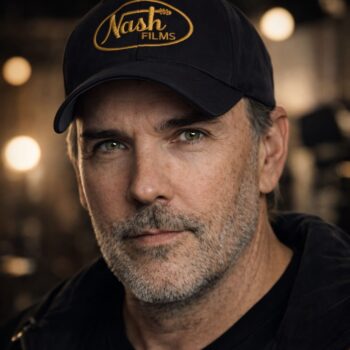
Filmmaker, Founder
, Beverly Hills Productions
Michael Nash is an Irish-American filmmaker and founder of Beverly Hills Productions. Named by Movie Maker Magazine as one of the “Top 10 Movie Makers for the Planet,” he is a Sundance alumnus whose films have won awards worldwide. He is currently partnered with Leonardo DiCaprio on the six-part AI documentary series Raise. In 2024, Nash became the first filmmaker in history to have a documentary placed on the lunar surface when Climate Refugees was included in a lunar time capsule dedicated to arts and humanity. Through Beverly Hills Productions, his team creates work that is both entertaining and educational, reflecting his commitment to storytelling as a force for positive impact.
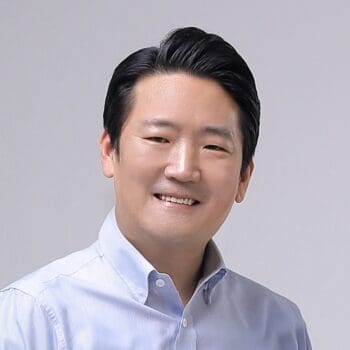
Founder and CEO
, EQ4ALL
Kevin Lee is the founder and CEO of EQ4ALL, a B Corp-certified technology company dedicated to advancing digital inclusion. Guided by the mission of “envisioning an equitable society through technology,” Kevin leads the development of AI-driven accessibility solutions, including sign language translation and LLM-based Easy Read conversion for deaf and hard-of-hearing people and individuals with intellectual disabilities or low literacy.
With experience at global ICT companies including Nagra Kudelski, Adobe and Samsung, Kevin works at the intersection of advanced technology and social impact. His contributions to digital inclusion have been recognized with the Presidential Award from the Korean government. As an active contributor to the ITU-D study group, he is a returning speaker at the AI for Good (2020, 2023), contributing to international discussions on inclusive technology standards.
He holds an MBA from the Korea Advanced Institute of Science and Technology (KAIST) and a BSc from Yonsei University.
He holds an MBA from the Korea Advanced Institute of Science and Technology (KAIST) and a BSc from Yonsei University.
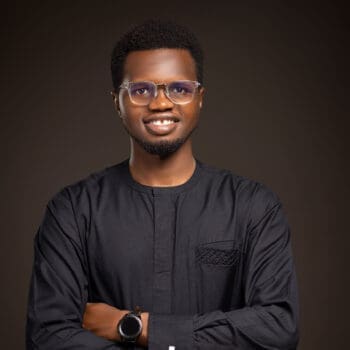
Founder & CEO
, Nearpays
My name is Victor Daniyan, a passionate entrepreneur and the Founder & CEO of Nearpays, a fintech company redefining the way businesses process payments globally.
My journey began with years of experience working with global tech giants like Nokia and Huawei, where I built a strong foundation in technology, innovation, and strategy. Those experiences shaped my vision to create smarter, more inclusive financial tools — leading to the birth of Nearpays, an AI-driven soft POS solution that empowers merchants and enterprises to accept payments anytime, anywhere.
Under my leadership, Nearpays has grown rapidly — now serving over 60,000 SMEs and individuals, processing 650,000+ monthly transactions, and recently earning the Best Fintech Award at GITEX. We also secured investment from Visa through Plug and Play, a testament to our credibility and innovation.
I’m honored to be a Certified Management Consultant and a Forbes 30 Under 30 nominee, recognitions that reflect my commitment to driving financial inclusion and digital transformation across Africa and beyond.
Every step of my journey has been guided by a single principle — innovation with purpose.

Associate Professor for Robotics
, Istituto Italiano di Tecnologia - IIT
Barbara Mazzolai is Associate Director for Robotics and Director of the Bioinspired Soft Robotics Laboratory at the Istituto Italiano di Tecnologia (IIT), Genoa. From February 2011 to March 2021 she was the Director of the IIT Center for Micro-BioRobotics (CMBR). She graduated in Biology (with Honours) at the University of Pisa, Italy, and received the Ph.D. in Microsystems Engineering from the University of Rome Tor Vergata. She was Deputy Director for the Supervision and Organization of the IIT Centers Network from July 2012 to 2017. From January to July 2017 she was Visiting Faculty at Aerial Robotics Lab, Department of Aeronautics, of Imperial College of London. She is member of the Scientific Advisory Board of the Max Planck Institute for Intelligent Systems (Tübingen and Stuttgart, Germany) and of the Max Planck Queensland Center on extracellular matrix, and member of the Advisory Committee of the Cluster on Living Adaptive and Energy-autonomous Materials Systems – livMatS (Freiburg, Germany). In 2020, she has obtained the Italian National Scientific Qualification of Full Professor in Bioengineering. Her research activity is in the field of bioinspired soft robotics, combining biology and engineering for advancing technological innovation and scientific knowledge. In particular, she focuses her investigations on plants and invertebrate animals. In the field of plant-inspired robotics, she was the Coordinator of the EU FET-Open PLANTOID project, and currently she is the Coordinator of the EU FET-Proactive Projects GrowBot and I-SEED. In May 2021, she has started the European Research Council (ERC) Consolidator Grant “I-Wood”, Forest Intelligence: robotic networks inspired by the Wood Wide Web. She has received various awards for her work, including the Marisa Bellisario Award and the Medal of the Italian Senate. She is author and co-author of more than 260 papers appeared in international journals, books, and conference proceedings. In 2019, she published her book “La Natura Geniale” and in 2021 “Il futuro raccontato dalle piante” (ed. Longanesi).
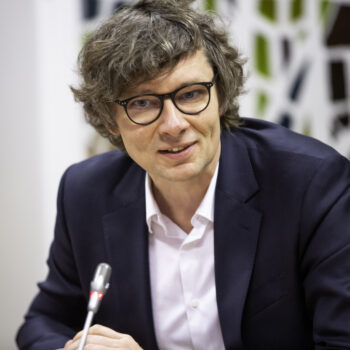
Deputy Secretary-General
, International Telecommunication Union (ITU)
Tomas Lamanauskas is Deputy Secretary-General of the International Telecommunication Union, elected at the ITU Plenipotentiary Conference of 2022, and taking up duties as of January 2023.
His 25 years of experience spans across sectors of telecoms and digital policy, regulation and strategy, stemming from executive level positions in agencies, companies, and organizations across Europe, the Middle East, the Caribbean and the Pacific region.
As Deputy Secretary-General of ITU, Tomas focuses on the financial sustainability and operational excellence of the organization. He also works to raise the digital industry’s ambition in fighting the climate crisis through the Green Digital Action initiative and promotes investments into the digital infrastructure as well as digital resilience through the Digital Infrastructure Investment Initiative and other efforts. Additionally, Tomas contributes to the global efforts to harness the opportunities and mitigate challenges of new technologies, in particular Artificial Intelligence, including through his role as a co-chair of the United Nations Inter-Agency Working Group on AI. He is also playing a key role in ensuring ITU’s support to other UN-wide development and governance efforts, including through the World Summit of the Information Society process and membership at the Operational Steering Committee of the UN Joint SDG Fund.
Tomas holds Master’s Degrees in Public Administration (Harvard), Leadership and Strategy (London Business School), Telecommunications Regulation and Policy (The University of the West Indies) and Law (Vilnius University).
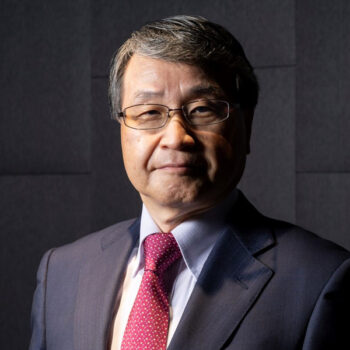
Director of the Telecommunication Standardization Bureau (TSB)
, International Telecommunication Union (ITU)
Seizo Onoe took office as Director of the Telecommunication Standardization Bureau (TSB) at the International Telecommunication Union (ITU) on 1 January 2023.
Before his election as TSB Director by ITU Member States, he completed an over 30-year career with Japanese mobile operator NTT DOCOMO. In 2021, he became Executive Vice President and Chief Standardization Strategy Officer for the Nippon Telegraph and Telephone (NTT) Corporation and a Fellow of NTT DOCOMO, INC. From 2017, he served as NTT DOCOMO’s Chief Technology Architect and President of its subsidiary DOCOMO Technology.
Between 2012 and 2017, he served as NTT DOCOMO’s Chief Technology Officer and Executive Vice President, a Member of the Board of Directors, and Managing Director of R&D Innovation Division. Earlier, he served as Senior Vice President and Managing Director of NTT DOCOMO’s R&D Strategy Department and Managing Director of the company’s Radio Network Development Department.
As TSB Director, he heads the part of ITU responsible for the coordination of technical standards and collaborative standardization processes that enable the interconnection and interoperability of information and communication technologies (ICTs) worldwide.
Mr Onoe is committed to facilitating open and inclusive standardization processes, along with promoting digital technologies to address global issues, building a new ecosystem that reflects evolving technologies, and strengthening cooperation and collaboration in ICT standardization worldwide.
Known in the industry as “the father of LTE” (Long-Term Evolution), he helped upgrade the wireless broadband standard for mobile devices and networks. He now aims for global outreach to bridge standardization gaps, deliver the benefits of technology widely and speedily, and ensure meaningful and affordable broadband access for everyone.
Mr Onoe holds a Master’s degree in electronics from the Kyoto University Graduate School of Engineering.
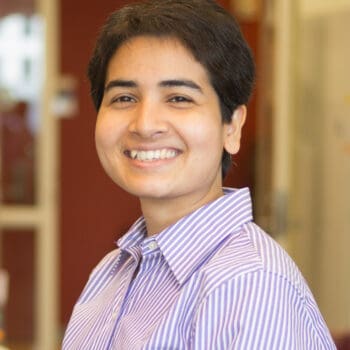
Associate Professor at MIT, Founder of
, Cahira Technologies Inc
Deblina Sarkar is an Associate Professor at Massachusetts Institute of Technology (MIT) and Career Development Chair Professor at MIT Media Lab. She is also the founder of Cahira Technologies Inc which builds autonomous and surgery-free brain-computer interfaces. Her research fuses engineering, applied physics, and biology to develop disruptive technologies for nanoelectronic devices and create new paradigms for life-machine symbiosis.
Her inventions include, among others, the world’s first autonomous and non-surgical brain implant, bioelectronic technology to treat drug-resistant brain cancer, a 6-atom thick channel quantum-mechanical transistor overcoming fundamental power limitations, an ultra-sensitive label-free biosensor, technology that reveals previously undiscovered biological nanostructures and ultra-miniaturized antenna that can work wirelessly even from inside a living cell.
She is the recipient of numerous awards and recognitions, including being winner of one of the top 3 dissertations throughout USA and Canada in the field of Mathematics, Physical sciences and all departments of Engineering, Technology Review’s Innovators Under 35 from India, NIH K99/R00 Pathway to Independence Award, the IEEE Early Career Award in Nanotechnology, Innovative Young Engineer Recognition from National Academy of Engineers, the NIH Director’s New Innovator Award with the highest and rarely achieved impact score, the MIND Prize , the Science News 10 Scientists to Watch, the Distinguished Scientist Award, NSF CAREER Award and others.

CEO
, OptiCloud
Vijay Karia is an AI sustainability expert, entrepreneur, and global leader in AI for Good, recognized for pioneering the fields of digital sanitation and digital recycling. He is the Co-Founder and CEO of OptiCloud, an AI-driven platform that reduces digital waste, energy consumption, and carbon emissions across cloud and data center infrastructure.
He is a recipient of the United Nations AI for Climate Action Award at COP29 and a 2025 Gusi Peace Prize Laureate and is a frequent speaker on the intersection of artificial intelligence and climate action. Vijay’s work focuses on utilizing AI to enable enterprises and governments to transform digital inefficiency into measurable environmental and economic impact that also support indigenous communities.
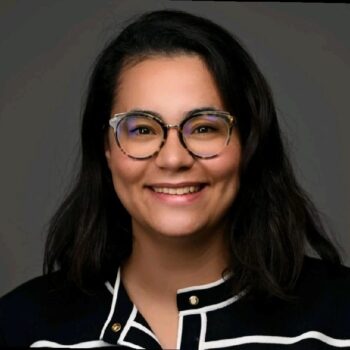
Lead Enterprise Strategist & Architect
, Lenovo
Lead Enterprise Strategist & Architect at Lenovo with 10+ years of experience advising organizations on embedding trust, governance into their scaling roadmaps. Asmaa lead strategic consulting and technical Architecture for large-scale, global cloud & AI initiatives—bridging business goals with future-ready architecture. With a Master’s in Engineering Intelligent Systems and multiple patents in cloud and AI innovation, Asma brings a strong blend of technical depth and strategic vision. Passionate advocate for women in tech through JumpINTech ,WomenTechMakers and LIFT.

Founder & CEO
, Zeroth
Entered Xi’an Jiaotong University at the age of 15, holding degrees in engineering, economics and financial economics. Former employee of Procter & Gamble and President of Dreame China, he led a team of over 1,500 staff and drove more than $8 billion in revenue for the home robotics business.

Global Head of Social Impact at HP Inc., Executive Director
, HP Foundation
Michele Malejki currently serves as Global Head of Social Impact at HP Inc. and Executive Director of the HP Foundation. Recognized for her dedication to fostering positive change through both business and philanthropy initiatives, Michele oversees HP Foundation and HP Inc. strategic programs designed to advance digital inclusion and equip disconnected communities for the future of work. Michele sees technology as a great equalizer and is determined to harness HP’s unique capabilities and resources to close the global digital divide and power the future of work. In 2023, Michele and her team received the inaugural TIME “Team of the Year” award for their unwavering commitment to social impact.
In addition to her role at HP, Michele has worked with several boards including serving on the UN Women’s Global Innovation Coalition for Change, the President’s Council of Cornell Women, the Global Partnership for Education Private Sector Advisory Group, and the Save the Children’s Council Action Team Gender Equality.
Michele holds an MSc in Sustainable Development from the School of Oriental and African Studies (SOAS), University of London, and a BSc in Industrial and Labor Relations from Cornell University.
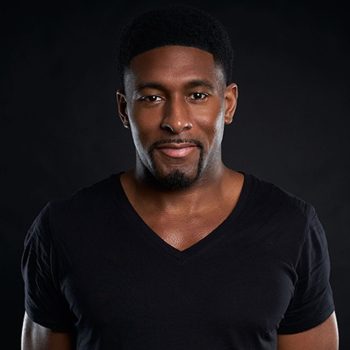
Co-Founder
, Gauge
Brandon Andrews is CEO of The Inexorable and co-founder of Gauge; an AI-driven mobile market research platform connecting brands to consumers and influencers to identify opportunities and avoid mistakes. He has done casting for ABC’s Shark Tank and other business shows on TV for a decade; meeting thousands of entrepreneurs each year. Named a Global Innovation Fellow by the U.S. Department of State, he has traveled the world speaking and hosting events on entrepreneurship and innovation.
He helped build and hosted the inaugural CGI Entrepreneurship Greenhouse at Clinton Global Initiative. He has also headlined entrepreneurship programming around the world including Bishkek, Kyrgyzstan; Dushanbe, Tajikistan; the Unleash+ pitch competition in Mysore, India; and four-part artificial intelligence event series in Kampala, Uganda.
Working with AI for Good he hosts Innovation Factory pitch competitions around the world. He also created and hosts the Impact with AI podcast engaging entrepreneurs using AI to support the United Nations Sustainable Development Goals.
He managed the #TechtoWealth Tour with DJ Young Guru. Designed to get 10K people of color coding, #TechtoWealth brought tech events to WeWork locations in the final six OTRII Tour cities + BET Hip Hop Awards with $1M in coding scholarships available from Opportunity Hub and Flatiron School.
Previously, Brandon empowered public affairs, technology, and real estate clients at MWWPR. He spent 5 years in the United States Senate where he handled technology, small business, and defense policy.
He is Chairman of the DC Commission on National and Community Service. A former fashion model, he serves on the DC Commission on Fashion, Arts, and Events and works with fashion/beauty entrepreneurs.
He provides commentary on policy, politics, business and tech on TV, radio, and the web.
A former Division-1 track athlete, Brandon is a graduate of Oral Roberts University.
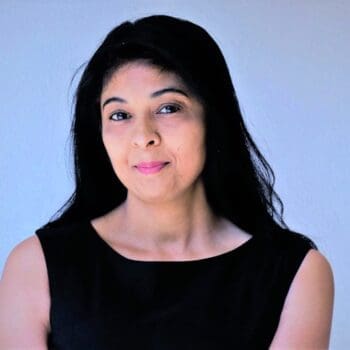
ASRIC Co-Chair
, African Union
Serves as the co-chair of the African Union Science Technology Commission ASRIC/ASTR Council on 4IR. She is a visionary figure in the advancement of responsible AI, dedicated to harnessing technology for good and unlocking humanity’s potential. Recognised as a Top 10 Leader advancing AI globally. A true full-stack human Amb. Lavina combines her expertise in psychology, technology, and economics to bring a unique and insightful perspective to AI development.
Her dedication and achievements are evident in her numerous accolades including top 10 leaders shaping AI. A futurist who’s vision is to accelerate the world’s augmentation of data by creating a more intelligent tomorrow through the footprints of collective humane knowledge. She’s not just a leader; she’s an inspiration, earning the title #aiMOM for fostering responsible development for a better tomorrow.

CEO
, Makers Hive
Pranav Vempati is a thought leader and global speaker known for his insightful contributions to the technology sector. As the Founder and CEO of Makers Hive, Pranav is dedicated to creating innovative technologies that are both advanced and accessible, with a strong commitment to driving positive social change.
Pranav’s journey was significantly shaped by two esteemed mentors: the Father of the Green Revolution, Bharata Ratna Dr. M. S. Swaminathan, and Padma Bhushan Dr. T. Ramasami. Their guidance inspired Pranav to leverage technology to address pressing societal challenges. This mentorship led him to focus on developing solutions that empower underserved communities, ensuring that innovation benefits those who need it most.
In 2018, Pranav founded Makers Hive with the mission to make cutting-edge technology accessible to everyone. The company’s first product, KalArm, is India’s first and the world’s most affordable bionic hand. This groundbreaking innovation has significantly improved the lives of many by providing a functional, cost-effective solution for individuals with limb loss.
Pranav and Makers Hive have received several prestigious accolades, including Forbes 30 Under 30 Asia, Forbes Asia 100 to Watch, GQ India’s 7 Most Influential Young Indians , and he was shortlisted for One Young World Entrepreneur of the Year Award.
As a global thought leader and speaker, Pranav continues to advocate for the transformative power of technology in driving social progress. Under his leadership, Makers Hive is committed to developing affordable, innovative solutions that address deep-rooted societal challenges, ensuring that no one is left behind in the pursuit of a better future. His work exemplifies how technology can uplift and empower, making a profound impact on both industry and society as a whole.
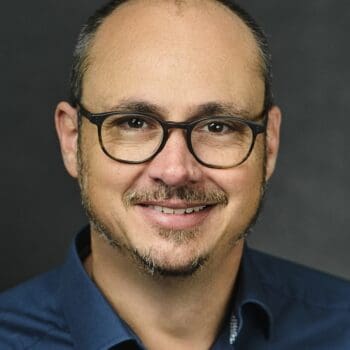
Associate Professor (with tenure) Department of Mechanical Engineering Adjunct, Paul G. Allen School of Computer Science
, University of Washington
Sawyer Fuller creates biologically-inspired sensors, control systems, and mechanical designs targeted at insect-sized air and ground vehicles, and investigates the flight systems of aerial insects. He completed his Ph.D. in Biological Engineering at the California Institute of Technology and B.S. and M.S. degrees in Mechanical Engineering at the Massachusetts Institute of Technology, and postdoctoral training at Harvard. In addition to his work in insect flight control, he also developed a frog-hopping robot at the NASA Jet Propulsion Laboratory and invented an ink-jet printer capable of fabricating millimeter-scale 3D metal machines at the MIT Media Lab. His work at the intersection of robotics and biology has appeared in journals such as Science and Proceedings of the National Academy of Sciences.
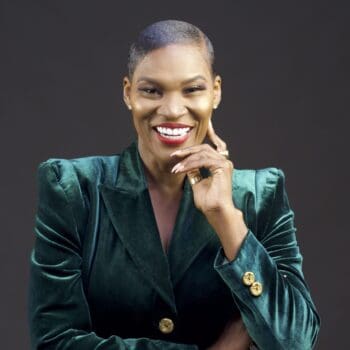
Executive Director
, Erskine Global Communications
Anita V.M. Erskine, MCM is a globally acclaimed strategic communications leader and Master of Ceremonies specializing in high-level convenings where policy, business, innovation, and emerging technologies — including AI, climate action, digital transformation, entrepreneurship, and inclusive economic development — intersect to shape global dialogue and drive impact. She is trusted by the United Nations system, the World Bank Group, the African Union, the European Union, and governments to convene and lead conversations on critical development priorities, and by multinational organizations including MTN Group, Nestlé S.A., and Equatorial Coca-Cola Bottling Company (ECCBC) to steer executive leadership engagements that influence strategy and outcomes worldwide.
She serves as Executive Director of Erskine Global Communications, a strategic communications and advisory firm focused on translating complex global challenges into human-centred narratives that drive alignment and action across institutions and industries.
Anita holds a Master’s degree in Communications Management from McMaster University (Canada) and a Bachelor of Arts in Cultural Studies. She has been recognized among the 100 Most Influential Women in Africa, the Top 100 Career Women Africa, and the 500 Most Influential Africans globally, and is also recognized among the Top Influential Masters of Ceremonies in Africa, honoring excellence in international event hosting and moderation.

Deputy Director of TSB | Chief, Study Groups & Policy Department (SPD)
, International Telecommunication Union (ITU)
Dr Bilel Jamoussi, a distinguished engineer and diplomat, is the Deputy Director of ITU Telecommunication Standardization Bureau and Chief, Study Groups & Policy Department (SPD) in Geneva, Switzerland.
His primary mission is to establish the international standards essential for ensuring global telecommunications and ICT interoperability, promote universal, meaningful connectivity and champion sustainable digital transformation.
Key achievements under his tenure have been important new standards, ensuring increased industry engagement, bolstering cooperation with other standardization bodies, as well as leading in emerging tech discussions and building strategic partnerships.
Before 2010, he held executive roles, including Director of Standards for Nortel, and contributed to over 90 international standards bodies. With a PhD in Computer Engineering from Pennsylvania State University, he is an IEEE Senior Member and has served on the IEEESA Board of Governors. A key voice in the global ICT arena, he is a regular keynote speaker at events like the Global Cybersecurity Forum and is frequently interviewed by top media outlets.
Fluent in Arabic, French, and English, with knowledge in Spanish and German, Bilel’s global perspective has been shaped by living and working in Tunisia, Canada, the USA, and Switzerland.

CEO & Co-owner, Forbes 30u30
, GoBigname
Tomas is an entrepreneur, educator, keynote speaker, and brand expert who helps founders fix their brands and scale internationally.
As the CEO and Co-Owner of the international branding studio GoBigname, he works with startups, small businesses, and corporates to help their brands grow globally. His work earned him a spot on the Forbes 30 Under 30 list.
GoBigname is Naming, Branding and Web Design Studio helping Founders and Marketers of startups, SMEs on their journey to become global players: Slido, a Saas startup with more than 45 million users acquired by Cisco, Exponea acquired by Bloomreach now valued over $2.2 billion, Berlin Brands Group valued over $1,2 billion, Rezztek – technology startup brand which became officialy licensed product by NHL in 2023 and license provider for global sport brand HEAD.
Over the past 12 years, the GoBigname team has created more than 300 brand names, brand strategies, consistent & distinctive brand identities and websites.
Tomas has been sharing his knowledge through masterclasses and keynotes for organizations and companies all over Europe. He’s worked with the Swiss Government and was part of the Google Certified Trainers program, showing his passion for helping others succeed in business and branding.
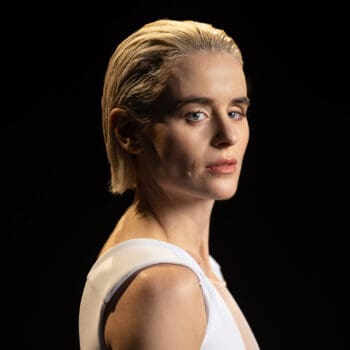
Performing artist, Immersive experience designer, Creator
, The NEKRA Project
Lori Baldwin is a performing artist and immersive experience designer whose work sits at the intersection of human perception and emerging technology. She is the creator of The NEKRA Project, which investigates AI and mortality through the lens of the unknown, using live performance as a research site. Baldwin’s work breaks the fourth wall, demands presence, and invites audiences to rethink themselves and the systems they inhabit. With over a decade leading interdisciplinary creative projects across art, science, and technology, she turns bold ideas into experiences that are rigorous, uncanny, and impossible to ignore. Appearances include TEDxBerlin, House of Beautiful Business, Waldorf Astoria, ANT Neuro, and CIC Berlin.
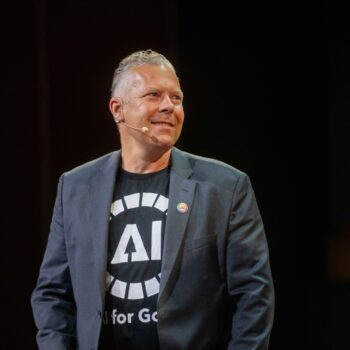
Chief, Strategic Engagement Division & AI for Good
, International Telecommunication Union (ITU)
Based in Geneva, Switzerland, Frederic Werner is a recognized leader at the intersection of artificial intelligence, technology, and global development. As the Chief of Strategic Engagement at ITU, the United Nations’ specialized agency for Digital Technologies, and Chief of Strategy and Operations for AI for Good, Frederic drives initiatives that shape the future of AI’s role in solving humanity’s greatest challenges.
Frederic is a co-creator of the United Nations AI for Good Global Summit, a landmark platform connecting AI innovators with real-world problem owners to collectively advance the Sustainable Development Goals (SDGs). Under his stewardship, AI for Good has become a global hub for innovation, collaboration, and actionable solutions, redefining how AI is used for social good.
At ITU, Frederic leads transformative strategic initiatives, driving global collaboration in digital transformation and standards development to address critical challenges. His leadership ensures the organization remains a leader in setting international standards and leveraging AI to advance the SDGs.
Before joining ITU, Frederic held pivotal roles that shaped global ICT collaboration. As Communications & Program Director of ETIS in Brussels, he established a pan-European network of CIOs and cybersecurity leaders. Earlier, as Head of Marketing and Communications at the European Organization for Conformity Assessment, he spearheaded capacity-building projects with the European Commission, strengthening ICT infrastructures in EU candidate countries.
A recognized figure in the AI sphere, Frederic is a regular keynote speaker and panellist at global tech and AI events, such as Davos, Vivatech, SXSW, World AI Festival Cannes, AI Africa Expo, World AI Summit Amsterdam, AWS Reinvent and GITEX to name a few. His insights on AI capacity building, governance and standards have led to numerous interviews and features across international media, books, and podcasts.
Academically, Frederic holds a B.A. in Business & Human Resources Management with a Communications Minor from Vrije Universiteit Brussel, an MBA in International Business from United Business Institutes, a Technical MBA in Telecoms Technology from Informa Telecoms, and a certificate from the MIT Sloan School of Management on AI’s Business Strategy Implications.
Having lived in diverse countries such as Belgium, Senegal, the United Kingdom, the Philippines, Austria, Turkey, Hungary, and Switzerland, Frederic brings a unique and global perspective to his partnerships and collaborations.

Co-founder and CEO
, NemoCare Wellness
Manoj Sanker is the Co-founder and CEO of NemoCare Wellness, a pioneering med-tech enterprise dedicated to ending preventable neonatal mortality through AI-driven precision healthcare. An alumnus of PES University(India) and a Fellow at Center for Healthcare Entrepreneurship at IIT Hyderabad, Manoj has spent nearly a decade bridging the gap between advanced engineering and global clinical impact.
As a budding entrepreneur in the healthcare and med-tech space, Manoj’s expertise lies in smart wearables combined with machine learning and user experience design. He is the technical architect of NemoCare Raksha, an IoT-enabled smart wearable backed by a next-generation AI analytics platform for predictive distress modeling, utilizing deep-learning algorithms to detect subtle physiological shifts ,hours before clinical symptoms appear.
His work gained national prominence on Shark Tank India Season 3, where he secured an investment to scale his “Made in India” technology globally and is backed by global funding agencies like the Bill & Melinda Gates Foundation,BIRAC(DBT,Govt Of India initiative),IKP Knowledge Park, Axilor Ventures ,MeitY’s Startup Hub(The Ministry of Electronics and Information Technology (MeitY), under Government of India) , Department of Science and Technology(Govt. of India),Google, Qualcomm, JICA(Japan) and Indian Council of Medical Research (ICMR)
Manoj is a LIF Global 2025 Fellowship Awardee by the Royal Academy of Engineering(UK),and is a staunch practitioner of design thinking. He aspires to become a global product leader, disrupting the healthcare industry through innovative product development that serves the world’s most vulnerable infants.

Senior Policy Advisor (Government Innovation)
, Tony Blair Institute for Global Change
Strategic leader in digital government transformation and capability building, with extensive experience advising governments on digital skills, innovation policy, and organisational readiness. Proven ability to lead cross-agency initiatives, develop digital capability frameworks, and translate emerging technology trends into actionable public sector strategies.
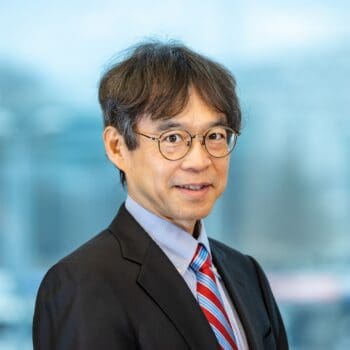
Assistant Director-General
, World Intellectual Property Organization (WIPO)
Mr. Natsume has been the Assistant Director General, Infrastructure and Platforms Sector, World Intellectual Property Organization (WIPO) since January 2021.
His portfolio includes frontier technologies such as AI, databases, classifications, standards, digital solutions for intellectual property offices, as well as customer experience, marketing, and digital engagement. Prior to his current role, he was the Senior Director of PCT (Patent Cooperation Treaty) Legal and International Affairs Department, the Director of PCT International Cooperation Division, as well as the Head of the WIPO Japan Office.
Before joining WIPO, he served with the Ministry of Foreign Affairs of Japan, the Permanent Mission of Japan to Geneva, and at the Japan Patent Office, where he played a leading role in various international intellectual property negotiations and debates including WIPO, WTO/TRIPS, WHO and CBD. At the Japan Patent Office, he also worked as a patent examiner specializing in image and information processing.
He was also a visiting researcher at California Institute of Technology.
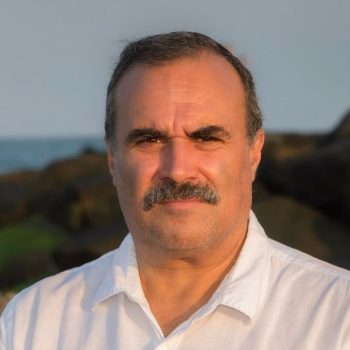
Senior Principal Architect
, Adobe
Leonard Rosenthol is the Senior Principal Architect for PDF & the Document Cloud at Adobe, having been involved with PDF technology for more than 20 years. He represents Adobe on various international standards bodies including the ISO (where he is the Project Editor for PDF/A, PDF/X and PDF/E), W3C and ETSI/ESI (where he authored the PDF Electronic Signature standard, PAdES).
Prior to re-joining Adobe in 2006, Leonard worked as the Director of Software Development for Appligent, and the Chief Innovation Officer for Apago, while also running the successful consulting business of PDF Sages. Before becoming involved in PDF, Leonard was the Director of Advanced Technology for Aladdin Systems and was responsible for the development of the StuffIt line of products.
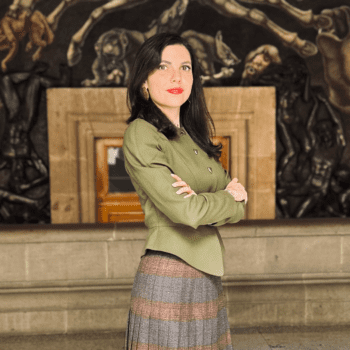
President, The HumAIne Foundation, and Founder, Managing Director, and CEO
, IQuilibriumAI
Ms. Viveros is a distinguished International Lawyer and Scholar; Trusted Expert and Senior Advisor on AI and Peace and Security; and Leading Voice for Sustainable Development in the Global South.
She is the Founder, Managing Director and CEO of IQuilibriumAI, a Consultancy Firm specialized on AI and Peace, Security, Humanitarian and Rule of Law issues, the President of the HumAIne Foundation and the Founder of the Global South Synergies and Resilience Platform, serving in different capacities across these fields to bolster scalable and expansive meaningful impact, with a special focus on the Global South and conflict and post conflict zones.
Ms. Viveros was appointed Member of the United Nations Secretary General’s High-Level Advisory Body on Artificial Intelligence (AI), tasked with advancing recommendations for the Global Governance of AI and Institutional Responses, serving as Co-Lead for Peace and Security. Likewise appointed Commissioner to the Global Commission on Responsible AI in the Military Domain (GCREAIM), serving as Co-Lead for the Broader Peace and Security Domains and Member of the Report’s Drafting Committee, an AI Expert for the Organization for Economic Co-operation and Development (OECD), for the working groups on AI risks and accountability, as well as on AI incidents monitoring, and a Member of the High-level Working Group on AI and Fraternity under the Patronage of Pope Leo XIV. Ms. Viveros also serves as Deputy Lead of the International Law Association’s Committee on AI and Technology, for Global Norms, Governance and Comparative Regulation, as an Expert for the AI Safety and Governance Program of the Internet Conference Specialized Committee on AI, Member of the International Commission for Robots Arms Control (ICRAC), of the ITU Women and Standards Network, of the UNESCO Women 4 Ethics Platform and AI Experts Without Borders, and sits on the Advisory Board of the Cyber Peace Institute on the AI and counter-cyberthreats track. She has been recognized in Apolitico’s 100 AI in Government 2025 List, under the Category of Strategy and Vision, and is an advocate and signatory for the Call for International Red Lines to prevent unacceptable AI risks and the Potsdam Call for a ban on autonomous weapons.
Her international experience includes the International Criminal Court, the International Criminal Tribunal for the former Yugoslavia, the International Criminal Tribunal for Rwanda, the Organization for the Prohibition of Chemical Weapons, and the United Nations Verification Mission in Colombia for the disarmament of the FARC. She has also worked for the Lebanese Supreme Court, in addition to NGOs in Kenya, Cambodia and Palestine. In Mexico, she has served as Chief of Staff and Head Legal Advisor at the Mexican Supreme Court of Justice, and at the Federal Judicial Council. She also held senior national leadership positions at the Ministry of Security and Civilian Protection, and at the Federal Tax and Finance Prosecutor’s Office, serving at the level of Director General.
Ms. Viveros earned a law degree from Iberoamericana University in Mexico City in an international programme with Salamanca University in Spain, and an LL.M. in Public International Law from Leiden University in The Netherlands, and over 20 international Certifications from Expert Trainings on AI, Peace and Security, Public Administration and International Law. She is finalizing her PhD at Cologne University in Germany, supervised by Dr. Claus Kreß, on the Harmonization of AI Governance Across Civilian and Military Domains for International Peace and Security through Actionable Recommendations.
She speaks 5 languages and is a widely published author on different areas of law as well as on AI Military and Civilian Governance groundbreaking areas, highlighting the following books and articles: Autonomous Weapons Systems: The Accountability Conundrum, published separately in English and Spanish; The Ultimate and Perhaps the Last Paradigm Shift – Artificial Intelligence, published in separately in English and Spanish; AI and the International Responsibility of States, published in Spanish; Autonomous Weapons Systems and the Use of Force; Drone Swarms as Weapons of Mass Destruction; The Risks and Inefficacies of AI systems in Military Target Identification; Why Should the UN “Govern AI for Humanity”: What is at Stake and what is the Urgency; “What Is Responsible AI? A Comparative Approach”; “The Double-Edged Sword: AI and the Future of Law Enforcement”; “AI that is shaped by all of humanity, for all of humanity: The Prerequisite for Global Governance”; and “Future of Legal Efforts to Regulate AI in Armed Conflict and International Law”.
Ms. Viveros is also an internationally renowned High-Profile Keynote Speaker, having addressed over 80 events worldwide, in addition to having delivered myriad lectures and conducted numerous executive seminars and trainings to prestigious governmental and academic institutions, as well as private actors. She serves in sundry Networks of multidisciplinary and specialized experts, being part of over 20 professional boards and academic associations in an array of capacities.
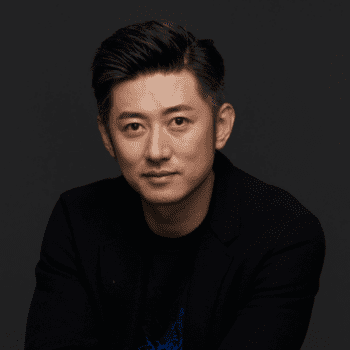
Founder & CEO
, Zero Zero Robotics
Mengqiu (MQ) Wang is a distinguished AI scientist and the visionary behind Zero Zero Robotics, the creators of HOVERAir, the world’s first brand of AI-powered, self-flying cameras. With a PhD from Stanford University and a Master’s from Carnegie Mellon, MQ’s pioneering research in machine learning has earned top honors from the American Association for Artificial Intelligence (AAAI).
MQ is dedicated to the “democratization of the lens,” using advanced AI to remove the barriers to high-quality storytelling. Under his leadership, Zero Zero Robotics has secured over 140 core patents, culminating in the HOVERAir series—a fully autonomous “film crew in your pocket.” By utilizing sophisticated algorithms for real-time recognition, technology eliminates the need for human operators or cumbersome equipment, empowering people to live in the moment while being captured flawlessly from the air. At the AI for Good Global Summit, MQ explores how turning a camera into an intelligent agent can empower human creativity on a global scale.

CEO, Serial Entrepreneur, Advisor
, The Scale Foundry
Alexandra Hirzel is a MedTech entrepreneur, investor, and board advisor specializing in the deployment of AI in regulated healthcare environments. She has founded and exited several companies, and now advises healthcare executives, investors, and AI-driven organizations on governance, scale, and real-world implementation across Europe and the U.S. She has served as a mentor and judge for UN AI for Good for over five years and has previously delivered both online and in-person masterclasses within the programme. Alexandra is a recent Women Hidden Figures Awards Winner and a 100 Women in Tech Nominee, recognized for leadership at the intersection of healthcare, technology, and impact.

United Nations Special Envoy for Road Safety
, United Nations
Mr. Jean Todt is the United Nations Secretary-General’s Special Envoy for Road Safety appointed by the then Secretary-General Ban Ki-moon on 29 April 2015, as the first ever Special Envoy for Road Safety. Mr. Todt was the previous President of the FIA (Fédération Internationale de L’Automobile) and is now an Honorary President of the FIA – the international motor sport governing body and federation of motoring organisations. On 6 February 2022, Mr. Todt was awarded as winner and inaugural recipient of the Autosport Gold Medal, in recognition of his lifetime of service to the sport and for leaving a lasting legacy for future generations.
He ran for FIA President in 2009, winning three successive four-year terms that concluded in December 2021. Some notable highlights from his presidency include the introduction of the electric racing Formula E series, the Women in Motorsport commission, the Halo head protection device, the F1 Budget cap, the Action for Road Safety campaign and the $20 Affordable Helmet for road use in developing countries. Mr. Todt made road safety a priority of the federation by launching the FIA Action for Road Safety campaign in 2011 in support of the UN Decade of Action for Road Safety. The campaign is built around a global advocacy for road safety, supporting action on the ground by its 250 member clubs in nearly 150 countries, building institutional and commercial partnerships and mobilising the motor sport community to promote road safety.
Mr. Todt is also a member of the FIA Foundation for Automobile and Society Board of Trustees. He began his career as a world championship rally co-driver in 1966, before joining Peugeot in 1981 as Sporting Director. He joined Ferrari Racing in 1993, ultimately becoming responsible for all motor sport activities for the Ferrari-Maserati Group. In 2003, he was appointed General Manager of Ferrari and at the end of 2006, became Chief Executive Officer of the company until 2008.
In 2011, Mr. Todt was named Grand Croix de la Légion d’Honneur, the highest honour of the French Republic. He is Chairman of the Board of the Suu Foundation, a humanitarian organisation founded by Nobel Peace laureate Aung San Suu Kyi, to advance the health and education of the people of Myanmar, and a member of the International Peace Institute (IPI) Board of Directors. He is also one of the Founders and the Vice-President of ICM, a medical research institute devoted to medical research for brain and spinal cord disorders. Mr. Jean Todt was born on 25 February 1946 at Pierrefort, Cantal (France). He has one son, Nicolas Todt, and shares his life with actress and film producer Michelle Yeoh, who is a UNDP Goodwill Ambassador and Global Road Safety Advocate.
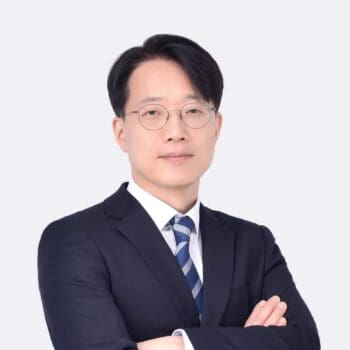
Head of Responsible AI Center
, KT
Wanjin Park is the Head of the Responsible AI Center at KT, where he leads the company’s initiatives on Responsible AI (RAI), including policy development, governance frameworks, and practical implementations across the AI lifecycle.
With more than 20 years of experience in emerging technology research and development, service innovation, and strategic collaboration with global technology leaders, he has played a key role in shaping KT’s technology strategy and AI transformation.
Since January 2025, he has been leading KT’s Responsible AI Center, establishing company-wide Responsible AI policies and governance structures and implementing evaluation methodologies and technical safeguards for AI systems. He has also contributed to the open-source community by releasing SafetyGuard, a guardrail framework designed to enhance safety and reliability in generative AI systems.
Previously, he served as Vice President of AI Technology Collaboration and Responsible AI at KT from 2023 to 2024. In this role, he led the development of generative AI strategies based on market and domain analysis, while managing collaborative projects with global AI companies and startups to accelerate AI technology and service innovation.
From 2011 to 2022, Mr. Park was Director of Technology Strategy at KT, where he was responsible for developing long-term technology strategies and service plans for key initiatives including IPTV, 5G networks, and edge computing. He also led analyses of emerging technologies to guide the company’s R&D directions.
His work focuses on bridging advanced technologies with responsible governance, particularly in generative AI, trustworthy AI systems, and telecommunications innovation.
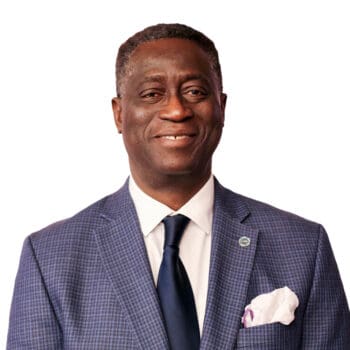
Secretary General
, World Alliance of YMCA
Carlos Madjri SANVEE (Togo) is Secretary General of the World Alliance of YMCAs. He took up the role in January 2019, having been elected during the 19th YMCA World Council in Chiang Mai, Thailand in July 2018. He is the first African Secretary General of World YMCA.
In his current role, he led the response to the Covid crisis from early 2020 by launching YMCA wide efforts for Movements to share and help each other, notably launching the YMCA Covid Solidarity Fund. Putting young people at the centre of initiating and leading change, he created the vision for the Youth Led Solutions Initiative, a series of Summits and projects launched in 2021 to empower young people with knowledge, networks and resources to lead change in their communities. He has been at the forefront of developing new partnerships with the public, private and ‘third’ (civil society) sectors, especially with the ‘Big 6’ youth empowerment organisations and the WHO and UN, in launching the Global Youth Mobilization in 2020-2022. Building on the three part Covid response strategy of ‘Resilience, Recovery and Reimagination’, he spearheaded a Movement-wide process of conversation and consultation which led to the adoption of YMCA Vision 2030 at the 20th YMCA World Council in Aarhus, Denmark in July 2022. The vision puts young people at the centre of the YMCA’s mission, a direction he had promoted across his different roles since 2010.
His priority in his second term of office – from 2022 – is to see Vision 2030 implemented across the Movement, addressing the 12 Strategic Goals of the four ‘Pillars of Impact’: Community Wellbeing, Meaningful Work, Sustainable Planet, and Just World. World YMCA’s first duty is to add value to its members. 2023 and 2024 saw the launch of two of the Vision 2030 Pillars (including a global survey on young people’s hopes and fears in the world of work), as well as the support functions for Strategic Alignment and Movement Strengthening, Learning, Innovation and Impact, and Resource Development and Partnerships. He also became Chair of the ‘Big 6’ as it launched a second phase of the Global Youth Mobilization with EU funding. In January 2025, his term was extended until December 2028.
Carlos Sanvee has been with the YMCA Movement for 50 years. He joined YMCA Togo as a teenage volunteer in 1973, and became a staff member in 1987 as a youth worker and community organiser. He ultimately became the deputy National General Secretary.
He first joined World YMCA in January 1999 as Executive for Finance & Administration, a position he held until 2007. During this time he was secretary of the-then Youth Committee within the Executive Committee, and strove to integrate young people at all levels of the Committee, and not in separate committees. He then worked as General Secretary of the Africa Alliance of YMCAs from 2007 until 2018, when he led the African YMCA Movements in articulating their collective identity with a shared vision around the ‘African Renaissance’. In this period he developed the Africa-wide YMCA ‘From Subject to Citizen’ programme. From 2011 to 2018, he was also acting as a part-time Special Advisor to the Secretary General of the World YMCAs.
He holds a first degree in Physics and Chemistry from Université du Bénin in Togo, and a “Diplôme des Hautes études de pratiques sociales (DHEPS)” from Université Lyon Lumière II, France.

Global Chief Content Officer
, GZERO Media
Tony Maciulis is an award-winning media executive whose career has spanned network television, digital content, and thought leadership initiatives for some of the world’s top brands.
He is currently Chief Content Officer of GZERO Media, a subsidiary of Eurasia Group. In his role, he leads a team of creators producing the US public television program GZERO World with Ian Bremmer as well as podcasts and daily newsletters and serves as executive producer and host of the series Global Stage.
Prior to GZERO, Tony was Katie Couric’s longtime producer and Head of News Video at Yahoo.
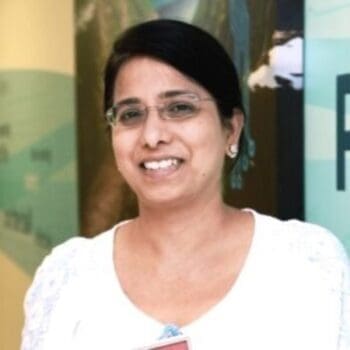
Chief Technologist for Middle East and Africa, Amazon Web Services (AWS)
, Amazon
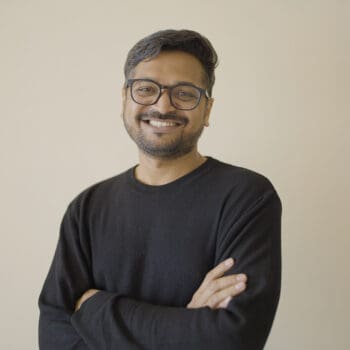
Founder
, CareMother
Dr. Shantanu Pathak, PhD in women’s health from IIT Bombay. He is a passionate social entrepreneur working on a mission of creating equal and personalised care opportunities for women. His venture CareMother (Doto Health) is offering innovative digital solutions for healthcare providers and women in India and developing countries. Shantanu is awarded by “The President of India’s Innovation Scholar Award in 2015 with 15 days stay at The President House ”, Google SMB Hero Award in 2017 and Top 10 Innovator by MIT, DST and Lockheed Martin in 2018 and Emerging Leader Award by Skoll Foundation in 2019, Stanford Biodesign Impact 1 Fetal and Maternal Award 2023, HIEx World Health Assembly Talk 2024 and 2025. Shantanu is steering committee member for Heat-in-Pregnancy project funded by Wellcome Trust along with PIs from THSTI, University of Oxford, George Institute etc.
CareMother innovative digital solutions address high risk pregnancy management, fetal and labor monitoring and new born care. CareMother has impacted reached more than 500,000+ pregnancies in last 5 years primarily in India and recently being used in Vietnam, Nepal, Sierra Leon, Nigeria, Bangladesh and Afghanistan. Along with entrepreneurial journey, Shantanu is also associated with NanoBios Lab , IIT Bombay and working on new problem statements on Maternal Health and Cancer care. He plans to establish India’s first Women’s Health Centre of Excellence at IIT Bombay.
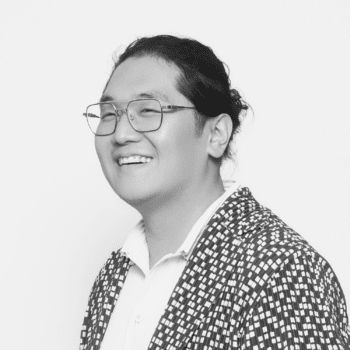
CEO, Chief Happiness Officer (CHO), Tech Maestro
, Galaxy Corporation
Tech Maestro, the youngest CEO of a K-Unicorn company, Chief Happiness Officer (CHO) of Galaxy Corporation, and the youngest attendee at the APEC 2025 Leaders’ Dinner – these are the titles that describe Choi Yong-ho, CEO of Galaxy Corporation. Choi Yong-ho is a recipient of the Presidential Citation for Distinguished Services at the 2025 APEC Leaders’ Meeting, the Global Content Producer Award at the Asia Model Festival, the Ministry of SMEs and Startups Award at the Korea SME Regulatory Innovation Awards, and the Grand Prize in the Metaverse Enterprise category at the Korea Innovation Management Brand Award.
After traveling alone to over 40 countries in his teens, Choi Yong-ho published a book titled Dreams Come True, through which he shared his ideas and attracted supporters before entering the startup arena. He later brought together like-minded peers and participated in the International Creativity Olympiad sponsored by NASA, where they placed 8th.
After attending university, he explored the potential across 100 different business ideas with peers, and in his twenties, boldly ventured into a Hallyu (Korean Wave) startup. He founded K-culture and became the publisher of KBS KWAVE, a Hallyu magazine distributed worldwide. During this period, he popularized the ‘K-‘ branding series and became a leading example of youth entrepreneurship.
After experiencing a business failure in his early thirties, he set out to pursue a venture aimed at realizing boundless imagination through AI-powered metaverse content designed to bring happiness to humanity. He founded the AI enter-tech company Galaxy Corporation and achieved global success with Physical 100 Seasons 1 and 2.
Global K-culture artists – including G-DRAGON, leader of BIGBANG; Song Kang-ho, lead actor in the film Parasite; Taemin of SHINee; and Kim Jong-kook of Turbo – are affiliated with Galaxy Corporation under the leadership of Choi Yong-ho. He is currently engaged in combining these Super IPs with technology.
He also serves as a specially appointed professor at Yonsei University College of Arts and collaborates with KAIST on industry-academia initiatives, contributing to the development of talent in the art-science sector.
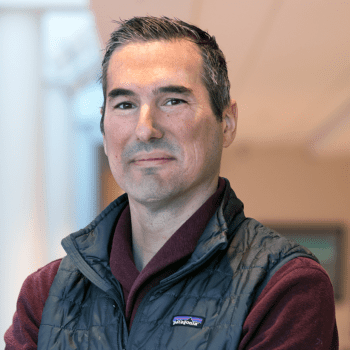
Associate Professor, Departments of Robotics and Mechanical Engineering
, University of Michigan
Elliott J Rouse is an Associate Professor in the Departments of Robotics and Mechanical Engineering at the University of Michigan. He directs the Neurobionics Lab, who studies the dynamics of how and why people use wearable robotic systems. His group uses this understanding to develop novel hardware designs, including the Open-Source Leg. In addition, Dr. Rouse is a Senior Research Scientist at the Institute for Human and Machine Cognition (IHMC). He is a recipient of the NSF CAREER Award and the Henry Russel Award at UM. He is on the Editorial Board of Wearable Technologies and is the Co-Chair of the IEEE RAS Technical Committee on Biorobotics. He received the BS degree in mechanical engineering from the Ohio State University and the PhD degree in biomedical engineering from Northwestern University. Subsequently, he joined MIT as a Postdoctoral Fellow in the MIT Media Lab. Prior to joining U-M, Dr. Rouse was a principal investigator at the Shirley Ryan AbilityLab / Northwestern University, and worked as a mechanic in professional Le Mans autoracing. In 2019 – 2020, he was visiting faculty at (Google) X where he co-founded their exoskeleton development team. In 2024-2025, he was on sabbatical at the Robotics and AI (RAI) Institute, where he worked on advanced machine design workflows.

Research Director, Sorbonne Université and Co-founder
, WelinQ
Eleni Diamanti is CNRS research director at the LIP6 laboratory of Sorbonne University in Paris. She received her PhD in Electrical Engineering from Stanford University in 2006 and performed her postdoc as a Marie Curie fellow at the Institute of Optics Graduate School in Palaiseau before joining the CNRS in 2009. Her research focuses on experimental quantum cryptography and communication, and on the development of photonic resources and applications for quantum networks. She is a recipient of a European Research Council Starting Grant, director of the Paris Centre for Quantum Technologies, and was awarded the CNRS Silver and Innovation Medals in 2024. She also serves as member of the European Quantum Technologies Flagship Strategic Advisory Board and is cofounder and scientific advisor of the start-up company Welinq that specializes in quantum interconnect technology.
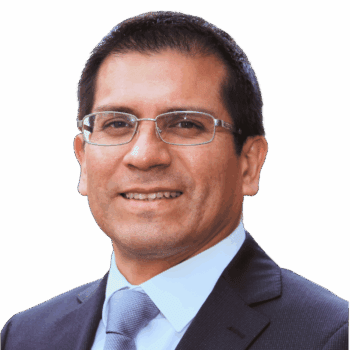
CEO & founder
, Moddula
Alex Nomberto is a senior executive and strategic advisor with over two decades of leadership experience across Latin America, specializing in General Management, Commercial Strategy, and Digital Business Design. He has held key roles in multinational corporations and international organizations across sectors including Telecommunications, Energy, Data Centers, Software, Retail, Internet, Healthcare, and Startups.
Alex’s core expertise lies in strategic planning, digital transformation, new business development, technology and innovation, and the design of digital and exponential business models. He is also deeply experienced in leading high-performance teams and supporting startups with scalable impact.
His corporate trajectory includes nearly a decade at Emerson Electric, where he was selected through the prestigious Global MBA Leadership Program. There, he successfully led commercial and operational transformations across Peru, Argentina, and a multi-country division generating over $80 million in revenue. He later joined Oracle Corporation to lead communications business expansion in Colombia, Peru, Ecuador, and Panama.
Currently, Alex leads Moddula, his boutique consulting firm focused on creating positive impact through the integration of strategy, technology, and innovation in organizations and communities.
He holds a degree in Electrical Engineering from Pontificia Universidad Católica del Perú (PUCP) and earned both an MBA and a Master in Entrepreneurship from the University of Arizona as a Fulbright Scholar. He is an alumnus of executive programs at IESE (Spain), PAD (Peru), MIT, Cambridge University, the University of Virginia, and Strategy Tools (Norway). He also completed the Lima Stock Exchange’s inaugural Director Certification Program, two executive programs in Japan under AOTS scholarships: Management on Technology (2003) and Business Innovation and Organizational Development (2024) and FEEL: A Disruptive Future Program in Dubai (2024).
Alex is an active member of international professional networks, including IEEE, Beta Gamma Sigma, the Fulbright Association, AOTS, OpenExO, and L+1 Leaders for Sustainable Development. He also served as a Global Ambassador for Singularity University, leading the SU Lima chapter, and contributes to multiple innovation and entrepreneurship communities across the Americas.

Chair
, IEEE SSIT Sustainability Technical Committee
Mei Lin Fung serves as Vice Chair of the UN AI for Good Impact Steering Committee, Chair of the IEEE SSIT Sustainability Technical Committee, and Co-founder of the Nehitek Foundation. has been a long-time Senior Advisor to World Data Lab and recently joined as an investor. She co-founded the People-Centered Internet with Vint Cerf and has contributed to G7 Think Tank policy briefs from 2022–2025 on Central Bank Digital Currencies, MSME financing, prosperity data networks, and AI regulation.
Mei Lin’s pioneered customer relationship management at Oracle and built financial models for Shell’s $8B North West Shelf Gas Exploration project. She educated at MIT under future Nobel laureates and Black-Scholes co-inventor Fisher Black.
Her current work focuses on Digital Public Infrastructure (DPI) implementation, SME financing, and AI governance. She operates at head-of-state and central bank levels across ASEAN, Europe, and the Americas, with direct access to Singapore President Tharman Shanmugaratnam and Monetary Authority of Singapore officials, and connects to EU legislators through Declan Kirrane, UN Science Summit Chair. She served as founding chair of the UN Science Summit Digital Cooperation theme and enabled the UN Science Summit to launch the UN AI Advisory Council report in 2023. She serves on the GovStack advisory council, a UN initiative developing digital building blocks for government services, with particular focus on Digital Asset Registries that enable governments to track and verify economic activity at the SME level.

Global Head of Applied AI
, HP Inc.
Dr. Raj Suri is Global Head of Applied AI at HP Inc., where he leads a global organization that deploys AI to drive business performance, enhance workforce productivity, and enable responsible innovation at scale. He focuses on translating advanced AI capabilities into practical applications that deliver measurable impact across the enterprise.
With more than two decades of experience, Dr. Suri has led technology organizations across financial services, defense, and consumer electronics. Prior to HP, he was Head of Card AI Strategy & Systems at Capital One, where he helped transform the credit card business through data and machine learning. Earlier, he led U.S. Army research on landmine and IED detection and contributed to product innovation at Bose.
In addition to his corporate role, Dr. Suri serves on boards and advises several nonprofit organizations, including Child Care Aware of America, USA for UNHCR, and CARE, supporting initiatives that advance social impact, digital equity, and global resilience.
Dr. Suri holds a Ph.D. in Mechanical Engineering from MIT, a master’s in Product Design from the University of Michigan, and dual bachelor’s degrees in Mechanical Engineering and Literature from MIT.
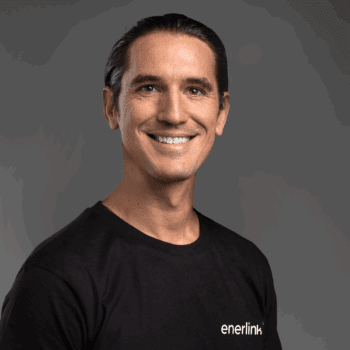
CEO
, Enerlink.ai
Marco C. Funk is an entrepreneur and clean-energy advocate who serves as the CEO of Enerlink.ai, a platform using AI and blockchain to bring trust and bankability to local clean energy. He launched his work in 2020 with the goal of accelerating the transition to sustainable energy by maximising the value of the optimal form of energy – local, decentralised projects.
For its cutting-edge AI-powered technology and the completion of over 20,000 projects, Enerlink won the AI For Good Innovation Factory 2025, and is looking forward to attending the Grand Finale in Geneva in July. Funk has spoken at international conferences on sustainability, clean tech and energy transition, and leads Enerlink’s mission to bring transparency, accountability and data-driven investment flows to clean energy deployment globally.

Founder
, Emanate
Kiara Nirghin is an award-winning Stanford technologist and bestselling author originally from South Africa. Nirghin gained international recognition at a young age when she won the Google Grand Prize for seminal research in AI algorithms for real-world applications in climate change.
Since then, she has been featured by TIME Magazine’s on their Most Influential Teen list, The Guardian’s Power list, Forbes 30 Under 30, and named one of Glamour Magazine’s College Women of the Year. She’s also a Thiel Fellow and a Y Combinator alum. As a prominent Gen Z sustainability advocate and technologist, she is internationally recognized as a scientific and cultural pioneer for her generation, having already published her first book with Penguin Random House and being a guest contributor to The Economist and TIME 100 Voices.
Beyond her scientific achievements and her contributions to Stanford’s Institute for Human-Centered AI, Nirghin demonstrates an extraordinary level of creativity by using her platform to inspire and empower others. She now advocates through both public and private organizations like UN Women, L’Oréal UNESCO for Women in Science, and the Academy of Motion Picture Arts and Sciences. Nirghin has served as the youngest member of Google’s Impact Fund and is Co-founder and Chief Technology Officer of one of the fastest growing San Francisco-based Applied AI Research Labs advancing the future of how AI understands the world and builds new ones. The company is backed by prominent venture capital investors like General Catalyst, Alexis Ohanian, and Michael Dell, and serves several Fortune 500 companies and institutions.

A band, a hackathon team, and an ephemeral research lab
, DADABOTS
CJ and Zack are the music hacker duo DADABOTS. They met at Berklee College of Music & formed DADABOTS at Music Hack Day MIT in 2012. From playing in metal, punk, and noise bands, to studying composition & programming, they realized machine learning was an even more extreme way to make sound & dove completely into eliminating themselves from music. In 2017 they published a paper at NeurIPS “Generating Black Metal and Math Rock” about SampleRNN (now considered vintage AI). Advancing from songs to endless streams, they run possibly the longest continuous 24/7 YouTube livestream, Relentless Doppelganger, generating techdeath for 5+ years. They co-founded Harmonai, the music research team within StabilityAI, and created Stable Audio, which was on TIME’s best inventions of 2023. Recently they published a documentary PROMPT JOCKEYS about live DJing music that doesn’t exist yet.

Founder and Creative Director
, KiQ Inc.
Director, Shosa Lab
Akane Kikuchi is the Founder and Creative Director of KiQ Inc. and Director of Shosa Lab, a Tokyo–Los Angeles-based innovation studio advancing Physical AI and nonverbal human–machine interaction. Her work focuses on how embodied movement, spatial design, and cultural intelligence can increase trust and emotional alignment in AI systems. At Osaka EXPO 2025’s Future of Life Pavilion, she led movement design for robotic systems that enhanced human engagement through nonverbal interaction. Kikuchi has also worked on the award winning ivi house, a research-driven residential project exploring how architecture can function as an adaptive, emotionally responsive system through integrated sensing, environmental feedback, and subtle behavioral design. She collaborates with global corporations, researchers, and cultural institutions to develop human-centered AI experiences across robotics, architecture, and luxury environments. Her work has been featured by Ars Electronica, TEDx, and international design platforms. Through Empathy Design, she develops frameworks that translate human behavior and perception into measurable design strategies for next-generation AI systems. She is a returning speaker at AI for Good, where she has presented on nonverbal human–AI interaction and embodied design.

Co-chair
, GeoGPT Governance Committee
former President of IUGS, former Director of British Geologic Survey
John Ludden CBE FRSE is a renowned geoscientist with extensive governance and leadership experience. He served as President of the International Union of Geological Sciences (IUGS) and was Executive Director of the British Geological Survey (2006–2019), where he led major international collaborations and strategic reforms. He also held senior roles at CNRS in France and currently chairs the Krafla Magma Testbed Board. Recognized for integrating science with policy and innovation, Ludden has shaped global geoscience agendas and promoted ethical, interdisciplinary approaches. He was appointed CBE in 2016 and elected FRSE in 2021.
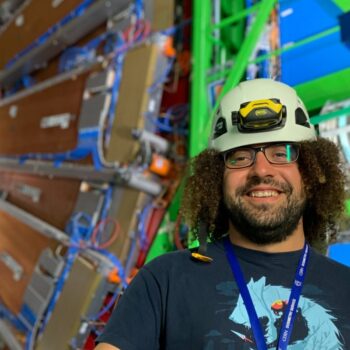
Scientific Associate
, CERN

Co-founder
, PixVerse
Jaden co-founded AIsphere in early 2023, with the mission of building a world-leading video generation model and application. Its flagship platform, PixVerse, is currently the most widely used video generation platform globally, with over 15 million monthly active users, and has topped app store charts in countries including the United States, Germany, Brazil, and Spain.
Prior to founding PixVerse, Jaden was Executive Director at Lightsource Capital, where he focused on TMT and AI sectors. He supported over 30 startups in raising more than 10 billion RMB in total and invested in 15 of those companies.
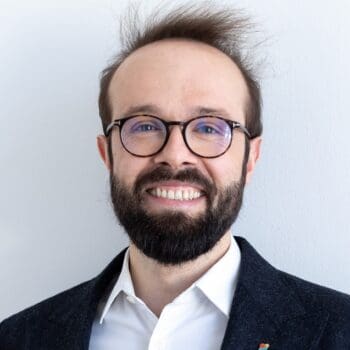
Professor of Artificial Intelligence Computer Science Department and Center for Artificial Intelligence
, Technische Hochschule Nürnberg Georg Simon Ohm
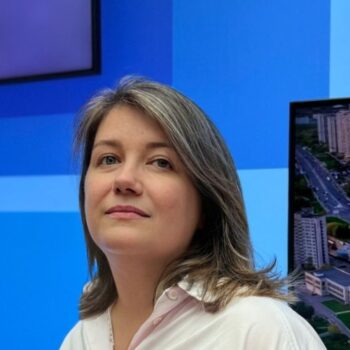
Director
, MGIMO AI Centre
Anna Abramova has more than 15 years of experience in research and lecturing on AI, digital trade developments, as well as official development assistance in the ICT sector. Along with being a Director of the MGIMO AI Centre, she is also Head of the Department of Digital Economy and Artificial Intelligence at MGIMO-University, Academic Director for the Master’s Programme on Artificial Intelligence. Anna has worked as a consultant for UNCTAD and the World Bank, contributed to UNCTAD Information economy report (UNCTAD 2012), UNCTAD Digital economy report (UNCTAD 2019, UNCTAD 2021), published articles in peer-reviewed journals and conference books. For the past several years, Anna has also been a member of national delegations to UNESCO and the Council of Europe, OECD ONE AI expert group on AI classification, a member of the Commission of the Russian Federation for UNESCO, National Committee for AI. Currently, she is a member of the Commission for AI Ethics Code, where she leads the working group on developing and monitoring the methodology of risk assessment and humanitarian impact of AI systems. Since 2023, she has been a member of the UN High-Level Advisory Body on AI.
Founder and Chief Executive Officer
, Cyber Eagle Project Inc.
Carlo Tortora Brayda is the Founder and Chief Executive Officer of Cyber Eagle Project Inc., a sovereign-grade AI and cybersecurity platform dedicated to protecting critical infrastructure across NATO, Five Eyes, and allied nations. Cyber Eagle is structured as a large-scale public–private partnership addressing systemic cyber, AI, and resilience risks across energy, transport, healthcare, finance, and government systems.
He is also the Founder and Executive Chairman of the Tortora Brayda Institute for AI & Cybersecurity, a global think tank focused on AI governance, national security, and alignment with the United Nations Sustainable Development Goals. The Institute convenes policymakers, industry leaders, and technologists to advance responsible AI deployment, cyber resilience, and international cooperation.
Mr. Tortora Brayda has been a long-standing contributor to the United Nations ecosystem. He has spoken at multiple UN summits and forums, including those convened by the International Telecommunication Union, and serves as a Judge for the UN AI for Good Innovation Factory, including its climate-focused programs featured at UNFCCC COP. His work consistently emphasizes the role of public–private collaboration in safeguarding trust, infrastructure, and societal stability in the digital age.
He is a long-term Global Leader of the Forbes Technology Council Cybersecurity Group, where he contributes thought leadership on AI security, critical infrastructure protection, digital trust, and cyber resilience for senior business and policy audiences worldwide.
Mr. Tortora Brayda has also been engaged with the World Economic Forum as a Special Constituent and subject matter expert on Global Risks, contributing to discussions supporting G20 and multilateral risk frameworks. His WEF work has focused on the intersection of emerging technology, systemic cyber risk, geopolitical stability, and governance.
Earlier in his career, he worked directly with UN institutions in Geneva, including as a volunteer in the Office of the United Nations Special Committee Against Apartheid. These formative experiences, alongside early engagement with senior UN leadership, shaped his lifelong focus on multilateral cooperation, ethics, and development.
Beyond cybersecurity, Mr. Tortora Brayda has advised governments and international organizations on entrepreneurship, private sector development, and digital transformation, particularly in Africa, where he led initiatives supporting large-scale employment creation and SME growth in coordination with national governments and UN agencies.
He is a Chartered Engineer in AI information systems, a frequent speaker at global technology and policy forums, and is recognized internationally as a thought leader at the intersection of artificial intelligence, cybersecurity, national resilience, and sustainable development.

Chief Curator of Artistic Intelligence Visionary Initiative
, R100 Studios
Harry Yeff is a London-born Creative Director and founder of R100 Studios. Yeff has forged a partnership with ITU, seeking out artists who push the boundaries of human and machine collaboration. Specialising in a blend of grassroots emergent curation and strategic insight for global arts and cultural initiatives and institutional collaboration. His research delves into how art, fueled by emergent technologies, can prepare society for present and future opportunities in a new creative and work landscape.
Professor, Ecole Polytechnique Fédérale de Lausanne, Convenor of JPEG Group, and Vice Chair
, AI and Multimedia Authenticity Standards Collaboration
Convenor of JPEG Group
Touradj Ebrahimi is professor of image processing at Ecole Polytechnique Fédérale de Lausanne (EPFL) and active in teaching and research in multimedia signal processing.
He is the Director of Multimedia Signal Processing Group at EPFL. Since 2014, he has been the Convenor (Chairman) of the JPEG standardization Committee which has produced a family of standards that have revolutionized the imaging world.
He represents Switzerland as the head of its delegation to JTC1 (in charge of standardizing information technology in ISO and IEC) and SC29 (the body overseeing JPEG and MPEG standardization) and is a member of ITU as the main representative of EPFL.
Prof. Ebrahimi is also involved in Ecma International as a member of its ExeCom. He serves as a consultant, evaluator, and expert for the European Commission and other governmental funding agencies in Europe and advises several Venture Capital companies in Switzerland in their scientific and technical audits. He has founded a number of startup and spinoff companies in the past two decades, including the most recent, RayShaper SA, a research startup company based in Crans-Montana, Switzerland, involved in AI-powered multimedia.
His areas of interest include image and video compression, media security, quality of experience in multimedia and AI based image and video processing and analysis. Prof. Ebrahimi is a Fellow of the IEEE, SPIE, EURASIP and AAIA and has been the recipient of several awards and distinctions, including an IEEE Star Innovator Award in Multimedia, an Emmy Award on behalf of JPEG and the SMPTE Progress medal.
Executive Director
, Fraunhofer Heinrich Hertz Institute (HHI)
Chair of ITU/WHO Focus Group on AI for Health
Thomas Wiegand is professor at the Technical University of Berlin and executive director of the Fraunhofer Heinrich Hertz Institute, Berlin, Germany. He heads research teams working on: video coding, machine learning, computer vision, and mobile communications.
Wiegand substantially contributed to the creation of the H.264/AVC, H.265/HEVC, and H.266/VVC standards. For H.264/MPEG-4 AVC, Wiegand was one of the chairmen of the Joint Video Team (JVT) standardization committee that created the standard and was the chief editor of the standard itself. He was also an active technical contributor to all these standards. Wiegand also holds a chairmanship position in the ITU-T VCEG and previously in ISO/IEC MPEG standardization organizations. From 2018-2023, he was the chair of the ITU/WHO Focus Group on Artificial Intelligence for Health. Since 2014, Thomson Reuters named him in their list of “The World’s Most Influential Scientific Minds” as one of the most cited researchers in his field. He is a recipient of the ITU150 Award. He has been elected to the German National Acdemy of Engineering (Acatech) and the National Academy of Science (Leopoldina).
Personal Chair in Quantum Computing
, University of Edinburgh

Entrepreneur, Technologist and AI Music Innovator
, Perfect Pitch Productions Ltd
World-renowned musician and BBC TV broadcaster LJ Rich presents on the international technology show, BBC Click. In the last year she’s delivered lines at 75mph from the UK’s tallest thrill ride, performed to a drone in the sea off the Welsh Coast – and learned to rap on camera thanks to a mind-reading AI headset.
LJ’s many innovative projects coupled with a wide knowledge of tech trends bring a unique spark to her professional speaking engagements. A highly accomplished pianist, she uses music to connect the emotional and rational minds of audiences, unlocking creative thinking and solving real-world problems. She believes AI/Machine Learning can be a companion to creativity and regularly uses it to enhance her original works. LJ also loves eating and singing, trains and planes, and solving difficult puzzles.

AI Research Director
, Swisscom
Dr Daniel Dobos is Research Director at Swisscom. He is responsible for relations with universities, universities of applied sciences and other research institutions. Together with employees from all Swisscom business areas, he and his team develop solutions that use the latest research and technology developments for the benefit of Swisscom customers. Previously, he led research and AI data analysis projects at the CERN research centre and at the United Nations.

Head of AI Sustainability
, Salesforce
Boris Gamazaychikov is Head of AI Sustainability at Salesforce, where he leads global efforts to align AI with climate action. Recognized by The Independent’s Climate 100 and Business Insider’s AI Trailblazers, he is a prominent voice at the intersection of technology and sustainability. At Salesforce, he drives initiatives to reduce the environmental footprint of AI products while advancing industry-wide solutions, most notably launching the AI Energy Score, the first standardized benchmark for measuring AI model energy use.
With over a decade of experience tackling complex environmental challenges, Boris is also a frequent speaker and board advisor. He holds a degree in Environmental Engineering from the University of Maryland and continues to bridge engineering, climate science, and AI to accelerate the transition to a sustainable future.
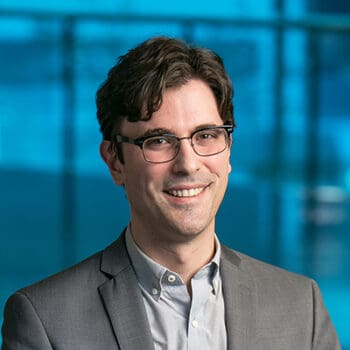
Assistant Professor, Electrical and Systems Engineering
, University of Pennsylvania
Marc Miskin is an Assistant professor of Electrical and Systems Engineering at the University of Pennsylvania. He received a BSc. in Physics at Rensselaer Polytechnic Institute and PhD. in Physics from the University of Chicago. Prior to joining the faculty at U. Penn, he was a Kavli Postdoctoral Fellow for Nanoscale Science at Cornell University. Currently, he is interested in the design and fabrication of microscopic robots. His work has won awards from the Air Force Office of Scientific Research, the Army Research Office, a Sloan Research Fellowship, a Packard fellowship and been featured in several media outlets, including the New York Times, the MIT Tech Review’s 35 under 35 list, the Washington Post, the Wall Street Journal, the BBC, and NPR. Outside of research, he is actively involved in science education, with his work featured in multiple science museums around the globe.
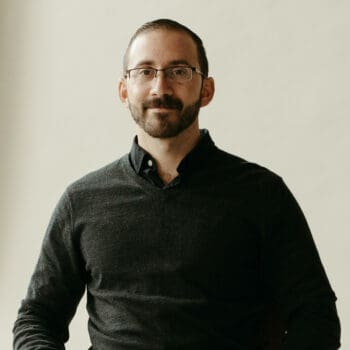
CEO and Co-Founder
, HILOS
Elias Stahl is the CEO and Co-Founder of HILOS, the Human Innovation Lab Operating System building the first 3D design platform made specifically for footwear – no CAD required. Powered by machine learning, HILOS’ core geometry engine connects 2D and 3D workflows to streamline how footwear is designed, developed, and brought to market. HILOS works with leading brands such as Steve Madden, Dolce Vita, and Alexander Wang. Stahl founded HILOS to modernize product creation by uniting advanced computation with shoemaking.
Prior to HILOS, he served in the Israeli special forces, worked on urban policy at the National League of Cities, and led product at Handshake, where he helped Fortune 50 brands leverage their influence for social impact. He holds an MA from Johns Hopkins University and a BA from the University of Toronto. He’s also an avid history reader, a casual swing dancer, and an amateur distiller.
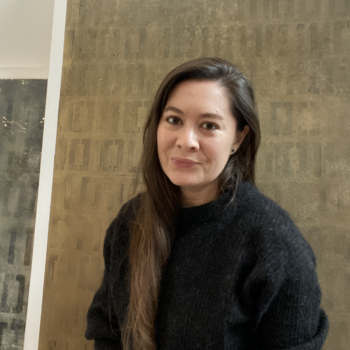
Artist & Poet
, Sasha Stiles
Sasha Stiles is an award-winning Kalmyk-American poet, artist, and AI researcher whose work explores what it means to be human in a more-than-human age. A founding figure in generative creativity, she bridges conceptual and computational art to reimagine poetry as a form of living intelligence, synthesizing text and technology, memory and imagination. Stiles’ work has been honored by the Prix Ars Electronica and Lumen Prize; featured in The New York Times, Poets & Writers, and Artforum; and exhibited around the globe, from MoMA to Gucci to Art Basel. A co-founder of theVERSEverse and graduate of Harvard and Oxford, she has served as Poetry Mentor to the humanoid BINA48 since 2018, and lives near New York with her husband and studio partner, Kris Bones.

Associate Professor of Bioengineering
, Imperial College London
Dr. Kaushik Jayaram is an Associate Professor of Bioengineering at Imperial London, where he leads the Insect Inspired Intelligence Lab. His work focuses on uncovering fundamental principles of biological robustness and translating them into deployable robotic technologies. His long-term vision is to establish insect-scale autonomous systems as a new paradigm for resilient, energy-efficient robotics with applications in infrastructure, agriculture, environmental monitoring, and disaster response. Dr. Jayaram leads an interdisciplinary team spanning biomechanics, robotics, materials science, and embedded systems, and is committed to training researchers who operate across traditional disciplinary boundaries. His work has been widely featured in major media outlets and public science platforms, reflecting its broad societal relevance. He received his PhD in Integrative Biology from the University of California, Berkeley, and completed postdoctoral training at the Wyss Institute at Harvard University. Prior to joining Imperial, he was an Assistant Professor at the University of Colorado Boulder with affiliations across engineering, robotics, and biomedical institutes. He is particularly known for advancing an integration-first approach to physical intelligence, embedding sensing, actuation, and control directly into materials and morphology. His research has resulted in over 40 peer-reviewed publications (including Science Robotics, PNAS, NPJ Robotics, etc.), multiple patents, and international recognition through invited and plenary talks. He has secured competitive funding from national and international agencies (including NSF CAREER) and industry partners to develop next-generation miniature robotic systems.
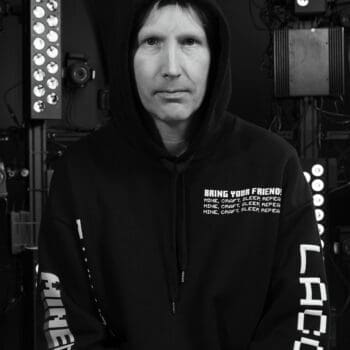
Director, Fashion Innovation Agency
, London School of Economics, UK
Matthew is a world-renowned authority at the intersection of emerging technology and the creative industries. As a specialist in immersive tech and artificial intelligence, he is not merely predicting the digital future, he is actively engineering it. As a leader, he leads his team in building the vital pathways that connect human creativity with machine intelligence, ensuring that the next era of technology remains profoundly human-centric.
His influence operates at the highest levels of policy and innovation. Matthew represents the creative sector on the UK Government’s Technical Working Group on AI and Copyright and serves as a strategic voice on the Bridge AI Advisory Board for Innovate UK. Recognized by Wired as a “pioneer and a visionary,” and hailed as a “fashion-tech trailblazer” by Draper’s, Matthew sits at the epicenter of the global conversation on how technology is governed, applied, and scaled.
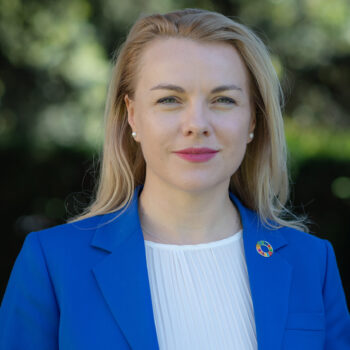
Executive Secretary
, United Nations Economic Commission for Europe (UNECE)
United Nations Secretary-General António Guterres announced on 26 July 2023 the appointment of Tatiana Molcean of the Republic of Moldova as the Executive Secretary of UNECE. She took office on 1 September 2023. Ms. Molcean brings to the position twenty years of experience in the public sector with extensive international cooperation and development experience, and in-depth knowledge and expertise across the entire UNECE membership. Prior to her appointment, she was the Permanent Representative of the Republic of Moldova to the United Nations Office, World Trade Organization and other international organizations in Geneva (since 2020). Ms. Molcean served as State Secretary and Deputy Minister for Multilateral and Bilateral Cooperation in the Ministry of Foreign Affairs and European Integration (2017-2020), Deputy Director General for European Integration and Head of the Division for Economic and Sector Cooperation with the European Union (2012-2017) and Head of the Division for Economic Cooperation and Sectorial Coordination at the General Directorate for European Integration (2004-2008). A career diplomat, she has also served as Chargé d’Affaires at the Embassy of the Republic of Moldova to Sweden (2008-2011). Ms. Molcean holds a LLM Degree in Law from the Faculty of International Law at Moldova State University and completed the Multilateral Diplomacy Program from the Graduate Institute of Geneva, Switzerland. She is fluent in Romanian, English and Russian, with advanced knowledge of French.

Secretary-General & CEO
, International Electrotechnical Commission (IEC)
Mr Metzger became IEC Secretary-General and CEO on 1 February 2020. Prior to joining IEC, he was Director-General of the Swiss Federal Office of Communications (OFCOM). Mr Metzger was also previously Deputy to the Director of the Development Bureau at the International Telecommunication Union (ITU) and Director of the European Free Trade Association (EFTA). Trained as a lawyer, Mr Metzger has issued several publications on the World Trade Organization (WTO) and competition law.
The Secretary-General is the Chief Executive Officer of the Commission and is responsible for its day-to-day operations.
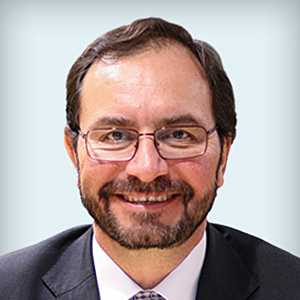
Secretary-General
, International Organization for Standardization (ISO)
Sergio Mujica started out as ISO Secretary-General in 2017. ISO is a leading international organization in standardization with a membership of about 165 national standards bodies. ISO standards support global trade, drive inclusive and equitable economic growth, advance innovation and promote health and safety to achieve a sustainable future. Under Sergio’s leadership, ISO approved a new Strategy 2030, which is fully aligned with the United Nations Sustainable Development Goals, with a vision of “making lives easier, safer and better”.
Combining his experience as Deputy Secretary-General at the World Customs Organization in Brussels from 2010 to 2017 and several leadership positions in the government of Chile, Sergio has unique global perspectives of international trade and sustainability. He is a tireless advocate for International Standards as ways of reducing barriers and fully realizing the role of international trade in growing economies.
Sergio is fully committed to integrity, transparency and the highest ethics across every part of ISO, as well as to gender equality. As an International Gender Champion, he is a member of a leadership network that brings together female and male decision-makers determined to break down gender barriers and make gender equality a working reality in their spheres of influence.
Sergio obtained his law degree at the Pontificia Universidad Católica de Chile and completed his master’s in international law at the American University in Washington D.C. (USA).
In 2021, the ISO Council reappointed Sergio as Secretary-General for a second five-year term (until July 2027).

Freelance journalist
, Journalist
Franco-English print & broadcast journalist and presenter Charlotte Kan spent five years working as anchor and reporter on both the French and English language channels at Bloomberg Television and has been freelance since 2011. She is based in the UK and a correspondent for French channels M6, Canal+, i-tele, plus Belgium’s RTL TVI. She specialises in finance, disruption, tech & culture and regularly works as presenter and moderator of international conferences and events. Her corporate clients include Deloitte, HSBC, Refinitiv, Oracle, RBC, Saxo Bank, BNP Paribas, Valeo and Expleo. She was to be found reporting live from the Royal wedding of the UK’s Prince Harry to Meghan Markle in Windsor for her French TV clients. Languages: native French, fluent English.
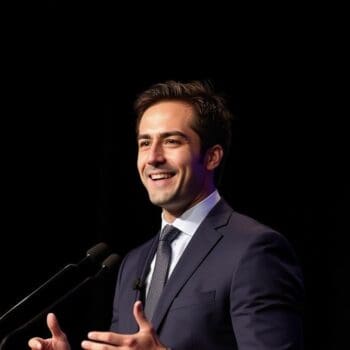
Founder & Chief Executive Officer
, Ahya
Salaal Hasan serves as the Founder & Chief Executive Officer of Ahya, the Middle East’s leading sustainability innovation company, delivering AI-powered software for the net-zero era. Ahya operates in the UAE, Saudi Arabia and Pakistan representing 1.6GtCO2e, on a mission to manage and reduce 100 MntCO2e by 2030.
Ahya has two core products in AhyaOS – AI-powered carbon management and accounting platform (CMAP) and Tawazun – AI-enabled voluntary carbon market-place (VCM). AhyaAI acts as climate intelligence for prediction, automation and decision-support. Ahya currently has 25 MntCO2 of emissions under management (EuMs), and 200+ carbon projects across its’ platforms.
Ahya won the Middle East & Africa Goes Green Award at COP-29, finalist of COP-28 TechSprint from the Bank of International Settlements and CBUAE, and was selected to the UAE’s Unicorn Builders Program by Endeavor and the Dubai Government.
Prior to Ahya, Salaal worked with the World Bank, Dubai International Capital and JS, co-founding a venture capital fund and investing in technology ventures across emerging markets. He is a chemical engineer and Exxon Mobil Scholar, having researched the capture of carbon-dioxide and conversion to graphene via super-critical fluid technology while at college.

Innovation Manager
, Fraunhofer Heinrich Hertz Institute (HHI)
Dr. Monique Kuglitsch is the Innovation Manager at Fraunhofer HHI and Chair of the newly established ITU/WMO/UNEPO/UNFCCC/UPU Global Initiative on Resilience to Natural Hazards through AI Solutions (the successor to the ITU/WMO/UNEP Focus Group on AI for Natural Disaster Management). In her past role at the American Meteorological Society, M. Kuglitsch was the Lead Technical Editor for several journals (including the Journal of Hydrometeorology and Journal of Physical Oceanography) and the Senior International Outreach/Communications Specialist. As a researcher, M. Kuglitsch has investigated past climate change, extreme weather events, and regional climate model projections. M. Kuglitsch has experience in fluvial and limnological field work, geochemical laboratory methods, applied mathematics and statistics, and climate change.

Co-chair
, GeoGPT Governance Committee
former VP of ExxonMobil, former Director of Energy Graduate Program, University of Texas
Richard Chuchla is a veteran geoscientist and former ExxonMobil executive with over 35 years of global leadership experience in energy exploration and strategy. He served as Senior Corporate Strategic Advisor and led deepwater and unconventional resource programs. Following his industry career, he directed the Energy and Earth Resources graduate program at the University of Texas at Austin, fostering interdisciplinary energy education. Currently, he co-chairs the GeoGPT Governance Committee, promoting ethical AI and scientific transparency. Chuchla is widely recognized for bridging science, policy, and innovation in resource development and for his commitment to responsible, forward-looking leadership in geoscience.

PhD Candidate, GeoLab
, Politecnico di Milano
Julia Leonardi is a PhD candidate at the GeoLab of Politecnico di Milano, where she specializes in integrating hyperspectral satellite imagery into Geospatial Foundation Models (GFMs). Her research investigates how this integration can support downstream applications such as environmental and agricultural monitoring, as well as enhance multimodality within GFMs.

Professor
, Lund University
Ali Mansourian is a Professor of Geomatics at the Department of Physical Geography and Ecosystem Science, Lund University, Sweden. He is Director of Lund University GIS Centre, coordinator of the “GIS & RS Master Programme”, and former council member of European AGILE (Association of Geographic Information Laboratories in Europe).
Mansourian has established research directions in Geospatial Artificial Intelligence (GeoAI, which is the intersection of GISceince and Artificial Intelligence), Spatial Data Infrastructures (SDI), and Multi-Criteria Decision Analysis (MCDA) using multi-objective optimization techniques. He has also a long-standing research line in applications of Geographic Information Systems (GIS) in epidemiology and heath, disaster risk management, land-use planning, and environmental management.
In his records, he has also coordination of several large international and national research and capacity building projects, evaluation of major EU/EC research grants, scientific program committee chair and/or organiser of several international conferences and workshops, supervision of PhD students and postdoc researches, invited evaluation committee of PhD theses, and publication of 150+ scientific journal/conference papers, books/book chapters, and technical reports.
For more information, please visit his extended CV.

ITU J-FET Editor-in-Chief and Truva Inc.
, USA
Ian F. Akyildiz received his BS, MS, and PhD degrees in Electrical and Computer Engineering from the University of Erlangen-Nürnberg, Germany, in 1978, 1981 and 1984, respectively. He is the Founder and Editor in Chief of the newly established of the ITU (International Telecommunication Union) Journal on Future and Evolving Technologies (ITU-J FET) since August 2020. Currently he is the President of the Truva Inc. based in Atlanta since March 1989. He also serves on the Advisory Board for the newly established research center called Technology Innovation Institute (TII) in Abu Dhabi, United Arab Emirates since June 1, 2020. He is the Ken Byers Chair Professor in Telecommunications Emeritus at the Georgia Institute of Technology, Former Chair of the Telecom Group at the ECE of GaTech and the Director of the Broadband Wireless Networking Laboratory between (1985-2020). He is a Megagrant Research Leader with the Institute for Information Transmission Problems at the Russian Academy of Sciences, in Moscow, Russia, since May 2018. He is a Visiting Distinguished Professor with the SSN College of Engineering in Chennai, India since October 2019 and an Adjunct Professor with Department of Electrical Engineering at University of Iceland since September 2020.
In the last two decades he established many research centers worldwide, e.g., at the University of Pretoria, South Africa, Politecnica de Catalunya in Barcelona, Spain, King Abdulaziz University in Jeddah, Saudi Arabia, University of Tampere, Finland. He is the Editor-in-Chief Emeritus of Computer Networks Journal (Elsevier) (1999-2019), the founding Editor-in-Chief Emeritus of the Ad Hoc Networks Journal (Elsevier) (2003-2019), the founding Editor-in-Chief Emeritus of the Physical Communication (PHYCOM) Journal (Elsevier) (2008-2017), and the founding Editor-in-Chief Emeritus of the Nano Communication Networks (NANOCOMNET) Journal (Elsevier) (2010-2017). He launched many conferences and workshops and served as General Chairs and TPC Chairs for many of them. He is an IEEE Fellow and ACM Fellow and received numerous awards from IEEE and ACM and other professional organizations. He received the Alexander von Humboldt Award to conduct research on TeraHertz at the University of Erlangen-Nurnberg between 2014-2017.
His current research interests are in 6G/7G Wireless Communication Systems, TeraHertz Communication, Internet of BioNanoThings, Molecular Communication, Reconfigurable Intelligent Surfaces, Nanonetworks, Internet of Space Things/CUBESATs; Internet of Things in Challenged Environments such as Underwater and Underground. According to Google Scholar as of May 2025, his h-index is 141 and the total number of citations to his papers is 153+K.
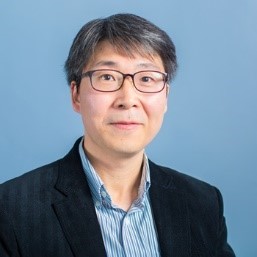
Professor
, Liverpool John Moores University (LJMU)
Gyu Myoung LEE is with the Liverpool John Moores University (LJMU), UK, as a Professor from 2014. He was with KAIST Institute for IT convergence, Korea, as an Adjunct Professor from 2012 to 2024. Prior to joining the LJMU, he has worked with the Institut Mines-Telecom, Telecom SudParis, France, from 2008. Until 2012, he had been invited to work with the Electronics and Telecommunications Research Institute (ETRI), Korea. He also worked as a research professor in KAIST, Korea and as a guest researcher in National Institute of Standards and Technology (NIST), USA, in 2007. His research interests include Internet of things, digital twin, computational trust, smart networking and services, multimedia services, and energy saving technologies. He has been actively working for standardization in ITU-T, IETF and oneM2M, etc. He was the chair of ITU-T Focus Group on data processing and management (FG-DPM) to support IoT and smart cities & communities and currently serves as a Rapporteur of Q16/13 and Q4/20 as well as a vice-chair of FG-AINN in ITU-T. He is a Senior Member of IEEE.
He received his BS degree from Hong Ik University, Seoul, Korea, in 1999 and his MS and PhD degrees from the Korea Advanced Institute of Science and Technology (KAIST), Daejeon, Korea, in 2000 and 2007.

Director of Center of Cyber Security and research assistant professor
, New York University
Hoda A. Alkhzaimi is currently the Director of Center of Cyber Security in New York University AD and a research assistant professor in New York University. She served in different posts for research and development in the Technology development sector for the past years, She also played a specific role in developing Cyber Security and Cryptology research and development ecosystems. She headed the Department of Research and Development for Cyber Security and Cryptology in different national initiatives in the United Arab Emirates along with her associations to different security initiatives nationally and internationally. She consults for special projects with national and international technology development initiatives.
Alkhzaimi has a specific expertise in cryptology; cryptanalysis, constructing and validating security hardware and software components, constructing trusted security architectures for different environments in different products for the respective industries. Hoda Alkhzaimi obtained her PhD in Cryptanalysis from Denmark Technical University. Her current research interests include Space, Aerospace, and UAV and autonomous systems security, constructing and analyzing cryptographic primitives, validating and investigating links between different cryptanalytic approaches and utilizing cryptographic primitives in different cybersecurity architectures as in Internet of Things and big data analysis among others. Her research includes analysis of the effect of machine learning techniques on improving security analytics.
Hoda is the president of Emirates Digital Association for Women a non-for-profit organization endorsed by the ministry of social affairs in the UAE that supports national and international initiatives that aims to empower economic and educational development for diverse communities with specific focus on women and children. This includes, yet not limited to, establishing, and creating ecosystems that support sustainable business development in the UAE and the international scene which supports indigenous growth of local economies. She is as well the strategic director for Women In Artificial Intelligence research international community that aims to improve the scientific and professional positioning of women’s contributions within the field especially in the MENA region. She is the lead of Women In Engineering Chapter in Abu Dhabi and the UAE lead for INWES MENA which is the global network for organizations of women in science, technology, engineering and mathematics. She is a currently focusing on building sustainable economic ecosystems and investments for valuable technological and industrial impacts.
Independent Research Consultant
, International Telecommunication Union (ITU)
Vishnu has hands-on experience in the field of Telecom industry for more than 25 years, developing and implementing standards, and holds many international granted patents.
Vishnu currently works as an independent consultant, is a Vice Chair of ITU Focus Group on Autonomous Networks and the co-convener of ITU Correspondence Group on datasets. Previously, he was a co-editor of ITU-T Focus Group specifications on Machine learning in 5G.
His current passion includes coordinating standards initiatives, industry bodies, open source and academia, mentoring student projects and coordinating the ITU “AI/ML in 5G“ Challenge across the globe. He also curates and moderates webinars under the ITU Machine learning 5G webinar series and AI for Good.
Vishnu was nominated as Scientific Advisory Board Associate (SABA) member of Motorola Networks and is a senior member of IEEE. He holds a Masters degree in Computer Science and Engineering from Indian Institute of Technology, Delhi.

Global President of Women in AI; Chair of AI and Multimedia Standards Collaboration, Sr. Director of Artificial Intelligence and Data Science
, Shutterstock
President, Women in AI
A research and scientific leader in Artificial Intelligence, Alessandra is the Sr. Director of AI and Data Science at Shutterstock. Alessandra has over 18 years’ experience in research and innovation gained whilst working in academic and commercial environments. Alessandra is passionate in advanced analytics, machine learning, and computational models with the focus of transferring innovation from research to products.
As Co-chair of the UNESCO Women for Ethical AI Platform and Global President of Women in AI (a non-profit do-tank working towards gender-inclusive AI that benefits global society) Alessandra is working with a strong community of women to foster diversity , inclusion and equality for women and minorities while encouraging a global ethical approach in AI. In an advisory capacity, Alessandra also serves as the Governance Committee Chair at the Science Foundation Ireland Center for Research Training in Machine Learning.
Among several awards, Alessandra won the 2024 Grace Hopper and the 2021 XV International Prize “Le Tecno-visionarie” in the AI - Industrial Research category. In her previous role Alessandra was Head of Analytics Research at Nokia Bell Labs where she was leading research teams in several locations while driving changes across different activities like her contributions to the Nokia AI Ethics Advisory Board.
Climate and Environment Data Unit
, UNICEF
Rohini Sampoornam Swaminathan is a geospatial expert with 12 years of international experience working with the humanitarian and development sectors. She currently leads the Climate and Environment Data Unit at UNICEF and previously served with WFP, WHO, UNDP, UNITAR and the NASA DEVELOP program.
Rohini holds a Bachelors and Masters in Geomatics Engineering, and an MBA.
System Analyst/Geospatial Focal Point
, International Telecommunication Union (ITU)
Andrea is a Senior System Analyst in the ITU Radiocommunication Sector. His current duties encompass software and radio communication engineering activities finalized to the design and implementation of software solutions and systems focused on the application of the provisions of the ITU Radio Regulations and Regional Agreements. He is also the ITU Focal Point for Geospatial Information Management and a Member of the Steering Committee of the UN Geospatial Network. He holds a Ph.D. in Physics (Indiana University, 2000) and an Executive MBA (Geneva University, 2011) with a specialization in International Organizations.
Associate Professor
, Bulgarian Academy of Sciences
Prof. (Assoc.) Dr. Dimiter Prodanov, MD, PhD, is an interdisciplinary researcher at the Institute of Information and Communication Technologies (IICT) of the Bulgarian Academy of Sciences, with over 60 peer-reviewed publications spanning neurotechnology, mathematical physics, and mathematical epidemiology. He holds an MD degree from the Medical University of Sofia and a PhD from the University of Twente, the Netherlands, and was awarded an IBRO postdoctoral fellowship to pursue research in neuroprosthetics at the Catholic University of Louvain, Belgium. Since 2023, Prof. Prodanov leads the €2M Horizon Europe ERA Chair project VIBraTE (https://vibrate-project.eu/), a Widening initiative dedicated to exploring the biomechanical and biochemical interactions between implanted electrodes and brain tissue, with the broader goal of advancing safer and more effective neural interfaces. Prior to this, he served as a senior scientist at Imec (Belgium), a world-leading centre in nanoelectronics and digital technologies, where he developed multichannel brain electrodes and later coordinated the H2020 project NanoStreeM on the safety of nanomaterials in semiconductor manufacturing and later served as a regulatory expert heading the Imec Biobank. Prof. Prodanov has a long-standing commitment to open science and open-source development: as an active contributor to ImageJ, the widely used public-domain scientific imaging platform, and his technical work consistently integrates open computational tools—including computer algebra systems and open numerical algorithms—for modelling biophysical phenomena. Since 2009 he has been engaged in the emerging discipline of Neuroinformatics and INCF, bridging machine learning and neuroscience.
In 2024, Prof. Prodanov was appointed to the UNESCO ad hoc working group on the Ethics of Neurotechnology, and in May 2025 served as an official delegate of the Bulgarian government to the UNESCO Intergovernmental Special Committee Meeting that adopted the text of the Recommendation on the Ethics of Neurotechnologies—the first global standard for the ethical governance of this cutting-edge technology. This dual role—as both scientific expert in the drafting process and official state representative at adoption—reflects Prof. Prodanov’s commitment to ensuring that advances in Brain Computer Interfaces and neurotechnology are developed responsibly and with full regard for human rights and safety.
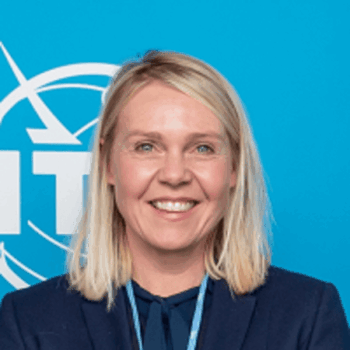
Head, Climate and Emergency Telecommunications Division, Telecommunication Development Bureau (BDT)
, International Telecommunication Union (ITU)
Vanessa is responsible for developing and overseeing projects and technical assistance on disaster preparedness, mitigation, response, and recovery. This includes the development of national emergency telecommunication plans (NETPs), the organization of regional and national workshops, and capacity building exercises for disaster management. In the area of disaster response, Vanessa oversees the work on the Disaster Connectivity Maps (DCM) and the deployment of emergency telecommunication equipment to countries hit by disasters. She is the ITU focal point for the UN’s Early Warning for All (EW4All) initiative and coordinates the initiative’s pillar on Warning Dissemination and Communication, to ensure that alerts reach people at risk. She is responsible for the organization of the Global Forum on Emergency Telecommunication (GET) and for specific ICT-for-disaster-management tools and publications, for example in the area of disruptive technologies, gender, and ICT simulation exercises.
Vanessa holds a master’s degree in political science and economics from the Graduate Institute of International and Development Studies in Geneva, Switzerland.
Associate Professor, Department of Electronics and Communications Engineering, Faculty of Engineering, Zagazig University, and Researcher
, Prince Sultan University
Abdelhamied A. Ateya is currently an Associate Professor with the Department of Electronics and Communications Engineering, Faculty of Engineering, Zagazig University, and a Researcher with Prince Sultan University. He has co-authored more than 100 publications in high-ranked journals. His current research interests include 6G communications, Open RAN, evolving networks, AI/machine learning applications in communication networks, agentic AI in 6G networks, autonomous unmanned aerial vehicles, satellite communications, Telepresence, holographic communications, Internet of Things, Tactile Internet and its standardization, and vehicular communications. He is a member of many scientific communities, an IEEE Senior Member, and an ACM Professional Member. He has been an active member of several international journals and conferences, contributing as an author, reviewer, editor, and program committee member.
Professor of Computer Science, Department of Computer Science
, Prince Sultan University
Mohammed Elaffendi is currently a Professor of computer science with the Department of Computer Science, Prince Sultan University, Riyadh, Saudi Arabia, the Former Dean of the College of Computer and Information Sciences (CCIS), Aide to the Rector, a Founder, and the Director of the Data Science Laboratory Emerging Intelligent Autonomous Systems (EIAS) and the Center of Excellence in quantum computing and Cyber Security. His current research interests include data science, intelligent and cognitive systems, machine learning, and natural language processing.

CTO and Co-founder
, Lablup Inc.
Joongi Kim is the CTO and Co-founder of Lablup Inc., where he leads the architecture and development of Backend.AI, an open-source platform designed for scalable AI infrastructure and on-demand machine learning execution environments. His work focuses on building efficient and accessible AI computing systems that enable researchers, developers, and organizations to harness large-scale computing resources with greater flexibility and efficiency.
With a background in distributed systems, high-performance networking, and GPU-accelerated computing, Joongi has contributed to the design of container-based GPU virtualization and large-scale AI workload orchestration technologies. His research and engineering work have influenced practical approaches to improving GPU utilization and enabling multi-tenant machine learning workloads in cloud and cluster environments.
Joongi received his Ph.D. in Computer Science from KAIST, where his doctoral research explored high-performance packet processing frameworks for heterogeneous processors including GPUs and many-core accelerators. His work was recognized with the Best Student Paper Award at ACM EuroSys Conference. In recognition of his contributions to AI infrastructure technology, he also received the Minister’s Award from the Ministry of Science and ICT of the Republic of Korea in 2024.
Beyond his work at Lablup, Joongi actively contributes to the open-source ecosystem, particularly in the Python and asyncio communities. He is the author and maintainer of several widely used open-source projects and frequently shares his expertise at international developer conferences including NVIDIA GTC and PyCon events worldwide.
Through both research and industry leadership, Joongi Kim continues to advance the development of scalable AI infrastructure and open technologies that make high-performance computing more accessible to developers and organizations around the world

Director of Data Science
, ComplyAdvantage

Co-Founder and CMO
, Praxis AI
Sharyn Outtrim is a leading voice on human experience in the digital world of AI. Across 30+ years and 600+ live sports & entertainment events, she discovered transformation not in the main event, but in unexpected moments engineered around it.
That philosophy guided her creation of the NFL’s first Super Bowl Corporate Hospitality Program, NCAA Championship Hospitality Programs, scaling PrimeSport from 8 to 150+ partnerships pre-acquisition, and co-founding fieldXperience.
As Co-Founder and CMO of Praxis AI, Sharyn architects brand vision, go-to-market strategy, business development, and strategic partnerships. She drives expansion from education into adjacent markets – preserving and scaling irreplaceable human expertise through AI-powered digital twins, increasing impact exponentially. She may have left sports and entertainment, but she’s come full circle – leading high-profile digital legacy initiatives for industry legends.
A global citizen forged by five countries, five cultures, and five socio-economic realities, Sharyn champions education equity – overseeing initiatives with AWS and partners ensuring AI is accessible to all. Living proof the right experience unlocks human connection and potential across every barrier.
She’s co-authoring Serendipity by Design: From IRL to AI with her digital twin, Sharyndipity.

CEO and Co-founder
, Praxis AI
David has spent 30+ years in technology — as a former professor, a technologist at Walt Disney Studios during the Animation Renaissance, and an architect of enterprise learning platforms — where he learned that the highest purpose of technology is invisible: it creates the safe, magical space where transformation becomes possible.
That insight has guided a career spanning the classroom, the animation studio, and the enterprise — producing a US patent for gamification methods, 34+ bestselling books on technology and innovation (500,000+ copies sold), and a Lifetime Achievement Award from the American Business Awards in 2024.
As CEO and co-founder of Praxis AI, he now architects AI-powered digital twins that preserve and scale human expertise — deployed wherever that expertise matters most: healthcare (Concussion & CTE Foundation), workforce development (Per Scholas), Indigenous education (37 Tribal Colleges via AIHEC), and higher education (University of Notre Dame, Champlain College Online) in 100+ languages. Selected for the inaugural AWS Education Accelerator, his central thesis is unchanged from Disney to AI: the technology that changes the world is the technology you never notice — because you’re too busy feeling safe enough to become something more.
Professor of Robotics and Perception
, University of Zurich
Davide Scaramuzza is a Professor of Robotics and Perception at the University of Zurich. He did his Ph.D. at ETH Zurich, a postdoc at the University of Pennsylvania, and was a visiting professor at Stanford University and NASA Jet Propulsion Laboratory. His research focuses on autonomous, agile navigation of mobile robots using standard and event-based cameras. He made fundamental contributions to visual-inertial state estimation, autonomous vision-based agile navigation of micro flying robots, and low-latency perception with event cameras, which were transferred to many products, from drones to automobiles, cameras, AR/VR headsets, and mobile devices. He pioneered autonomous, vision-based navigation of drones, which inspired the algorithm of the NASA Mars helicopter. In 2022, his team demonstrated that an AI-powered drone could outperform the world champions of drone racing. He received several awards, including a IEEE Technical Field Award, the IEEE Fellowship, the IEEE Robotics and Automation Society Early Career Award, a European Research Council Consolidator Grant, a Google Research Award, and many paper awards. In 2015, he co-founded Zurich-Eye, today Meta Zurich, which developed the head-tracking software of the Meta Quest. In 2020, he co-founded SUIND, which builds autonomous drones for precision agriculture. Many aspects of his research have been featured in the media, such as The New York Times, The Guardian, The Economist, and Forbes. He co-authored the book “Introduction to Autonomous Mobile Robots,” published by MIT Press, which has sold over 10 thousand copies worldwide and is among the most used textbooks for teaching mobile robotics. He has been consulting the United Nations on disaster response, the Fukushima Action Plan, disarmament, and AI for good.
Founder & President, IPv6 FORUM, Chair, AI & Blockchain Global Forum, Founder of EU Public Safety Forum, Member
, 3GPP PCG Board
Founder & President, IPv6 FORUM www.ip6forum.org,
Chair, AI & Blockchain Global Forum
Emeritus Trustee, Internet Society www.isoc.org.
Founding Co-Chair, IEEE Future Networks World Forum 2024 https://fnwf2024.ieee.org/
Board Chair IPv6 Ready Logo Program https://www.ipv6ready.org/
Board Chair, IPv6 Education Program: https://education.ipv6forum.com/
Member of 3GPP PCG (Board) (www.3gpp.org)
Former Co-Chair, IEEE Blockchain World Forum
Former Chair, IEEE IoT World Forum
Former Chair, ETSI IPv6 Industry Specification Group
Former Founder of the EU Public Safety Forum from an EU Project called u2020.
Former Member of UN Strategy Council Member of Future Internet Forum EU Member States (representing Luxembourg).
Founder of EU Public Safety Forum
Former Research Fellow @ University of Luxembourg (since 2006) on multiple European Commission Next Generation Technologies Projects.
IPv6 Forum Internet Pioneer Award, 2002, IPv6 Life Time Achievement Award, 2016.

Associate Vice President, Economic Growth & Private Sector Engagement

Senior Researcher, Center Leo Apostel for Interdisciplinary Studies (CLEA)
, Vrije Universiteit Brussel
Dr. Em Lenartowicz is a social scientist specialising in collective intelligence, complexity, and the governance of sociotechnical systems. A senior researcher at the Center Leo Apostel for Interdisciplinary Studies (CLEA), Vrije Universiteit Brussel, since 2014, she served as managing director of the Global Brain Institute and founding director of the Postgraduate School of Thinking VUB. She developed the AI Commons (AIC) Framework – a modular licensing instrument for governing the operational terms on which AI capabilities circulate through value chains – and coordinates its international working group, currently hosted at CLEA. She serves on the Steering Committee of the UN “AI for Good” Impact Initiative and is an executive fellow of NuNet, a decentralised computing infrastructure project.
Director for Global Markets Development, Frontier Issues and Critical Technologies
, IEEE
Anja Kaspersen, serving as the Director for Global Markets Development at the IEEE (Institute of Electrical and Electronics Engineers), plays a significant role in the realm of technology and AI systems governance. Her work at IEEE is centered around Frontier Issues and Emerging Spaces, where she focuses on the thoughtful advancement of technology.
As a Senior Fellow at the Carnegie Council for Ethics in International Affairs, Kaspersen co-leads the AI and Equality Initiative. This role is dedicated to fostering a nuanced approach to ethics in technology and AI governance and international affairs, emphasizing the promotion of informed public civic ethics and engaging in meaningful discourse.
Previously, Kaspersen held the position of Director at the United Nations Office for Disarmament Affairs in Geneva and served as the Deputy Secretary-General of the Conference on Disarmament. In these roles, she was pivotal in highlighting the effects of emerging technologies on international security, especially in arms control and non-proliferation dialogues.
Her extensive background includes positions with the United Nations, the European Union, the International Committee of the Red Cross, the World Economic Forum, and a diplomatic career with the Norwegian Government. Her experience in the private sector and academic roles has provided her with deep and varied insights. These experiences have equipped her with a unique blend of diplomatic expertise and proven leadership in complex processes, combining technical knowledge, anthropological curiosity, and political savvy.
Kaspersen also serves on the Standing Committee on Ethical Matters of INTERPOL,is involved with the International Military Council on Climate and Security and is an alumna International Gender Champion.

Founder Director
, Mashmari
Sharad Arora is an internationally respected ICT standards leader, telecom technologist, and digital transformation architect with over three decades of experience across telecom, IoT, cybersecurity, and digital learning ecosystems. He is the Founder Director of Mashmari Consultants and IT Advisor & Board Member to the Child Education Society, which runs the Bal Bharati Public Schools network.
Sharad is a key contributor to global technology standards through the International Telecommunication Union, having served as Liaison Rapporteur in Study Group 13 and currently as a Member of the AI for Good Impact Steering Committee. He previously chaired the Services & Solutions Study Group and served on the Governing Council of the Telecom Standards Development Society of India.
An industry veteran, Sharad has held senior leadership roles including Chief Officer – Wireless Solutions at Tata Teleservices. He is Lead Author of the ITU-T Recommendation Y.4234 on Remote Education and co-author of multiple global standards on IoT trust frameworks, device security, and digital identity.
Sharad is deeply committed to capacity building and has trained government and industry leaders in emerging technologies, IoT architectures and security frameworks, advancing inclusive digital transformation across developing regions.

Founder
, Blue Moves Media
Lindsey Mastis is a four-time Emmy and regional Edward R. Murrow Award-winning journalist and the first local news anchor in the United States specializing in artificial intelligence. As an independent AI & tech storyteller and founder of Blue Moves Media, she demystifies emerging technology through human-centered reporting, documentary-style features, and global speaking engagements.
Her work spans two decades of frontline journalism from mass shootings to robots on Capitol Hill. During the pandemic, she created a daily unscripted live program that reached more than 23 million viewers, connecting the public with medical experts and trusted information.
Lindsey’s reporting has taken her across the world. She produced and hosted a documentary on child survival in India as an International Reporting Project fellow, covered international issues in Mexico, and taught digital journalism to reporters in Iraqi Kurdistan.
Her latest independent feature, “Is AI Ruining Music?”, includes perspectives from artists such as Rosanne Cash, Jackson Browne, and DJ CherishTheLuv, and has been featured by BBC Radio. She also scored the piece herself, drawing on her work as a singer-songwriter.
Lindsey founded Blue Moves Media as a new model for independent, ethical AI journalism that helps global audiences understand and trust the technologies shaping their future.
Tech Reporter
, Euronews
Pascale Davies is a technology reporter, who has a particular focus on European tech and artificial intelligence. She has been working as a journalist for over ten years, and has worked as a journalist for Reuters, Forbes and is currently with Euronews. She is also an official moderator for the United Nations’ AI for Good Summit.
She is interested in how technology impacts society, its possibilities, and how it intertwines with geopolitics. She also has a keen interest in the start-up ecosystem, particularly in France.


25 March 2026