

Imagine you are a climate researcher studying drought patterns across East Africa. The satellite data exists, hosted free on AWS, but finding the right dataset among 1,100 options, figuring out the file structure, and assessing whether it actually fits your question could take days before analysis even begins.
What if you could simply ask: “Show me datasets related to drought indices in sub-Saharan Africa” and get back relevant options, previews, and metadata in seconds?
That is now possible. At the AI for Good Global Summit 2026 in Geneva, AWS launched an open-source MCP server for the Registry of Open Data on AWS that does exactly this, turning open data from something that technically exists into something researchers can actually find and use.
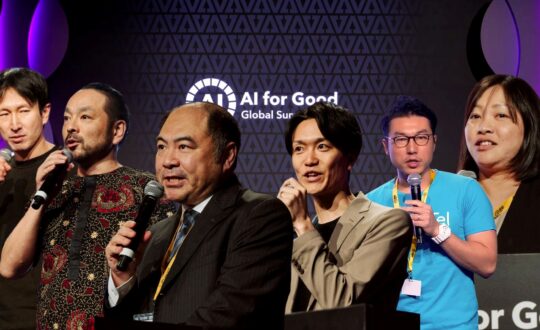
But infrastructure is only part of the story. Real impact depends on the people who understand the problems, the communities, and the constraints on the ground. That is why AWS also brought technology leaders from its Now Go Build CTO Fellowship to the Summit: practitioners working across health, education, disaster response, climate resilience, and food security, sharing firsthand experience building AI solutions where resources are scarce and the stakes are high.
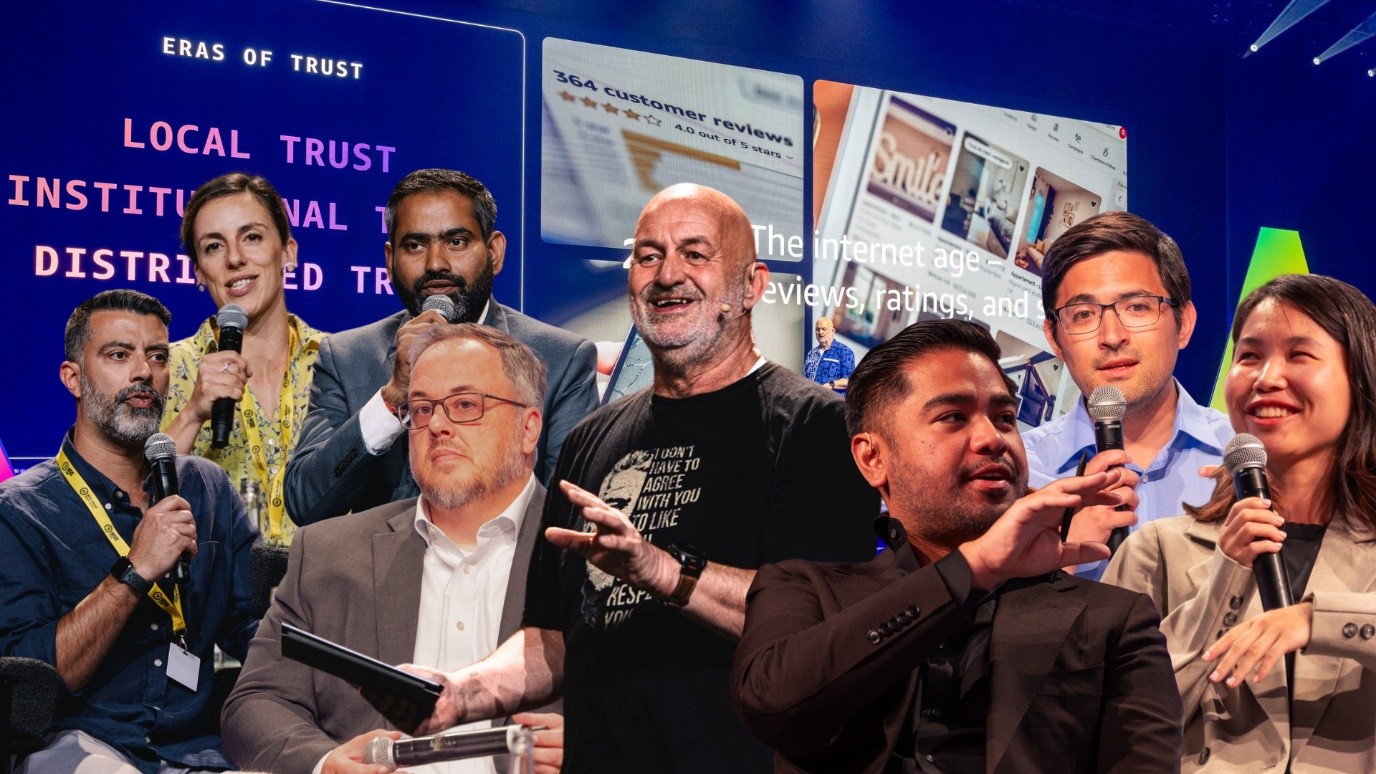
Watch the full session Trust is dead: Trust me on our YouTube channel
Turning open data into usable data
The Registry of Open Data on AWS (RODA) hosts over 1,100 datasets from more than 400 organizations, including NASA, NOAA, NIH, and the Allen Institute. Through its Open Data Sponsorship Program, AWS covers the storage costs, making more than 100 petabytes of satellite imagery, climate records, genomics data, and geospatial research freely available.
MCP is an open standard that enables AI assistants to connect to external tools and data sources. By building an MCP server for RODA, AWS equipped any MCP-compatible AI assistant, including Kiro and Claude Code, with the ability to search the full catalog, inspect metadata, list bucket contents, and sample files on behalf of the researcher.
The server is open source under the Apache 2.0 license and designed around three capabilities: discovery (find datasets by research question), exploration (inspect metadata, find related datasets), and evaluation (preview file structures, sample actual data). As Dan Pilone, CEO of Element 84, noted during the Summit panel Open data for all: researchers and emergency responders need the right data delivered quickly, reliably, and in a form that supports action. David Feng of the Allen Institute added that high-quality open datasets generate value far beyond the original research project, enabling scientists to test methods and build on previous discoveries.
Watch the full session on Open data for all: Moving beyond raw data to real impact on our YouTube Channel
I am text block. Click edit button to change this text. Lorem ipsum dolor sit amet, consectetur adipiscing elit. Ut elit tellus, luctus nec ullamcorper mattis, pulvinar dapibus leo.
The people who build where it is hardest
Technology that is easy to discover still needs someone who knows how to apply it in the right context. That is where the Now Go Build CTO Fellowship comes in.
Led by Amazon.com VP and CTO Werner Vogels, the Fellowship supports technology leaders driving social impact across education, health, food security, climate resilience, and disaster response. These are environments where budgets are limited and the stakes are high.
“We feel, as a large organization, responsible for helping nonprofits to actually be successful with technology,” Vogels said, encouraging engineers and business leaders to contribute not only funding, but also time and expertise.
Nineteen Fellows participated in this year’s Summit, invited as speakers through a collaboration between AWS and the International Telecommunication Union (ITU). For ITU, the invitation was deliberate: what the Fellows bring to the forum is not theory, but practical experience building and deploying solutions in communities facing urgent challenges. As Fred Werner, Chief of Strategic Engagement and Chief of Strategy and Operations for AI for good at ITU, noted after his mentorship session with the Fellows during the Summit: “They’re not talking about AI in theory. They’re building practical solutions to real problems, often local solutions for local communities.”
Season 2 of the Fellowship’s video series, which premiered at the Summit, follows Fellows from the Health and Education cohorts. Their stories illustrate what “building AI for good” actually looks like on the ground:
Ezekiel Brooks, U.S. Hunger, using AI and data integration to uncover the root causes of food insecurity, connecting families not just to meals but to the healthcare and social services they need.
Jay Patel, Jacaranda Health, delivering maternal health guidance via SMS to three million mothers across Africa, demonstrating that the best health technology meets people where they are.
Oluwafunmilayo Ajakaiye, The Sapphires Development Initiative, in Nigeria using AI-powered personalized learning to bring STEM education to underserved girls across Africa, proving that technology can break down barriers of gender and geography.
Rosius Ndimofor, EduCloud Academy, in Cameroon creating cloud platforms in local languages, proving that Africa’s hardest problems need African-built solutions.
What connects them is working backwards from the people they serve. Rather than leading with technology, they listen first, define the problem clearly, then build with the right tools for their own context.
During the Summit, Fellows and practitioners shared stories about how these principles are implemented. Petya Kangalova from the Humanitarian OpenStreetMap Team described how local contributors fill gaps in mapping data for disaster response, because satellite imagery and global models are often incomplete for a specific location. Vijay Solanky from the Watershed Organisation Trust explained the reality for smallholder farmers in India: they make decisions using models that lack accurate information about local soil, water, and crops. His team builds that missing data layer while involving communities in the design.
Watch the full session on Education at scale: Three builders, three solutions, one mission featured on our YouTube Channel
Two sides of one challenge
The MCP server for RODA and the Now Go Build CTO Fellowship address different parts of one problem.
The Fellowship invests in people: leaders who understand local constraints, who listen before they build, who choose the minimum viable technology rather than the most impressive one. The MCP server addresses infrastructure: making scientific data not just available, but genuinely discoverable and usable for anyone with a research question and an AI assistant.
For researchers, that means finding the right dataset in minutes rather than days.
For builders working on the ground, it means the data, tools, and support to turn local knowledge into working systems. And for the broader AI for Good community, it offers a concrete example of how open infrastructure and local expertise can advance equitable access to AI, one of the central goals of the Summit and ITU’s AI for Good platform.
The MCP server for RODA is open source and ready to use. Add it to any MCP-compatible AI assistant via the GitHub repository. Organizations interested in the Now Go Build CTO Fellowship can learn more about the nomination process. Watch the Season 2 premiere: YouTube.
Watch the full session on Tech leadership in the age of AI on our YouTube Channel