

GENEVA, August 2026 – Building AI that works is no longer the primary challenge for a new generation of technology entrepreneurs. Building AI that scales, earns trust, navigates regulation, and attracts investment is the focus for many AI startups.
That distinction sits at the heart of the Startup Accelerator Programme, a four-day intensive training track that was embedded within the AI for Good Global Summit 2026 in Geneva from 7-10 July.
The Startup Accelerator Programme is a component of the AI for Good Innovation Factory, led by the International Telecommunication Union (ITU) to identify and support AI startups working on solutions to global challenges.
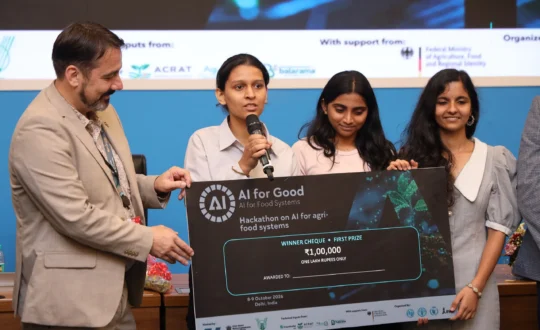
Over the past 6 years, the Innovation Factory has received over 1000 applications and named over 210 finalists that have competed for the top prize. This year startups ranged from accessible digital payments to AI-powered healthcare and efficient water management. Find out more about this year’s winner here.
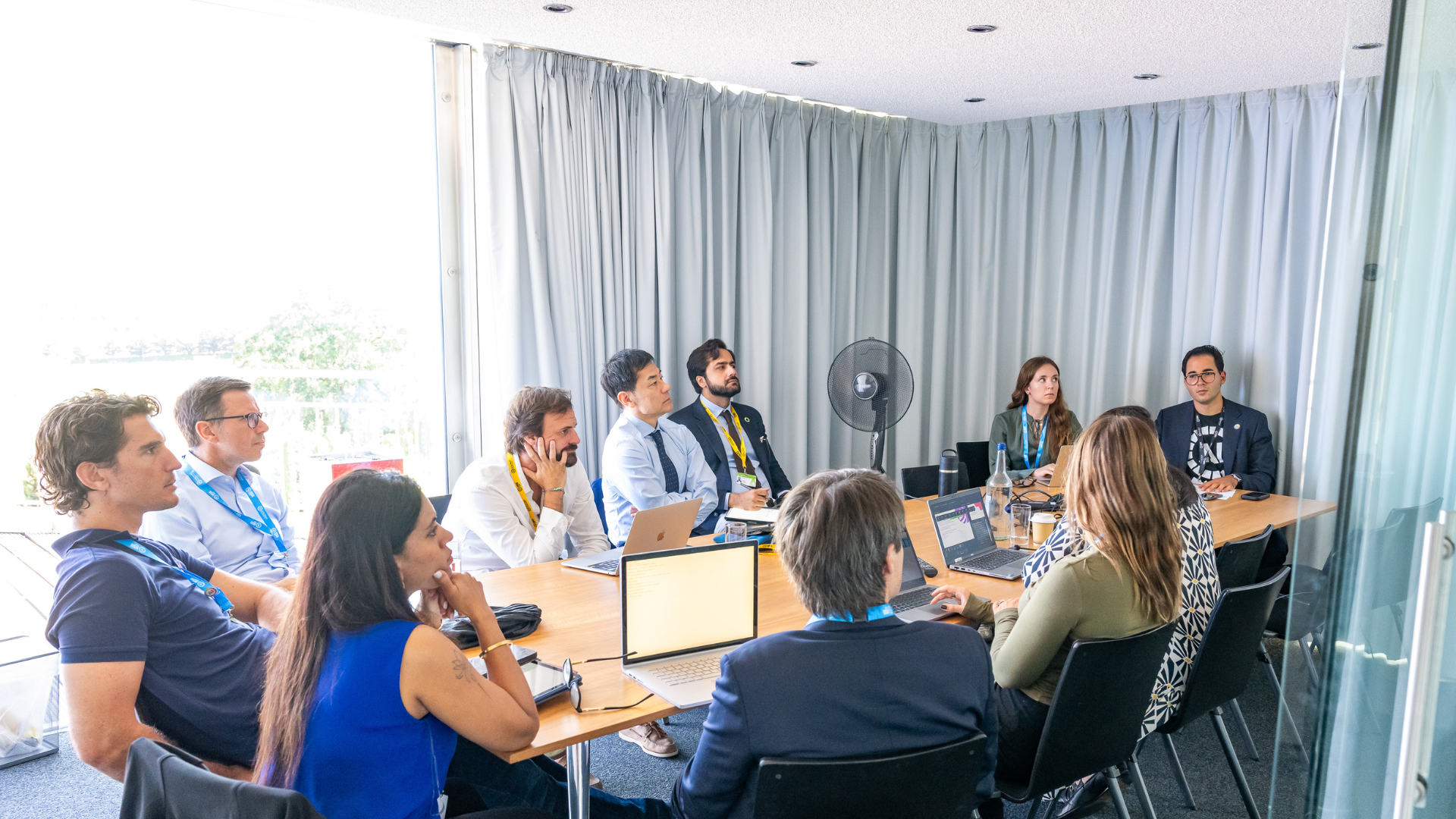
To support the startups participating in the Innovation Factory, the Accelerator Programme brings together a cohort of early-stage and scaling founders for an intensive curriculum of expert-led sessions over 4 days, including a series of Masterclasses, strategy sessions, and structured networking designed to address the practical realities of bringing impact-driven AI solutions to market.
The first day of the programme opened with go-to-market strategy. Adriana Pricope, Founder and CEO of AI Everywhere®, challenged founders to sharpen their routes to market, identify the right buyers and partners, and treat partnerships as a core lever for scale. A masterclass on feedback loops pushed teams to look beyond expert validation and test whether users face a real, urgent need.
On the funding side, Lu Zhang, Founder and Managing Partner of Fusion Fund, provided mapping of the funding landscape, from angel investment and venture capital to grants and public programmes.
The afternoon turned to branding and responsible AI. Tomas Petrek, CEO of GoBigname, showed how brand codes and positioning can shape market share. Sarah Barnbrook of Away from Keyboard Inc. and Suzy Madigan of The Machine Race made the case that trust, safety and community input must be built into AI products from the start.
The second day put enterprise trust under the spotlight, asking what AI startups must prove before governments and large organisations will buy, deploy or scale their solutions. Karolien Vanhuffel, Global Director of Digital Risk Management at Becton Dickinson, translated AI ethics into practical governance across the product lifecycle. Andrea Tribelhorn, Executive Board Member at Detecon, followed with a clear warning on privacy and cybersecurity: startups that delay data protection often pay for it later. Asmaa El Andaloussi, Lead Enterprise Strategist and Architect at Lenovo, focused on the leap from proof-of-concept to production-grade AI systems that can withstand enterprise and public-sector scrutiny.
That afternoon widened the lens. Joana Santos, Director of Data Science at ComplyAdvantage, outlined how to build AI with integrity in regulated sectors. Ayumi Moore Aoki, Founder of the Tech Diplomacy Global Institute and Women in Tech® Global, urged founders to factor policy and geopolitics into AI strategy. Margherita Pillan of Politecnico di Milano closed the day by calling for equity and data justice to be designed in from the outset.
The third day shifted from launch to longevity, pressing founders to show how their AI ventures can sustain and prove their impact. Monica Maghami, Founder and CEO of SUSTAIN-NOBILITY Advisory, reframed governance as a growth engine. Drawing on the EU AI Act, ISO/IEC 42001 and the NIST AI Risk Management Framework, she showed how application-level governance can accelerate adoption, investment and cross-border expansion. Lourdes Rivas, CEO of World Pulse, brought the focus to accountability, showing founders how to measure and report social impact in ways that go beyond technical metrics. Annariina Komljenovic, EVP Strategic Alliances at Valantic, closed the day with a resilience framework for deciding when to scale, deepen impact or stay deliberately small to protect the mission.
The final day of the programme tackled the commercial and financial decisions that determine whether mission-driven AI ventures survive long enough to scale their impact.
The morning opened with AI security, giving founders practical tools to balance speed, compliance, risk and trust. Carlo Tortora Brayda di Belvedere, Founder and CEO of Cyber Eagle Project Inc, then addressed the adoption gap, arguing that technical quality alone is not enough: successful deployment depends on trust, partnership and institutional uptake. The afternoon turned to fundraising. Alexandra Hirzel, CEO of The Scale Foundry, unpacked investor psychology, including the biases and decision drivers that shape how venture investors assess AI startups beyond the technology. The programme concluded with Tania Gómez Herazo, Expert Director at Devoteam, on keeping mission and AI ethics intact through acquisition, public listing or other exit pathways.
Running alongside the Accelerator Programme, the WIPO x ITU Intellectual Property Management Clinic (IPMC) for AI-Driven Startups and SMEs addressed a structural gap in support for AI ventures that goes largely unremarked in accelerator curricula: intellectual property strategy.
The Clinic, a joint initiative of the World Intellectual Property Organization (WIPO) and ITU, was officially launched at the Summit.
The Clinic targets AI-driven startups and SMEs across a broad range of application domains. The initiative also addressed a common gap in startup support by connecting founders with IP guidance and the AI for Good ecosystem. Together, the Accelerator Programme and the Clinic equipped founders with the skills needed to build trusted, investable AI ventures.
The week culminated in the AI for Good Innovation Factory Grand Finale, where the most promising startups took to the Summit Stage to pitch their solutions before an international panel of judges.
As the event came to a close, founders left with a challenge that extends far beyond the Summit: not simply to build AI that works, but to build ventures that can be trusted, scaled and sustained in the real world.