

Food crises rarely begin with a single dramatic event. They emerge through a series of pressures: missed rainfall, early drought, failed harvests, price increases and disruptions across supply chains. By the time these pressures become visible at scale, the opportunity to act early may already be narrowing.
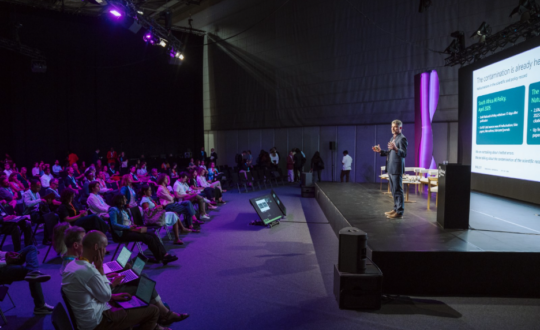
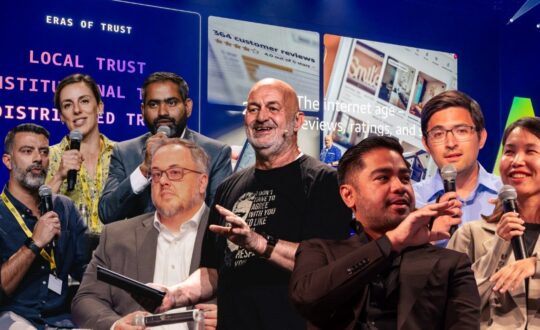
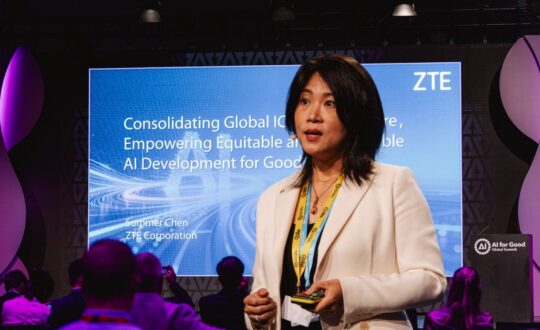
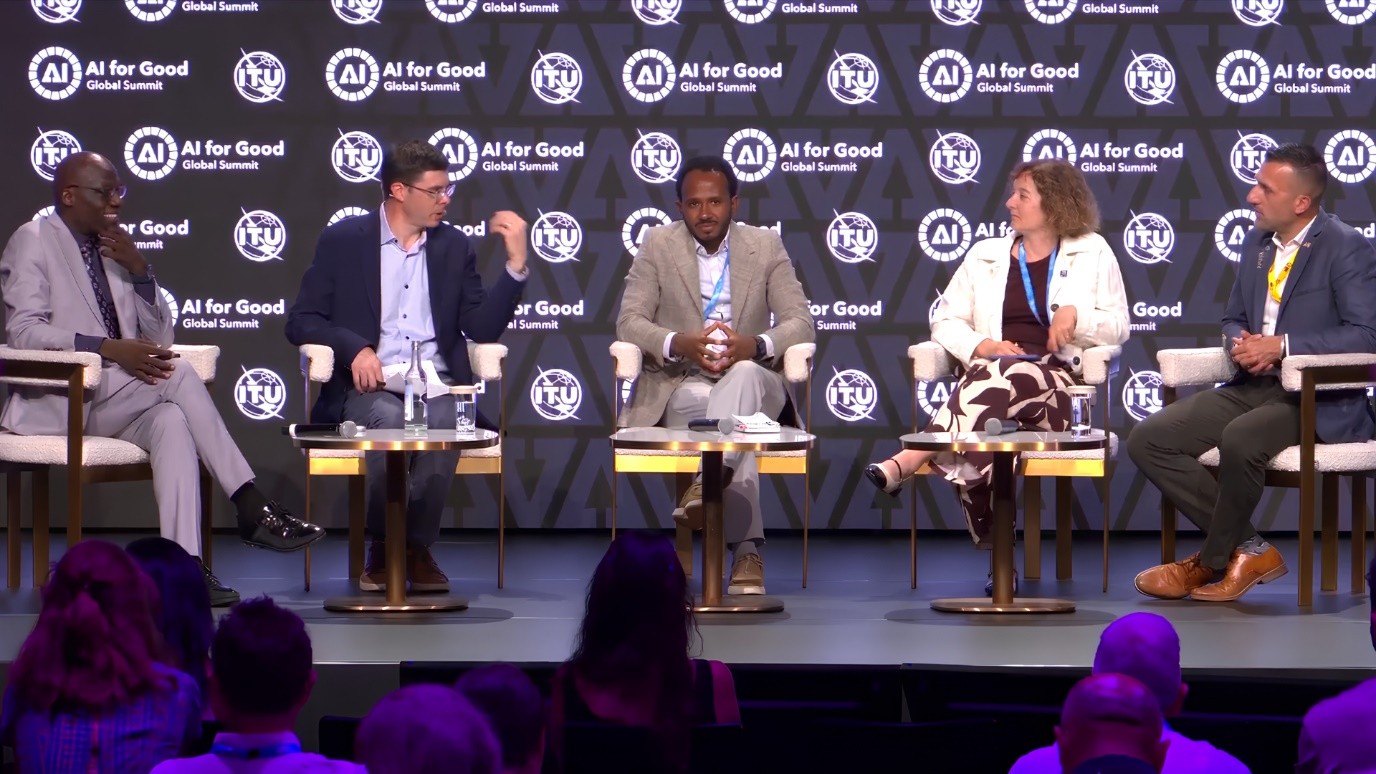
During the session Strengthening food systems resilience with AI at the AI for Good Global Summit 2026, a panel of experts from technology, humanitarian response, government and meteorology examined how AI can help identify changing conditions sooner and support more timely decisions.
Across their different perspectives, one message remained consistent: the value of AI does not lie in the model alone. It depends on whether the technology is connected to credible data, local institutions, and the decisions that farmers, governments and humanitarian organizations need to make.
Seeing risks earlier
Opening the session, Kevin White, Senior Director at the Microsoft AI for Good Lab, described food insecurity as a challenge that AI cannot solve independently, but one where earlier insight can make an important difference.
“AI is not going to solve hunger on its own, but AI can see earlier, can understand where risks are converging, can support decision-making,” he said.
For White, success should not be measured by the sophistication of a model. What matters is whether useful information reaches a farmer before planting, allows a government to plan ahead or helps a humanitarian team support people in need more quickly.
Watch the full session here:
Starting with local needs
Girmaw Abebe Tadesse, Principal Scientist and Manager at the Microsoft AI for Good Lab, brought the conversation into the context of Kenya, where his team works with government institutions and other partners on food security challenges.
At the time of the session, he explained, parts of the country were experiencing drought after rains arrived early and then stopped quickly. Farmers had planted, but changing weather conditions were placing maize production at risk. Government decision-makers needed to understand the likely impact on the harvest and what conditions might look like in the months ahead.
Technology can help by combining AI with information such as remote sensing data, but Tadesse stressed that projects should not begin with a preselected technical solution.
“We don’t try to assume the problem and solve it by ourselves,” he said.
Instead, the team begins with a need identified by the people and institutions working within the relevant context. This requires understanding who will use the solution, whether it is intended for a national ministry, a local administrative unit, an agricultural extension worker or an individual farmer.
Even a question such as how much maize a country produced during the latest harvesting season is difficult to answer. It requires information about where crops are being grown, how drought has affected them, what yields can be expected and how estimates can be validated on the ground.
Supporting preparedness and response
Kyriacos Koupparis, Head of Unit, Forecasting and Early Warning at the World Food Programme, described two broad areas in which AI is already supporting the organization and its partners.
The first is preparedness and anticipatory action before a shock occurs. Forecasting tools can help identify where conditions may deteriorate, supporting measures such as rapid assessments, the pre-positioning of supplies or, when financing is available, the provision of cash before a situation worsens.
However, he cautioned that technical capability must be accompanied by strong relationships with those who will use the tools.
“You have to meet decision-makers where they are. You have to work with local stakeholders and not for local stakeholders,” Koupparis said.
Data availability must also remain a priority. Forecasts cannot lead to effective action without the institutions, financing processes and local capacity needed to interpret and apply them. The benefits of AI therefore depend on the wider enabling system surrounding the technology.
Forecasts built on shared data
For Véronique Bouchet, Senior Director for Science, Services and Capacity Development at the World Meteorological Organization, the potential of AI in agriculture and food security is closely connected to the global infrastructure that underpins weather forecasting. That infrastructure necessarily extends beyond national borders.
Weather systems do not stop at national borders. Producing a forecast in one country may require observations from oceans, satellites and weather stations located across several regions of the world.
“As weather has no frontier, we all need within our respective countries to actually have data accessible from across the world,” she said.
The World Meteorological Organization helps coordinate the real-time exchange of this information so that national weather services can access the data required to produce forecasts. Bouchet explained that this observation system also provides the foundation for AI-driven forecasting.
Bouchet also highlighted areas where AI is creating new opportunities. It can improve accuracy in certain forecasting periods, accelerate forecasts and reduce the computing resources required. It can also help translate technical weather information into guidance for practical decisions, such as when to plant or harvest, or whether extreme heat could damage goods during transport.
Connecting information across food systems
Tadesse also introduced Adopt Kenya, a national initiative bringing together government, the private sector, academia, non-profit organizations and UN organizations.
The initiative is intended to combine layers of information including soil conditions, fertilizer use, weather, crop yields and market intelligence. Bringing these sources together can support a more detailed understanding of conditions within a village, a small administrative area or potentially at the level of an individual farmer.
Tadesse said the initiative involved 49 partners. Although coordinating such a broad group is complex, it allows organizations to combine their knowledge, reduce duplication and develop solutions that government institutions can eventually maintain and use.
Keeping farmers at the centre
H.E. Ambassador Philip Thigo, Special Envoy on Technology for Kenya, widened the focus from agricultural production to the food system as a whole, encompassing the journey from farms to markets, processing, transport and consumption.
He illustrated the point through a familiar example from Kenya. Milk is often transported by boda boda, using canisters whose design has remained largely unchanged for generations. When a bicycle falls, the milk may spill. Data can reveal a variance indicating that something has gone wrong along the route.
“That’s what AI does, and it’s simply reducing inefficiencies,” Thigo said.
The example showed how AI can be applied to simple, everyday problems rather than only complex technical challenges. For farmers, the important question is not how advanced a system is, but whether it helps them protect their produce, avoid losses and make better decisions.
He also emphazized the need for data interoperability across the many actors involved in food systems. Information becomes more useful when it can be exchanged within a trusted ecosystem rather than remaining isolated in institutional silos.
Turning insight into action
As the session drew to a close, White asked the panelists which uses of AI should be prioritized over the next twelve to twenty-four months.
Their responses pointed to several immediate needs: making tools accessible through voice and local languages, maintaining strong observation networks and trusted forecasts, developing systems alongside governments and improving cooperation between institutions.
Together, these priorities reflected the central theme of the discussion. AI can help identify risks earlier, combine information across complex systems and support faster decisions. But its contribution to food systems resilience will depend on whether it is built with local actors, grounded in reliable data and connected to the institutions responsible for acting on the insights it provides.