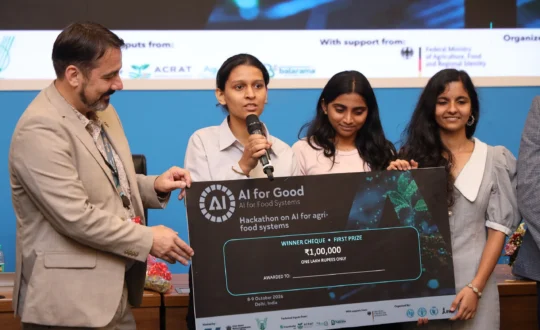


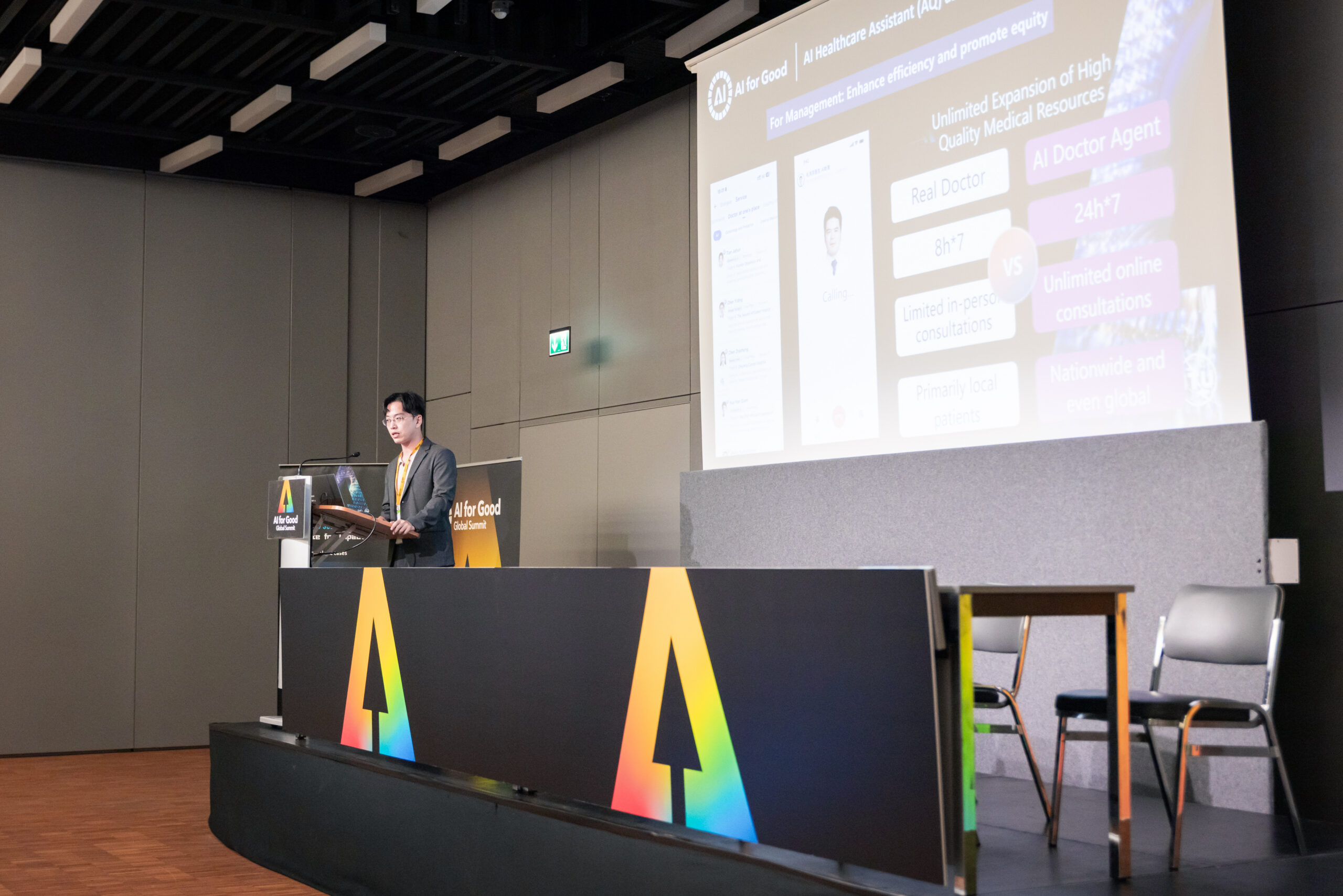
The AI for Good Summit inaugurated its first day of proceedings with the announcement of the winners of Innovate for Impact, the initiative through which the International Telecommunication Union identifies, analyses and scales up AI solutions applied to real-world problems. Fifty-nine projects, selected from a pool of nearly 400 global entries, were honoured during the workshop held in Room V at the Summit.
ITU’s Innovate for Impact, launched in 2024 as part of the AI for Good platform, addresses a structural problem in the sector: unequal access to digital infrastructure, technical skills and computing capacity risks widening the gap between countries that can develop AI and those that remain excluded, especially in developing economies. The initiative applies the principle to sectors entailing health care, agriculture, inclusive finance and the management of critical infrastructure.
The mechanism combines an annual global call for use cases, a mentorship programme for researchers, the AI for Good Scholars, and a technical committee of international experts that oversees the evaluation process. The resulting catalogue is then analysed and disseminated through reports, workshops and collaborative platforms with the stated aim of turning experimentation into measurable real-world impact.
Read the 2026 Innovate for Impact Interim report: AI for Good Innovate for Impact Interim Report 2026
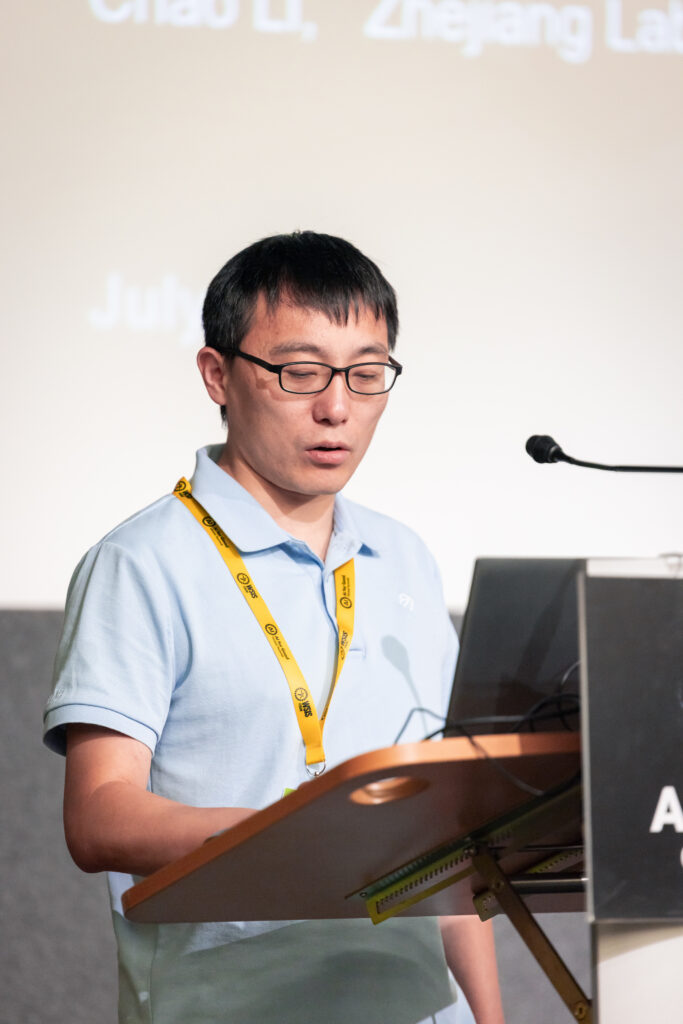
This mechanism has been taken to its largest scale to date in the 2026 cycle: 267 use cases from 40 countries and economies across five ITU regions. The evaluation was conducted by a technical advisory committee of 23 experts established at the end of 2025 with the support of AI for Good Scholars, who were mandated to assist project authors during the review phase. The selected projects cover nine key areas of the sector, exploring frontiers such as AI agents, generative systems, open-source and spatial computing, a rich tapestry that reflects how global priorities in this field have evolved and changed since the initiative’s early editions.
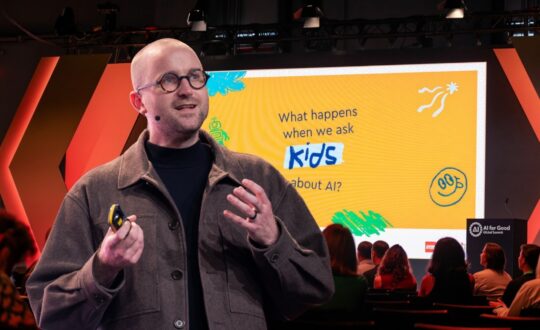
The submissions are fragmented in their landscape, but a visible pattern emerges connecting the winning projects: they are replicable in contexts of limited resources. In Senegal, Doctor NDEY Pharma has built a platform for the controlled management of pharmacies based on the regulatory framework of the national pharmaceutical authority, with the stated goal of being rolled out in other African countries. The National Institute of Statistics in Rwanda has used AI to code job descriptions in three languages: Kinyarwanda, English and French. This allows it to speed up the production of employment statistics in support of the country’s Vision 2050 objectives.
A similar trajectory unites the projects selected in Zimbabwe, Brunei and Tanzania. Paltech Africa has created an open-source solution for public spaces, based on data gathered through crowdsourcing, in response to the lack of support for local languages in current AI systems. Brunei’s ChemBuddy Supreme+ leverages generative AI and information retrieval-based learning to increase access to chemistry education. For instance, Sokoine University in Tanzania has built open source speech datasets for languages that have extremely scarce linguistic resources, filling in a gap generally overlooked by large commercial models.
Alongside these small-scale projects, the selection features solutions from organisations with far greater resources. Emirates Health Services presented an AI-based personal health platform developed in line with UAE data governance regulations. On the educational front, Alibaba DAMO Academy introduced RynnBot, a low-cost robotic architecture that democratises the teaching of embodied AIeven for parts of the world with scarce resources, a demonstration of how even big tech companies are directing some of their research toward digital inclusion rather than only to commercial scale.
Overall, the 2026 selection marks a shift in the sector’s maturity: it has evolved from isolated experimentation towards solutions designed from the outset for real-world deployment, with mechanisms for replicability built into the very design of the projects. The full report, featuring the entire 2026 collection, will be published in the coming weeks. The Summit continues tomorrow with the second day of sessions, dedicated to the latest developments in the governance and standardisation of AI at a global level.


Register here