

Autonomous mobility is increasingly moving beyond pilots and demonstrations into real-world deployment. From driverless vehicles and autonomous aircraft to intelligent railways, many of the underlying technologies are already being deployed. The question is no longer whether autonomous mobility will arrive, but whether regulation, infrastructure and public trust can evolve quickly enough to support it.
For years, much of the conversation centred on whether AI could safely navigate roads, skies and rail networks. The focus is now shifting towards a different challenge: how can autonomous systems be integrated safely, consistently and at scale?
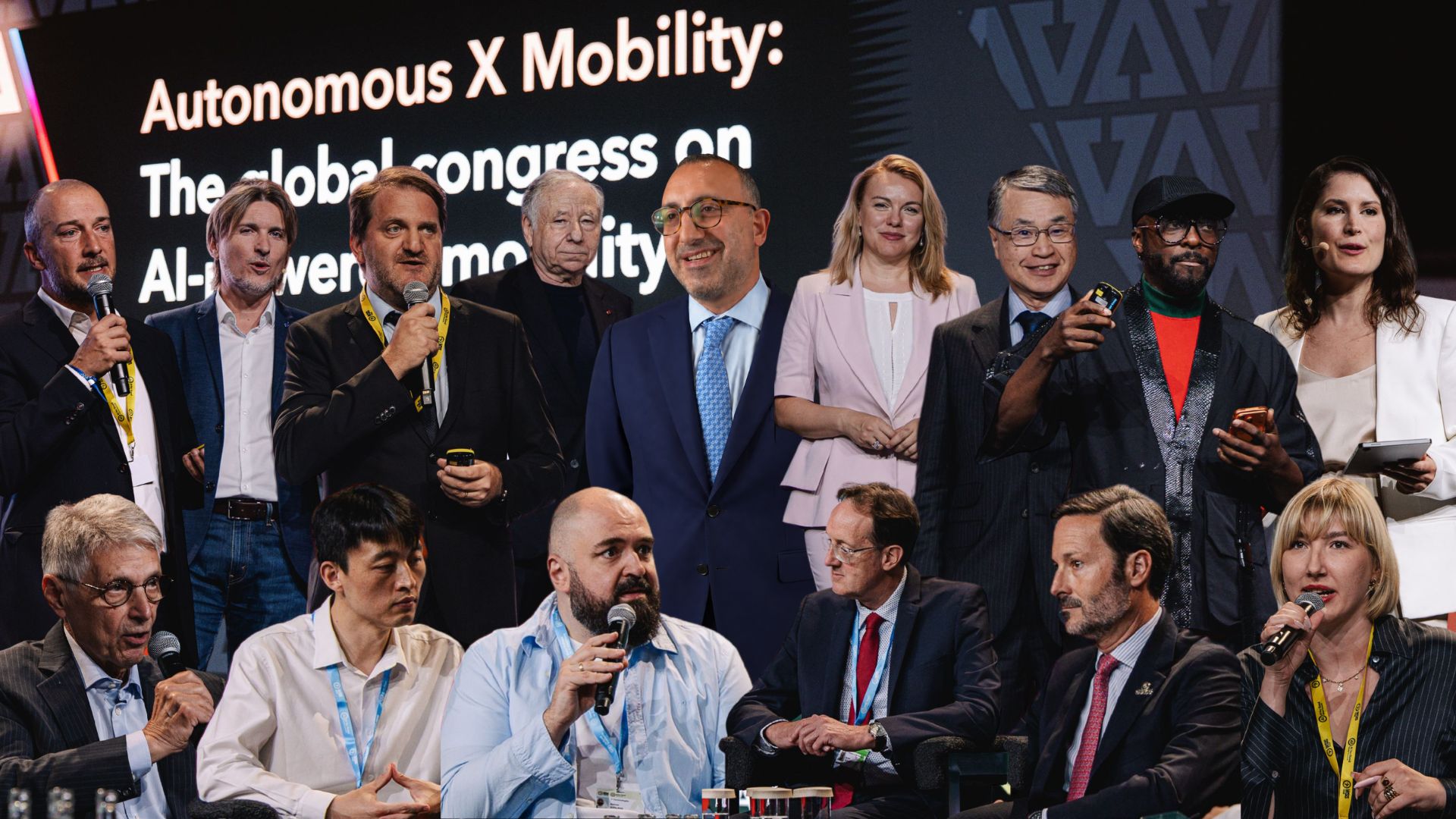
That question formed the central theme of the Autonomous X Mobility congress, held during the AI for Good Global Summit 2026. Policymakers, regulators, industry leaders and researchers explored the technical and governance challenges shaping the future of AI-powered transport. Discussions covered road vehicles, electric vertical take-off and landing aircraft, railways and public transport.
Across these different modes of transportation, one message emerged: technological capability alone will not determine whether autonomous mobility reaches widespread deployment. Progress will also depend on regulation, infrastructure, human oversight, and public confidence developing alongside it.
Beyond an engineering challenge
Namir Hourani, Managing Director of Global MICE Organisation Limited, opened the Congress by describing autonomous mobility as one of the most significant transformations in transport since the invention of the automobile. He said vehicles were increasingly able to perceive their surroundings, communicate with one another and make decisions without direct human intervention.
Hourani pointed to autonomous taxis, pilotless aircraft and intelligent ships already operating in parts of the world, shifting the focus from technological feasibility towards whether governance can keep pace. He argued that autonomous mobility could no longer be viewed solely as an engineering challenge. He identified safety, ethics, cybersecurity, liability, accessibility and public trust as being as important as advances in artificial intelligence itself. According to Hourani, trust cannot be achieved through technology alone. It must be earned through collaboration among governments, regulators, industry and researchers.
This broader understanding of autonomous mobility shaped the discussions that followed. Bilel Jamoussi, Deputy Director of the ITU Telecommunication Standardisation Bureau, highlighted the role of international standards in supporting safety, trust and interoperability. Dmitry Mariyasin, Deputy Executive Secretary of the United Nations Economic Commission for Europe (UNECE), added that autonomous transport depends on networks extending across national boundaries and therefore requires shared regulatory frameworks and international cooperation.
The opening keynote by will.i.am placed this transition within the wider relationship between AI and society. He argued that advances in AI should be accompanied by investment in education and technical literacy, so that people and communities can participate in shaping emerging technologies rather than only consuming them.
Together, these contributions positioned autonomous mobility as both a technological and institutional transition. Vehicles may be becoming more capable, but their integration into everyday transport systems depends on the frameworks, skills, and public institutions surrounding them.
Creating rules across borders
The first step toward deployment at scale is establishing rules that allow autonomous systems to operate consistently across different markets and jurisdictions.
François Guichard, Focal Point for Intelligent Transport Systems and Automated Driving at UNECE, discussed the recent adoption of what he described as the world’s first global regulatory framework for automated driving systems. According to him, the framework establishes internationally harmonised requirements for deploying fully autonomous vehicles and provides a common approach to demonstrating their safety.
Rather than presenting regulation as an obstacle to innovation, Guichard described it as an enabler of deployment. He argued that while technology can move across borders, trust cannot. Without internationally harmonised regulation, he suggested, markets become fragmented, testing is duplicated and manufacturers face greater legal uncertainty. Harmonised standards, by contrast, create a common language for deployment while helping build confidence among governments, industry and the public.
This cross-border dimension is particularly important for transportation systems, which operate through interconnected roads, airspace, rail networks, and digital infrastructure. A vehicle may be developed or certified in one country, but deployment at scale requires it to function within systems and regulatory environments that extend beyond a single jurisdiction.
Participants acknowledged that achieving this level of international coordination remains challenging. However, standards and technical regulation were presented as practical mechanisms for aligning approaches to safety, certification, and deployment, even where national policies differ.
Moving from certification to deployment
Regulation can establish whether an autonomous system meets agreed requirements, but certification alone does not make deployment possible. Autonomous mobility also requires the physical infrastructure, operational procedures, and commercial models needed to integrate systems into real transport environments.
Jose Ignacio (Nacho) Rexach, Chief Commercial Officer for Europe and Latin America at EHang, described the development of autonomous electric aircraft as requiring close collaboration among manufacturers, regulators, municipalities and infrastructure providers.
He argued that deployment depends not only on certifying the aircraft themselves, but also on establishing operating standards, landing infrastructure, airspace management and commercially viable operating models. Drawing on EHang’s experience operating across multiple countries, Rexach said lessons learned in one jurisdiction could inform deployment elsewhere.
Autonomous aviation therefore illustrates the difference between demonstrating that a vehicle can operate and creating an ecosystem in which it can operate regularly. Similar questions apply across road transport, railways, and public transportation: where will autonomous systems operate, how will they interact with existing networks, and who will remain responsible when intervention is required?
The challenge of scaling autonomous mobility is consequently not limited to improving the performance of individual vehicles. It also involves coordinating the organizations, infrastructure, and procedures that support them.
Building trust and maintaining oversight
As autonomous systems take on more driving and decision-making functions, human oversight does not disappear. Instead, it shifts away from direct control and becomes embedded in monitoring, governance, and emergency-response systems.
During a panel examining safety, ethics and public trust, Aleksei Shpilman, Director of AI at T-Technologies, argued that transparency remains one of the sector’s greatest challenges. While manufacturers often publish the number of kilometres travelled by autonomous vehicles, he noted that there is far less visibility into the nature and severity of incidents. This makes it difficult for the public to understand how systems perform under real-world conditions.
According to Shpilman, improving transparency around incidents is essential to building confidence in autonomous systems. He also cautioned against assuming that AI can always explain its own decisions. Instead, he argued that confidence should be reinforced by surrounding AI with deterministic systems capable of intervening safely when uncertainty arises. This approach treats AI as one component within a wider safety architecture, rather than as the sole decision-maker.
Autonomous public transport presents a different dimension of the oversight challenge. Jeroen Beukers, Head of Innovation at TPG, described how removing a driver from a vehicle introduces new operational responsibilities. While automated driving systems may control the vehicle, operators must still ensure passenger wellbeing. Beukers said this would require remote supervision and onboard monitoring systems capable of detecting emergencies and alerting human supervisors when intervention is required. According to him, these functions become part of maintaining the same level of passenger safety traditionally provided by a driver.
In this model, automation does not remove the human role. It redistributes it across remote supervision, monitoring systems, operational procedures, and clearly defined lines of responsibility.
Building on established safety systems
Aviation and rail offer examples of how advanced automation can be introduced within established systems of certification and operational control.
Drawing on experience in aviation, Rexach argued that decades of certification, operational procedures and internationally recognised standards demonstrate the importance of building comprehensive ecosystems rather than focusing solely on vehicle technology. He noted that commercial aviation’s safety record depends not only on aircraft design, but also on regulation, certified operators, airport procedures and internationally harmonised rules. According to Rexach, similar principles will be needed as autonomous ground and aerial mobility continue to develop.
Professor Francesco Flammini presented railways as another example of a measured approach to automation. He said railway systems had long relied on deterministic safety mechanisms, including automatic train protection and analytical control systems, before introducing more advanced AI capabilities. Rather than replacing established safety frameworks, Flammini described AI as complementing them in areas such as predictive maintenance, obstacle detection and traffic management. Critical safety functions, he argued, should remain within predictable and certified systems.
Both examples point toward a layered approach to autonomy. AI can expand perception, prediction, and operational efficiency, while certified systems, human oversight, and established procedures continue to provide the safety framework around it.
From testing to trust
Across road transport, aviation, public transportation, and railways, the discussions showed that autonomous mobility is entering a new phase. The central question is no longer only whether autonomous systems can function, but how they can become part of everyday transport networks.
Moving from testing to deployment will require common regulatory foundations, interoperable standards, supporting infrastructure, transparent safety information, and clearly defined forms of human oversight. It will also require coordination among governments, industry, researchers, operators, and standards organizations.
Public trust will depend on how these elements work together. Rather than following automatically from technological progress, confidence in autonomous mobility will be shaped by whether systems can demonstrate safety, accountability, and reliability under real-world conditions.