

The defining question of the current technological moment is not simply what AI can do, but how societies choose to use it.
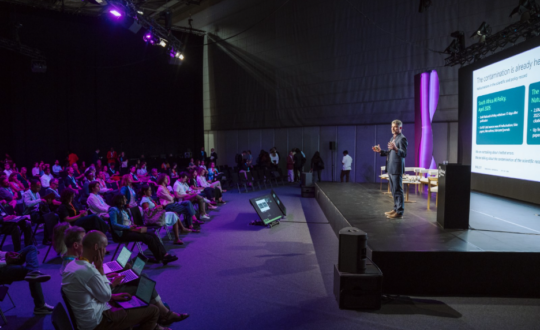
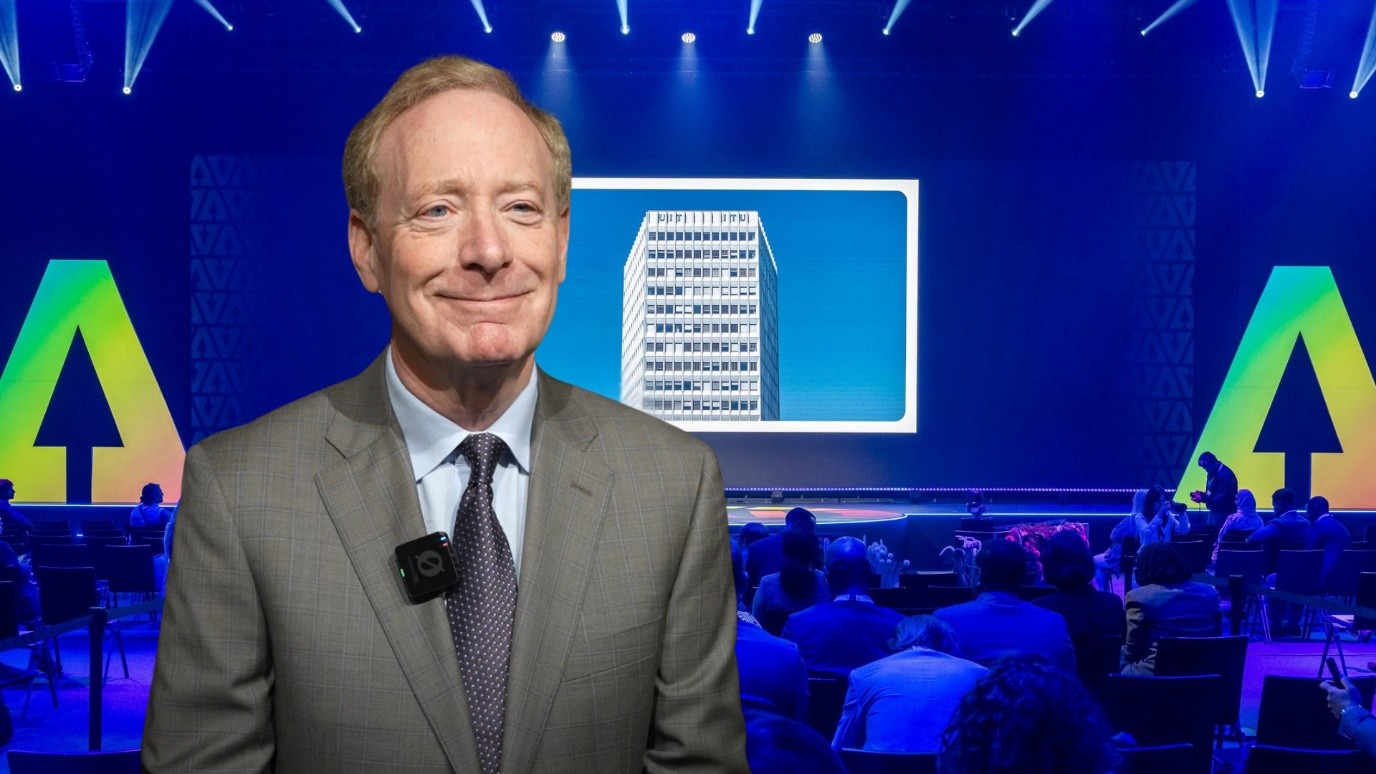
That was the central message of Brad Smith, Vice Chair and President of Microsoft, during his keynote at the AI for Good Global Summit 2026. Speaking in Geneva, he argued that the benefits of AI will depend on whether governments, companies and civil society can widen access to the technology, establish workable governance and ensure that it strengthens human capability.
He began by reflecting on Geneva’s long history as a place where countries have gathered to address questions shaping the future. From diplomacy and humanitarian action to international cooperation, he described the city as a setting in which the world has repeatedly come together during periods of profound change.
Today, he argued, AI presents another such moment.
A widening divide in AI adoption
Smith first turned to the unequal adoption of AI between the Global North and Global South. He compared the current technological divide with the unequal spread of electricity, which contributed to lasting economic disparities between countries. AI, he warned, risks following a similar path.
Smith noted that, by the end of the first quarter of 2026, approximately 27% of the working-age population in the Global North was using generative AI, compared with 15% in the Global South. Microsoft’s projections indicated the gap could widen further, with adoption in the Global North reaching twice the level seen in the Global South by the time the world returns to Geneva in 2027.
This widening divide, he cautioned, risks deepening existing inequalities rather than allowing the benefits of AI to be shared more broadly. Addressing it will require cooperation between the public, private and non-profit sectors. Each has a different role to play, but progress depends on their ability to combine resources, expertise and reach.
Watch the full session here:
AI infrastructure requires substantial investment, particularly in data centres, connectivity, education and skills. Smith said that Microsoft was on track to spend USD 50 billion by the end of the decade, with much of that investment directed towards infrastructure.
However, he stressed that physical infrastructure alone would not be enough. AI systems must also work across a wider range of languages, respond to local needs and be supported by measurement systems that can assess whether access is genuinely expanding.
Connectivity, skills and investment
AI depends on a broader technological foundation that remains unevenly distributed. Smith noted that 2.2 billion people remain unconnected to the internet, limiting their ability to benefit from AI, regardless of how capable the technology becomes.
Skills are equally important. Individuals and institutions need data science capabilities and sufficient AI fluency to apply the technology effectively. Smith therefore called for a broader financial architecture capable of mobilising investment from multiple sources. Technology companies can fund infrastructure, while governments, development banks and international organisations can provide public financing. Other forms of private and sovereign investment will also be needed to fill the gap between them.
Investment must be matched by demand. Governments can help stimulate markets through their own use of AI, while countries can work together to share infrastructure across borders.
Smith pointed to examples in Europe and East Africa where governments have explored serving several countries through shared data-centre capacity while maintaining national requirements for privacy and control over data.
“Ultimately, we need to focus on the kind of public policies that will move this faster and equip people with the opportunity to accelerate economic development,” Smith said.
The stakes extend beyond technology itself: without coordinated action, existing inequalities risk becoming even more entrenched.
Innovation needs clear rules
Expanding access was only one part of Smith’s argument. Capacity and governance, he said, must develop together. He rejected both heavy-handed regulation and an unrestricted approach in which AI systems operate without meaningful rules.
“We need innovation with guardrails,” he said.
Smith compared governance to keeping a fast-moving car on the road. Speed alone is of little value when there are no safeguards to prevent the vehicle from losing control.
Rules, he argued, create transparency and give businesses the certainty required to plan. They also provide people with avenues for redress when their rights are violated.
Regulation does not need to be identical in every country. Different legal systems and cultures will naturally lead to different approaches. However, he called for greater interoperability between national frameworks so that technology can continue to operate across borders.
This requires both national policymaking and international dialogue.
He highlighted the role of the United Nations in bringing countries together to discuss how different governance systems can connect without requiring complete uniformity.
Expanding human capability
Smith then turned to one of the most persistent concerns surrounding AI: its impact on employment. Rather than treating human ability as fixed, he argued that history shows how people adapt to new technologies and use them to create new forms of work and expression.
He cited the arrival of photography in the nineteenth century. Although some painters initially feared that the camera would make their profession obsolete, photography ultimately contributed to new artistic movements by encouraging artists to explore what a camera could not reproduce.
“The good news is that human capability is neither fixed nor finite,” Smith said.
New technologies can create foundations from which people develop new skills, ideas and forms of creativity. For the future of work, the objective should therefore be clear: to use AI to create better jobs for more people.
Smith acknowledged that AI, like earlier technologies, will displace some jobs while creating others. But employment is not only a source of income. It is also connected to dignity, purpose and people’s ability to shape their own futures.
“It is about creating a future where technology serves work and workers,” he said.
Technology should therefore serve workers, while preserving their knowledge, experience and ability to continue learning. He also stressed the importance of consent and control over how employees’ knowledge is used when they interact with AI systems.
Achieving this balance will require difficult conversations between companies, workers and organised labour. Smith argued that organisations often make better decisions when they listen to groups with different interests and perspectives, rather than limiting discussions to those who already agree.
AI for disaster response
Smith concluded with an example of how AI can support urgent humanitarian action.
He described Microsoft’s use of satellite imagery and an AI model to identify damaged buildings and locate people in need of rescue following an earthquake in Venezuela. According to Smith, the technology enabled experts on the ground to complete in hours work that had previously taken days.
“During a week when the difference between hours and days literally could mean the difference between life and death, AI proved to be the indispensable tool that led people to their rescue,” he said.
During the Summit, Microsoft announced that the disaster-response model, called HASTE, would be made available as a free, open-source model on GitHub. It is designed to be adapted to local conditions and different types of disasters. It can analyse satellite imagery, help identify areas where people are at risk and support the mobilisation of emergency services.
For Smith, the example reflected the wider purpose of technological development: enabling people to solve problems that directly affect their lives.
He closed by returning to what he called the timeless spirit of Geneva, built on cooperation across borders and a willingness to confront the defining issues of each era.
“This is our moment,” Smith concluded, “and we need to meet its measure.”