

Who controls the AI systems a country depends on, and can research teams move faster without giving that control away? Those two questions ran through the Technology Innovation Institute’s contribution to the AI for Good Global Summit 2026. The Technology Innovation Institute (TII), the applied research arm of Abu Dhabi’s Advanced Technology Research Council (ATRC), brought its latest work in AI, cryptography and advanced research systems to the event through a presence spanning both the program and exhibition hall.
Alongside its booth, where participants could explore TII’s research and technologies, the Abu Dhabi-based institute contributed to two sessions examining different but closely connected questions: how countries and organizations can retain greater control over the AI systems they use, and how AI agents can support researchers across complex R&D processes.
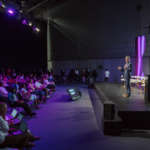
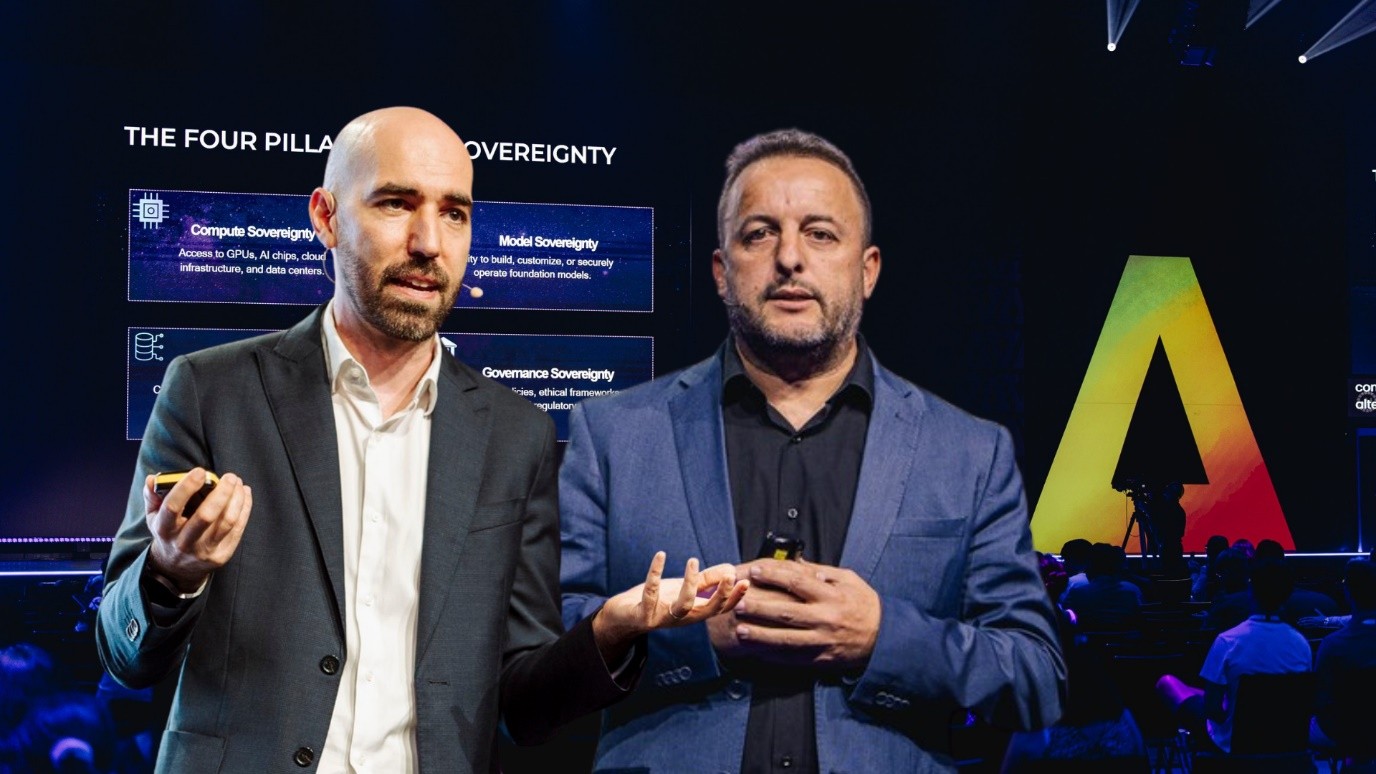
On the Centre Stage, Dr. Hakim Hacid, TII’s Chief Researcher for Artificial Intelligence and Digital Science Research Center, and Dr. Victor Juan Mateu, Chief Researcher at TII’s Cryptography Research Center, explored AI sovereignty as a strategic capability. Dr. Mateu also took to the Solutions Stage to present InnoviumAI, a multi-agent orchestration platform developed within TII to support researchers from the earliest stages of an idea through validation and development.
Together, the sessions offered a view of TII’s work across two levels of the AI ecosystem: building the models, data protections and infrastructure needed for greater technological independence, and creating practical tools that help research teams work more effectively. This is of importance for any country or public institution that wants to put AI to work on sensitive data without handing over control of it.
AI sovereignty as a strategic capability
During the session AI Sovereignty: A strategic asset, Dr. Hacid described AI sovereignty as the ability of a country, organization or institution to independently develop, deploy, regulate and secure AI across the entire technology pipeline.
He argued that sovereignty cannot be reduced to ownership of a single model. It depends on several interconnected elements, including access to computing infrastructure, the ability to build and understand models, control over data, governance and the development of specialized talent.
“Achieving this sovereignty is not just a matter of having a model,” Dr. Hacid said. “It is much more complicated than that.”
Compute forms one part of this foundation. Training, fine-tuning and deploying AI systems all require access to substantial infrastructure, making computing capacity an increasingly strategic resource.
Model development is another central component. Dr. Hacid outlined TII’s work building open-source models within the United Arab Emirates, including models designed for reasoning, Arabic-language applications, image recognition and deployment on devices with more limited computing power.
The aim, he explained, is not only to build large models requiring extensive infrastructure, but also smaller systems that can operate on laptops and mobile phones. This broader range can help different organizations and countries use models suited to their own resources and needs.
Data sovereignty adds another layer. Regulations may require sensitive or proprietary information to remain within a company, institution or national border. At the same time, collaboration often depends on the ability to draw insights from data held by multiple parties.
This creates a challenge: how can organizations jointly train more capable models without exposing the underlying information?
Collaboration without exposing data
Dr. Mateu addressed this question through TII’s work on federated learning.
Federated learning allows several organizations to contribute to the training of a shared model while keeping their original data within their own secure environments. A hospital, for example, may hold sensitive patient information that cannot be transferred elsewhere, but which could still contribute to the development of a more accurate model.
“The idea is that all the entities collaborate in the creation of a model, but the data is still private,” Dr. Mateu explained.
However, he noted that conventional federated learning approaches can still create security risks. Even when raw data does not leave an organization, information may potentially be inferred from the model updates exchanged during training. Central aggregation can also create a point at which the developing model may be exposed.
Dr. Mateu presented TII’s approach to addressing this limitation. Rather than sending a complete locally trained model to an aggregator, each organization distributes randomized pieces. These pieces are used collaboratively to construct the shared result, without any external party holding the complete model during the process.
Under this structure, both the original data and the full model remain within protected environments. According to Dr. Mateu, the approach is intended to guarantee the privacy in both ends: training data and resulting model, without reducing the accuracy gained from training across several data sources.
The broader objective is to allow institutions to preserve control over sensitive information while still participating in research collaborations across organizations or national borders.
For TII, this balance between independence and cooperation is central to AI sovereignty. Greater control over models, data and infrastructure does not necessarily mean operating in isolation. Instead, secure technical foundations can make broader collaboration possible.
Watch the full session here:
Building an AI-supported R&D team
TII’s second session shifted from national and organizational sovereignty to the day-to-day work of research teams. During the Solutions Stage presentation InnoviumAI: Your Entire R&D Team, orchestrated by AI, Dr. Mateu introduced a platform designed to support the full research and development process through coordinated AI agents.
The project began with a challenge familiar to many R&D organizations: research teams are often expected to pursue high-risk, potentially high-value work with limited resources. TII therefore explored whether AI could expand the capabilities of existing researchers rather than replace them. This principle shaped InnoviumAI from the outset.
“We didn’t want agents running a team,” Dr. Mateu said. “We wanted a human running an R&D team of agents.”
The platform is designed as an orchestration layer through which specialized agents can carry out different tasks, communicate with one another and support researchers across an innovation process.
These tasks may include literature reviews, technical documentation, simulation, coding, validation, market analysis and preparation for product development. Because different research fields require different tools and models, the system is designed to remain model-agnostic and support integrations across a wide range of technical environments.
Human oversight must remain part of the process. Researchers can approve individual tasks, review outputs and retain control over what is executed on their systems. As confidence in a workflow grows, some approvals can be reduced, allowing several processes to run in parallel.
From idea to validation
Dr. Mateu described R&D not simply as the production of new ideas, but as a longer pathway extending through validation, simulation, development and potential commercialization. InnoviumAI is therefore structured to support three broad phases: idea generation, validation and product development.
During the idea phase, agents can support literature reviews and help researchers define the technical scope of a project. In the validation phase, they can assist with simulations, iterations and analysis. Later, they can contribute to documentation, quality assurance, formal verification and other activities required to move a concept toward practical use.
The system has been deployed across several TII research centers, where teams work in fields ranging from AI and digital science to robotics, advanced materials, cryptography, secure systems, propulsion, sustainability and renewable energies, and directed energy.
This variety creates a demanding test for the platform. The tools required to develop a new material are very different from those used for aerodynamics, quantum systems or software engineering. InnoviumAI is intended to provide a common orchestration framework, while allowing each research team to define and share agents tailored to its own expertise.
Mateu presented two early use cases.
In one, the system supported the design of a gas turbine controller. According to Dr. Mateu, the workflow reduced a task that had previously required three hours to approximately five minutes, after which a subject-matter expert validated the result.
A second use case involved a photonics simulation for quantum key distribution using fiber optics. Several specialized agents contributed to the workflow, including agents focused on quantum physics, simulation and coding. In this case, the process was reduced from six hours to one.
These examples were presented as early demonstrations rather than an endpoint. TII is continuing to develop additional use cases, security controls, model benchmarking and tools that allow agents to create and optimize new workflows.
Watch the full session here: