

As artificial intelligence and other frontier technologies continue to redefine the boundaries of innovation, Kaleidoscope 2026: AI and frontier technologies for good advances critical discussions on how these technologies can be harnessed to serve humanity and accelerate sustainable development. In this 16th edition of the Kaleidoscope academic conference, we look toward a future where technological progress is guided by principles of inclusion, responsibility, and global cooperation.
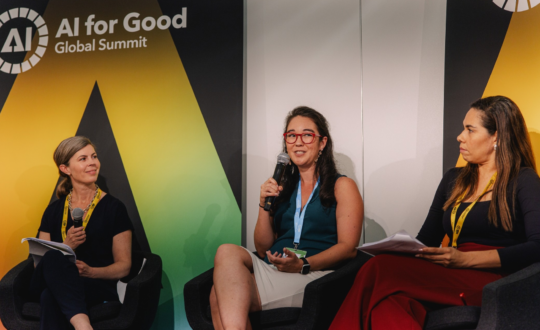
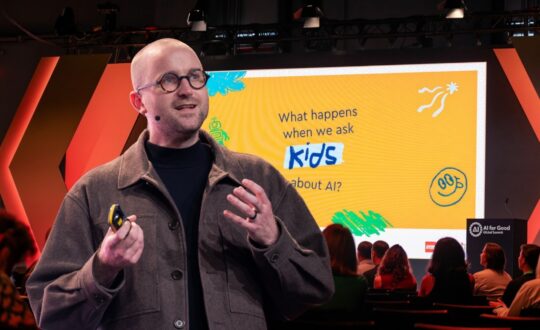
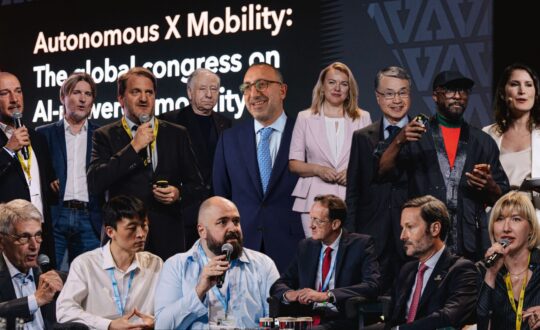
This year’s conference will take place from 7 to 9 July 2026 at the Palexpo convention centre in Geneva, Switzerland, in conjunction with the AI for Good Global Summit 2026. The co-location of Kaleidoscope with the AI for Good Global Summit offers a unique opportunity to strengthen collaboration among researchers, standards experts, policymakers, and innovators working to ensure that frontier technologies deliver meaningful benefits for society.
The 2026 programme spans the four frontiers identified by ITU’s recently established Academic Advisory Body: AI, quantum, space and strategic foresight.
AI remains the broadest frontier, with sessions mainly focused on digital sovereignty, ethics and accountability in autonomous systems, clinical and diagnostic applications, and AI-native network architectures for 5G and 6G. In this regard, Hoda Alkhzaimi of New York University Abu Dhabi will deliver a keynote on how frontier technologies can be directed toward inclusive productivity and sustainable prosperity. In addition, there will be two dedicated keynotes on quantum technologies: Elham Kashefi of Sorbonne Université will discuss hardware-aware photonic architectures for trusted quantum learning, and Eleni Diamanti of the Paris Centre for Quantum Computing will present on resources and applications for advanced quantum networking. A special session will extend the discussion to practical applications and the educational pathways needed to develop a quantum-ready workforce. After that, the focus shifts to space computing: Jian Wang, founder of Alibaba Cloud, director of Zhejiang Lab and member of the Chinese Academy of Engineering, will deliver the 1st keynote of this year’s edition “Space computing: Endless frontiers and exploration”, that will be followed by an invited paper on recent developments in GeoGPT authored by the Co-Chairs of GeoGPT Governance Committee, John Ludden and Richard Chuchla.
Ian Akyildiz, Editor-in-Chief of the ITU Journal on Future and Evolving Technologies (ITU J-FET) will present his research paper From digital twins to cognitive twins: closing the metacognitive loop for 6G and beyond wireless systems.
Strategic foresight anchors the second day, with the chairs of ITU’s Academic Advisory Body convening to share findings from their first year of work across all four thematic groups. Two invited papers by Rafael Popper of Warsaw University of Technology will close the third day, addressing anticipatory oversight for cybersecurity and AI-driven skills intelligence for curriculum modernisation.
What sets Kaleidoscope apart from other academic conferences is its rigour. All submitted papers go through a double-blind peer review process and are evaluated on content, originality, clarity, relevance to the conference’s theme and, critically, significance to future standards and policy. This last criterion reflects Kaleidoscope’s distinctive role within ITU: the conference is not simply a venue for academic exchange but a direct contribution to the organisation’s standardisation and policy work.
Submissions have been organised into three tracks. While Track 1 covers the technological foundations of intelligent and resilient network infrastructures, spanning machine learning, large and small language models, space computing, quantum information technologies and neuromorphic computing, the second one focuses on applications and services for sustainable development, including radiocommunication networks, cybersecurity, smart transportation, Earth observation and embodied AI in healthcare. The last track examines the social, economic, environmental and policy dimensions of frontier technologies, from ethical frameworks to intellectual property, quantum education and sustainable smart cities.
Selected full papers will be presented in plenary sessions and short papers in poster sessions. Accepted papers will appear in the Kaleidoscope Proceedings, and extended versions of selected contributions may be considered for a special issue in the ITU Journal on Future and Evolving Technologies (ITU J-FET). The authors of the three best papers will receive special awards, and young authors aged 30 or under will be recognised with a Young Author Recognition certificate.
Kaleidoscope 2026 will also provide a dedicated exhibition space for innovations developed by Swiss institutions led by universities, providing a glimpse of academic research originating from the host country.
Participation in Kaleidoscope is not limited to the conference itself. The AI for Good Global Summit provides attendees direct access to a wider community of international experts, innovators, entrepreneurs, UN representatives and decision-makers. The conference offers a platform for the exchange of ideas across academia, industry and policy, to keep abreast of the latest developments in frontier technologies, to expand professional and academic networks and to explore collaboration opportunities. Students, researchers, faculty and practitioners can register on the AI for Good Summit website.