


In 2026, more than a billion people use a generative AI tool every month. That figure sounds like momentum – and in some places, it is. But look closer, and a different picture emerges. Economies in the Global North are adopting AI at nearly twice the rate of those in the Global South: 24.7% of working-age adults compared to 14.1%. The most powerful AI systems, the ones capable of meaningful economic transformation, are not diffusing evenly. They are concentrating.
The infrastructure gap is measurable
The scale of that concentration becomes clear in the data. Access Partnership’s Global South AI Diffusion Playbook, developed through a sustained research and convening programme with policymakers, industry practitioners, infrastructure operators, and development finance institutions across four continents, puts hard numbers to what was previously discussed only in the abstract.
Sub-Saharan Africa faces a 98% compute gap: the region is projected to need 4.2 gigawatts of capacity by 2030 to meet demand for AI and is on track to have just 0.1 gigawatts. South Asia faces an 87% gap. Globally, none of the world’s 100 high-performance computing clusters capable of training large language models are hosted in developing countries. Just two nations account for half of all hyperscale data centre capacity worldwide. The Global South holds two-thirds of the world’s population but produces only around 18% of global power generation, an energy constraint that will not be resolved by policy frameworks alone.
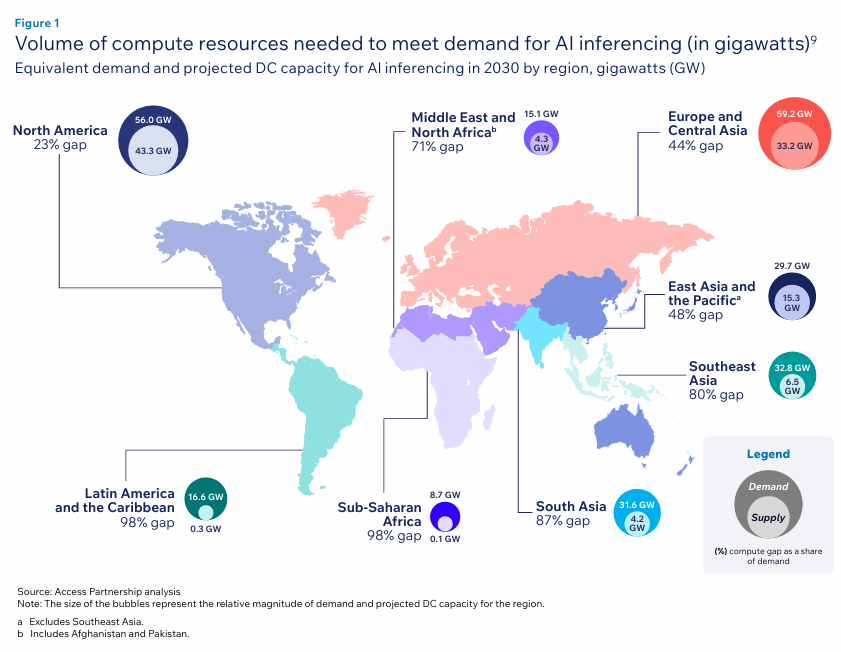
Figure 1: Volume of compute resources needed to meet demand for AI inferencing (in gigawatts). Source: Access Partnership analysis.
Understanding the scale of the gap is the starting point for closing it. And closing it means talking about compute and energy infrastructure in the same room as AI governance and skills. All stakeholders need to move past generalities about “inclusion” and build concrete proposals on financing, procurement, and the international arrangements that shape who gets access to frontier capability and on what terms.
Diffusion, not readiness
These gaps prompted Access Partnership to move from analysis to structured action. In the lead up to the India AI Impact Summit, the AI Policy to Practice (AIP2) Lab Series brought together policymakers, industry practitioners, and infrastructure operators across four working sessions in Washington DC, London, Brussels, and New Delhi. Each session examined what it actually takes to move from a national AI ambition to a successful AI economy.
The sessions identified AI diffusion, not readiness, as the defining challenge of this period. It is a question about how access is structured, not about who is prepared to receive it. Consolidated into the Global South AI Diffusion Playbook, the findings identified five systems that must be aligned for diffusion to succeed: physical infrastructure, data, institutions, skills, and markets. Weakness in any one of them limits the others.
Taking the conversation to Geneva
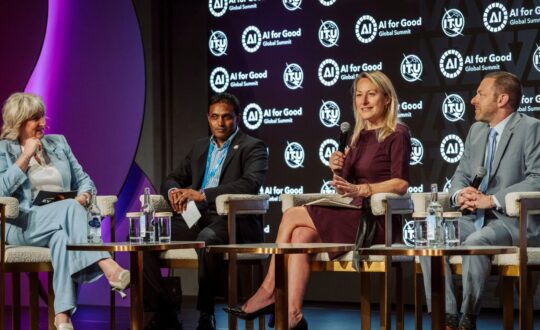
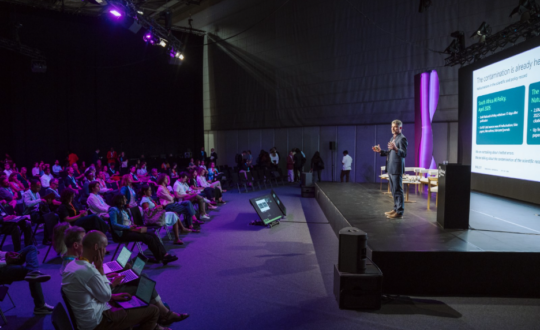
At the AI for Good Global Summit, Access Partnership is bringing together experts from across the AI ecosystem to align those systems and develop a practical path forward. The working session “Who Controls Frontier AI? Building a Plan for Diffused Access” will cover five themes that map to the structural gaps the Playbook identified: access to frontier capability; compute and energy infrastructure; skills and institutional readiness; finance and investment; and safe deployment in priority sectors.
The session brings together Robert Opp (UNDP), Rachel Adams (Global Center on AI Governance), Kathryn Yontef (Microsoft), Kristian Ruby (Eurelectric) and Thelma Quaye (Smart Africa)
Leaders from across industry, government, and institutions will work together on the question that the data makes urgent: how access to frontier AI can be broadened to achieve AI for all.
“Who Controls Frontier AI? Building a Plan for Diffused Access” takes place on Wednesday 8 July 2026, 14:00–16:00 CEST, at Palexpo, Geneva. Find the session in the AI for Good Summit app. The Global South AI Diffusion Playbook is available at accesspartnership.com.
Author information
Matthew McDermott, Director of Artificial Intelligence, Access Partnership
Bringing over a decade’s worth of experience working on global technology policy issues, Matthew advises across a range of sectors to help companies and trade associations address regulatory barriers and execute government affairs strategies. He is closely involved in engagement with governments and international organisations, including the European Union, the International Telecommunication Union, and the United Nations. As a speaker and moderator, he regularly participates in debates on the regulatory and policy impact of new technologies.
Abhineet Kaul, Vice President, Strategy & Partnerships, Access Partnership
Abhineet is a Vice President of Strategy and Partnerships at Access Partnership. Based in Washington, DC, He has a passion for economic development and future solutions, with a focus on policy and societal aspects. Abhineet has worked with government agencies and the private sector in Asia Pacific, Latin America, Africa, and the Middle East on a variety of topics. His list of past work is diverse and spans connectivity, infrastructure, skills, impact, roadmaps, tourism, digital, and others.