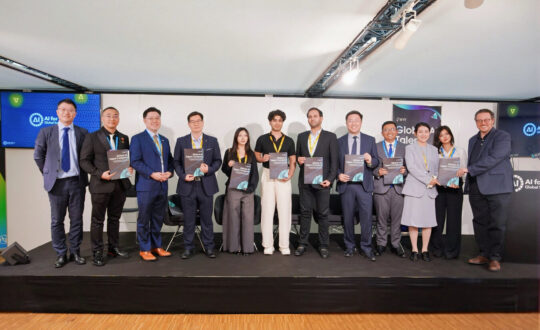



During the AI for Good Global Summit 2026, the workshop AI for Good and for All was hosted by the Group of Friends of Global Governance in Geneva and organized in partnership with the Permanent Mission of the People’s Republic of China and the China Academy of Information and Communications Technology (CAICT). The discussion brought together government representatives, international organizations, academics and technology leaders to examine how global AI governance can reflect the priorities of the Global South and enable more countries to participate in AI development and deployment.
From participation to meaningful capacity
Across the opening remarks, speakers returned to a common concern: AI’s benefits are expanding, but the resources needed to develop, adapt and govern the technology remain concentrated in relatively few countries.
Inclusion was therefore framed as more than representation in international discussions. Countries also need connectivity, computing resources, data, skills, financing and institutions capable of evaluating AI systems. Without these foundations, developing countries risk remaining dependent on technologies designed elsewhere, even when those systems affect their populations or rely on their data.
Speakers emphasized the United Nations’ role in providing a universal forum for global AI governance, while calling for international discussions to lead to practical outcomes. These included shared infrastructure, technical assistance, financing, training and greater access to standards and policy tools.
Tomas Lamanauskas, Deputy Secretary-General of the International Telecommunication Union, identified five interconnected barriers to a more inclusive AI future: gaps in connectivity, computing capacity, energy and resources, skills, and governance readiness. He stressed that countries need not only access to digital infrastructure, but also the expertise, standards, policies and investment strategies required to participate meaningfully in the AI ecosystem.
“Today’s task is to ensure that all countries have a fair opportunity to participate in, shape and benefit from an AI-powered future,” Lamanauskas said, calling for international cooperation to deliver practical results across infrastructure, capacity building and governance.
Building balanced and inclusive AI governance
The first panel, moderated by Maxime Stauffer, Founder and CEO of the Simon Institute for Longterm Governance, explored how governance can account for the different contexts in which AI is developed and deployed.
H.E. Salma Rasheed, Permanent Representative of the Maldives, described AI as a potential tool for improving public services, strengthening institutions and supporting more resilient development. However, innovation must be balanced with privacy, ethics, safety, cultural values and public trust. The Maldives is developing a ten-year AI master plan while strengthening its wider digital governance framework. Rasheed also highlighted the importance of developing content and datasets in Dhivehi so that AI systems reflect the country’s language and lived realities.
“Global AI governance must therefore be inclusive of the needs and capacities of all countries, including small island developing states,” Rasheed said. “We need practical international cooperation, capacity building, knowledge sharing and inclusive access to technology. Only then can AI become a tool for development, equity and shared progress.”
Oksana Sotnikova, Director of the Department for Strategic Development and Innovation at the Ministry of Economic Development of the Russian Federation, focused on science diplomacy. International scientific cooperation, she argued, can narrow technological gaps while respecting national laws and interests. She cited an AI foresight exercise involving 270 scientists from 36 countries, who jointly identified research priorities for the coming decade. Sotnikova called for more joint laboratories, distributed research teams and open scientific platforms.
“AI development requires open collaboration. Therefore, any restrictions on joint scientific research efforts should be minimized. AI science is one of the few fields where every state shares a common interest in reaching advanced AI knowledge through joint effort,” Sotnikova stated.
Jovan Kurbalija, Director of DiploFoundation, argued that the challenges raised by AI should not be treated as entirely new. Principles such as responsibility for the systems one creates have deep historical roots, while philosophy and accumulated human experience can provide guidance for contemporary governance. He also emphasized the distinction between knowledge and data. Rather than waiting for the largest models or most powerful companies, countries and institutions can begin with local knowledge and develop AI systems around specific needs.
“Inclusive, bottom-up AI is technically feasible, financially affordable and ethically desirable,” Kurbalija said.
Wang Jian, Founder of Alibaba Cloud and Director of Zhejiang Lab, reflected on the evolution from mainframe computers to personal computers, the internet and mobile technologies. Technological progress, he said, has historically expanded access to tools that were previously available only to a small number of people. He compared AI to pen and paper: a broadly available tool that should support human capabilities rather than compete with them.
“For me, AI is just another kind of pen and paper to help us. There is no competition between the human and the technology. It should be cheap enough and available almost anywhere, and that should be the goal for AI,” Jian said.
Watch the full session here:
Bridging AI divides through co-development
The second panel, moderated by H.E. Prof. Muhammadou M. O. Kah, Ambassador and Permanent Representative of the Republic of The Gambia, moved from governance principles to the practical conditions required to narrow AI divides.
H.E. Dr. Fancy Too, Ambassador and Permanent Representative of Kenya, argued that the key question is no longer whether AI will shape the future, but whether it will deepen inequality or help close longstanding development gaps. She called for practical action across infrastructure, data capacity, skills, local innovation ecosystems and affordable access to AI-enabled tools. Governance, she said, must not only manage risks but also ensure that AI’s benefits are accessible and aligned with development priorities.
“It is more about whether AI deepens inequality or helps close the longstanding development gap. This must translate into practical action, including stronger support for infrastructure, data capacity, skills development, local innovation ecosystems and affordable access to AI-enabled tools,” Too explained.
Alain Labrique, Director of Digital Health and Innovation at the World Health Organization, used healthcare to show why governance principles must be translated into standards, benchmarks and practical tools. Health systems need domestic regulatory capacity, clear accountability and models grounded in local conditions before AI technologies are introduced. Access to a finished system, he argued, does not give a country the capacity to shape the questions, govern the data or test the model.
“This is about keeping people at the center and always asking the question: why are we using AI? Not using AI because we can, but using AI because it is a logical, sensible and sustainable solution to a problem that we’re trying to solve,” Labrique said.
Jin Li, President of Fudan University and Director of its Center for Global AI Innovative Governance, placed talent at the heart of capacity building. Countries need people who understand not only technology but also institutions, society and local contexts. Universities can contribute through governance curricula, policy toolkits, visiting-scholar programmes and open knowledge networks. Jin also argued that developing countries should participate in setting international priorities rather than simply receiving technologies and rules developed elsewhere.
“Countries of the Global South should not be simple recipients of technology only. They should also be agenda setters, rule shapers and contributors of practical experiences and solutions,” he said.
Yu Xiaohui, President of CAICT, warned that rising development costs and unequal access to compute, data, connectivity and talent could further concentrate AI capabilities. He presented open-source models, public datasets and developer communities as tools for reducing barriers and accelerating the diffusion of AI applications. At the same time, countries need their own datasets, reflecting their languages, cultures and industries, as well as the infrastructure and skills required to use AI effectively.
“AI should not be merely a technological race among a few countries or a few companies. It should become a development tool that more countries can afford, understand and use effectively,” he stated.
Across both panels, a shared conclusion emerged: inclusive governance cannot be separated from the practical ability to participate. Closing the AI divide will require coordinated investment in infrastructure, data, skills, institutions and financing, as well as a shift from one-way technology delivery towards co-development, with countries participating as creators, decision-makers and rule-shapers.