

The burning questions around AI are no longer just about what technology can do. They are about how we can ensure advanced systems act in accordance with human values, whether the rules written for it can work in practice, and whether the power grid can cope with its demands on energy. At the AI for Good Global Summit in Geneva, the IEC discussed these issues with representatives of industry, civil society and regulatory authorities.
A technology that is leaping out of the lab
A few years ago, conversations about AI centred on what models could do. Today the questions are grounded in concerns about safety and sustainability and they come from places far beyond the research lab.
Grid operators want to know where the electricity for the next wave of data centres will come from. Ministries want to know how to buy an AI system without inheriting risks they cannot see. Human rights bodies want to know how an algorithm used in welfare, policing or hiring will affect the people on the other side of it.
What is often missing is the layer in between that turns ambition into something an engineer can build, an auditor can check and a regulator can rely on. And that’s where standards help connect the dots. At the AI for Good Global Summit in July 2026, the IEC, and ISO – International Organization for Standardization, convened two sessions to put some of these key questions to the fore.
Session one: from data centres to climate goals
Every AI query ends in a building full of servers, and every one of those servers draws power. The first session, From data centres to climate goals: International standards for a more energy-efficient AI, started from that physical reality.
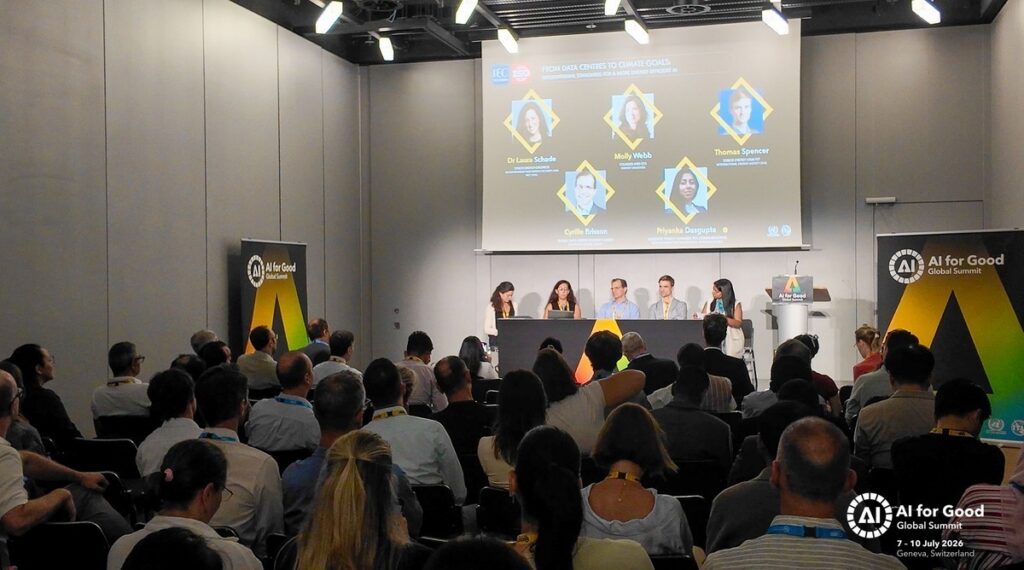
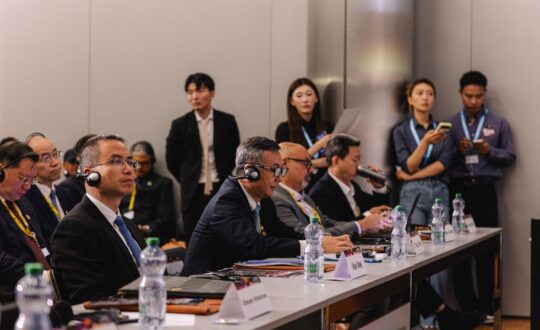
The panel was moderated by Priyanka Dasgupta (IEC). Speakers came from across the energy and digital value chain: Thomas Spencer of the International Energy Agency (IEA), Dr Laura Schade of the UK Department for Energy Security and Net Zero, Molly Webb of Energy Unlocked, and Cyrille Brisson of Eaton.
Thomas Spencer from the IEA set the tone with a single figure. “We estimate that their electricity consumption increased by around 17 percent last year, growing more than five times faster than total electricity consumption,” said Thomas Spencer of data centres.
The point was not alarm but the need for planning. AI’s future, speakers argued, depends as much on energy systems as on chips and algorithms. Rising demand, grid capacity limits, access to clean power and the difficulty of measuring energy use all came up as pressing challenges.
Watch the full session:
A need for change in perspective
Laura Schade, who also shared her insights on the work that led to a new IEC Strategic Position Paper on Data Centres, weighed in, “We should stop seeing data centres just in terms of energy demand, but we should look at them in terms of systems that can enable decarbonization.”
This does not just mean ignoring the very real challenges surrounding the growing demand around data centres. It means identifying opportunities on how data centres can be built and used in a more sustainable way. It means ensuring that the ensuing design, objectives and deliverables reflect that. Data centres can offer flexibility and demand response to the grid. AI itself can help optimize networks and integrate renewable energy. Unmanaged growth, however, could put serious pressure on climate commitments.
The potential remains huge: industry voices described how AI workloads are reshaping infrastructure, from liquid and immersion cooling to energy management. There is ongoing IEC work on standards to help treat data centres as active participants in energy systems and look at cleaner cooling, water use, e-waste and lifecycle emissions.
What standards bring to the table
International standards and conformity assessment already provide a shared way of measuring efficiency and the carbon footprint of data centres, as well as setting key performance indicators for data centres, so operators everywhere measure performance the same way.
An upcoming Strategic Position Paper on ‘Clean green data centres’ identifies gaps in the standardization landscape pertaining to sustainability and safety. It highlights the role data centres can play as net contributors to the grid, emphasizing the need to view data centres as active participants in energy systems. It also addresses broader sustainability impacts and supports the adoption of new architectures and technologies.
Session two: operationalizing AI impact assessment
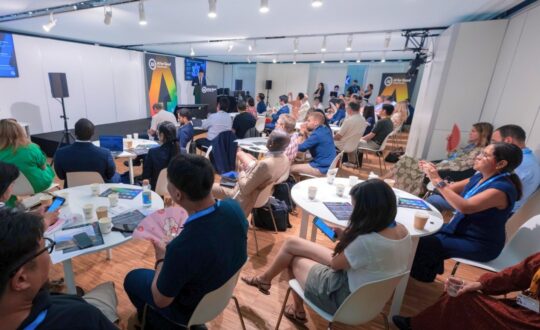
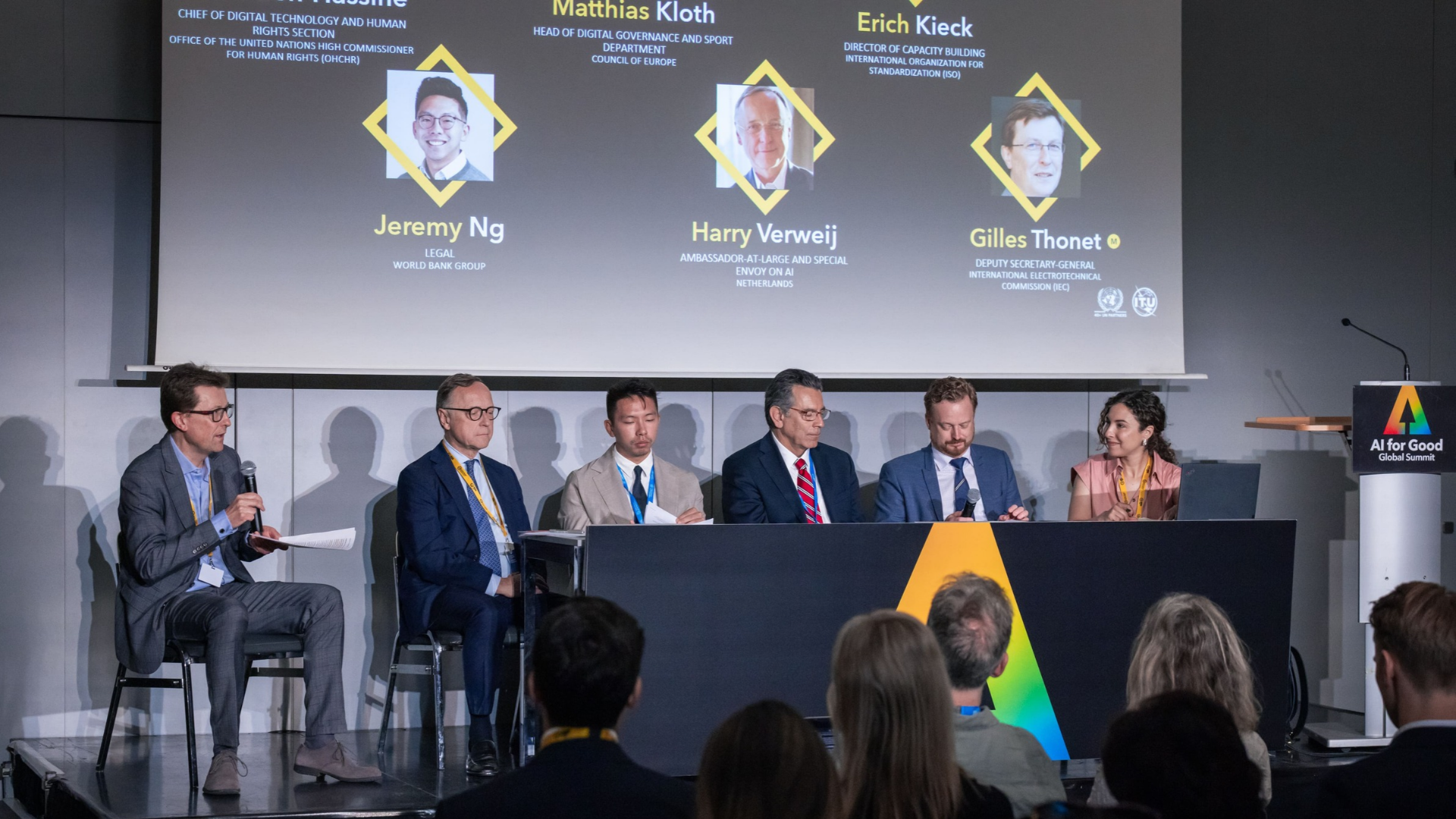
If the first session asked whether the world can power AI, the second asked how the world can govern it in practice. The IEC/ISO workshop on Operationalizing AI Impact Assessment: The interplay between law-based frameworks and international standards drew a packed room of policymakers, standards experts, human rights specialists and government representatives.
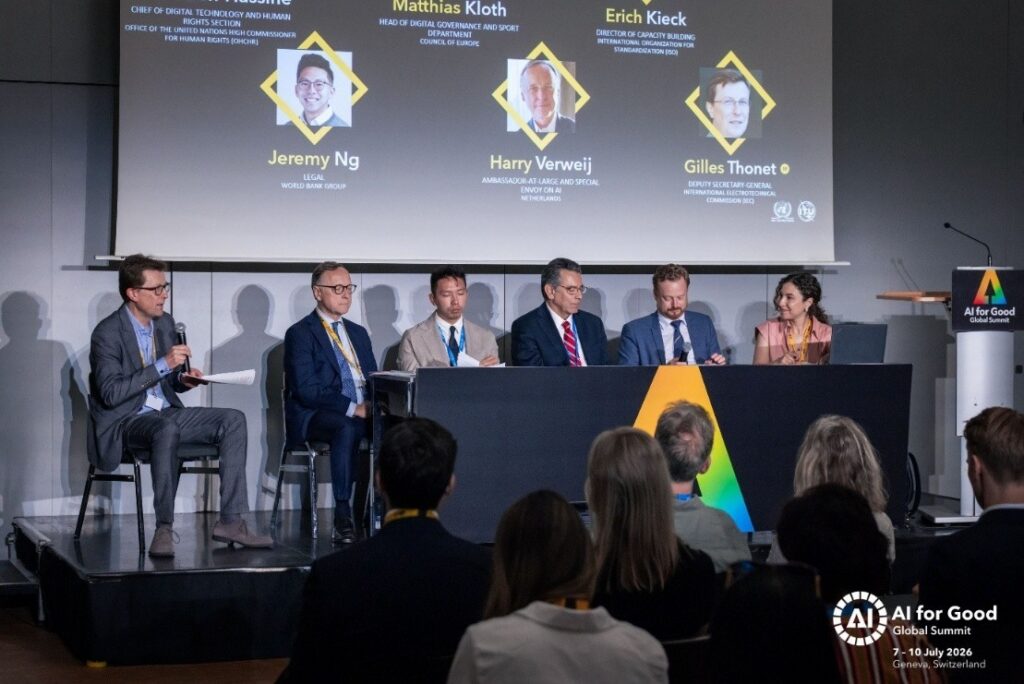
The high-level panel was moderated by Gilles Thonet, IEC Deputy Secretary-General. He was joined by Wafa Ben-Hassine (OHCHR), Matthias Kloth (Council of Europe), Erich Kieck (ISO), Jeremy Ng (World Bank Group) and Harry Verweij, the Netherlands’ Ambassador-at-Large and Special Envoy on AI.
One message stood out: “AI governance requires collaboration across legal, policy, human rights and technical communities if implementation is to be effective.”
The Council of Europe presented its Framework Convention on AI and HUDERIA, its methodology for assessing AI impacts on human rights, democracy and the rule of law. Speakers saw standards as the natural partner to such frameworks, offering structured processes and a common vocabulary. Two ISO/IEC standards from the joint AI committee (JTC 1/SC 42) were central:
ISO/IEC 42001 sets requirements for an AI management system, covering governance, accountability and risk management inside an organization.
ISO/IEC 42005 gives guidance for assessing the impacts of a specific AI system in its real deployment context.
ISO also shared the results of its Capacity Building Journey on AI Policy and Standards, which brings regulators and national standards bodies together. Representatives of the World Bank and the Netherlands stressed that governance must work across very different legal systems, and that standards act as a common language between them.
Watch the full session:
From principle to practice
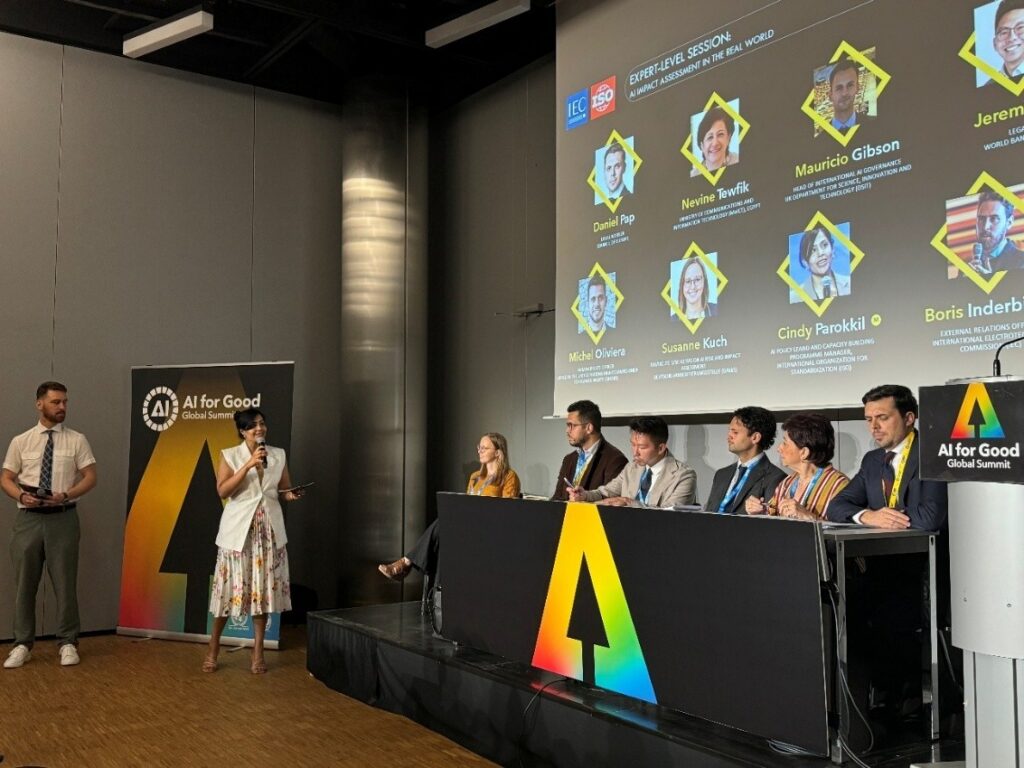
The expert session, moderated by Cindy Parokkil (ISO) and Boris Inderbitzin (IEC), moved from policy to implementation. Speakers included Daniel Pap (Council of Europe), Nevine Tewfik(Egypt’s Ministry of Communications and Information Technology), Mauricio Gibson (UK Department for Science, Innovation and Technology), Jeremy Ng (World Bank Group), Michel Roberto Oliveira (OHCHR) and Susanne Kuch (German Accreditation Body, DAkkS).
Some key insights emerged:
Governments are moving from writing AI policy to implementing it. Standards turn principles into repeatable processes, and long-term capacity building keeps those processes alive.
Public procurement is a powerful lever for responsible AI deployment.
Certification and impact assessment answer different questions. Certification to ISO/IEC 42001 shows an organization has governance processes in place. Understanding what a system does to people in a given setting needs context-specific assessment, supported by ISO/IEC 42005.
A pilot to test it in the real world
The workshop’s most concrete outcome was broad support for a proposed IEC – ISO pilot project. It would apply international standards on AI management, risk and impact assessment to a real-world AI deployment. The results would then be mapped against legal frameworks such as HUDERIA to test how well the two approaches fit together.
Gilles Thonet, IEC Deputy Secretary-General, shared, “These discussions have reinforced the need to recognize the interplay between technical standards, policy and human rights, and to approach their application with responsibility and care. The real opportunity now is to turn these theoretical concepts into concrete actions: to test these approaches in real-world settings, assess their impact in practice, and learn what works. This is what the impact-assessment pilot hopes to achieve. If we get this right, the insights from these experiences can be scaled up and applied globally.”
Participants saw clear value in this: evidence on interoperability, better support for public-sector procurement, assessments that can be compared across jurisdictions, and practical learning for institutions building their capacity.
Watch the full session:
Let’s continue the conversation
From both sessions, the lessons are clear: We need effective implementation. International standards enable technology to be applied efficiently, encourage financial investment, and make solutions scalable. Standards are essential for safe and responsible AI adoption. Laws and policies set what must be achieved. Standards show how, in ways that are consistent, measurable and recognized across borders.
The IEC, together with ISO and other partners, will carry this work forward through effective standards for AI that help regulators, policymakers and decision makers ensure that AI is safe for adoption in society. The invitation is simple: engage with standards early, use them, and help shape them.
The sessions mentioned in this article were organized in partnership with IEC as part of the AI for Good Global Summit 2026. The views and claims expressed by participating organizations and speakers are their own and do not necessarily reflect those of ITU or its Members. The inclusion or promotion of any information, materials, businesses, products, or services in connection with this session shall not constitute or be deemed to constitute an endorsement by ITU or its Members.