

(Photo: India Mobile Congress)
India Mobile Congress 2026 brought together young innovators, researchers, policymakers and international organisations in New Delhi to explore how AI can deliver practical benefits for people. International Telecommunication Union’s programme at the Congress, alongside an agri-food hackathon held at the ICAR- Indian Council of Agricultural Research(ICAR) campus, connected national AI capacity, agricultural innovation, robotics and communications networks.
Across five events from 8 to 10 October, competitions and collaborative discussions explored both AI applications and the skills, infrastructure and governance needed to support them. The programme reflected AI for Good’s mission to unlock AI’s potential to serve humanity, linking hands-on experimentation with national priorities and international cooperation.
Building national AI capacity
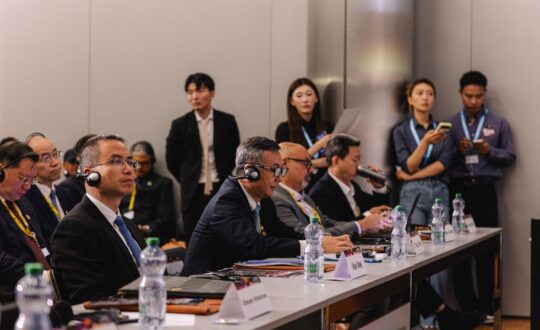
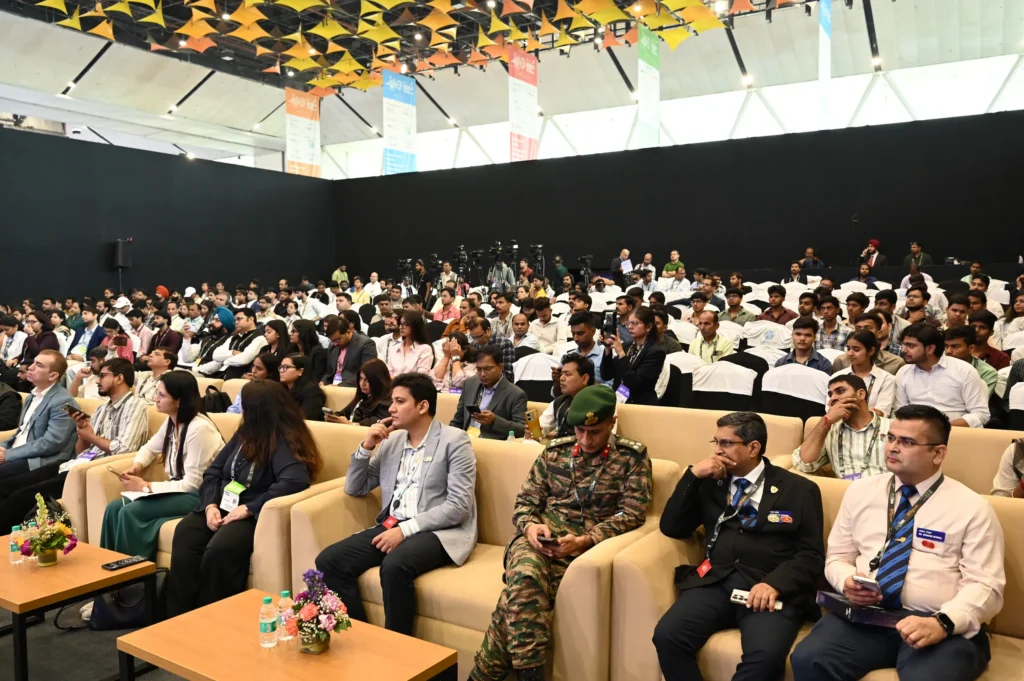
On 9 October, “From strategy to impact: Accelerating national AI capacity through the AI for Good Lab”examined how countries can move from readiness assessments and strategies towards locally relevant applications.
(Photo: India Mobile Congress)
Organised jointly by ITU and India’s Department of Telecommunications ( DOT ), the workshop at India Mobile Congress was inaugurated by Communications Minister Jyotiraditya M. Scindia. India participated as one of the Lab’s ten pilot countries.
The Lab connects three pillars: AI Readiness and Policy, AI Skills Development, and Public AI Infrastructure. Together, they support policy assessment, national talent development and environments for testing, validating and reusing AI solutions.
Discussions addressed institutional engagement, priority sectors and knowledge-sharing across the Global South. Participants also explored AI Sandbox requirements, including how to assess fairness, robustness and safety before expanding deployment.
The workshop placed skills alongside infrastructure and governance as essential ingredients for translating national ambitions into services that respond to local needs.
Innovation for agri-food systems
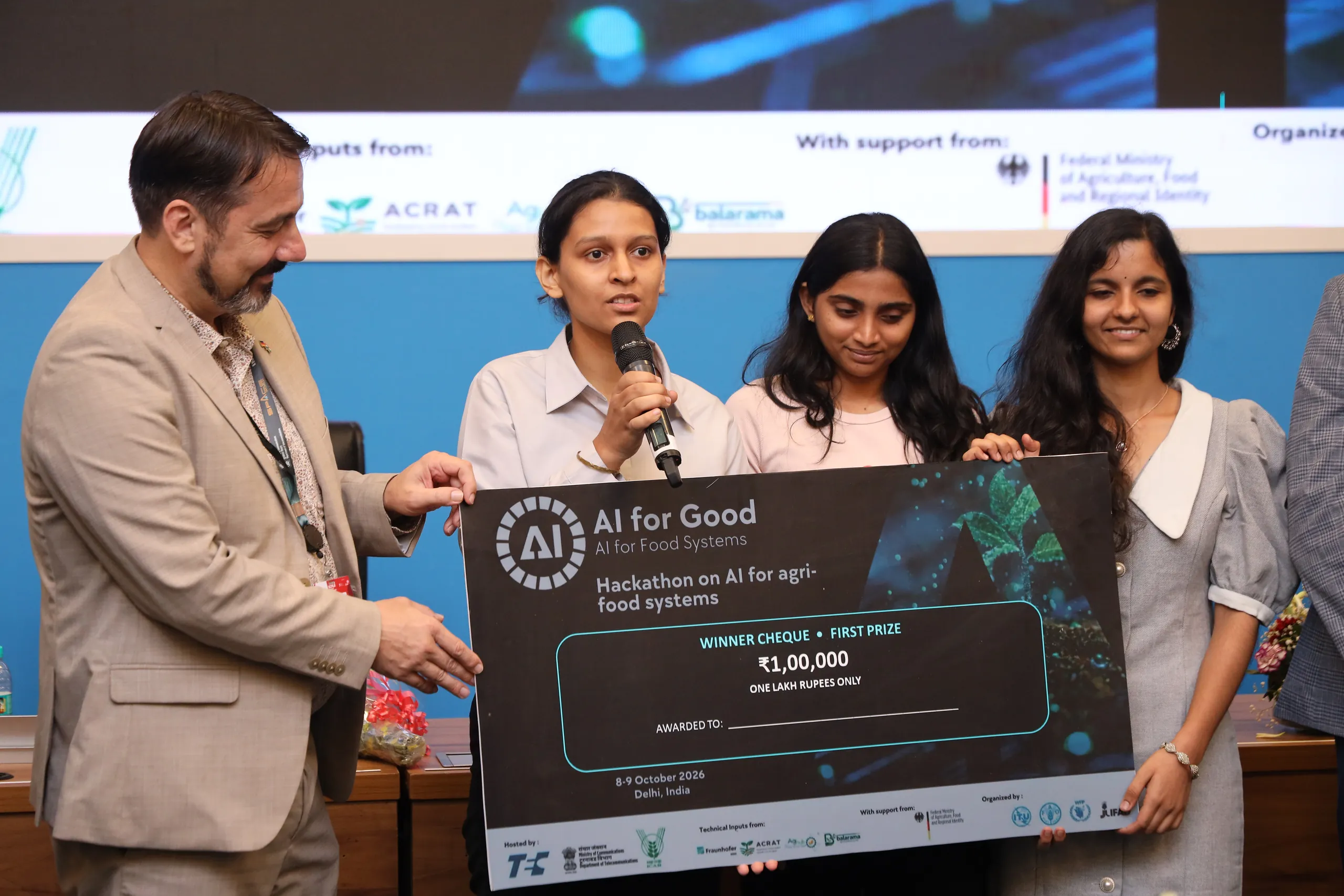
The Hackathonon AI for Agri-Food Systems, held on 8–9 October at the ICAR campus, brought together 200 teams, with over 500 participants to develop practical solutions across agriculture, food production and value chains.
Organised under the Global Initiative on AI for Agri-Food Systems, the competition encouraged interoperable, scalable approaches using the Initiative’s Open Reference Architecture. The aim was to identify ideas with potential for further development, piloting and replication.
Team KrishiNex from India took first place for work addressing Maximum Residue Limits in farm production. Team NutriEdge from India placed second with its focus on crop health and nutrition, while Team UniferX from Germany secured third place for abiotic stress and biostimulants. Two Skys from Ethiopia received the Jury Prize.
The results highlighted different entry points for applying AI to agricultural challenges, with further development needed to translate competition solutions into use in the field.
Connecting innovation with international cooperation
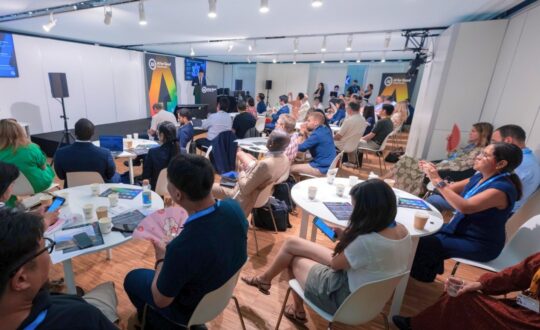
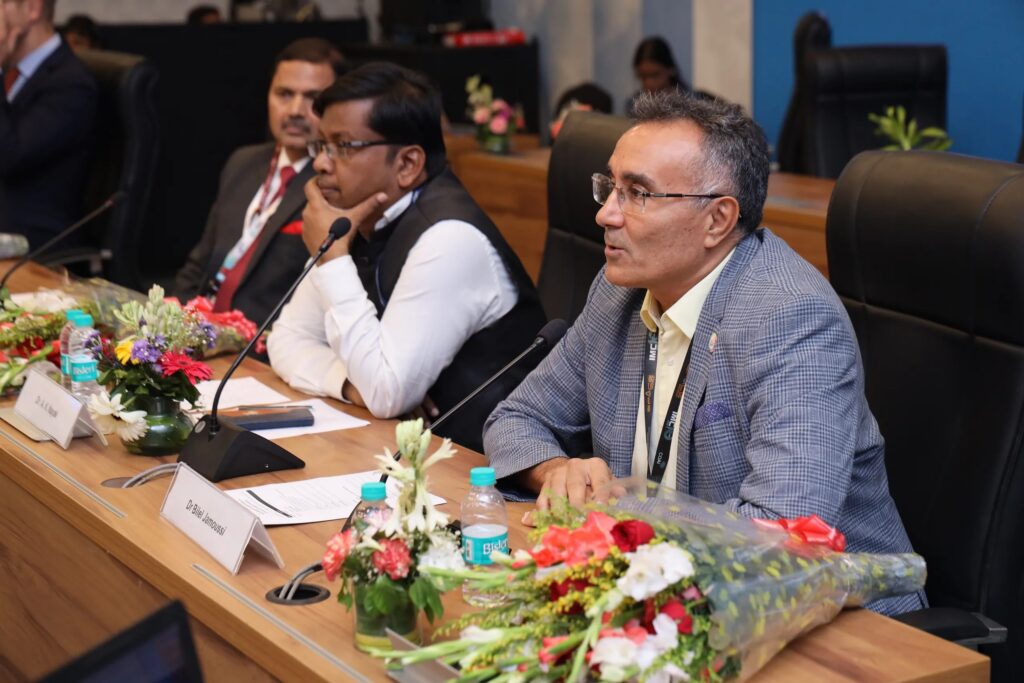
On 10 October, the Initiative’s second meetingat India Mobile Congress brought together around 70 delegates in person and 25 online. Jointly hosted by the Telecommunication Engineering Centre (TEC), DoT and ICAR, it connected government, research, industry, international organisations and standards development bodies.
(Photo: India Mobile Congress)
The Initiative is coordinated by ITU in close collaboration with FAO, IFAD and WFP. Its New Delhi meeting linked the hackathon with broader discussions on responsible, farmer-centred AI.
Shortlisted teams presented their solutions, and winning innovations were recognised. Discussions explored how connected sensors, weather information, drones, satellite systems and AI analytics could support agricultural decision-making and resource management.
Young innovators take on health emergencies
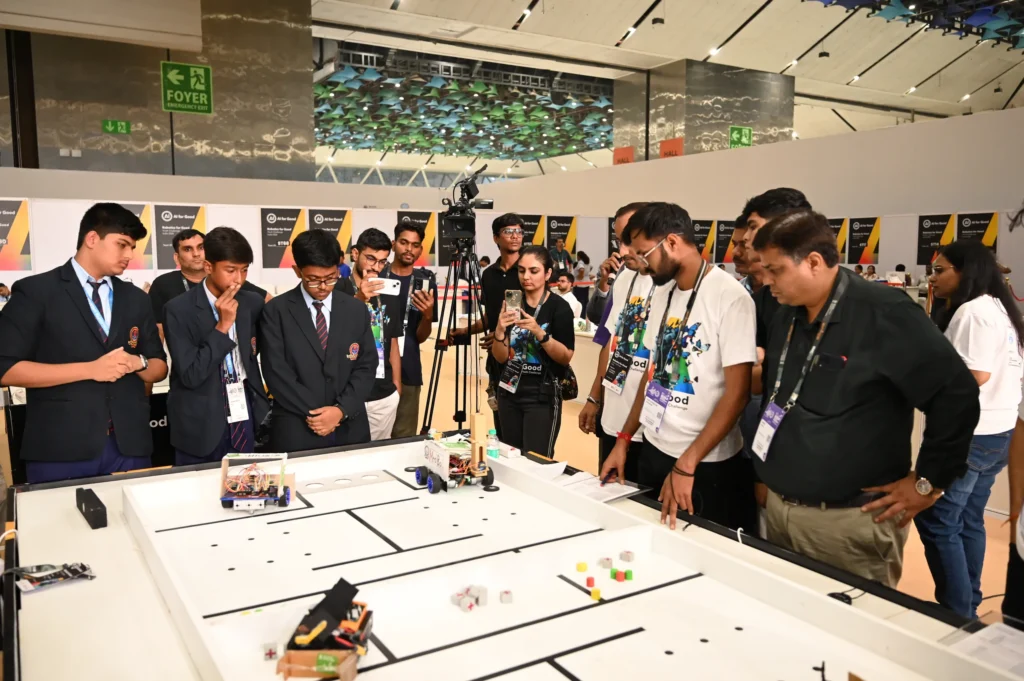
The Robotics for Good Youth Challenge India on 10 October brought together 57 teams and around 300 students and mentors from 14 states.
(Photo: India Mobile Congress)
Organised by ITU and DoT with support from IIT Delhi’s I-Hub Foundation for Cobotics, the competition challenged students aged 10–18 to design, build and programme autonomous robots for public health emergency response.
Tasks included sample delivery, medical-kit distribution, quarantine-zone construction and triage.
Team Singularity from Gopalan International School, Karnataka, won the junior category. Team Ferrum Incubators from Cambridge School, Noida, Uttar Pradesh, won the senior category. Both will represent India at the Grand Finale during the AI for Good Global Summit in Geneva in June 2027.
AI agents for communications networks
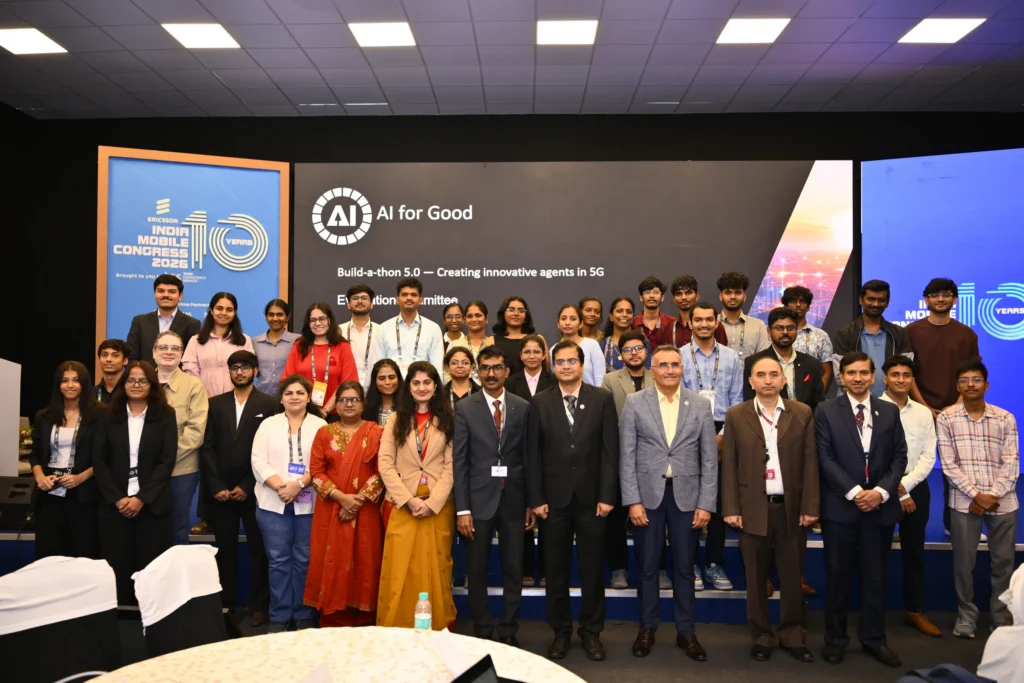
Also on 10 October, Build-a-thon 5.0, “Creating innovative agents in 5G”, challenged students, researchers and professionals to develop solutions for network troubleshooting and resource optimisation using the ITU AI for Good Sandbox.
(Photo: India Mobile Congress)
netaxis from RVCE Bangalore won first place, followed by teamSNR, also from RVCE Bangalore, in second and agentnet from GITAM in third. The Women’s Prize was shared by orbitflow from SNU Chennai and handshake protocol. nethealers and Callmatic received Judges’ Prizes.
Participants developed country-specific knowledge bases and AI agents grounded in relevant policies, standards and regulations. Winning solutions have an opportunity to feature in the 2027 Summit’s live multi-country error exercise.
Towards Geneva
The programme connected learning, experimentation and cooperation across sectors, giving participants opportunities to develop ideas and build relationships for further work.
The robotics champions will take their next international step at the AI for Good Global Summit, taking place on 21–24 June 2027 in Geneva, where innovation and crucial conversations will continue around AI that serves humanity