


GENEVA, 8 July 2026 — The Youth Zone at the AI for Good Global Summit 2026 shifts its focus on the second day. Technical skill-building gives way to policy and pedagogy. Technologists, teachers and youth voices come together to debate what good AI education actually looks like in practice.
One of the day’s hands-on sessions, “Planet protectors: GeoAI heroes,” invites participants aged 11 to 16 to take on the role of innovators. Using GeoAI, a combination of AI and digital mapping tools, they explore real-world challenges in extreme environments through a game-based roleplay format. The session is led by Marta Koch of Imperial College London and the WMO Group on Earth Observations.
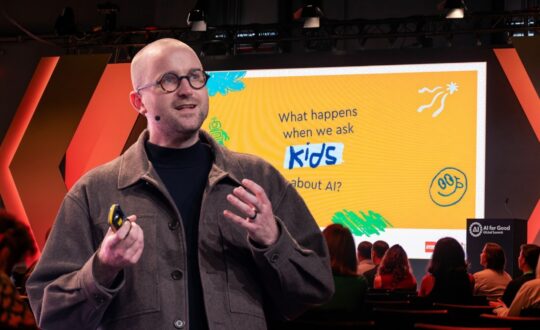
Elsewhere in the Youth Zone, the recurring session “Building the future in today’s classrooms”, presented by LEGO Education, returns throughout the day. It asks a simple question with complicated answers: how can students be empowered to not only use AI and IT systems in a conscious, reflected, and responsible way, but also to become their future architects?
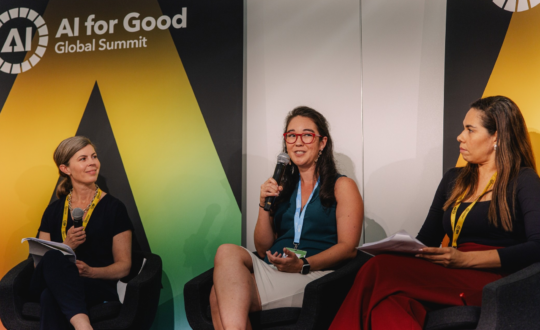
Two panels will anchor the day’s discussion track. The first, “Getting better EdTech for students: what good looks like in AI EdTech procurement,” moves the conversation from novelty to accountability. Kieron John Kelly from LEGO Education, Carlos Ferrari from UNICEF’s EdTech for Good programme, and Gareth Stokes of DLA Piper address procurement criteria and the pitfalls schools and governments should avoid when adopting AI tools.
The second, “AI in action: A youth debate on real-world challenges,” puts young participants at the centre. Structured as a formal debate, the session is facilitated by Dunola Mgbachi, Youth Programme Officer at the International Telecommunication Union ITU, Theo Wellington, Youth Coordinator at the World Meteorological Organization, and Iuri Carvalho, co-founder of the Sustainability League and consultant at UNITAR. Participants argue real-world scenarios around the access, design and use of artificial intelligence.
Beyond the Youth Zone, the day’s networking programme will span very different registers. An invitation-only breakfast hosted by Google Cloud brings together UN officials and Google DeepMind’s Joëlle Barral to discuss AI’s global impact. In the evening, the Frontier Stage’s Women Entrepreneurs Shaping the Future session will give three women-led startups the chance to pitch before judges including Amazon’s Werner Vogels, ahead of the Global AI for Education Awards and a Gala Dinner bringing together 250 CxO leaders and heads of UN agencies.
The enquiries on the table will have undergone a transformation by the conclusion of the second day. Day one enquired about the potential for young people to construct, while day two focuses on the responsibilities of the adults in their vicinity to ensure that they are executed correctly. On the third day, the participants will be given the opportunity to speak, as they will participate in a Girls in ICT Day activity and a youth-led panel discussing the future of AI.