

The question is no longer whether AI will shape the future. It already is. The leadership challenge is whether institutions can redesign work quickly enough to turn that capability into greater mission impact.
The more urgent question is how quickly institutions can adapt to realize AI’s benefits – and expand their capacity to improve lives.
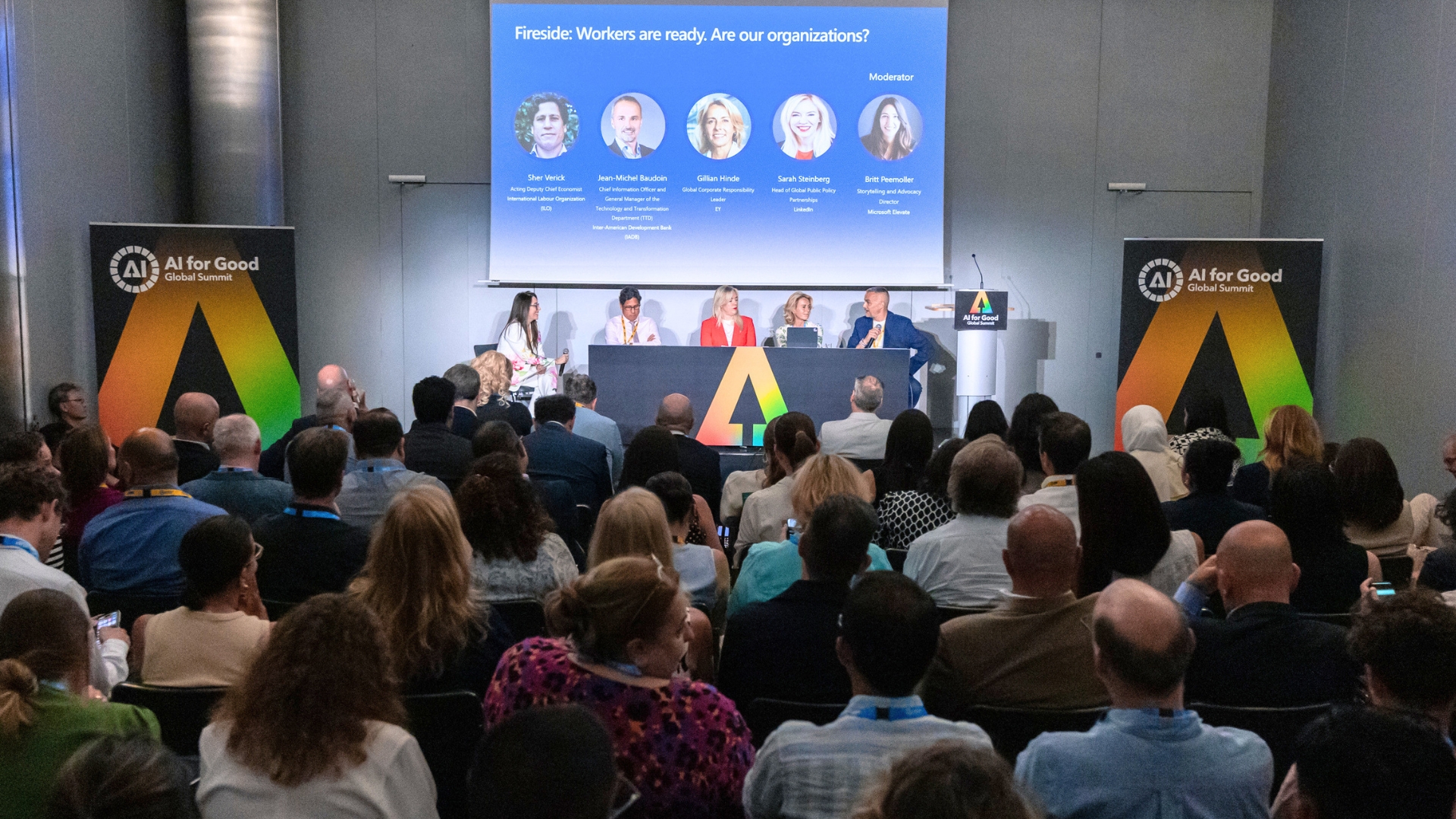
Across my recent conversations with leaders at the AI for Good Global Summit in Geneva, two realities stood out. First, AI is redefining work, requiring organizations to rethink roles, talent, and human contribution. Second, it is changing the economics of innovation, enabling institutions to turn ideas into working solutions at unprecedented speed and scale.
Together, these shifts create an enormous opportunity. They also present one of the most consequential leadership challenges institutions have faced in decades.
Realizing the benefits of AI will require more than expanding access to technology. It will require helping institutions rethink how work gets done, who gets to innovate, and how new capabilities translate into measurable public value.
Workforce transformation is the leadership challenge
AI discussions often focus on the latest model, app, or data-center innovation. Those advances matter, but the greater constraint is increasingly organizational: whether leaders can redesign work, build workforce capability, and govern adoption at enterprise scale.
AI is redefining work, prompting leaders to rethink roles, skills, operating models, and human contribution. The executive question is no longer whether employees will use AI, but how the institution will redesign work around it. That requires defining where AI-augmented labor creates value, planning for the cost of AI capacity, clarifying where human judgment remains decisive, and equipping employees to convert new capabilities into measurable productivity and mission impact.
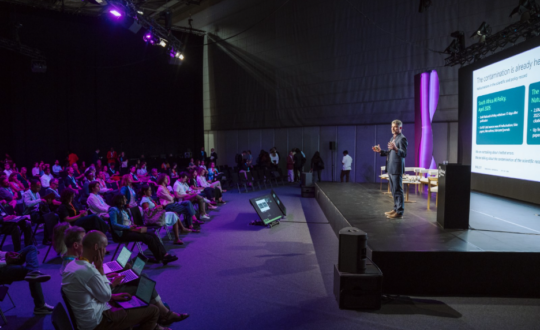
This gap was central to the discussion at our workshop during the summit on human agency and the future of mission work. As Sarah Steinberg of LinkedIn observed in her keynote, “AI-driven growth is real, but it’s not automatic.” The countries and institutions best positioned to benefit will be those willing to invest in human capital with the same urgency they invest in infrastructure and technology.
The labor-market signals make the urgency clear. LinkedIn estimates that 85% of professionals could see at least a quarter of the skills required for their jobs change because of AI. The implication is broader than training more technologists: institutions need AI fluency across functions, alongside the human capabilities that technology cannot replace – judgment, adaptability, creativity, communication, and domain expertise.
This is why workforce transformation has become a leadership challenge. Every AI strategy requires a workforce strategy.
AI is redefining the art of the possible
AI is not simply accelerating innovation. It is changing the economics of innovation itself.
For decades, institutions operated within practical limits of time, budget, technical expertise, and organizational capacity. As a result, many ideas remained out of reach. Today, those constraints are being fundamentally challenged. The distance between identifying a mission need and building a working solution is collapsing.
This shift is bigger than efficiency. It changes what institutions can aspire to achieve.
As Tiffany Treacy, Vice President of Product for Microsoft Power Platform, emphasized during the Summit, AI is expanding who gets to be a creator and bringing innovation closer to the people who understand problems firsthand. The people closest to a challenge can increasingly help design and build the solution themselves. At the same time, organizations are seeing new team structures, new operating models, and new leadership responsibilities emerge as AI becomes part of everyday work.
This demands a different level of ambition. Leaders should not ask only how AI can help them do the same work more efficiently. They should rethink the art of the possible.
What becomes achievable when innovation is dramatically faster, less costly, and accessible to people who previously could not participate? What new levels of service, reach, and mission impact become possible?
These questions sit at the heart of what we have begun calling an AI 10X ambition. The opportunity is not to improve outcomes incrementally. It is to fundamentally reimagine what institutions can accomplish when barriers to innovation begin to fall. As one emerging framework from this work puts it: if you can describe it, you can build it. The challenge is to aim for 10X, not 2X.
What comes next
The future of AI will not be determined by technology alone. It will be determined by the institutions that choose to transform around it.
The defining leadership questions are increasingly clear. How do we help people thrive as work changes? How do we open innovation to those closest to the problems? How do we move beyond incremental gains toward genuinely greater impact? And how do we ensure that technological progress strengthens human agency rather than diminishes it?
Trust enables adoption. Workforce readiness builds capacity. Innovation expands possibility. Institutional transformation converts possibility into impact.
The institutions that succeed will invest in people and technology together and redesign work around what that combination makes possible. An example of this type of work is well represented in our UN80 coalition with EY, ServiceNow, ProgeSoftware & ProgeSwiss, VO, Reply, Cura, Ontinue, Replit, Cloud Lighthouse, RSM, Nedamco, NTT, Alithya, and Accenture. For leaders, the mandate is clear: build trust, develop workforce capacity, open innovation to those closest to the mission, and measure success by better outcomes rather than technology adoption alone.