



Human intelligence is constrained by approximately 86 billion biological neurons and by our limited ability to safely interface electronics with the brain. What if brain-computer interfaces could become as simple and accessible as vaccines, enabling electronics to seamlessly integrate throughout the brain without invasive surgery? In this talk, I will present Brain AI², a vision for the convergence of biological and artificial intelligence enabled by a new generation of surgery-free nano-implants. Unlike conventional neural implants that require risky surgery and are confined to a small region of the brain, these nano-bioelectronic devices can be administered through a simple injection in the arm and establish distributed electronic interfaces throughout the brain safely without surgery. I will present the first demonstration of wireless, subcellular-sized nanoelectronics—a billion times smaller than a grain of rice—that travel through the circulatory system, cross the blood-brain barrier, autonomously implant in the brain, and achieve precise neuromodulation without wires, batteries, or surgery. This technology has already been proven in our preclinical studies and has the potential to democratize brain therapies, enabling scalable treatments for neurological and psychiatric disorders worldwide, while eliminating the massive costs of traditional neurosurgery. Beyond near-term therapeutic applications, I will discuss a future in which distributed networks of nano-implants function as synthetic electronic neurons, creating unprecedented forms of brain-AI symbiosis, enabling humanity to transcend the biological limits and expand human potential. As artificial intelligence advances at unprecedented speed, such technologies can help bridge the growing gap between human and machine capabilities while ensuring that human agency remains central in the age of AI and that the benefits of advanced neurotechnology are distributed equitably worldwide.

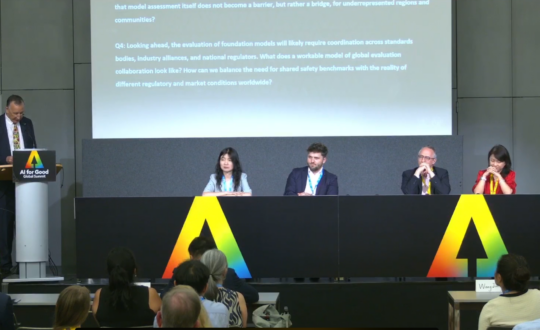
Building shared standards for foundation model evaluation
As foundation models become more capable and increasingly embedded across industries and public services, evaluating them is becoming both more...
AI for Good | Global Summit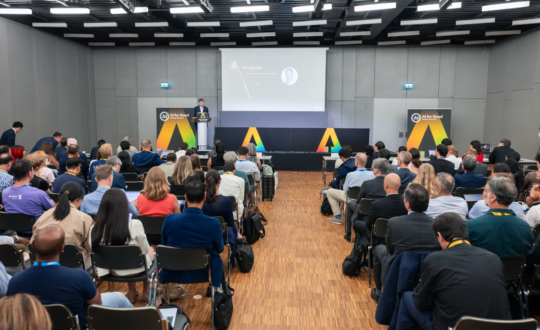
Brain-computer interface: Toward Shared Standards for a Global Industry
During the AI for Good Global Summit 2026, the workshop "Brain-Computer Interface: Technology for Good and Application Cooperation" gathered scholars,...
AI for Good | Global Summit
Ubiquitous, Open, Accountable, Inclusive: What It Will Take to Bring...
Despite the rapid expansion of mobile connectivity, significant gaps in access remain. Closing those gaps and ensuring that advances in...
AI for Good