
 Register here
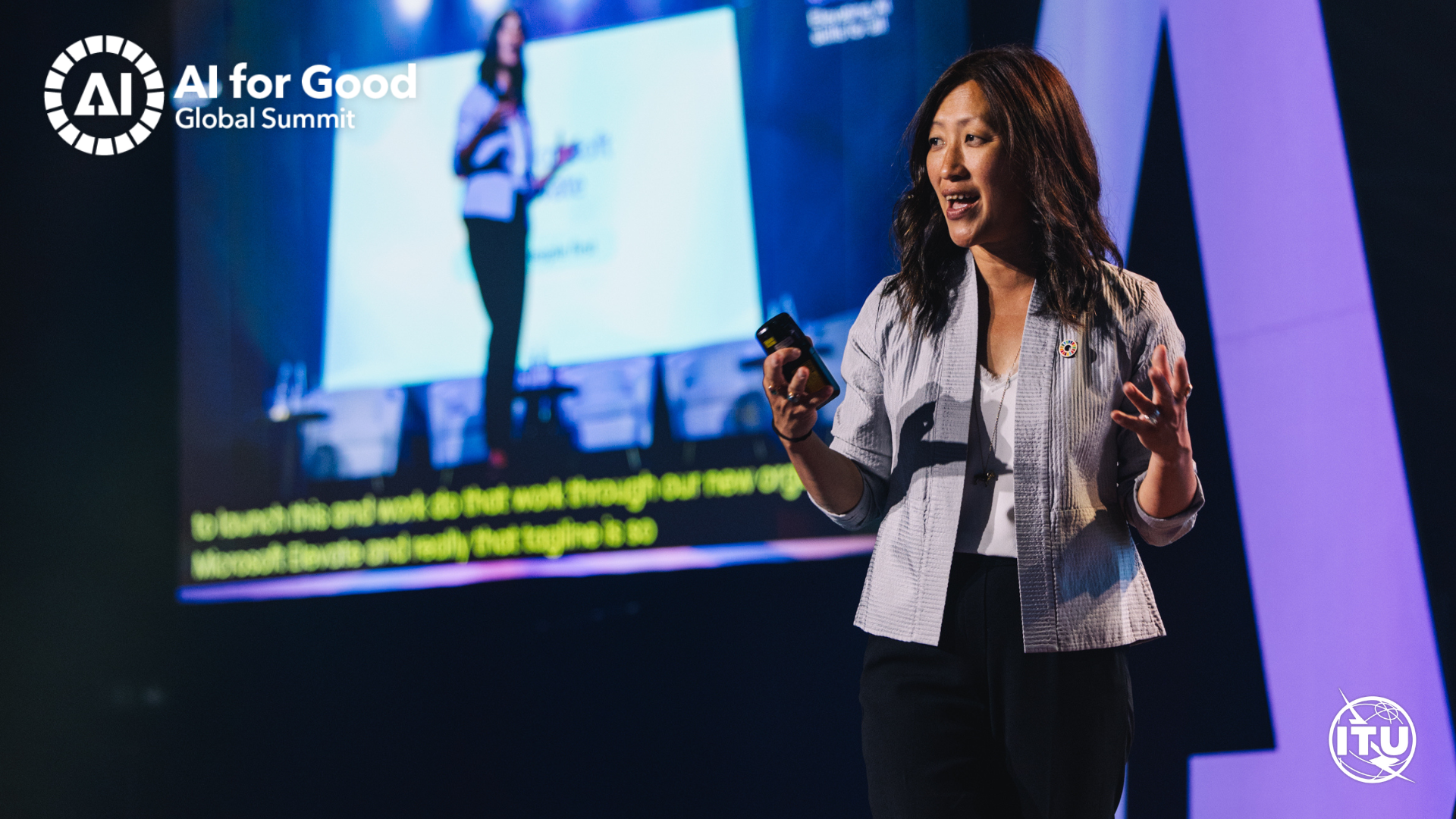
At the 2025 AI for Good Global Summit, Microsoft offered a clear and urgent message: ensuring the benefits of AI are widely shared requires intentional, large-scale investment in people. In a keynote session titled Elevating AI Skills for All, Naria Santa Lucia, General Manager of Microsoft Elevate Skills, laid out the company’s vision for workforce readiness in an AI-driven economy – a vision centered on people first and empowering individuals through skills, credentials, and opportunity.
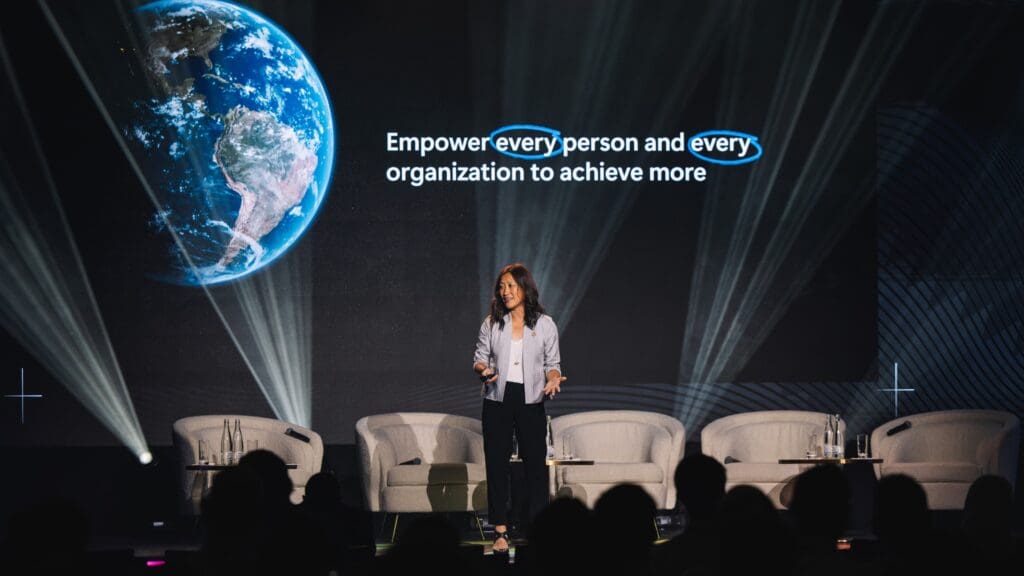
“Our mission is to empower every person and every organization on the planet to achieve more,” Santa Lucia stated.
Microsoft Elevate, the company’s newest initiative, was at the center of the conversation. Announced just days earlier, the program brings together Microsoft’s philanthropic investments, partnerships, technology, and training efforts into a single platform aimed at scaling AI skilling for nonprofits, education, and workforce organizations.
From philosophy to action: putting people at the center
Santa Lucia began by addressing a fundamental shift in mindset. Microsoft’s approach to AI is focused on people first by using AI to augment human capabilities and unlock new kinds of work. This philosophy underpins Microsoft Elevate’s central objective to equip individuals with the tools and skills they need to thrive in the era of AI. The initiative aims to help people go beyond adapting to change and instead help shape the future of AI by actively learning new skills and creating new solutions.
“Are we trying to build machines that are smarter than people, or machines that will help people become smarter? […] Are we building machines that will outperform people in their jobs, or machines that will help people pursue better jobs?” Santa Lucia explained.
These are the questions guiding Microsoft’s AI strategy, from product development to workforce training.
Watch the full session here:
Microsoft Elevate by the numbers
At the heart of Microsoft Elevate is a $4 billion commitment in cash and technology over five years, focused on schools, community colleges, nonprofits, international organizations, and public institutions. The real measure of its ambition lies in scale: Microsoft aims to support 20 million people in earning an AI credential in two years. This past year alone, Microsoft has reached 60 million people, trained 15 million, and helped 5 million earn an AI credential.
This emphasis on credentials, rather than just short-term exposure or awareness, is what sets Microsoft Elevate apart. Microsoft is focused on going beyond AI fluency into deeper, role-based training that prepares learners for real jobs and career advancement. These skills are tested, certified, and designed to signal readiness in a rapidly evolving job market.
The company offers a suite of free training, credentials, and curriculum resources, including tools like the AI Skills Navigator, which helps learners chart personalized learning journeys using AI itself. These tools are designed to be accessible and scalable across a wide range of contexts.
Addressing the global skills gap
Santa Lucia also outlined the urgency of Microsoft Elevate’s mission with data illustrating the scale of the global skilling gap:
- 70% of the skills used in most jobs will change by 2030 (LinkedIn Work Trends report 2025).
- 75% of young people across 92 countries lack the skills needed to access jobs in the AI economy (Recovering Learning 2022, UNICEF & Education Commission).2
- While 76% of global education leaders believe AI literacy is essential, only 10% of schools and universities are currently offering guidance to AI educators (2025 AI in Education from PSB Insights and Microsoft).
- 78 million net new jobs are expected to be created by 2030 (WEF Future of Jobs Report 2025)
Microsoft sees these challenges as both a wake-up call and an opportunity to design systems that meet learners where they are, particularly in underserved communities.
Partnerships for global and local impact
Achieving this scale of impact is only possible with deep partnerships. Microsoft Elevate operates through collaborations across education systems, government agencies, nonprofits, and multilateral institutions.
“At the center of all our work is our partnerships,” Santa Lucia noted.
In particular, she emphasized the role of partnerships with UN agencies, highlighting their ability to foster local trust and deliver long-term results.
One example is the AI Skills Coalition, with over 60 organizations on board, this AI for Good multistakeholder initiative launched in 2024 aims to coordinate global efforts in AI training. Microsoft is a founding contributor and continues to encourage others to join.
Another key partner is UNICEF, with whom Microsoft has co-developed programs such as Passport to Learning and Passport to Earning. These initiatives have trained over 14 million youth in 47 countries, delivering content in low-connectivity areas and supporting job-seeking youth with AI and digital skills.
Microsoft also works closely with the International Labour Organization, particularly through the Women in Digital Business program – an initiative that helps women microentrepreneurs acquire digital and AI skills to grow their businesses and train others.
These partnerships reflect Microsoft Elevate’s multi-sector, multi-region approach, helping ensure that digital skilling is not a one-size-fits-all solution, but one that adapts to local needs and ecosystems.
Inclusive growth through community empowerment
Beyond large institutional partnerships, Microsoft Elevate emphasizes local, people-centered impact. Santa Lucia shared stories of small business owners using AI tools to expand their reach, highlighting how skills development can ripple outward within communities.
One such story emerged from the Women in Digital Business program. A woman in Kenya, initially selling products online, used new digital marketing skills to grow her business and began training others in her community. Her journey reflects how AI skilling can empower individuals to thrive and become catalysts for broader local transformation.
This emphasis on community recognition, local empowerment, and training the trainers is a cornerstone of the Microsoft Elevate philosophy. It reflects a belief that inclusion is not just about reaching the largest number of people, but about ensuring that the benefits of AI are distributed equitably and sustainably.
From access to opportunity
Microsoft’s approach extends beyond providing access to training. It seeks to build an ecosystem where AI literacy leads to job opportunity. That means giving learners a way to demonstrate their skills through recognized credentials, supporting governments in building workforce readiness programs, and contributing data-driven insights through platforms like LinkedIn.
Microsoft Elevate’s strategy spans five functions: philanthropic investment, sales and technical support, product development, global skills training, and public policy advocacy. These areas work in coordination to ensure that the insights gathered through skilling initiatives help shape a more inclusive AI economy.
A shared call to action
Santa Lucia closed the session with an invitation to all participants of the Global Summit.
“There are so many different ways that we all can work as a community to make sure that nobody is left behind with the AI skills,” she said.
Whether through content, networks, funding, or energy, Microsoft is calling on organizations of all types to join in building an AI-ready workforce.
Microsoft Elevate is going beyond training: It is redefining what it means to prepare for the future of work and showing that the transition to an AI economy can be one of empowerment, equity, and shared opportunity.