
 Register here
 Inspire creativity and innovation in education and work through AI
- Foster interdisciplinary collaboration and amplify diverse voices
- Raise awareness of AI for good
- Drive positive change and impact


- January 2026Contest launch
Call for applications
12 January - January – March 2026Submission phase
Submission deadline
29 March - March – May 2026Evaluation phase
Screening & shortlisting phase
30 March - 1 May - July 2026Winner announcement
Winner is invited to come to Geneva for the AI for Good Global Summit 2026
7-10 July


- Creativity and originalityThe artwork displays a unique and imaginative perspective on the theme, either through a unique visual style, concept, fresh artistic narratives or symbolism that stand apart from common AI art themes
- Relevance to themeThe artwork aligns with the contest theme exploring how AI is reshaping learning, professional environments, changing human roles and skills, or reflecting on cultural, societal, or personal shifts emerging from the integration of AI into everyday life
- Effective use of AI technologyThe artwork is created or meaningfully enhanced using AI, and the creative and technical process are shared, including: the AI platforms, tools, or models used, any datasets, reference inputs, or training approaches applied, and how AI contributed to idea generation, composition, rendering, or refining the artwork
- Impact and messageThe artwork evokes a sense of wonder, curiosity, or reflection while communicating a clear vision, through a clear narrative or concept visible within the artwork, or viewer takeaway that encourages thought, discussion, or inspiration
- Visual impact and aesthetic appealThe artwork is visually striking, engaging, and effectively encourages viewers to explore the subject matter further, through strong composition, color, visual storytelling, symbolism or visual metaphors
- Connection to global challengesThe artwork clearly illustrates the potential of AI in addressing real-world challenges
- Global relevanceThe artwork resonates with a diverse, international audience, transcending cultural boundaries and reflecting the interconnected nature of global challenges


- Created using or with the help of AI technologies
Using ethically sourced, licensable creative tools to ensure responsible use of AI
- The creative and technical processes involved in creation are described
Authorship, degree of human and AI input, data set choice, and technical tool choice
- One original and high-resolution digital image
Minimum 300 dpi with no copyright infringement
- International, universal, and relevant to the activities of UN institutions
Themes are international or universal in character and of relevance to the fields of activity of the United Nations


- Invitation to the AI for Good Global Summit 2026
- Recognition and exposure
- Canvas of the Future trophy
- Professionally filmed ITU red carpet interview


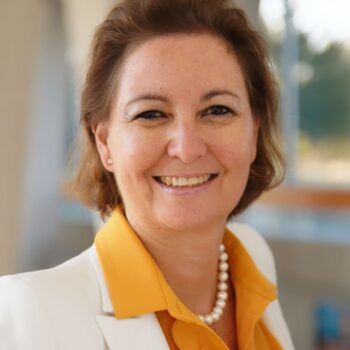
Laura Thompson is the Assistant Director-General for External and Corporate Relations in the International Labour Organization (ILO).
She has vast experience in diplomacy, external relations, multilateral international negotiations, high-level representation and the UN system. She has also extensive expertise and demonstrated capacity to manage complex intergovernmental organizations and change management processes and a proven ability to translate strategic vision and political mandates into managerial action.
During her career, Ms Thompson has served in key political and managerial positions including as the Deputy Director-General of the International Organization for Migration (IOM) for a total of twelve years, elected by the member States. Prior to that, she served in a number of diplomatic positions including as the Ambassador, Permanent Representative of Costa Rica to the United Nations and other International Organizations in Geneva.
In addition, she has worked with academia in the conception and creation of the Centre for Innovation in Global Politics and Economics (CIGPE) in the IE University School of Politics, Economics and Global Affairs as its Founding Director and as an adjunct professor.
Throughout her diplomatic career, Ms Thompson has successfully conducted delicate political negotiations at both the bilateral and multilateral levels and was elected President and/or Vice President of several Governing Bodies of International Organizations.
Ms Thompson has also authored academic articles, contributed to the media and participated as a guest professor, keynote speaker or panellist in international summits, conferences, and roundtables on a wide variety of subjects. Ms Thompson holds a Diplôme d’Etudes Supérieures (DES) of the Graduate Institute of International and Development Studies (IHEID) and a Law Degree from the Universidad de Costa Rica. She has also undertaken Executive Education courses at the Harvard John. F. Kennedy School of Government and at INSEAD.
Besides Spanish, her mother tongue, Ms Thompson is fluent in English, French, and Greek and has basic knowledge of Italian and Portuguese.

Philip is chief executive of the Raspberry Pi Foundation, an educational charity with a global mission to enable young people to realise their full potential through the power of computing and digital technologies.
Philip was previously a non-executive director of the Foundation’s commercial business, Raspberry Pi Ltd and part of the team that led the successful IPO of the business on the London Stock Exchange in June 2024.
Prior to joining Raspberry Pi, Philip was the Deputy Chief Executive of the UK’s innovation foundation, Nesta, where he built programmes and ventures to address social problems through innovation.
He was a non-executive director of the Behavioural Insights Team (the Nudge Unit) and a founding trustee of the Centre for London. He served as an adviser on social innovation to the UK government, and has advised municipal and national governments, charities, and social enterprises all over the world.
Earlier in his career, Philip was a chief officer at the London Borough of Camden and a senior civil servant in the Home Office.
Philip has a degree in law from the University of Liverpool and qualifications in management and finance. He was awarded a CBE for services to Engineering and Technology for Societal Impact in the King’s Birthday Honours in 2025.
Outside of work he is a dad, craft cider maker, and a slow cyclist. He is an active member of the local community, having served as a scout volunteer, a school governor, and trustee of a local arts organisation.

Serves as the co-chair of the African Union Science Technology Commission ASRIC/ASTR Council on 4IR. She is a visionary figure in the advancement of responsible AI, dedicated to harnessing technology for good and unlocking humanity’s potential. Recognised as a Top 10 Leader advancing AI globally. A true full-stack human Amb. Lavina combines her expertise in psychology, technology, and economics to bring a unique and insightful perspective to AI development.
Her dedication and achievements are evident in her numerous accolades including top 10 leaders shaping AI. A futurist who’s vision is to accelerate the world’s augmentation of data by creating a more intelligent tomorrow through the footprints of collective humane knowledge. She’s not just a leader; she’s an inspiration, earning the title #aiMOM for fostering responsible development for a better tomorrow.
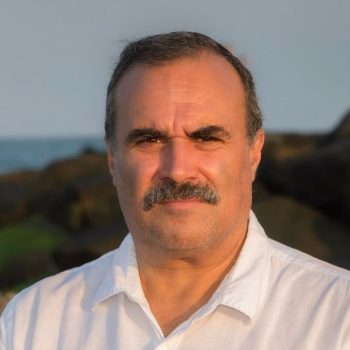
Leonard Rosenthol is the Senior Principal Architect for PDF & the Document Cloud at Adobe, having been involved with PDF technology for more than 20 years. He represents Adobe on various international standards bodies including the ISO (where he is the Project Editor for PDF/A, PDF/X and PDF/E), W3C and ETSI/ESI (where he authored the PDF Electronic Signature standard, PAdES).
Prior to re-joining Adobe in 2006, Leonard worked as the Director of Software Development for Appligent, and the Chief Innovation Officer for Apago, while also running the successful consulting business of PDF Sages. Before becoming involved in PDF, Leonard was the Director of Advanced Technology for Aladdin Systems and was responsible for the development of the StuffIt line of products.





























George Papandreou is former Prime Minister of Greece (2009-2011) and currently Member of Parliament with the Panhellenic Socialist Movement/Movement of Change. As an MP, he represents Hellenic Parliament in the Parliamentary Assembly of the Council of Europe, and has chaired over the years several Committees in producing recommendations for deepening democracy, human rights and the rule of law across its 47 member-states. He also currently serves as the General Rapporteur for Democracy of the Parliamentary Assembly of the Council of Europe.
First elected as MP in 1981, he served in many governmental posts. As Minister of Education (1994-1996), he founded the Greek Open University and promoted multicultural programs. As Minister of Foreign Affairs (1999-2004), he promoted peace building and European integration in the Eastern Mediterranean and the Balkans and managed a breakthrough in Greek-Turkish relations. In 2004, Papandreou was elected leader of PASOK in the party and country’s first open primary – symbolizing his commitment to participatory governance. Throughout his political career, he has actively sought to maximize citizen participation in governance through information technologies.
From 2006 to 2022, he was President of Socialist International, the largest global political family. Around the world, Papandreou has deployed ‘Green Diplomacy,’ calling for the protection of the environment by placing sustainable development at the epicenter of policy-making and multilateral cooperation.
During his premiership, he applied a series of structural reforms in his attempt to modernize his country whilst avoiding bankruptcy during Greece’s 2010 debt crisis. For his achievements related to government Transparency, he received the Quadriga Award in the category “Power of Veracity”. In 2010, he was named one of the Foreign Policy magazine’s TOP 100 Global Thinkers. In 2017, he was honored with the International Leadership Association (ILA) Distinguished Leadership Award.
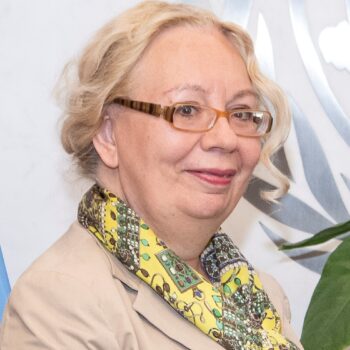
Tatiana Valovaya is the 13th Director-General of the United Nations Office at Geneva (UN Geneva) and the first woman to occupy the position.
Ms. Valovaya has more than 35 years of experience in public service, diplomacy, and journalism. She began her career in 1983 in the editorial office of the Economic Gazette in Moscow, first as a correspondent and later as deputy editor for the Department of World Economy.
In 1989, Ms. Valovaya joined the Permanent Mission of the Union of Soviet Socialist Republics to the European Union (EU) where she served as Third Secretary. She then became Second Secretary of the Permanent Mission of the Russian Federation to the EU, a position she held until 1994. During her diplomatic career, she oversaw issues relating to financial and economic cooperation.
From 1995 to 1997, Ms. Valovaya worked at the Presidential Administration of the Russian Federation, where she was responsible for relations with the statutory bodies of the Commonwealth of Independent States (CIS). She later served as Head of the Monetary and Financial Policy Directorate at the Ministry for the CIS.
From 1999 to 2012, Ms. Valovaya worked in the Government administration of the Russian Federation as Deputy Director and then Director of the Department of International Cooperation.
Ms. Valovaya joined the Eurasian Economic Commission in 2012 as a Member of the Board (Minister) responsible for integration and macro-economic issues. In this capacity, she led on the implementation of integration policies within the Eurasian Economic Commission. She also coordinated the formation processes of the Supreme Eurasian Economic Council, oversaw the negotiation of free trade agreements between the Eurasian Economic Community and third countries, and managed relations with international organizations.
In 1980, Ms. Valovaya graduated from the Faculty of International Economic Relations of the Moscow Finance Institute. She holds the scientific degree of Candidate of Economic Sciences (1st doctoral level scientific degree and the degree of Doctor of Economic Sciences from the Financial Academy under the Government of the Russian Federation).
Ms. Valovaya has written more than 170 scientific and journalistic publications on issues of international monetary and credit relations, European and Eurasian economic integration, and multilateral cooperation in the CIS.
In addition to her mother tongue, Russian, she speaks English and French.
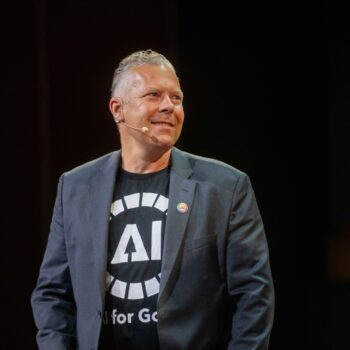
Based in Geneva, Switzerland, Frederic Werner is a recognized leader at the intersection of artificial intelligence, technology, and global development. As the Chief of Strategic Engagement at ITU, the United Nations’ specialized agency for Digital Technologies, and Chief of Strategy and Operations for AI for Good, Frederic drives initiatives that shape the future of AI’s role in solving humanity’s greatest challenges.
Frederic is a co-creator of the United Nations AI for Good Global Summit, a landmark platform connecting AI innovators with real-world problem owners to collectively advance the Sustainable Development Goals (SDGs). Under his stewardship, AI for Good has become a global hub for innovation, collaboration, and actionable solutions, redefining how AI is used for social good.
At ITU, Frederic leads transformative strategic initiatives, driving global collaboration in digital transformation and standards development to address critical challenges. His leadership ensures the organization remains a leader in setting international standards and leveraging AI to advance the SDGs.
Before joining ITU, Frederic held pivotal roles that shaped global ICT collaboration. As Communications & Program Director of ETIS in Brussels, he established a pan-European network of CIOs and cybersecurity leaders. Earlier, as Head of Marketing and Communications at the European Organization for Conformity Assessment, he spearheaded capacity-building projects with the European Commission, strengthening ICT infrastructures in EU candidate countries.
A recognized figure in the AI sphere, Frederic is a regular keynote speaker and panellist at global tech and AI events, such as Davos, Vivatech, SXSW, World AI Festival Cannes, AI Africa Expo, World AI Summit Amsterdam, AWS Reinvent and GITEX to name a few. His insights on AI capacity building, governance and standards have led to numerous interviews and features across international media, books, and podcasts.
Academically, Frederic holds a B.A. in Business & Human Resources Management with a Communications Minor from Vrije Universiteit Brussel, an MBA in International Business from United Business Institutes, a Technical MBA in Telecoms Technology from Informa Telecoms, and a certificate from the MIT Sloan School of Management on AI’s Business Strategy Implications.
Having lived in diverse countries such as Belgium, Senegal, the United Kingdom, the Philippines, Austria, Turkey, Hungary, and Switzerland, Frederic brings a unique and global perspective to his partnerships and collaborations.
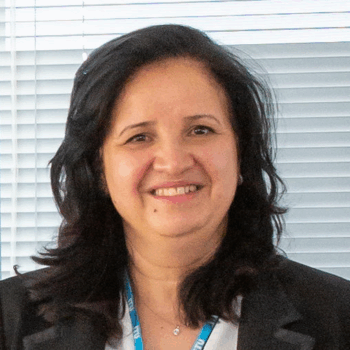
Dr. Rim Belhassine Cherif is a general engineer. She is currently the Chief Innovation and Strategy Officer and responsible of the digital transformation department at the incumbent telecom operator in Tunisia “Tunisie Telecom”.
Dr. Belhassine Cherif has participated in several ITU conferences, seminars and workshops and she holds many positions at ITU-T such as the positions of chairperson of the Network of Women in ITU-T and chairperson of ITU-T Study Group 13 Regional Group for Africa. She is also Vocabulary Rapporteur for the ITU Standardization Committee for Vocabulary and co-convener of the ITU-T Correspondance Group on Study Group 13 future direction. She has been a vice-chairperson of the ITU Telecommunication Standardization Advisory Group and Co-Rapporteur on Standardization Strategy from 2017 to 2022. Moreover, she has been vice-chairperson of ITU-T Study Group 13 from 2013 to 2024, vice-chairperson of WP3/13 from 2018 to 2024 and also vice-chairperson of the ITU-T Focus Group on Bridging the Gap: from Innovation to Standards between 2013 and 2015.
Dr. Belhassine Cherif graduated from the Higher School of Posts and Telecommunications of Tunis. She obtained her Master degree then her Ph.D. degree from the National Engineering School of Tunis and obtained an Executive MBA from Paris-Dauphine University and Paris 1 Panthéon-Sorbonne University (promotion major).
In the academic field, she performed several research activities in the domain of telecommunications and electrical engineering, and she is the author of many papers published in international and national conferences and scientific journals
Photo Rim Belhassine Cherif.png

A research and scientific leader in Artificial Intelligence, Alessandra is the Sr. Director of AI and Data Science at Shutterstock. Alessandra has over 18 years’ experience in research and innovation gained whilst working in academic and commercial environments. Alessandra is passionate in advanced analytics, machine learning, and computational models with the focus of transferring innovation from research to products.
As Co-chair of the UNESCO Women for Ethical AI Platform and Global President of Women in AI (a non-profit do-tank working towards gender-inclusive AI that benefits global society) Alessandra is working with a strong community of women to foster diversity , inclusion and equality for women and minorities while encouraging a global ethical approach in AI. In an advisory capacity, Alessandra also serves as the Governance Committee Chair at the Science Foundation Ireland Center for Research Training in Machine Learning.
Among several awards, Alessandra won the 2024 Grace Hopper and the 2021 XV International Prize “Le Tecno-visionarie” in the AI - Industrial Research category. In her previous role Alessandra was Head of Analytics Research at Nokia Bell Labs where she was leading research teams in several locations while driving changes across different activities like her contributions to the Nokia AI Ethics Advisory Board.

World-renowned musician and BBC TV broadcaster LJ Rich presents on the international technology show, BBC Click. In the last year she’s delivered lines at 75mph from the UK’s tallest thrill ride, performed to a drone in the sea off the Welsh Coast – and learned to rap on camera thanks to a mind-reading AI headset.
LJ’s many innovative projects coupled with a wide knowledge of tech trends bring a unique spark to her professional speaking engagements. A highly accomplished pianist, she uses music to connect the emotional and rational minds of audiences, unlocking creative thinking and solving real-world problems. She believes AI/Machine Learning can be a companion to creativity and regularly uses it to enhance her original works. LJ also loves eating and singing, trains and planes, and solving difficult puzzles.

Amir Banifatemi is the Chief Responsible AI Officer at Cognizant, where he leads the company’s global efforts to embed safety, transparency, and accountability into AI systems and services. He oversees the design and implementation of Cognizant’s Responsible AI framework, ensuring alignment with international standards such as ISO/IEC 42001, NIST AI RMF, and other emerging governance models across sectors and jurisdictions.
A prominent voice in international AI policy and governance, Amir contributes to key initiatives at the OECD, GPAI, IEEE, and the ITU, where he focuses on operationalizing responsible AI and advancing cross-sector standards for AI safety and accountability. He co-leads working groups on AI Futures, AI-Enabled Investments, and Trustworthy AI Ecosystems.
Previously, Amir served as Chief Innovation and Growth Officer at XPRIZE, where he launched and directed global competitions addressing grand challenges in AI, climate, and health. He co-founded the AI for Good movement and helped establish the AI for Good Global Summit in partnership with the ITU, aligning AI innovation with the UN Sustainable Development Goals.
With more than 25 years of experience at the intersection of innovation, deep technology, and investment, Amir has helped shape and scale breakthrough initiatives across sectors—from public institutions like the European Space Agency and European Commission to venture-backed technology startups. He brings a systems-level approach to advancing emerging technologies such as AI, quantum computing, and predictive systems, with a consistent focus on real-world impact, interdisciplinary collaboration, and sustainable value creation.
He holds degrees in Electrical Engineering, an MBA, and a Doctorate in System Design and Cognitive Sciences.

Lori Rodney is the Global Head of Communications at Shutterstock. As a socially conscious storyteller, she leads the company’s worldwide external communications efforts with a current focus on empowering the world to tell their stories by bridging the gap between idea and execution. Prior to joining Shutterstock, Lori was the Global Head of Communications at Change.org, the world’s largest tech platform for social change, where she led the organization through critical world-shaping events, including the launch of its global Racial Justice Fund, crisis management related to the Russia/Ukraine conflict, and the overturning of Roe vs. Wade in the United States, among other initiatives.
Lori’s broad range of experience includes brand strategy, government affairs, crisis communications, philanthropic initiatives, technology communications, data communications and regulatory milestones, multicultural and diversity programming, youth-driven and education-based initiatives, and social impact work. Beyond her direct work, she has become a trusted mentor to many of the next generation of communications leaders currently working across creative, pharmaceutical and non-profit advocacy organizations with a commitment to fostering value-based communications models for the future. Lori is a member of ColorComm, the premier business organization for women of color in the communications industry and CHIEF, a private, members-only network for the most powerful women in leadership. Lori has also been featured in PRWeek’s Power 50 List, the definitive guide to the 50 most influential communicators.
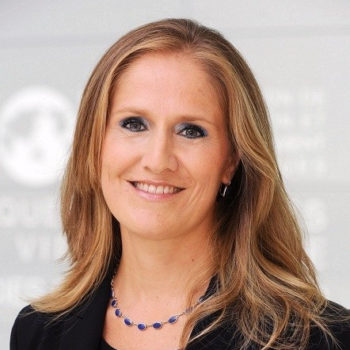
Mariagrazia Squicciarini is Chief of Executive Office and Director a.i. at the Social and Human Sciences Sector (SHS) of the United Nations Educational, Scientific and Cultural Organization (UNESCO).
At UNESCO, Mariagrazia supervises, coordinates, steers and helps advance policy-relevant work related to the social transformation, including the ethics of science and technology – in particular, of Artificial Intelligence; the youth; sport and antidoping; inclusion, antiracism and gender.
In the past, she has led and contributed policy relevant analysis related to the changing determinants of growth and productivity; the economics of Intellectual Property Rights (IPR); knowledge-based capital; global value chains; the digital transformation and AI; job and skill dynamics; and the digital gender divide.
Mariagrazia holds a Ph.D. in Economics from the University of Essex (UK). Before joining UNESCO, Mariagrazia worked for more than ten years at the OECD Directorate for Science Technology and Innovation as Senior Economist – Head of Unit. Prior to joining the OECD, she had a number of appointments, including at VTT Technical Research Centre of Finland (FI), the University of Essex (UK) and the European Commission-Joint Research Centre (IPTS, ES).
She has published extensively and has been acting as a reviewer for international peer-review journals and governments.