
 Register here

The pilot trap
The AI investment cycle has hit a paradox. Many organizations have allocated budgets, leaders report high confidence, and many large institutions are piloting AI initiatives. On paper, the AI transformation is well underway. Real-world outcomes tell a different story: service quality, safety, and public trust have not improved at the pace many expected. The standard explanation points to technological issues: wrong data, wrong architecture, wrong use cases. The research in our recent publication “The AI-empowered organization” suggests the problem is somewhere else entirely.
The deeper issue is structural. Organizations are deploying AI into operating models designed for a world in which humans were the only ones doing the work. These operating models were never designed to incorporate systems that not only assist but also act by coordinating tools and data on behalf of the people who activate them. You cannot simply add that kind of capability to an unchanged organization and expect it to improve outcomes, strengthen accountability, or build public trust. The way work flows has to change, and in our experience, this change never starts with the architecture. It starts with the people.
This is what has shaped our thinking at Eraneos. We are convinced that AI creates real value only when it is built around the people who use it, rather than simply handed to them once it is finished. The measure of a successful AI program is not the sophistication of the model or the scale of the rollout. It is whether the people working alongside those systems are genuinely better placed to do their jobs and serve those who depend on them.
That is what we mean by human-centric value creation, with technology at the core. And it is why AI for Good felt like the right community to be part of. The questions being asked here about “who does AI serve?” and “on whose terms?” are the same ones we return to in every engagement.
People centered transformation
A large European insurance IT services provider built a technically sound internal AI platform and found that the senior developers it was designed for simply weren’t using it. The platform had been built for them, not with them. When the program shifted, routing practitioner feedback directly into platform priorities, building a network of AI Ambassadors across business units, and moving teams from static prompts to multi-agent workflows they had co-designed, the platform grew from a struggling pilot to over a thousand active users in six months.1 The technology was largely the same. What had changed was whether people felt any ownership over it.
The numbers from our Eraneos People & AI Study, which will be published in the coming weeks, tell the same story. Where organizations build AI capability through occasional training programs, fewer than one in five employees report genuine confidence in the AI systems they are being asked to use. In organizations where AI is woven into everyday work, with role-specific examples and dedicated time set aside for hands-on experimentation, that figure rises to more than half.2 With the same technology. Completely different outcomes. Standalone training, still the centerpiece of most enablement programs, turns out to be one of the weakest interventions we have measured. Participation is what actually builds trust: people working with AI on real problems in their own context, with room to shape how it works for them.
The stakes are particularly high in the public sector. When AI enters systems through which governments deliver services and make decisions, trust becomes a question of democratic legitimacy. Civil servants who cannot explain how an AI system reached a conclusion will not use it for important decisions, regardless of what the compliance documentation says. This is professional judgment, not obstruction, and it is exactly the right approach. Mandating usage does not close the confidence gap; building explainability, accountability, and genuine shared ownership does. We hope to advance that discussion at the AI for Good Global Summit, and to learn from others working on the same problem across public administration, international development, and sectors where the cost of getting AI wrong falls hardest on those with the least power to push back.
From pilots to impact: AI transformation for organizations
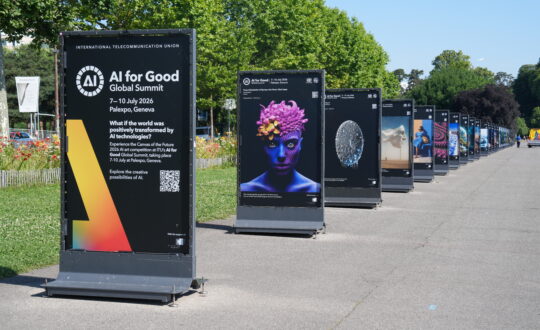
On 9 July, from 10:00 to 12:00, we are hosting a workshop at the AI for Good Global Summit. From AI pilots to AI-empowered organizations: Putting people at the center of transformation. The session is built around a question most AI programs defer for too long: not whether AI works, but whether the organization is ready to absorb it. Drawing on examples from Swiss public sector institutions, we will work through four dimensions that determine whether AI scales beyond isolated experiments: organizational readiness, people empowerment, organizational anchoring, and process redesign. We will also look at what changes when AI evolves from assistants into autonomous agents, and what organizations can do now to get ahead of that shift.
The organizations building lasting value from AI are not necessarily the fast-movers or the heaviest spenders. They are the ones willing to do the harder work: giving employees a real hand in shaping the systems they use. At a broader level, that is also what responsible AI looks like in practice: not something deployed to institutions and the people in them, but something those institutions and people have genuinely helped direct. We are in Geneva because that conversation matters, and because the people in this room are the ones who can move it forward.
About Eraneos
Eraneos combines deep AI technology expertise with proven operational transformation methods in one integrated approach. We do not stop at strategy or tooling. We redesign workflows, define governance and guardrails, and ensure AI is embedded into daily operations where value is created.
As a European challenger, we bring a people-first and responsible AI perspective. That means not only accelerating performance today, but building the capabilities, culture, and leadership needed to sustain it. Because real transformation does not happen when AI is introduced. It happens when organizations change how they work.
Website: www.eraneos.com | LinkedIn: linkedin.com/company/eraneos