
 Register here
In agriculture, what is not measured tends not to be managed. Yet the resource that underwrites the world’s food supply, freshwater, has long flowed through fields and factories largely unrecorded. As pressure builds on already water-stressed regions, the gap between use and accountability is widening at a time it most needs to close.
Nimbora, an India-based startup, is trying to fix that precise gap. The company’s mission is described simply: “Nimbora is building the intelligence layer for water–helping farmers, industries, and governments measure, optimize, and verify water use in real time.”
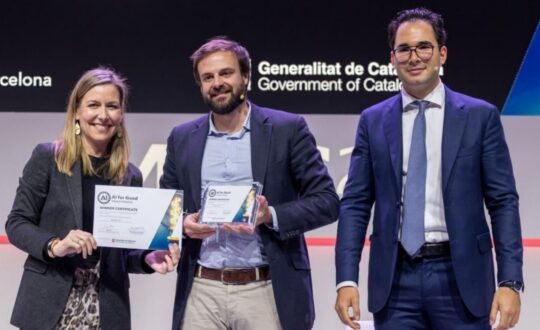
On 14 April 2026, Nimbora was named the winner of “Water intelligence for climate-resilient communities,” a session of the AI for Good Innovation Factory hosted by ITU in collaboration with the World Food Forum. The Innovation Factory is AI for Good’s global pitching competition, which names and accelerates AI-driven startups that tackle the world’s most pressing development challenges. Winners of each thematic session advance to the Innovation Factory Grand Finale Pre-Final Round, with the standout startup ultimately progressing to the Grand Finale at the AI for Good Global Summit 2026 in Geneva. This puts Nimbora’s work on water at the centre of one of the year’s most consequential AI-for-good conversations.
It is hard to overstate the stakes. Agriculture consumes roughly 70–80% of global freshwater, yet most irrigation remains unmeasured and inefficient. At the same time, high-demand sectors such as data centres, thermal power and semiconductor manufacturing are increasingly being located in already water-stressed regions, competing directly with farmers for the same supply. Rising food demand, particularly in the Global South, is pulling these pressures into what the company calls a systemic crisis threatening food security, farmer livelihoods, and economic stability.
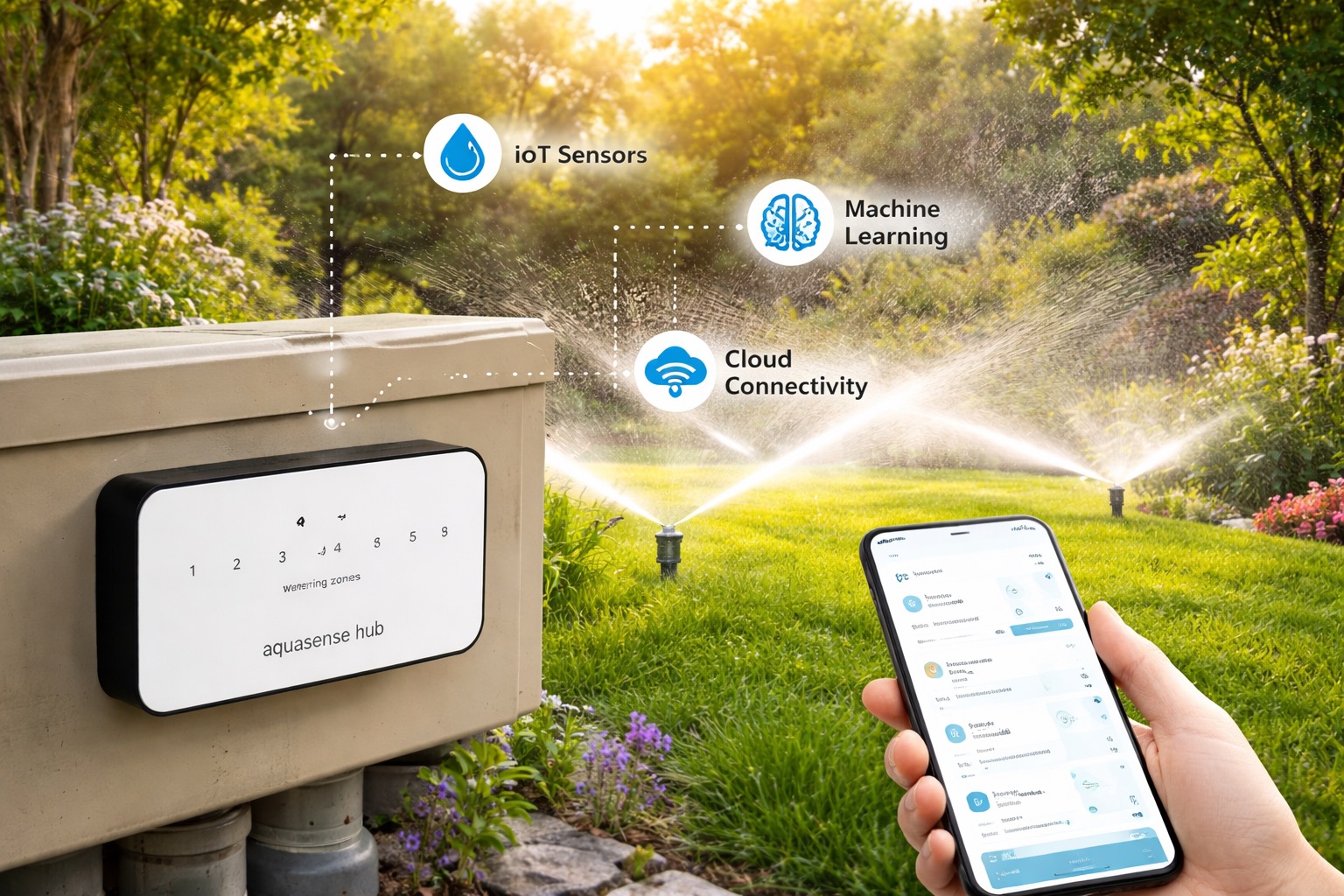
As a response, Nimbora combines IoT sensors, satellite data and AI models that allow precise, context-aware irrigation decisions, ensuring water is applied only when and where it is needed. The platform is designed to operate even in low-connectivity environments through edge AI and modular hardware, an important consideration in the rural geographies where the technology is most needed. Pilots are now underway in water-stressed regions such as Maharashtra, India.
Apart from the measurement layer, the financial aspect is what sets the model apart. Nimbora positions itself as a financial enabler, connecting water use to sustainability markets and climate finance mechanisms. Using globally recognised frameworks such as Volumetric Water Benefit Accounting (VWBA), the platform quantifies water savings and translates them into measurable, tradable incentives. Those credits can then be structured within localised, sub-basin level marketplaces, ensuring savings are valued within the same hydrological system where the impact is created while also aligning the interests of stakeholders sharing the same resource.

(source: nimbora.tech)
The intent is to give water something it has historically lacked: a price indicator that aligns with the place it is consumed. As the company observes, water “lacks strong economic signals. Unlike carbon, there are no widely adopted, standardized markets that reward water efficiency at scale.” Building such a market is a structural project, not only a technological one.
That structural ambition is where the broader global stakes of the work come into play. Nimbora addresses “the growing mismatch between water availability and demand across agriculture, industry, and urban systems.” By shifting irrigation from schedule-based to need-based decisions, the platform aims to reduce water waste, lower energy consumption and improve crop productivity for smallholder farmers, outcomes that additionally strengthen the stability of global food supply chains. Verifying those outcomes through frameworks like VWBA links them to sustainability markets and climate finance, creating, in Nimbora’s framing, a model “where conservation is not only encouraged, but economically rewarded.”
Building such a model in the Global South is not without challenge. The biggest hurdle, Nimbora describes, “is not the technology itself, but aligning multiple systems (data, behavior, and incentives) across a highly fragmented and resource-constrained ecosystem.” Reliable ground-level data is often limited, connectivity is constricted, and agricultural decision-making tends to be rooted in habit rather than data. These conditions necessitate a usability design accessible to non-technical users, including smallholder farmers, while ensuring the underlying models remain resilient to data gaps and locally relevant.
Nimbora’s response has been multifaceted: edge-based intelligence combined with satellite data, fallback mechanisms embedded in its AI models, and pilot deployments used to validate real-world usability before scaling. In parallel, the team is working to align with emerging frameworks such as VWBA to ensure credibility and interoperability across stakeholders.
While headquartered in India, with initial deployments concentrated in regions such as Maharashtra and Haryana, Nimbora is meant to scale across similar contexts in Africa, Southeast Asia and other parts of the Global South, geographies where water stress, agricultural dependence and climate vulnerability intersect. The company also maintains a presence in the United States, anchoring it in global climate finance ecosystems, technology partnerships and investor networks–channels through which international capital and expertise can be directed toward water impact in the regions where there is high stress.
Nimbora’s recognition as winner of “Water intelligence for climate-resilient communities,” an AI for Good Innovation Factory session hosted by ITU in collaboration with the World Food Forum, reflects a wider interest in solutions that sit at the nexus of climate, agriculture and infrastructure. As denoted by Nimbora, water “sits at the intersection of agriculture, energy, industry, and livelihoods, yet remains largely unmeasured and undervalued.” Building the systems to change that requires not only technological innovation but alignment with global frameworks, institutions and financing mechanisms, precisely the kind of cross-sector convergence the AI for Good platform enables.
Nimbora will present at the AI for Good Global Summit 2026 from 7 to 10 July in Geneva. Across four days, the company will host live demos and partnership conversations at its booth, where attendees can meet the team, see Water-OS in action, and explore how Nimbora is digitizing global water conservation.
At the moment, Nimbora represents a particular vision of AI where intelligence is deployed not only to optimise, but to make accountability and incentives possible at scale.
As the Nimbora’s founder Kavita Kalyankar puts it: “AI can turn invisible resource crises into measurable action–empowering communities to protect what matters most: water, food, and the future.”