
 Register here
In education, as in medicine, timing is everything. Yet millions of children begin school already at a disadvantage, not because of a lack of ability, but because warning signs were missed when intervention would have been simplest. As Masaki Ishibashi, co-founder of TOY EIGHT Holdings Inc., puts it: “Every child deserves to start school ready to learn.” The difficulty is that too many do not.
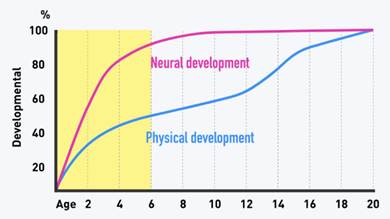
The stakes are highest in the earliest years. As TOY EIGHTHoldings states: “The ages from 0 to 6 are often referred to as the “Golden Age,” a critical period when 90% of brain development and 40% of physical growth occur. Even if there are developmental delays, regular screenings enable early detection, allowing for timely intervention. Early treatment during this crucial period greatly improves outcomes, aligning with the child’s growth up to age six and providing lifelong benefits.”
Globally, early developmental challenges are often detected only after they have already shaped learning trajectories. According to a ScienceDirect Article, approximately 53 million children under the age of 5 have developmental disabilities worldwide. The vast majority remain unidentified, particularly in regions where access to specialists is limited. In such contexts, the conventional model, teachers observe, clinicians diagnose, and interventions follow, proves both slow and fragmented.
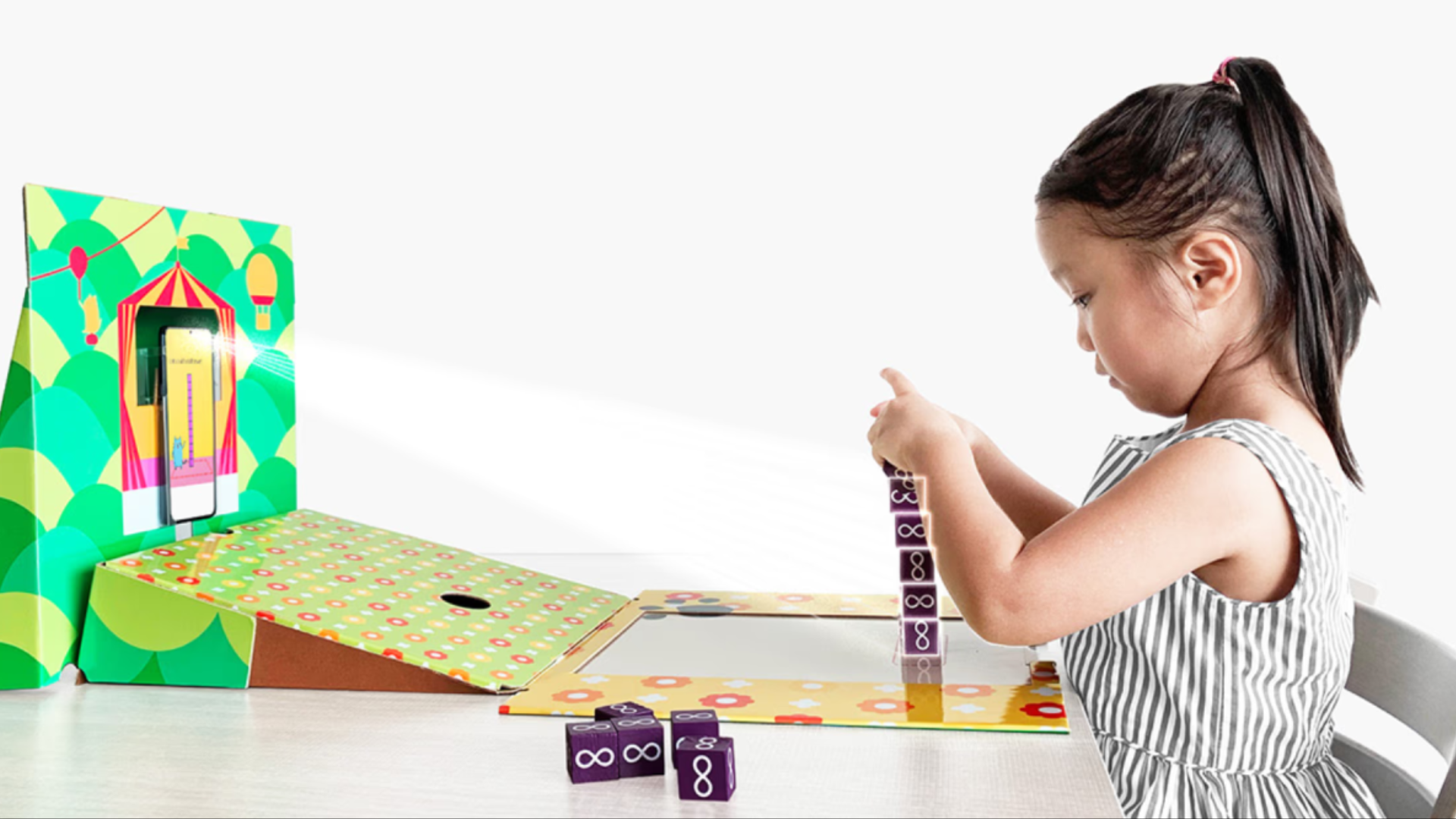
“TOY8 was built to change that” claims the Ishibashi. Founded in Japan in 2020, the company attempts to invert this sequence by embedding screening directly into the classroom. Rather than relying on external diagnosis, it equips teachers with tools to identify early signs of developmental delay through structured, play-based activities. These assessments span five domains, including motor skills, speech and language, cognition and social behaviour. The process is designed to be accessible: teachers require no specialist training, only guided observation.
What distinguishes the model is not only detection but response. Once screening is complete, the platform generates tailored support strategies. “TOY8 does not stop at detection. Once screening results are generated, our platform equips teachers with AI-generated intervention plans, giving them the practical guidance they need to support each child’s unique developmental journey.” The intention is not to displace expertise but to distribute it.
As Ishibashi notes, “TOY8 does not replace teachers. It gives them a superpower.”
The company’s origins lie in Japan’s own early childhood health system, inspired by the country’s structured developmental health checkup model, a system that has long enabled early identification of developmental concerns. Yet such systems are not widely replicated in Southeast Asia, where resource constraints and uneven access to specialists leave many children unassessed. Recognising this gap, the firm positioned its operational base in Malaysia, expanding into Indonesia through licensing partnerships and conducting pilot programmes in Singapore.
This regional focus has yielded a growing body of data. To date, TOY8 has collected more than 15,000 screening data points, forming one of the more substantial early childhood developmental datasets in Southeast Asia. This data serves not only operational purposes but also addresses a persistent challenge in educational technology: bias. “Screening tools built on assumptions, rather than evidence, risk excluding the very children they are meant to serve” notes Ishibashi. By grounding its models in diverse, real-world data, the company aims to ensure that outcomes are not skewed by geography, gender or socioeconomic context.
Still, the promise of such systems rests as much on institutional alignment as on technical capability. For Ishibashi, “building TOY8 means operating at the intersection of education, healthcare, and government policy.” Each deployment requires coordination across ministries, alignment with regulatory frameworks and sensitivity to local contexts. The company has deliberately chosen a path that compounds this complexity. A consumer-facing model targeting families would likely be easier to scale and monetise. Yet TOY8 has resisted that approach. “We believe early screening and intervention are infrastructure for all children, not a privilege for some” claims Ishibashi. By embedding its solution within schools and public systems, it prioritises inclusivity, though at the cost of speed.
This decision introduces practical challenges. Data privacy regulations vary widely across jurisdictions, requiring context-specific safeguards. Digital readiness differs, particularly in rural areas where connectivity and device literacy may be limited. Training teachers to use the platform effectively requires local adaptation, and scaling depends heavily on identifying institutional champions capable of driving adoption.
At the same time, these constraints may form the company’s competitive advantage. Barriers that slow expansion can, once overcome, create defensible positions. In Malaysia’s Sarawak state, where the company has worked in partnership with government actors, TOY8 has begun to demonstrate how integrated data can create a shared framework across schools, healthcare providers and policymakers. Indeed, for Ishibashi, “real-world screening data creates a common language across schools, healthcare providers, and governments.”
In Japan, Ishibashi argues that the challenge lies less in access than in fragmentation. Diagnosis, therapy and educational support are distributed across separate systems with limited coordination. In 2026, the company plans to launch a pilot intervention programme aimed at bridging these gaps through a more integrated, data-driven approach. If successful, it could offer a model not only for emerging markets but also for developed economies grappling with systemic inefficiencies.
The company’s methodology has been validated through peer-reviewed research conducted in partnership with Malaysia’s Ministry of Health. It has co-produced research with regional economic institutions and has been included in government-backed AI case studies. Its selection for international platforms, including the AI for Good Innovation Factory, reflects a growing interest in solutions that combine technological capability with policy relevance.
Yet the central question remains one of scale. Expanding across borders requires more than software, it also requires trust, evidence and political will. “The Malaysian success model is our template, built in Southeast Asia, designed for the world.” Whether that template can be replicated widely will depend on the company’s ability to navigate the institutional landscapes that define education systems.
For now, TOY8 represents a particular vision of AI. Its ambition is to ensure that fewer children are left behind before their education has even begun. As Mr Ishibashi puts it, “Empower every teacher, and you unlock every child’s potential. No matter where they are born.”
Selected as a finalist in the AI education and skills track of the AI for Good Innovation Factory, TOY EIGHT Holdings Inc. will present at the AI for Good Global Summit 2026 from 7 to 10 July in Geneva. The company will take part in the final pitching round, where one startup will be selected as the 2026 Innovation Factory winner.
Join the AI for Good Global Summit and watch the pre-finale pitching competitions. Buy your ticket today