
 Register here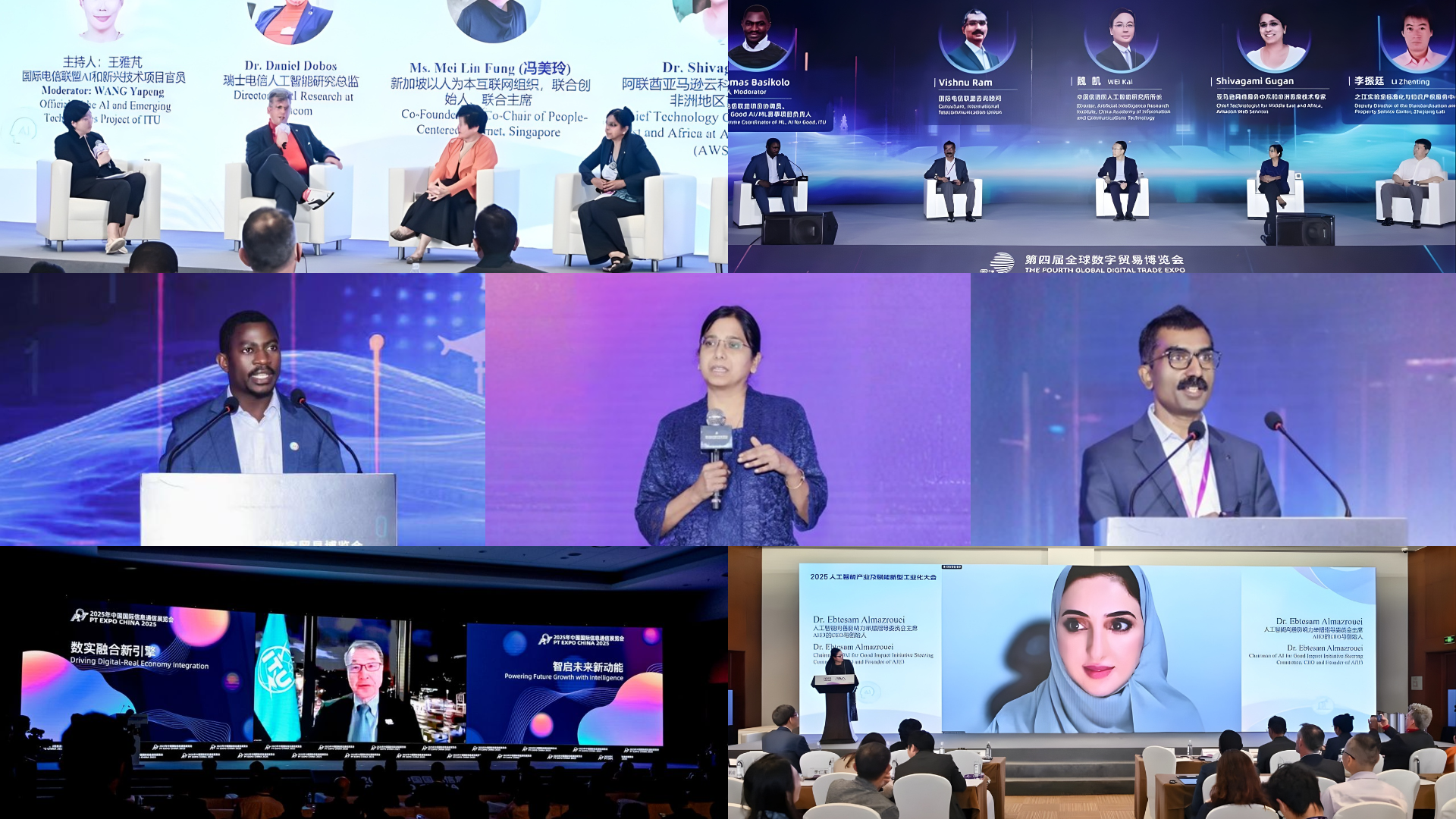
As AI continues to shape the future of technology and society, AI for Good remains at the center of global efforts to ensure that innovation serves humanity responsibly. In late September 2025, two major international conferences in China showcased this shared vision: the AI Industry and Empowering New Industrialization Conference – International Cooperation Forum in Beijing, and the Innovate for Impact: International Conference on Artificial Intelligence and Space Computing in Hangzhou.
Both gatherings reflected a growing international consensus that collaboration, standardization, and responsible development are key to unlocking AI’s full potential. Bringing together experts from the International Telecommunication Union, government, and industry, the events demonstrated how AI for Good initiatives are translating vision into tangible progress, from industrial transformation to applications in health, education, and sustainability.
Global collaboration for responsible AI
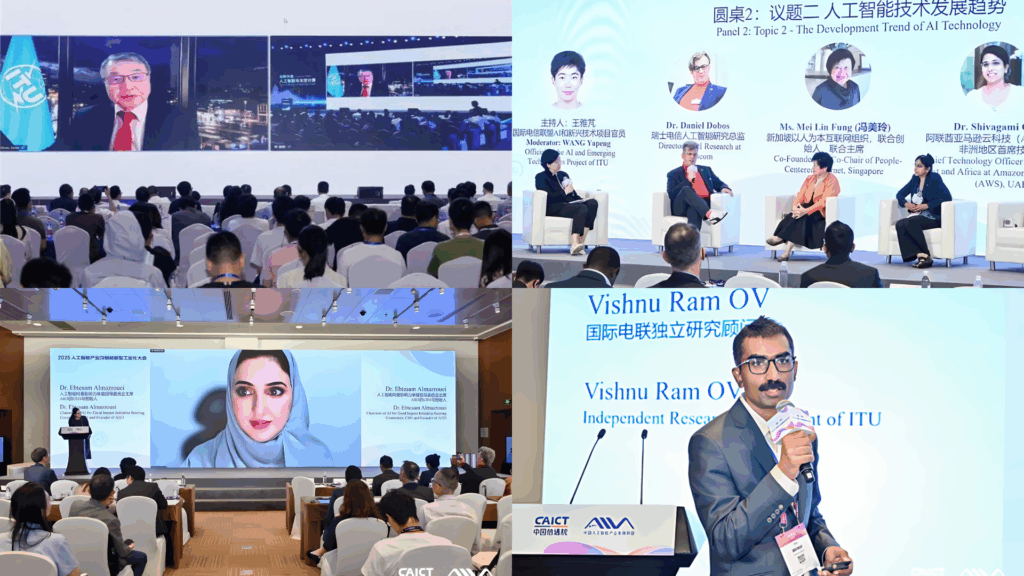
The 2025 AI Industry and Empowering New Industrialization Conference – International Cooperation Forum took place on 24 September at the China National Convention Center in Beijing, during the PT EXPO. The forum brought together leading global experts, industry pioneers, and policymakers to explore how AI innovation and governance can drive sustainable and inclusive development worldwide.
Dr. Ebtesam Almazrouei, Chair of the AI for Good Impact Initiative and CEO and Founder of AIE3, delivered a video message officially announcing the establishment of the Impact Initiative Steering Committee. She emphasized that the AI for Good movement infuses technology with a sense of humanity and responsibility, inspiring confidence and anticipation for the future of global AI collaboration.
Vishnu Ram OV, Independent Research Consultant at ITU, presented key projects developed under the Impact Initiative framework. These projects, he noted, are transforming the vision of AI for Good into tangible actions, providing powerful tools to advance the global AI ecosystem.
A roundtable moderated by Yapeng Wang, AI and Emerging Technologies Officer at ITU, featured a diverse panel of experts: Dr. Daniel Dobos, Director of AI Research at Swisscom; Adanna Chukwuma, Senior Director at Visa; Dr. Shivagami Gugan, Chief Technology Officer for the Middle East and Africa at Amazon Web Services (AWS); and Mei Lin Fung, Co-Founder and Co-Chair of the People-Centered Internet (Singapore).
The discussion explored the strategic direction of the newly formed Steering Committee and broader trends in AI technology development. Panelists exchanged views on initiative planning, innovation, and global cooperation, highlighting the importance of ensuring that emerging technologies align with environmental and social goals.
Against the backdrop of global carbon neutrality efforts, speakers also discussed how AI can empower organizations to integrate Environmental, Social, and Governance (ESG) principles into their business models, strengthening accountability and advancing sustainability through innovation.
Innovating for impact through AI and space computing
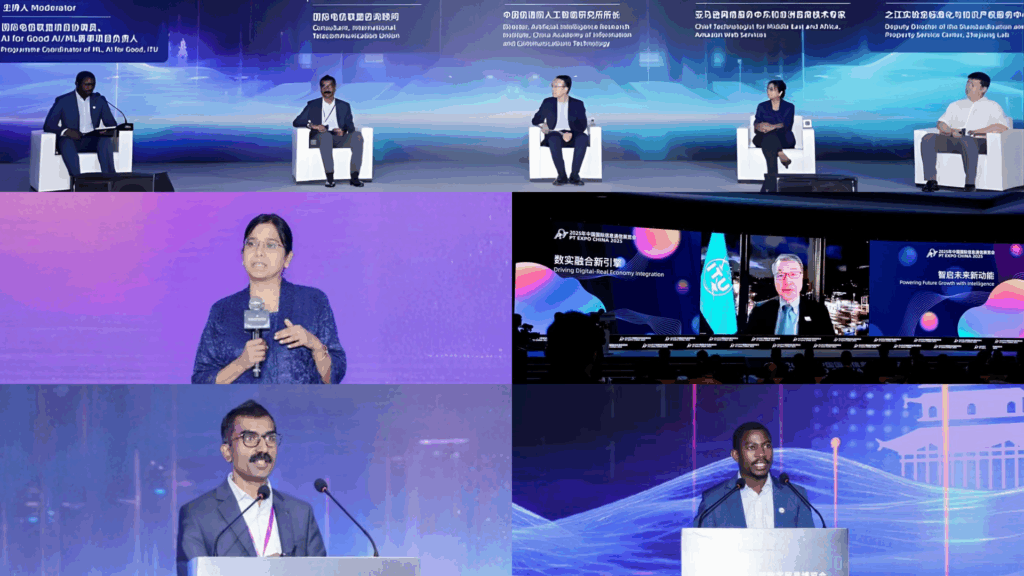
On 26 September in Hangzhou, the Digital Trade Expo hosted the Innovate for Impact: International Conference on Artificial Intelligence and Space Computing, jointly organized by the Hangzhou Municipal People’s Government and Zhejiang Lab. The event formed part of ITU’s Innovate for Impact global series, highlighting how AI and space computing can drive sustainable human and social development.
Ke Jixin, Vice Governor of Zhejiang Province, opened the conference, welcoming participants from across sectors and emphasizing the importance of collaboration in advancing the next wave of AI and space computing technologies.
In his virtual remarks, Seizo Onoe, Director of the Telecommunication Standardization Bureau at ITU, highlighted that Innovate for Impact has already produced case studies showing how AI can empower progress in fields such as health, education, agriculture, and energy. He also reaffirmed ITU’s commitment to supporting competitions and events, advancing standardization efforts, and strengthening global partnerships to ensure that AI continues to serve humanity.
Then, during a keynote session, Vishnu Ram OV shared three case studies illustrating the practical applications of AI for Good: agricultural development in Africa, mangrove forest conservation, and accessibility enhancement for persons with disabilities. Each example reflected the initiative’s core mission of turning innovation into measurable social and environmental benefits.
Building on these insights, Dr. Shivagami Gugan underscored that AI must remain human-centered and focused on improving people’s lives. She called for enhanced data capabilities to maximize AI’s impact and emphasized the need for responsible governance to unlock AI’s full potential for good.
The discussions continued in a roundtable session featuring Vishnu Ram, Dr. Shivagami Gugan, Dr. Wei Kai, Director of the AI Research Institute at CAICT, and Li Zhenting, Deputy Director of the Standardization and Intellectual Property Service Center at Zhejiang Lab. The discussion, moderated by Dr. Thomas Basikolo, Programme Coordinator at ITU, and themed “Technological Innovation and Standardization in Space Computing,” explored the challenges, solutions, and opportunities in integrating AI with space technologies.
During the conference, the ITU Xingzhi Cup AI and Machine Learning Challenge (China Region) – AI and Space Computing Thematic Competition was officially launched. Co-hosted by ITU, CAICT, and Zhejiang Lab, the competition invites participants to explore three central themes: Space Intelligence Empowering Zero Hunger, Space Intelligence for Clean Water and Sanitation, and Space Intelligence Supporting Sustainable Cities and Communities. Registration will open on 26 October 2025.
Advancing a shared vision for global AI collaboration
Together, the Beijing and Hangzhou conferences highlighted the growing momentum of AI for Good across sectors and regions. From industrial empowerment to space computing, both events underscored the importance of international cooperation, ethical innovation, and collective action in shaping the future of AI.
As AI continues to evolve, initiatives like these ensure that its benefits are shared broadly and responsibly. Through collaborative dialogue, research, and innovation, AI for Good continues to bridge the gap between technological progress and human impact, helping the world harness intelligence not just for advancement, but for the common good.