Become an AI for Good Scholar

As an AI for Good Scholar, you have an opportunity to work closely with ITU to develop and analyse use cases for AI and shepherd them towards featuring them at the AI for Good Global Summit in Geneva


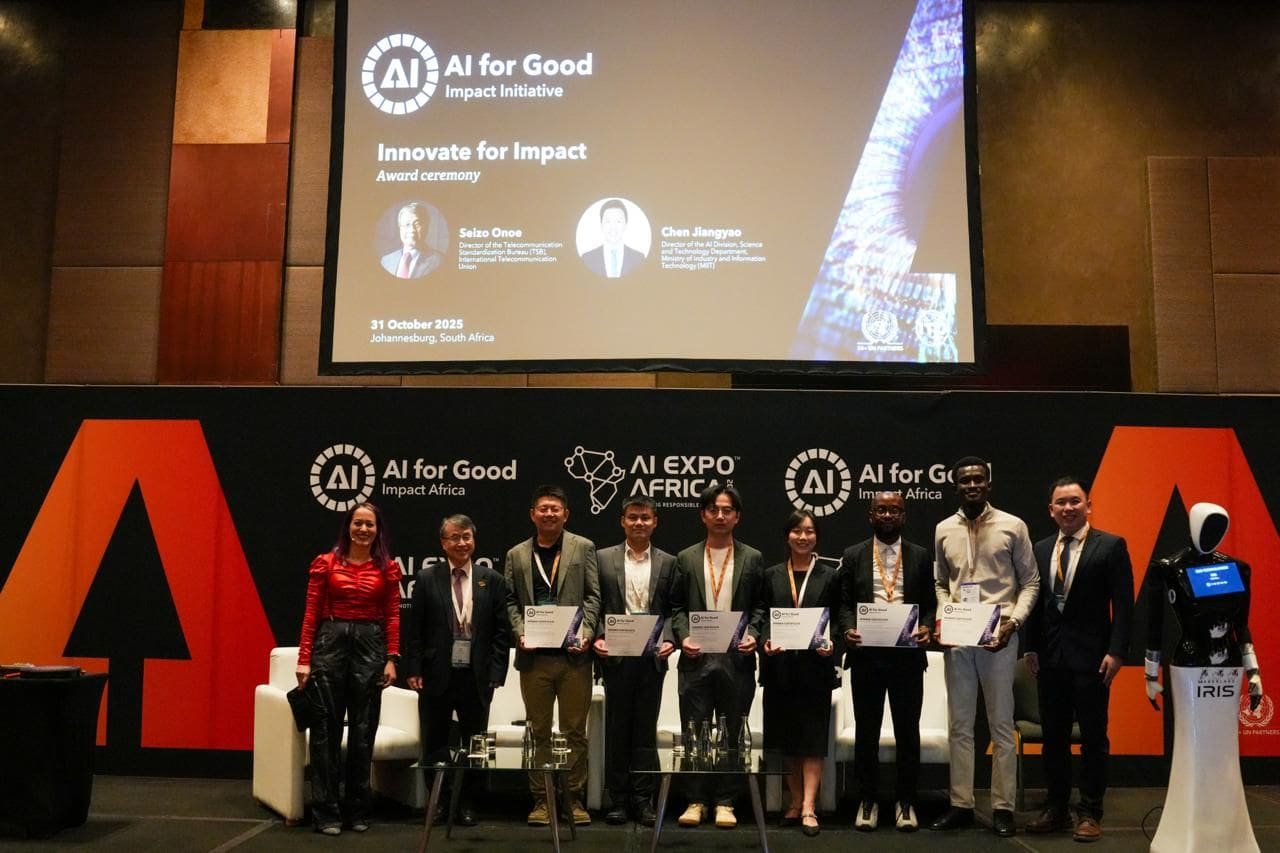
The role of Scholars in the overall Innovate for Impact Initiative in 2025 is mentioned in the key outcomes. We renewed the call for the AI for Good Scholars Program, aimed at nurturing talent committed to leveraging AI to address global challenges.
Scholars from developing countries would also receive funding to attend the AI for Good Summit in Geneva.

Visit our AI for Good Prizes portal to learn more about how we acknowledge and incentivize the AI for Good Scholars.

Deadline 28 February 2026

The role of Scholars in the overall Innovate for Impact Initiative in 2025 is mentioned in the key outcomes. We renewed the call for the AI for Good Scholars Program, aimed at nurturing talent committed to leveraging AI to address global challenges.
Scholars from developing countries would also receive funding to attend the AI for Good Summit in Geneva.

Visit our AI for Good Prizes portal to learn more about how we acknowledge and incentivize the AI for Good Scholars.

Deadline 28 February 2026

Timeline
  • 22 Dec 2025 – 28 Feb 2026
    Submission period
  • Mar 2026
    Notification of selected scholars
  • Mar – Apr 2026
    Work with ITU to analyse use cases
  • May - June 2026
    Report preparation and demos
  • July 2026
    AI for Good Summit
  • Nov 2026
    AI Conference
Who can participate?
The call for AI for Good scholars is free and open to any individual coming from ITU Member States. We encourage applications from a broad spectrum of participants, which include, but are not limited to
  • Academia and research entities
  • Startups
  • Industry leaders
  • Policymakers and government bodies
  • NGOs and civil organizations
  • Individual innovators
FAQsFrequently Asked Questions

Use the form given in here Become an AI for Good Scholar to submit. We accept only online submissions.

Detailed submission guidelines:

1. Academic Qualifications:

  • Applicants can range from students to seasoned researchers or engineers. It is recommended that applicants come from STEM fields (science, technology, engineering, and mathematics).
  • Applicants should have demonstrated excellence in academic performance, research, and – for students – relevant coursework.

2. Interests and dedication to address global challenges:

  • The applicant should have a strong awareness and interest in leveraging AI to solve global challenges
  • They should be able to articulate their interests and demonstrate how their studies, research or work aligns with specific global challenges.
  • The applicant should have a dedicated commitment to addressing global challenges and contributing to the achievement of addressing global challenges through the application of AI.

3. Collaboration and Partnership:

  • The applicant should indicate a project, ability and willingness to collaborate with different stakeholders, including researchers, organizations, and communities, around the world, to advance the use of AI for addressing global challenges.

4. Communication Skills:

  • Effective communication skills, in regional and any of the UN languages, both written and verbal, are important, as the AI for Good Scholars will be expected to convey their analysis and findings and collaborate with a diverse range of individuals and organizations.

5. Recommendation Letter:

  • The letter of recommendation provided by a faculty, professional mentor, or advisor, should provide a comprehensive and compelling rationale for why the applicant is an excellent candidate for the AI for Good Scholars program.

Shape the future of AI as a 2026 Scholar

Take the next step in your career by working closely with ITU and global experts. Gain world-class mentorship, analyze high-impact use cases, and receive funding to represent your region at the AI for Good Global Summit in Geneva.

Are you sure you want to remove this speaker?