AI Environmental Footprint Measurement Hackathon

Innovating for sustainable AI: Quantifying Carbon and Water impact.

Artificial intelligence (AI) systems, including large language models (LLMs), have driving innovation across industries. However, their growing computational demands contribute significantly to carbon emissions and water usage, particularly in data centers. As AI adoption scales, there is an urgent need to develop reliable, transparent, and actionable methods to measure the carbon and water footprint of these systems.

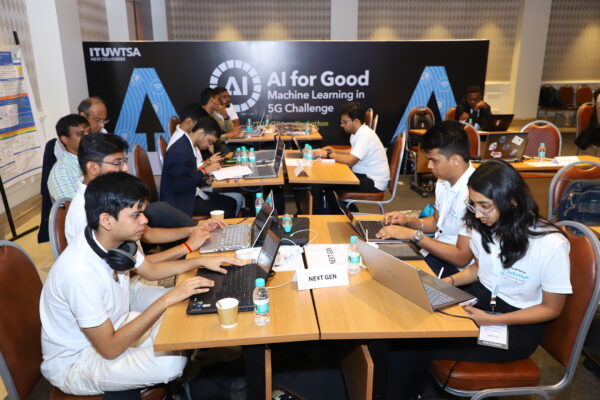
This competition aims to bring together innovators from around the world to create proof-of-concept solutions that can accurately measure, monitor, and report the environmental impact of AI systems. By advancing the science of AI sustainability, we can empower stakeholders to make informed decisions and develop more efficient, eco-friendly AI technologies.

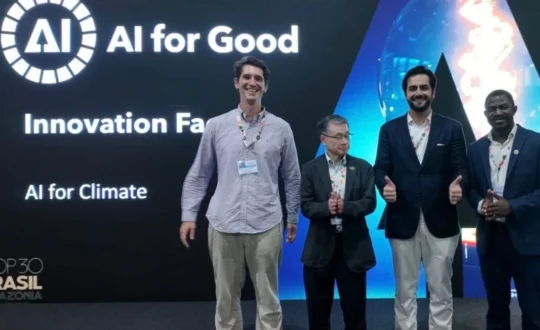
Winning Hackathon Teams
First Prize GreenMind
Vishal Jain (Team Captain)
Rahul Ajmera
Pragati Jain
Second Prize Standardizing Energy Models for
Large-Scale AI Training with
Long-Term Sustainability
Projections

Luis Carvalho (Team Leader)
Aldo Moreno Martel
Abu Abu
Aisha Olomowewe
Third Prize EcoAI Tracker
Mohamed Alpha
Addressing AI's resource demands
Current AI systems exhibit massive resource demands, with
  • Carbon costs
    Training large models can emit CO₂ equivalent to 5 car lifetimes.
  • Water usage
    Foundation model training consumes a lot of water through cooling and energy.
  • Measurement gaps
    Lack of standardized metrics for cross-system comparisons.
Challenge objective: Foster transparency & accountability

To foster global innovation by challenging participants to design and develop solutions that measure the carbon and water consumption of AI systems, enabling greater transparency and accountability in AI development and deployment.

Focus areas: Key solutions we seek
Solutions should address one or more of the following areas:
  • Carbon footprint measurement
    Tools to calculate the carbon emissions generated by AI training and inference processes, including metrics for energy sources, computational intensity, and geographical variations.
  • Water footprint monitoring
    Systems to quantify the water usage required for cooling data centers and AI infrastructure.
  • Real-time monitoring solutions
    AI or IoT-based platforms for real-time tracking of energy and water consumption in data centers.
  • Optimization insights
    Solutions that not only measure but also provide actionable recommendations to reduce carbon and water footprints.
  • Lifecycle assessment
    Comprehensive methods to evaluate the environmental impact of AI systems across their lifecycle, from development to deployment and disposal.
Your path through the challenge
Follow the key stages of the hackathon, from registration to final presentations.
  • 1-27 August 2025
    Registration and orientation
    Participants register individually or as teams. A detailed briefing on the competition goals, key concepts, and environmental metrics will be provided.
  • 29 August 2025
    Proposal submission
    Teams submit a concept note outlining their proposed solution, including its methodology, expected outcomes, and alignment with sustainability principles.
  • 1-30 September 2025
    Proof-of-Concept development
    Shortlisted teams will develop and demonstrate prototypes or proof-of-concept models over a designated period. Teams will have access to mentorship and resources from experts in AI, environmental science, and sustainability.
  • 16 October 2025
    Final presentation
    Teams present their solutions to a panel of judges comprising experts from AI, environmental science, and industry.
Judges
Vice Deputy Engineer, China Telecommunication Technology Labs (systems)
,
China Academy of Information and Communications Technology (CAICT)

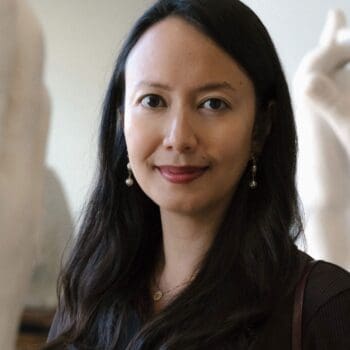
She graduated from Beijing university of posts and telecommunications in 2007 and holds a master’s degree in computer science. She has been working in the field of green and low carbon ICT for more than 10 year. Currently she is the Vice Deputy Engineer of China Telecommunication Technology Labs (systems) in China Academy of Information and Communication Technology (CAICT). Her focuses include fundamental Research, prospective study and standardization work in digital sustainable development and net zero.

She is also Vice Chair of ITU-T Study Group 5, Chair of WP3 on climate action and Chair of the Asia Pacific Regional Group in ITU-T SG5; and lead of WG2 (Large scale renewable energy deployment and digitalization) and lead of Aisa Pacific Regional group in the Council of Engineers for the Energy Transition (CEET) under the auspices of the United Nations Secretary-General. She is also very active in IEC TC22 and IEC SyC LVDC. She is Chair of Working Group 1 / Technical Committee 4(Power and environment for ICT) in China Communication Standardization Association (CCSA).

She developed around 20 Recommendations as main contributor in ITU such as ITU-T L.1210, ITU-T L.1380 series Recommendation on smart energy. Moreover, she is also very active in Chinese domestic standardization activities and developed more than 20 Chinese standards including National standards, industrial standard and regional standards. She has got first prize scientific rewards from China Institute of Communications and first prize scientific reward from CCSA. She was also awarded funding for participation in international activities as a young scientist.


Co-Chairman, FG-AI4EE
,
Huawei

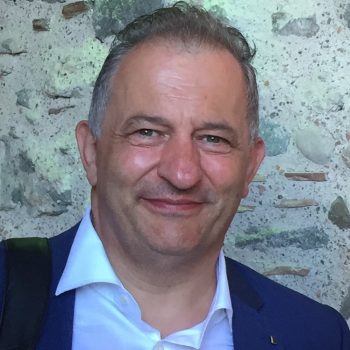
Paolo Gemma – senior Specialist for Europe and representative of Huawei on issues related to energy saving and environmental sustainability of companies worldwide – has done its input in Huawei in April 2008.

Before he was in Nokia Siemens Networks, has been responsible for laboratories Italian for EMC (electromagnetic compatibility) and electrical safety areas. Previously he held for 18 years a role like within the Siemens Communications Division. Paolo Gemma, between the leading experts of sector at international level, has an active role in international standardization activities. Since 1993 has engaged in ETSI (European Telecommunication Standard Institute) and participates in the development of telecommunications EMC standards.

In 1997 he joined ITU-T Study Group 5 as Rapporteur and he is now the Chairman of Working Party 3 “ICT and Climate Change”. Paolo Gemma has followed the work of the EE (Environmental Engineering) of ETSI Technical Committee since 1998. EE is the Technical Committee of ETSI engaged in the standardization of energy power, mechanics and environmental conditions. The group is committed since 2004 on ecological issues in particular with regard to the reduction of energy consumption and cooling management of equipment and installation publishing some standards on this issue. In 2002, has been appointed Secretary of the Committee ETSI TC EE and 2009 holds the position of Chairman of the EEPS EE (eco Environmental product standard) working group. Paolo Gemma is a graduate in electrical engineering from the University of Genoa.

Head of Sustainability Standardization
,
Nokia

Susanna Kallio works as Head of sustainability standardization at Nokia, coordinating the Nokia standardization activities in sustainability area. Her main areas of expertise include environmental impact assessment, LCA, circularity, and sustainable AI. She has been working  as standardization delete in Nokia since 1999; first in 3GPP on mobile network architecture related topics and later as a delegate in ETSI EE and ITU-T SG5 meetings. Currently, Susanna is the editor for the draft standard “Guidelines for Assessing the Environmental Impact of Artificial Intelligence systems” both in ETSI and ITU. For the last couple of years she has been also a delegate in ISO JTC1 SC42 and CEN/CENELEC JTC21 for sustainable AI. In addition, she is co-rapporteur in ITU-T SG5 Q7 group which produces standards for circular economy. Susanna received her M.Sc. degree in electrical engineering from the Technical University in Espoo, Finland.

Director IT Sustainability Strategy
,
HSBC

Tim Smolcic is a global technology executive and a leading voice in sustainable IT, with over 15 years of experience driving innovation at the intersection of enterprise technology, cloud computing, AI, and environmental impact. Currently serving as Director of IT Strategy & Sustainability at HSBC, Tim leads global transformation initiatives, integrating sustainability as a core design principle for modern enterprise infrastructure.

A passionate advocate for responsible technology, Tim is an active partner of the ITU Green Digital Action initiative. His work focuses on embedding sustainability into the digital ecosystem—particularly the development of open-source tools that enable real-time measurement of software-related carbon emissions. His patented carbon tracking framework is now listed on the UN Digital Public Goods Register.

At the AI for Good Summit, Tim brings industry-wide insights from his ongoing research into the measurement and reporting of AI energy consumption. His work identifies critical gaps in current methodologies and reporting frameworks, offering evidence-based recommendations to align AI development with global sustainability goals. Through cross-sector collaboration, Tim is helping define what “green AI” means in practice—and where the industry must evolve to close the disconnect between innovation and environmental accountability.

MLOps Engineer
,
Pruna AI
MLOps Engineer working at pruna by day, Code Carbon contributor by night, I am interested in efficient, reliable & robustly beneficial AI. My work is centered around building ML development platforms, and providing relevant tooling to build & deploy robust ML models in applications.
Programme Specialist
,
UNESCO

Leona Verdadero is a Programme Specialist at UNESCO working on sustainable digital transformation and policy innovation. She leads initiatives to advance inclusive and rights-based approaches to data and AI governance, with a focus on energy-efficient AI (“greening AI”) solutions, sustainable AI design, and international cooperation. Leona has co-authored publications on ethical and sustainable AI, including research on gender bias in large language models and the environmental impact of generative AI. Named one of the “100 Brilliant Women in AI Ethics” in 2024, she brings experience from UNDP, the World Bank, and OECD, and holds degrees from Columbia University and NYU Tandon School of Engineering.

Head of AI Sustainability
,
Salesforce
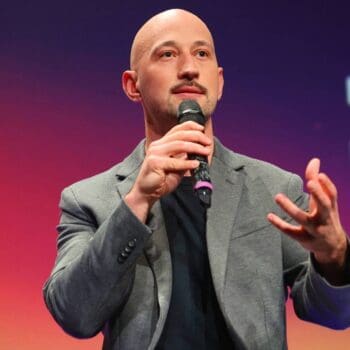
Boris Gamazaychikov is Head of AI Sustainability at Salesforce, where he leads global efforts to align AI with climate action. Recognized by The Independent’s Climate 100 and Business Insider’s AI Trailblazers, he is a prominent voice at the intersection of technology and sustainability. At Salesforce, he drives initiatives to reduce the environmental footprint of AI products while advancing industry-wide solutions, most notably launching the AI Energy Score, the first standardized benchmark for measuring AI model energy use.

With over a decade of experience tackling complex environmental challenges, Boris is also a frequent speaker and board advisor. He holds a degree in Environmental Engineering from the University of Maryland and continues to bridge engineering, climate science, and AI to accelerate the transition to a sustainable future.

Software Engineer

,
CodeCarbon
Iñigo Imaz Chacón is a software engineer passionate about the intersection of AI, sustainability, and open source.
He has contributed to impactful initiatives such as CodeCarbon, helping measure and reduce the carbon footprint of computing
Evaluation criteria
Your solutions will be assessed based on the following:
  • Innovation
    Novelty and uniqueness of the solution
  • Accuracy
    Precision and reliability in measuring carbon and water footprints
  • Feasibility
    Practicality and scalability of the solution
  • Impact
    Potential to drive transparency and sustainability in AI development
  • Presentation
    Clear communication of findings and methodologies
  • Usability
    Ease of use and intuitive design for stakeholders
The Impact of your Innovation
This hackathon aims to drive tangible progress towards sustainable AI.
  • New tools & methodologies
    Innovative tools and methodologies for measuring AI's environmental impact.
  • Increased awareness
    Increased awareness of AI's carbon and water consumption among developers and stakeholders.
  • Scalable solutions
    Scalable solutions that can be adopted by AI companies and data centers globally.
  • Sustainable AI development
    Contributions to the broader goal of making AI systems sustainable and environmentally responsible.
Prizes
  • Present the solution at COP30
    The winner gets an opportunity to present the solution at COP30 in Belem, Brazil.
  • Prize money
    A total of CHF 5,000 will be awarded to the top three solutions:
    CHF 3,000 for first place, CHF 1,500 for second place, and CHF 500 for third place.
Related to ITU standardization work

From competition to contribution: shaping the future of AI sustainability standards.

The International Telecommunication Union (ITU) develops international standards for environmental sustainability in the ICT sector through its Study Group on Environment, Electromagnetic Fields (EMF), Climate Action and Circular Economy (ITU-T SG5).

ITU-T SG5 is currently developing ITU-T L.EnvAI – Guidelines for Assessing the Environmental Impact of Artificial Intelligence Systems, building on ITU’s life cycle assessment methodology ([ITU-T L.1410]) and enabling effects methodology ([ITU-T L.1480]).

The winning hackathon solutions could provide valuable insights to support this ongoing international standardization effort.

Discover the success stories
Join the challenge
This challenge seeks to transform AI development practices by making environmental costs viable, actionable, and central to technical decision-making. By addressing AI energy measurement gaps, solutions from this hackathon could establish directions for new policy directions related to sustainable AI.

Are you sure you want to remove this speaker?